Polish Presidency highlights EU climate paradox
Press release | 1 July, 2011As Poland starts its EU Presidency today, serious doubts loom over its willingness to provide ambitious leadership on EU climate policies. Paradoxically, it is the EU’s own public banks which are sponsoring the country’s unfettered coal industry, the root cause of Polish climate scepticism.
Read moreVideo: Polish perspectives on the EU presidency
Blog entry | 1 July, 2011Today Poland takes the helm of the EU presidency, but the country’s recent move to unilaterally block a 25 percent reduction target for EU carbon emissions has solidified expectations that Poland would hinder a more ambitious EU climate policy agenda.
Read moreCivil society groups in the Arab region say Western financial aid plan could divert the revolutions’ goals of economic and social justice
Press release | 27 June, 2011Arab civil society and international NGOs are opposing the EU and US backed financial aid package for post-revolutionary countries in their region on the grounds that it could damage the democratic transitions and divert the revolutions’ goals of economic and social justice.
Read more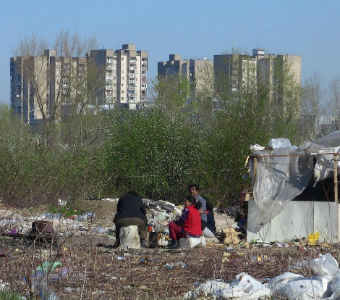
Deja-vu in Belgrade
Blog entry | 22 June, 2011Bankwatch’s coordinator in Serbia Zvezdan Kalmar finds himself in a situation similar to the one when campaigning on the Gazela bridge project: Roma families live in uncertainty about when they’ll be resettled to make way for road construction, all the while with little influence about how decisions are made.
Read moreLetter reiterating Vinci’s failure to respect Global Compact commitments on human rights
Publication | 20 June, 2011Bankwatch and the Movement to Defend Khimki Forest wrote to the Global Compact on 28th March 2011 regarding Vinci’s non-compliance with its Global Compact Commitments in relation to the first section of the Moscow – St. Petersburg motorway project. Our letter subsequently formed the basis of an enquiry to Vinci by the Business and Human Rights and Human Resource Centre, to which Vinci responded on 26th April 2011. Having carefully reviewed Vinci’s response, we still believe that the company is not in compliance with its Global Compact commitments.
Read morePolice investigates irregularities at TES 6 in Slovenia
Press release | 8 June, 2011Ljubljana, Slovenia — The Slovenian police confirmed June 7 that it was looking into allegations of mismanagement at coal plant Sostanj, including serious questions over the building of new lignite block TES 6.
Read more
EIB transport lending is not just on a wrong track but hardly on tracks at all
Blog entry | 6 June, 2011Bankwatch’s EIB team leader Anna Roggenbuck, on her way to consultations on the European Investment Bank’s transport policy, has crunched the numbers of the bank’s transport sector lending. The result: while exhibiting a strong faith in future technological solutions the EIB is fuelling increased carbon emissions across Europe.
Read moreBankwatch Mail 48
Publication | 19 May, 2011On the occasion of the EBRD’s 20th anniversary, Bankwatch Mail is complemented by a range of personal reflections from people both within and beyond central and eastern Europe, people who have worked directly on issues related to the EBRD, or who have studied the bank’s impacts.
Read moreSlovenian government drops support for Sostanj coal plant; European public banks must follow suit
Press release | 5 May, 2011Ljubljana, Slovenia — CEE Bankwatch Network and Slovene NGO FOCUS are calling on the European Investment Bank (EIB) and the European Bank for Reconstruction and Development (EBRD) to review their plans to provide 650 million euros in loans for the controversial 600 MW TES 6 block at Slovenian lignite plant Sostanj.
Read more
