• Skip to primary navigation
  • Skip to main content
  • Skip to footer

Bankwatch

  • About us
    • Our vision
    • Who we are
    • 30 years of Bankwatch
    • Donors & finances
    • Get involved
  • What we do
    • Campaign areas
      • Beyond fossil fuels
      • Rights, democracy and development
      • Finance and biodiversity
      • Funding the energy transformation
      • Cities for People
    • Institutions we monitor
      • European Bank for Reconstruction and Development
      • European Investment Bank
      • Asian Infrastructure Investment Bank
      • Asian Development Bank (ADB)
      • EU funds
    • Our projects
    • Success stories
  • Publications
  • News
    • Blog posts
    • Press releases
    • Stories
    • Podcast
    • Us in the media
    • Videos
  • Donate

Home > Archives for Blog entry

Blog entry

Expert analysis confirms Croatian Plomin C coal plant is economically unfeasible


The Plomin C coal power plant would bring higher social costs than benefits and is highly sensitive to changes in operational costs, so it is not recommended to continue with the project, according to a new economic analysis [hr, pdf] commissioned by Zelena akcija/Friends of the Earth Croatia and carried out by the Society for Sustainable Development Design (DOOR) using European Commission methodology.[*]

In spite of the fact that the project has been promoted by publicly owned company Hrvatska Elektroprivreda (HEP) for at least five years already, there is a remarkable lack of official economic data about the project and its risks in the public sphere and the analysis’ authors hope that it will open up the debate.

From the point of view of potential strategic partner Marubeni, the project would be made financially feasible by guaranteeing that HEP would buy off a certain percentage of the electricity at a guaranteed price. This is likely to be in conflict with EU state aid rules and it remains to be seen how this will be addressed.

Coal in the Balkans

Find out more

Looking from the point of view of the wider society, the economic analysis shows that even if not including external costs such as health costs, the project is highly risky and is unfeasible in the following cases:

  • an increase in operational costs by 35% compared to the basic scenario,
  • a 2-year delay in construction along with an increase in the price of emissions allowances as foreseen in the PRIMES energy model used in the European Commission’s Energy Roadmap 2050 [pdf, pg 37],
  • including external costs as defined by the ExternE project.
  • The risk of an increase in operating costs of at least 35% compared to the base scenario is very real, as the analysis used the fixed operational costs from the EU’s Strategic Energy Technologies Information System (SETIS), while the EIB’s estimates are considerably higher. Also, the current CO2 price was used, whereas a significant increase is expected over the lifetime of the project. Coal costs likewise vary significantly over time.

    Plomin C and energy policy more widely are a test for Croatia’s new government, which will show whether it is able to recognise the trends playing out across the EU and ensure the transformation of Croatia’s energy system. Zelena akcija has welcomed the new Croatian government’s “temporary moratorium” on building Plomin C, but believes this analysis shows that it is necessary to permanently withdraw from the idea.

    The analysis is available (in Croatian) here [pdf].

    Notes

    * The analysis was carried out using official data and where this was not available, estimates by relevant international institutions were used. The methodology is that laid out in the European Commission’s Implementing Regulation 2015/207 from 20 January 2014 [pdf], the EC’s guide to cost-benefit analysis for investment projects [pdf] for the period 2014-2020 and 2013 EIB guidelines for the economic valuation of projects [pdf].

Do not fund Southern Gas Corridor with EU money


This article first appeared on Euractiv.com.


A leap year comes just twice in a decade, but the Southern Gas Corridor, the series of pipelines intended to feed Europe with gas from the Caspian Sea, is a once in a lifetime project. So maybe it is more than just coincidence that Azerbaijan – well versed in using the spotlight of international milestones to whitewash the crackdown on its citizens – chose 29 February to hold the second meeting of its Southern Gas Corridor Advisory Council and roll out the red carpet for a plethora of European ministers and presidents of development banks.

A massive financial investment entailing serious environmental and geopolitical risks (pdf), the Southern Gas Corridor has nonetheless been labelled a ‘Project of Common Interest’ by the European Commission and afforded streamlined regulatory and financing status. The western portion of the route alone, known as the Trans-Adriatic Pipeline, is slated to receive €2 billion from the European Investment Bank (EIB), the largest loan by the EU bank in its 57-year history. Another loan of €1 billion for the eastern part of the corridor through Turkey, the Trans-Anatolian Pipeline (TANAP), is soon to be announced by the EIB.

Intended as an alternative to reliance on Russian energy imports, the Southern Gas Corridor ties the EU to Azerbaijan – one of its most undesirable international partners – for decades to come.

The November 2015 elections in Azerbaijan again confirmed the government’s lack of transparency and accountability, as the ruling party secured 91% of the vote. In its World Report 2015, Human Rights Watch blasted Azerbaijan over its human rights record during the rule of President Ilham Aliyev. The country has seen a crackdown on dissenting opinion through the arrest and imprisonment of journalists, lawyers, civil society representatives and opposition leaders, which has drawn the attention of the European Parliament, the Council of Europe and the Organisation for Security and Cooperation in Europe (OSCE).

In December, the Council of Europe launched an investigation into Azerbaijan’s compliance with its commitments under the European Convention on Human Rights after “judgments from the European Court of Human Rights have highlighted an arbitrary application of the law in Azerbaijan, notably in order to silence critical voices and limit freedom of speech”. The unprecedented move was decided after Azerbaijan failed to meet even the minimal benchmarks the Council had set for it, leading the organisation to reconsider the country’s membership altogether.

Prior to that, in September 2015, the European Parliament had raised the alarm about the worsening human rights situation in Azerbaijan. In its resolution, the Parliament found the latest imprisonment of human rights defenders unacceptable and called for the suspension of any kind of EU funding for the country. Azerbaijan’s relationship with the OSCE has since further deteriorated, after the OSCE refused for the first time in its history to send a delegation to the last elections, following President Aliyev’s opposition to a number of proposed representatives.

And the situation in Azerbaijan is expected to become only more precarious, as oil prices plummet and the Aliyev regime continues to tap its diminishing reserves to address the economic crisis and quell more widespread discontent.

That the deteriorating political situation in Azerbaijan has not been more thoroughly addressed by the EU also reflects a failure of the European Neighbourhood Policy, which has until now turned a blind eye to Aliyev’s offences, his lack of willingness for meaningful political and economic reforms and his desire to cement political and economic privileges for his family and allies. It is in the EU’s interest to have a democratic Azerbaijan that respects the rule of law as a neighbour; but the Southern Gas Corridor will not help to achieve this. On the contrary, the project will strengthen the status quo, in exchange for which the EU might well receive just another song contest or sporting event.

A project of the Southern Gas Corridor’s stature is indeed a once-in-a-lifetime deal, and it is one that Europe’s leaders should consider passing up on as they head back to their capitals after the meeting in Baku. As warned by the European Parliament itself, the geopolitical significance of the Union’s actions inside and outside its borders cannot be underestimated, especially when human lives and freedoms are at stake.

Croatia, Italy and Colombia linked by harm from coal industry


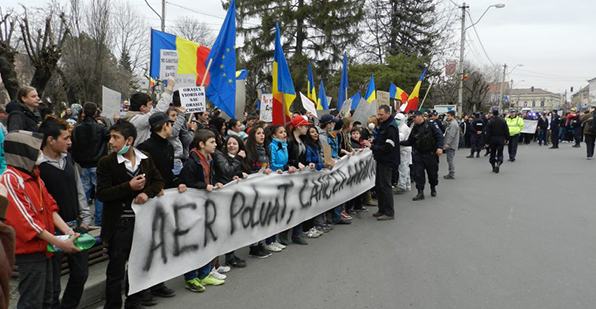
Local residents near Plomin in Croatia’s Istria County have for years been concerned about the health impacts of air pollution from the existing Plomin 1 and 2 power plant units and the planned Plomin C.

However, it is much less known that around a quarter of Croatia’s coal comes from Colombia, where opencast coal mining directly endangers the local communities through resettlement, pollution and overuse of water resources.

For example, thousands of tonnes of coal burned in Plomin over the past 15 years came from the El Cerrejon mine in Colombia’s La Guajira region. At last week’s protest, Danilo Urrea from Colombian group CENSAT-Agua Viva/Friends of the Earth Colombia spoke about the dire consequences of coal extraction in the mine.

Under the guise of development, said Urrea, in less than 30 years the coal companies and industrial agriculture corporations have gained control of the main water resources in La Guajira, which they have polluted and depleted. The mining operations in El Cerrejon alone use 17 million litres of water daily for damping down dust on the roads where the coal trucks drive, while the average inhabitant of La Guajira drinks less than a litre of water daily.

Facing such water shortage, local communities can no longer grow their own food and people in the region have been dying due to lack of food and water.

Considering that the culture of the local communities is based on the region’s previously rich water resources, with traditional agriculture, livestock breeding and fishing, Urrea sees El Cerrejon as responsible for the crisis and the destruction of the local communities’ culture, and the conflict between the residents and the mining companies that has ensued. The countries importing the coal also share responsibility.

Along with Croatia, Italy is one of those countries. But in this case the story may have an inspiring ending. Talking at the event, Antonio Tricario of Re:Common told of the unique case of the Vado Ligure plant, owned by Tirreno Power, which was burning coal from Colombia until March 2014 when a judge ordered the temporary (but most likely to be made permanent) shut down of its two 330 MW coal-fired units.

After local groups filed a case with the public prosecutor, a painstaking investigation was opened against 86 people including the director of the power plant, as well as local officials. The investigation, which was completed recently, proved their responsibility for environmental disaster and manslaughter. Italian parliamentarians, also argued that in the Vado Ligure case, corporate pressure had influenced public officials’ decisions. The beginning of the trial is expected soon.

Mladen Bastijanic, an activistfrom Labin, emphasized that Istria also suffers from water scarcity. High quality water from the Bubic jama spring is used for the Plomin power plant and residents in the nearby town of Labin are supplied with water of much poorer quality from the springs in the Rasa valley, a situation he described as “criminal”.

Dusica Radojcic from Green Istria pointed out that Plomin C would create the need for even greater volumes of imported coal and that coal-based development is simply immoral. The new Croatian government has recently agreed a moratorium on the construction of new coal power plants, but to prove it is serious it must definitively withdraw from Plomin C, she concluded.

Slovakia’s EU funds spending plans: finance for the energy transition – where’s it at?


A new Bankwatch study, launched last week, looks at how nine central and eastern European countries are set to spend billions of EU funds until 2020 that are meant to transform the carbon-intensive, inefficient energy systems of their countries.

Today, in the last installement of a series of blogs, our Slovak campaigner Miroslav Mojzis comments on the findings from Slovakia. Take a look at the results for other countries too and find out more at bankwatch.org/enfants-terribles >>


Almost 90% of all public investments over the 2011–2013 period in Slovakia were mainly financed by European cohesion and structural funds, which was the highest share in the EU.

This makes the new Partnership Agreement for the period 2014-2020 the most important investment strategy of the country.

However, a Bankwatch study analysing the final setup of the Agreement and of the Operational Programmes concludes that any traces of energy transformation are hard to identify. Slovakia did not allocate resources to research and development of new energy technologies nor into the testing of intelligent energy management and distribution. Measures to tackle energy wastage and support for renewables receive only neglectable sums.

More


Climate action in EU Cohesion Policy funding for Slovakia, 2014-2020 (pdf)
Study chapter | January 26, 2016

Other chapters, graphs & more

It is safe to say that Slovakia has missed the opportunity to bind the EUR 14 billion of Cohesion spending with decarbonising its energy sector.

Any systemic change would require liberalisation and decentralisation of Slovakia’s largely monopolistic, heavily state influenced energy economy with its high dependence on imported fossil fuels and high carbon intensity.

Energy investments: no ambition, no transition

Energy savings, energy efficiency and renewables receive EUR 1.35 billion (9,6%) of its almost EUR 14 billion in Cohesion Policy funds. This, however, includes heat and electricity cogeneration in fossil-fuelled installations as well as controversial energy efficiency measures in large enterprises which basically would mean supporting economically viable projects in businesses well equiped with capital.

In comparison, a Bankwatch research from 2012 estimated the investment needs in the energy sector with EUR 17.5 billion, almost 13 times as much. Considering, again, that almost 90% of public investments in Slovakia are made up of EU funds and national co-funding, it is clear that the current clean energy allocations get us nowhere.

Also the huge potential for reducing the energy consumption in residential buildings remains untapped. The Integrated Regional OP dedicates only EUR 111.3 million to energy efficiency in the housing sector which will be distributed through financial instruments within the Slovak Investment Holding. This instrument however fails to cover half of Slovak households living in single family houses even though only about 15% of these are to some extent renovated.

The lack of will to really deal with energy losses in the residential sector (with the help of both EU funds and revenues from the emission trading scheme) is plainly visible when comparing the scale of support with that in the Czech Republic where EUR 1 billion are allocated for the New Green Savings Scheme.

Renewable energy gets a meagre EUR 169 million, with EUR 65.7 million supporting micro PV installations in households and on public buildings. The rest is made up of EUR 55.2 million for biomass installations up to 20 MW and around EUR 47 million for other renewables, mostly thermal heatpumps in households.

A step in a good direction are the altogether EUR 112 million for renewables installations allocated through financial instruments. They open up the EU funds to households for the first time. Once first experiences are available Slovakia should seriously think about supporting household energy projects more substantially.

Firing up the old heating sector

Existing heat producers have tapped into EU funds quite effectively by claiming support for biomass and electricity/heat cogeneration and district heating within the ‘Quality of Environment’ Operational Programme.

The positive contribution of biomass support is questionable as existing fossil fuel-powered installations up to 20 MW will be reconstructed to co-fire biomass. This not only creates a lock-in effect into Slovakia’s old fassioned heating system.

It also pretends to offer solutions by ignoring the fact that heavily polluting fossil fuels, including coal, are being burned alongside the ‚renewable‘ biomass. If such compartmentalisation would not be allowed, no such installations would receive EU funds.

Another issue is the restoration of old heat distribution networks. While it will reduce heat loss it will also perpetuate the dependence on old systems instead of investing in new ones.

Allocations confirm this with heating restoration and cogeneration getting EUR 185 million and smart grids and intelligent energy management systems getting a clear zero for the next seven year period.

Much space for improvement

The next opportunity to improve the climate performance of Cohesion Policy will be during the mid term review in 2018. By then Slovakia will have ample chances to prove that its climate comittments are sound and serious.

The evidence from the relevant calls for proposals and from evaluations of operational programmes will be crucial.

Already in the coming months, when all managing authorities have to show how they want to measure their portfolios‘ climate performance, Slovakia should prove its efforts to really mainstream climate into the spending.

If there are gaps in methods and tools, the European Commission should play an active role and help member states to get the system running. It is up to the EC now how strong a pressure it will put on the implementation of Europe’s climate agenda.

So far, however, there is absolutely no hint that Slovakia intends to shift its economy towards a low-carbon development path. If that attitude prevails, Cohesion Policy in Slovakia will remain a potential unfulfilled.

Find out more

Other chapters, graphs & more at https://bankwatch.org/enfants-terribles >><

Croatia’s EU funds spending plans: Land of unfulfilled clean energy potential


A new Bankwatch study, launched last week, looks at how nine central and eastern European countries are set to spend billions of EU funds until 2020 that are meant to transform the carbon-intensive, inefficient energy systems of their countries.

On our blog today, our Zagreb-based research co-ordinator comments on the findings from Croatia. Take a look at the results for other countries too and find out more at bankwatch.org/enfants-terribles >>


Croatia ought to be one of the easiest countries in Europe to transform to an energy-efficient, sustainable renewables-based economy, with its small population, relatively low energy demand, ample sun and wind resources, large areas of forest and large existing hydropower plant capacity.

The country had a favourable starting point for renewable energy compared to some other EU countries – 12.8 percent of energy in 2005 – mostly due to the fact that around half of Croatia’s 4000-plus MW of installed electricity generation capacity consists of hydropower plants built decades ago.

The problem is, however, that renewable energy development in Croatia has not got far since then compared to the potential. Successive governments have chased economically and environmentally dubious projects like the Plomin C coal power plant and the Ombla hydropower plant instead of improving the transmission infrastructure and making serious efforts to develop sustainable forms of renewable energy.

More


Climate action in EU Cohesion Policy funding for Croatia, 2014-2020 (pdf)
Study chapter | January 26, 2016

Other chapters, graphs & more

The 2009 Energy Strategy was already bizarre at the time it was adopted, and reality has only made it look worse. The Strategy predicted 3.5 percent per year growth in energy consumption. The predicted demand was to be satisfied, among other things, by 1200 MW of new coal power plants, 1200 MW of new gas-fired power plants, 1200 MW of new wind power plants and 300 MW of large hydropower.

In reality, in 2014 demand had actually decreased compared to 2010, no coal plants had been built, and only 42 MW (the highly controversial Lešće plant) of large hydropower had been built. In November 2015 it was also reported that the 230 MW Sisak C gas-fired plant had begun test operations.

New forms of renewable energy have fared somewhat better than coal and hydropower in recent years. Coal has been becoming less and less economic, while most of the hydropower potential left in Croatia is highly problematic because of its biodiversity impacts. Neither does adding more hydropower help much in terms of predictability of electricity supply considering the increasing climatic fluctuations of recent years.

Wind power, after a very slow start, has finally started to take off, with 339 MW of licensed capacity installed by November 2015. Solar photovoltaic too, has made some headway (42.9MW).

But just when Croatia was finally making progress with these plentiful resources, they hit a brick wall: The National Renewable Energy Action plan does not foresee any more solar and wind installations before 2020 because the quotas are full.

The EU is not raising this as an issue because Croatia is, even with its lacklustre efforts, on track to meet its 2020 renewable target. In 2013 it had 18 percent renewables in final energy consumption, leaving just two percent still to achieve by 2020.

EU funds to the rescue?

In this context it is not surprising that EU funds have a hard job supporting Croatia’s switch to clean energy systems. In the financial period 2014–2020, Croatia plans to spend around EUR 517 million on energy out of which EUR 437 million (a poor 5.16% of all Cohesion Policy funding) goes to clean energy.

The good news is that 62 percent of all energy investments are allocated for energy efficiency. However, only 18 percent, or EUR 95 million, is slated for renewable energy, and only 4 percent (EUR 20 million) for smart grids.

Graph: The different types of energy infrastructure investments in Croatia to be financed by EU funds 2014-2020

Source: Climate’s enfants terribles

This latter point is particularly worrying considering that grid stability is the main reason cited for not increasing the renewable energy quotas. Transmission and distribution ought to be one of the key priorities for matching the interest shown by the public and investors in increasing the use of renewable energy.

If there is any doubt that such interest exists, take the example of small renewable plants: Yearly quotas for small renewable plants are set at 12 MW per year and by 9 January 2014 (only 8 days from the opening of the tender) 2079 bids were submitted with a total of 87.9 MW of proposed capacities. Rather than increasing the quota, in 2015 the Croatian government decided not to contract new renewables.

So the EU funds allocations are likely to go beyond current national ambitions and make a contribution, yet they could do much more if they were based on a coherent strategy. Towards the end of 2015 the outgoing Croatian government presented a Green Paper for a Low-Carbon Strategy towards 2050, and it is to be hoped that the new government will continue this work. There are some recent encouraging signs, but ultimately decarbonisation needs a pro-active strategy, not just an absence of carbon-intensive projects. Considering Croatia’s high debts and poor economic situation, EU funds will be essential for supporting this process.

Find out more

Other chapters, graphs & more at https://bankwatch.org/enfants-terribles >>

Turceni coal unit in Romania shut down after operating illegally


Last Tuesday, February 2, the Romanian National Environment Guard shut down Turceni unit 7 [ro] after operating in spite of the unit not complying with legal operating conditions related to pollution limits. Oltenia Energy Complex (OEC), the state-owned company managing the power plant, was also fined RON 60.000 (approx. EUR 13.000) as unit 7 exhausted the hours it was allowed to operate without conforming to emission limit values.

The decision is a direct result of pressure exerted by Bankwatch Romania and Greenpeace and has likely been expedited by the subsequent media coverage. Teams from the two organisations went to the coal power plant on 19 January to protest its operation. (Unsurprisingly, the management ignored our demands and refused to speak to us.)


(Image (c) Mircea Topoleanu / Greenpeace)

At the same time we asked the Environment Guard in a letter to inspect the unit and demand its immediate shut down.

With this week’s decision the National Environmental Guard has now dealt the final blow for the Turceni power plant – at least until it complies with national and European power plants emission standards. Since December 2014, Bankwatch Romania has taken OEC to court requesting the environmental permit for Turceni power plant to be cancelled, as the emission standards were not updated and the environmental impact was not evaluated.

Seven energy units have been built at the Turceni coal power plant between 1978 and 1987. Recently, they have been operating under an environment permit emitted in March 2014 by the Environment Protection Agency, which does not include unit 7, since it was supposed to stop operating since 2014.

Unit 7 was exempt from complying to emissions limits under the condition that OEC committed to only operate 20,000 hours until 31 December 2015 the latest. According to this exemption, for 5-6 years it has polluted up to 10 times more than the legal norms that are generally applicable or compared to other energy units from Turceni. The 20,000 hours were exhausted in 2014.

The decision gives us hope that the Environment Guard will make sure that all the other power plants which no longer benefit from derogations will abide to existing legislation. This applies to 41 large combustion installations, each including one or more gas or coal-fired power plant units, for which the derogation deadline ended on Jan 1st 2016. If these installations don’t comply, the Environment Guard must order them to immediately cease operation.

« Previous Page
Next Page »

Footer

CEE Bankwatch Network gratefully acknowledges EU funding support.

The content of this website is the sole responsibility of CEE Bankwatch Network and can under no circumstances be regarded as reflecting the position of the European Union.

Unless otherwise noted, the content on this website is licensed under a Creative Commons BY-SA 4.0 License

Your personal data collected on the website is governed by the present Privacy Policy.

Get in touch with us

  • Bluesky
  • Email
  • Facebook
  • Instagram
  • LinkedIn
  • RSS
  • YouTube