• Skip to primary navigation
  • Skip to main content
  • Skip to footer

Bankwatch

  • About us
    • Our vision
    • Who we are
    • 30 years of Bankwatch
    • Donors & finances
    • Get involved
  • What we do
    • Campaign areas
      • Beyond fossil fuels
      • Rights, democracy and development
      • Finance and biodiversity
      • Funding the energy transformation
      • Cities for People
    • Institutions we monitor
      • European Bank for Reconstruction and Development
      • European Investment Bank
      • Asian Infrastructure Investment Bank
      • Asian Development Bank (ADB)
      • EU funds
    • Our projects
    • Success stories
  • Publications
  • News
    • Blog posts
    • Press releases
    • Stories
    • Podcast
    • Us in the media
    • Videos
  • Donate

Home > Archives for Blog entry

Blog entry

The hefty health toll of coal burning in the Western Balkans – and what is not being done about it


I often hear that countries in the Western Balkans are too poor to invest in pollution reduction, environmental improvement, energy efficiency or renewable energy sources.

Less than three months after thousands protested in Bosnia and Herzegovina, Montenegro and Macedonia against intolerable air pollution and their governments’ inaction on the matter, a new report (pdf) by the Health and Environment Alliance (HEAL) puts a price tag of up to EUR 8.5 billion per year on the health impacts of coal plants in the Western Balkans. [1]

8.5 billion is a heavy toll for the already indebted countries of the Western Balkans, representing 13% of their collective GDPs (converted at inforeuro exchange rate).

For comparison, in the last 4 years the total amount of funds allocated to renewable energy, energy efficiency and climate change mitigation by European public banks (the European Bank for Reconstruction and Development (EBRD) and the European Investment Bank (EIB) and by EU pre-accession funds was 2.5 times less than the annual health bill, at approx. EUR 3.46 billion.

Balkan coal a major culprit, damages extend to EU countries

These countries’ energy sectors are heavily reliant on coal for electricity production, and this indeed shows in the health impacts: HEAL’s report finds that in Montenegro, for example, the Pljevlja coal plant was solely responsible for more than 90% of national SO2 and half of the NO2 emissions in 2011. Furthermore, this plant contributed 59% of PM10 emissions (coarse particulate matter) and 42% of PM2.5 emissions (fine particulate matter). Also, in Serbia, coal plants were responsible for more than 80 percent of national SO2 emissions and half of NO2 emissions in 2013. These plants were also contributing over 15 percent of PM emissions (PM2.5 and PM10). But neither of these is a match to Bosnia and Herzegovina’s Ugljevik power plant. With annual SO2 emissions at 154,380 tonnes, this is the most polluting coal plant in the whole of Europe.

An additional important finding of the report is the calculation of the health damage to neighbouring countries that is caused by coal burning in the Western Balkans. Air pollution is not limited to the proximity of the power plant. Some pollutants in exhaust clouds from the smokestack can be transported to neighbouring EU countries and beyond, thus plants in Serbia, for example, may cost the health of the local population up to 1.7 billion Euro, but add up to the health bill in the EU another 4 billion Euro.

Missed opportunities to improve air quality through Energy Community

Still, we see little progress being made in the direction of creating a level playing field between the electricity generation in the EU and that of the Western Balkans. The Energy Community, which aims to extend the EU internal energy market to South East Europe and beyond on the basis of a legally binding framework, has an opportunity to change the fate of air pollution in the Western Balkans, with strong support from affected communities and with legislative ease (see Bankwatch’s briefings on adopting the Air Quality Directive and Chapter II of the Industrial Emissions Directives). Yet, signs of progress are nowhere to be seen.

Yesterday’s meeting of the Permanent High Level Group of the Energy Community took into account a few new pieces of environmental legislation (pdf) to be adopted in the following year, unfortunately none of which tackle air quality directly.

Disappointingly enough, most governments in the region don’t seem to realise the gravity and urgency of the situation by themselves, either. The EU and Energy Community need to take a strong lead and make the Air Quality Directive and Industrial Emissions Directive (Chapter II) part of the Energy Community acquis as soon as practicably possible and provide support to governments in realising that air quality is more about health benefits than about legal burdens.

The harmonisation of the energy market cannot happen at the expense of health and environmental protection. EU decision-makers should show leadership and insist on the inclusion of all parts of EU air quality and industrial emissions legislation in the Energy Community’s requirements and closely follow its application, without further deadline extensions.

Notes

1. The report covers Bosnia and Herzegovina, Macedonia, Montenegro, Kosovo and Serbia. The EUR 8.5 billion figure consists of costs directly related to air pollution from coal-fired electricity plants, including from premature deaths, respiratory and cardiovascular hospital admissions, new cases of chronic bronchitis and lower respiratory problems, medication use and days of restricted activity due to ill-health, including lost working days.

Tensions are rising over hydropower and the lack of participation in Georgia’s mountains


The number of local communities pitted against hydropower developments in Georgia is steadily growing. Also during yesterday’s International Day of Action for Rivers, communities in Georgia protested against the sell-out of their rivers, livelihoods and lands.

One of the largest dams currently under development is the planned 135 m high Nenskra dam in the Upper Svaneti region that may receive substantial support from European development banks. Even though the 300 families in the affected town of Chuberi are facing the loss of communal land and impacts on their ability to do subsistence agriculture, almost no objective information is available to them.

Background: Nenskra dam


Background, images and updates on the Nenskra hydropower plant.

See the project page

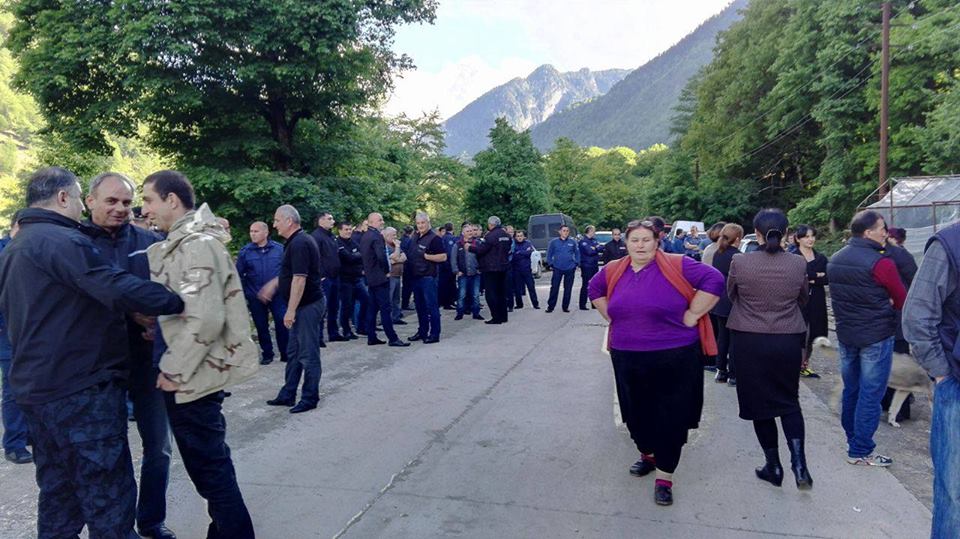
Just two weeks ago, as Chuberi residents gathered on February 28 to discuss the effects of the dam and the 280 MW hydropower plant, none of them expected the self-organised meeting would end in a protest. But when an unannounced government official continued the project promters‘ one-sided rhetoric of project benefits and failed to take the locals‘ concerns seriously, the villagers just had enough. Insisting on their right to be informed and involved, participants walked out of the meeting criticising the unconstructive dialogue and the lack of engagement.

With tensions rising in Chuberi, the Nenskra project adds to the already fierce opposition against large dams in the region. Only 20 km kilometres downstream, people in Khaishi are fighting for years against the 700 MW Khudoni dam that would flood their town and displace about 2000 people – one sixth of the populations in Upper Svaneti. Altogether, more than 30 hydropower plants are planned in an area the size of Mallorca that is inhabited by Svans, an ethnic subgroup of Georgia’s Caucasus mountains with their own language, laws and traditions. Nenskra is the largest one currently under development. [1]

Map: Hydro plans in Upper Svaneti


Interactive map of planned hydropower installations in Upper Svaneti

Explore the map

It has been nearly a year that the environmental impact assessment (EIA) report was released for the Nenskra hydropower plant. Yet the developers have undertaken minimum effort to consult the roughly 300 families living downstream, even though the dam will resettle an unclear number of families and flood communal lands that are the basis for the subsistence of livelihoods. So far project promoters organised only one official meeting (in May 2015) to discuss the EIA with people in Chuberi and the other affected community in the town of Nakra.

During a visit to Chuberi in June 2015, the participants of the consulation meetings told us that no project risks were presented during the May meeting and they received no explanation how the expected negative impacts will be tackled by the company.

Photo story


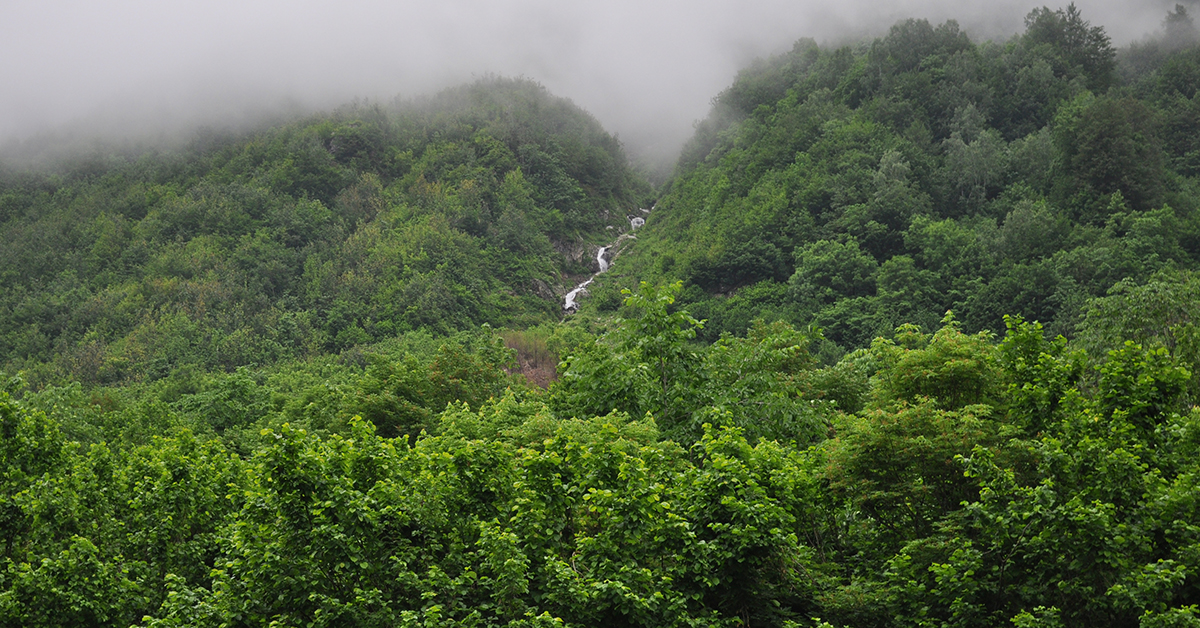
The community of Chuberi will lose part of its land should the Nenskra dam be built.

Read the photo story

International financial institutions including the European Bank for Reconstruction and Development, the European Investment Bank and the Asian Development Bank are considering financing the project, a joint venture between the Georgian state-owned investment fund JSC Partnership Fund and the Korea Water Resources Corporation.

Although each of the international financiers has a set of environmental and social requirements towards its corporate clients, the Svans have so far seen no credible social and environmental assessment. The Neskra EIA report, subject to the national permitting process, was of disturbingly poor quality and significant changes were recommended by an external reviewer. The German reviewer, commissioned by the Georgian Ministry of Environment and Natural Resources, found serious shortcomings in the assessment and handling of social impacts and natural risks such as mudflows. He even expressed doubt whether such a hydro power plant should be built due to the clash with nature conservation.

Regardless of the poor EIA, Nenskra was granted a permit in October 2015, a month after the works on access roads had started and without major changes to the EIA or subsequent meetings with the local population. The works are likely to recommence once the winter is over in the high mountainous valleys of South Caucasus, but the latest public meeting showed growing disagreement with the repetitive official rhetoric about the project‘s benefits, jobs in particular .

The lack of meaningul engagement of Svans over hydropower projects has created a very deep sense of exclusion and has polarised Georgia’s society. Whether in Nenskra, Khaishi or the rest of Upper Svaneti, investors should be prepared that Svans will defend their rights to livehood, land and a clean environment.

Notes

1. Khudoni still has no construction permit, but a new agreement between the project developer and the Georgian government seems to have cleared the way for the expropriation of land. More on this soon on the Bankwatch blog.

United Nations report highlights risks and failures of public-private partnerships


The United Nations Department of Economic and Social Affairs (UN/DESA) has just released a Working Paper called Public-Private Partnerships and the 2030 Agenda for Sustainable Development: Fit for purpose? [pdf]. The paper includes many of the concerns raised by civil society organisations during the last few years and identifies areas requiring better understanding and institutional innovation for ensuring value for money, minimising contingent fiscal risk and improving accountability. It also finds that there is a need for a common definition of PPPs and internationally accepted guidelines, including uniform accounting and reporting standards.

Perhaps most notably, the paper includes the following finding:

“… the evidence suggests that PPPs have often tended to be more expensive than the alternative of public procurement while in a number of instances they have failed to deliver the envisaged gains in quality of service provision, including its efficiency, coverage and development impact. In other words, they have failed to yield ‘value for money’ in its broadest sense taking into account not just the financial costs and efficiency gains deriving from a project but also its longer-term fiscal implications (including the risks of any contingency liabilities) as well as the broader welfare benefits for society such as the impact on poverty and sustainable development.”

We couldn’t have put it better ourselves, but for a more detailed argumentation and case studies illustrating these points, see our website Overpriced and underwritten: The hidden costs of public-private partnerships.

Europe’s false solutions for Ukraine’s energy woes


European decision makers had good intentions, but in their efforts to help ensure Ukraine’s energy security, especially in turbulent times like these, they have been continuously overlooking the far reaching implications of perpetuating the country’s dependence on outdated nuclear power.

Two years after the Euromaidan protest, the bond between Ukraine and the EU never seemed stronger, and recognising the poor state of the country’s nuclear power plants could not be more urgent.

The European Bank for Reconstruction and Development (EBRD) and Euratom – each extended EUR 300 million in loans for improving the safety of Ukraine’s 12 nuclear energy units – had also practically acknowledged, that in their current condition, these Soviet-era nuclear reactors are a serious risk for both Ukraine and its neighbours.

Over the next four years these ageing nuclear reactors will reach the end of their original lifespan, but the government in Kiev is as keen as ever to use the EU’s financial support to keep them going for at least ten extra years.

And indeed, rather than helping Ukraine to retire its nuclear fleet and chart a new, sustainable energy course, Europe is now knowingly helping perpetuate a profoundly precarious energy source.

Nearly a quarter of European public money invested in Ukraine’s energy sector between 2007 and 2014 has gone into nuclear energy generation, concentrated in the hands of state-owned operator Energoatom. The European financiers were hoping to be able to positively influence the nuclear regulatory framework in the country, but have so far failed to act on a governmental decree in effect since January 2015 that bars SNRIU, the state nuclear regulator, from initiating inspections in nuclear facilities. This decree was issued a mere month after the EBRD gave the green light for the disbursement of its loan’s first tranche.

One year on, the Ukrainian government’s irrational fixation on nuclear energy means it does not even stop to consider alternatives. And even worse, Ukraine is consistently overlooking its legal obligations under both international treaties and the conditions to the loans it has received.

In May, when unit 2 at the South Ukraine nuclear power plant exceeded its design lifetime, it was taken off the grid. Unit 1 in the same nuclear power plant has already been operating beyond its original operational deadline since 2013, even though an independent expert study released in April this year determined the nuclear reactor has critical vulnerabilities due to substantial wear. When the National Ecological Centre of Ukraine, a Bankwatch member organisation, commented on the news about unit 2, Energoatom filed a libel lawsuit against us.

And the Ukrainian authorities appear to be quite consistent. In early December, South Ukraine’s unit 2 became the fourth to have its expiry date rewritten and was swiftly switched on again. The fact it had at least ten safety issues of the highest priority still pending did not seem to bother the SNRIU’s board, and addressing them has been postponed for 2016-2017.

The day before last Christmas another nuclear unit reached its original expiry date and was shut down. This time it was unit 1 in the Zaporizhia nuclear power plant, Europe’s largest, barely 250 kilometres from the front lines of the ongoing fighting in eastern Ukraine. But in its meeting a week earlier the SNRIU’s board clarified that, once again, this is merely a technical intermission after which it will approve a similar lifetime extension. This could happen as soon as March 31, probably regardless of the state of safety improvements.

One might think that the Ukrainian authorities are equally in rush to guarantee the safety of these nuclear units, or that perhaps European involvement would help ensure that all safety upgrades are implemented fully and in a timely manner.

But, apparently, not if the Ukrainian government considers this a hurdle in its nuclear energy race. The deadline for the implementation of the European-financed program was agreed to be 2017. Yet, earlier this year the government decided to move this deadline to 2020 without the approval of the program’s financiers.

It is then no wonder that, even though the Ukrainian authorities receive support from EU taxpayer money for its hasty nuclear adventure, they blatantly ignore international treaties. The Aarhus and Espoo Conventions oblige Ukraine to carry out transboundary environmental impact assessments and consult neighbouring countries which could be affected by projects of this kind before permitting lifetime extension. In fact, several EU governments and the European Commission have already expressed their concerns to their Ukrainian counterparts.

The current government has been elected primarily with the mandate of fostering tighter relations with the EU. Keeping these outdated nuclear reactors at once condemns Ukraine to decades of unsustainable energy, and jeopardises the safety of both Ukrainians and their neighbours. The ball is now in Ukraine’s court because real solidarity is based on mutuality.


Read more about Europe’s support for Ukraine’s nuclear lifetime extensions on the Bankwatch website.

Guest post: Walking the line


This article first appeared on openDemocracy.net under a creative commons licence (CC BY-NC 4.0).


“Of course we need a different energy model,” Alberto Santoro states emphatically. “It is not enough to simply replace fossil fuels with renewable energy sources. Who controls the energy is just as important.” Alberto lives on his family’s farm in the heel of southern Italy. Olive trees are scattered over his land. He grows food, keeps a few animals and rents a couple of rooms to tourists who visit the beautiful Puglia coastline.

Alberto is a member of just one of three communities we spoke to for an interactive documentary that follows the projected route of a new pipeline from the capital of Azerbaijan to the coastline of Italy. He has more reasons than most to worry about our planet’s energy model.

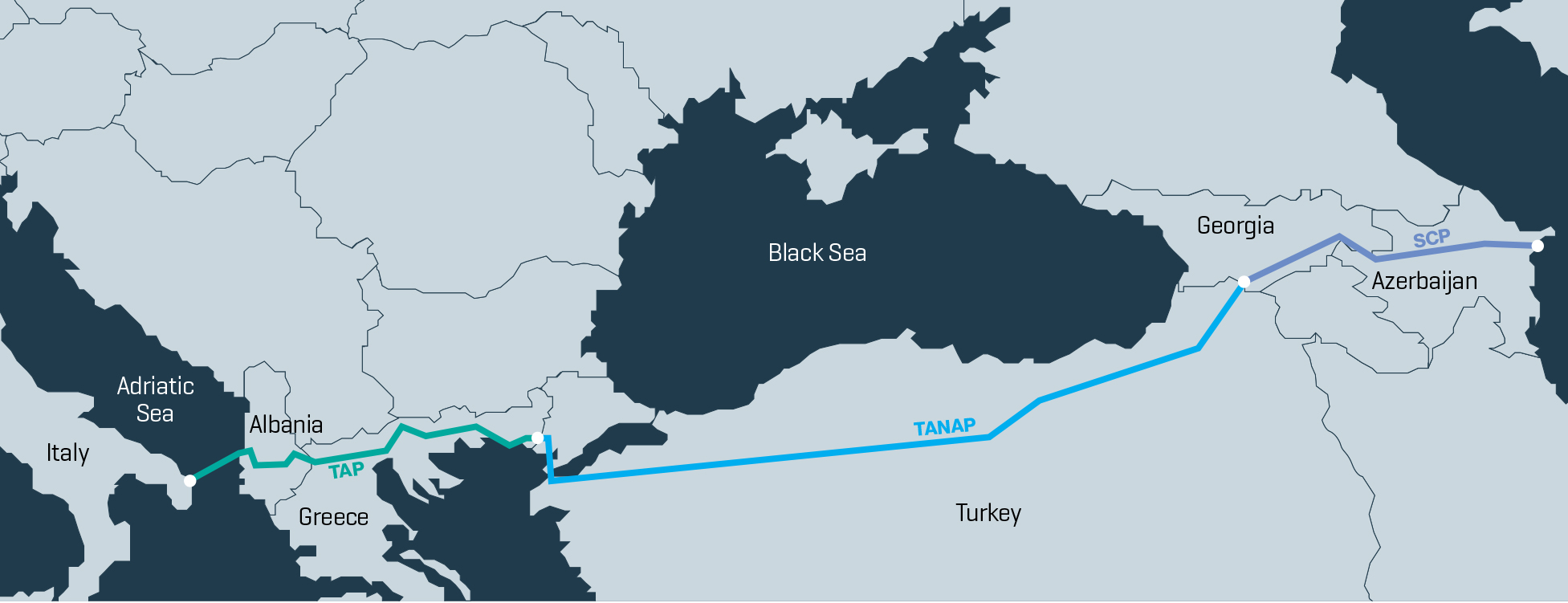
In recent years, Alberto has found himself at the frontline of a fight against a huge piece of fossil fuel infrastructure – the Euro-Caspian Mega Pipeline. This gas pipeline will extend over 3,500km, from the coastline of the Caspian Sea to the beaches of Puglia through six countries. Despite falling gas demand in Europe, this new pipeline is planned to be built at a cost of $45 billion.

“This concerns our future”

The Euro-Caspian Mega Pipeline will create a giant construction site across Europe. Trucks and excavators will rip up farmland, thousands of villages, forests, deserts and the seabed of the Adriatic. In response, the community in Puglia have organised a tenacious campaign.

We met Alberto on his farm. He told me he was worried about the impact of the pipeline on tourism, fishing and agriculture, especially the cultivation of olive trees, which is a key source of income in the region. Alberto felt he had to act: “This concerns our future. As citizens we have to get involved, nobody will do it for us.”


Photo by Laure Cops, Wouter Vanmol and Berber Verpoest.

With a small group of concerned citizens, as well as technical and legal experts, Alberto started analysing the project in detail. They highlighted omissions and demanded additional studies to address the seismic risks, as the pipeline passes through one of the most active faults in Europe.

From this small group, the campaign spread across Puglia. Mayoral candidates stood on anti-pipeline platforms, and thousands of people attended a concert against the pipeline.


Photo by Laure Cops, Wouter Vanmol and Berber Verpoest.

“I felt we had to react, so I suggested organising our own festival,” says Treble, a reggae artist who lives in Melendugno. It was an instant success: “Over hundred artists registered to play for free and about 10,000 people came to party with us in August last year.”

At the other end of the pipeline lies Baku, the capital of Azerbaijan. The city looks out onto the Caspian Sea, where the Shah Deniz ii gas fields are being drilled to feed the Euro-Caspian Mega Pipeline.

Pipelines and prisoners

Last June, I attempted to visit Azerbaijan during the inaugural European Games held in the capital Baku. I was detained and put on a plane back to London, the first of several unwelcome guests — Amnesty International and the Guardian were also barred from entering the country.

Those I travelled with to shoot Walking the Line managed to enter the country. Brand new stadiums, posters and video walls awaited them on their way from the airport to the hotel. Billions of dollars of oil money have been spent building new roads and glass skyscrapers.

Yet my companions soon discovered another side to Azerbaijan. Just a few kilometres from the centre of Baku, the six lane boulevards turn to dirt roads; the shiny 4×4 jeeps are replaced by Ladas and donkeys.

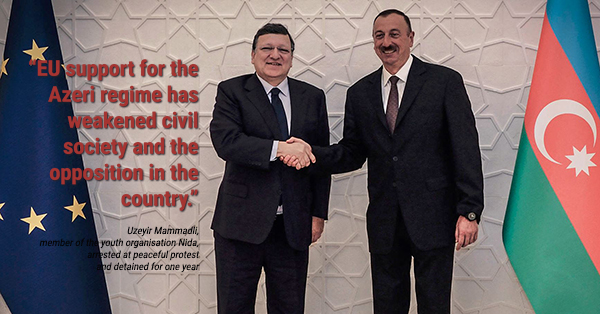
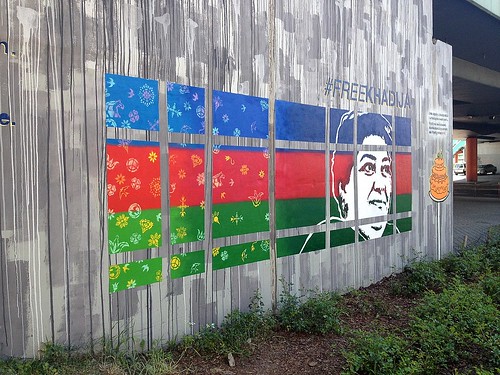
There are almost 87 political prisoners in Azerbaijan. They are journalists, bloggers, peace activists, human rights defenders and lawyers who have been arrested for speaking out against the corrupt Aliyev regime.

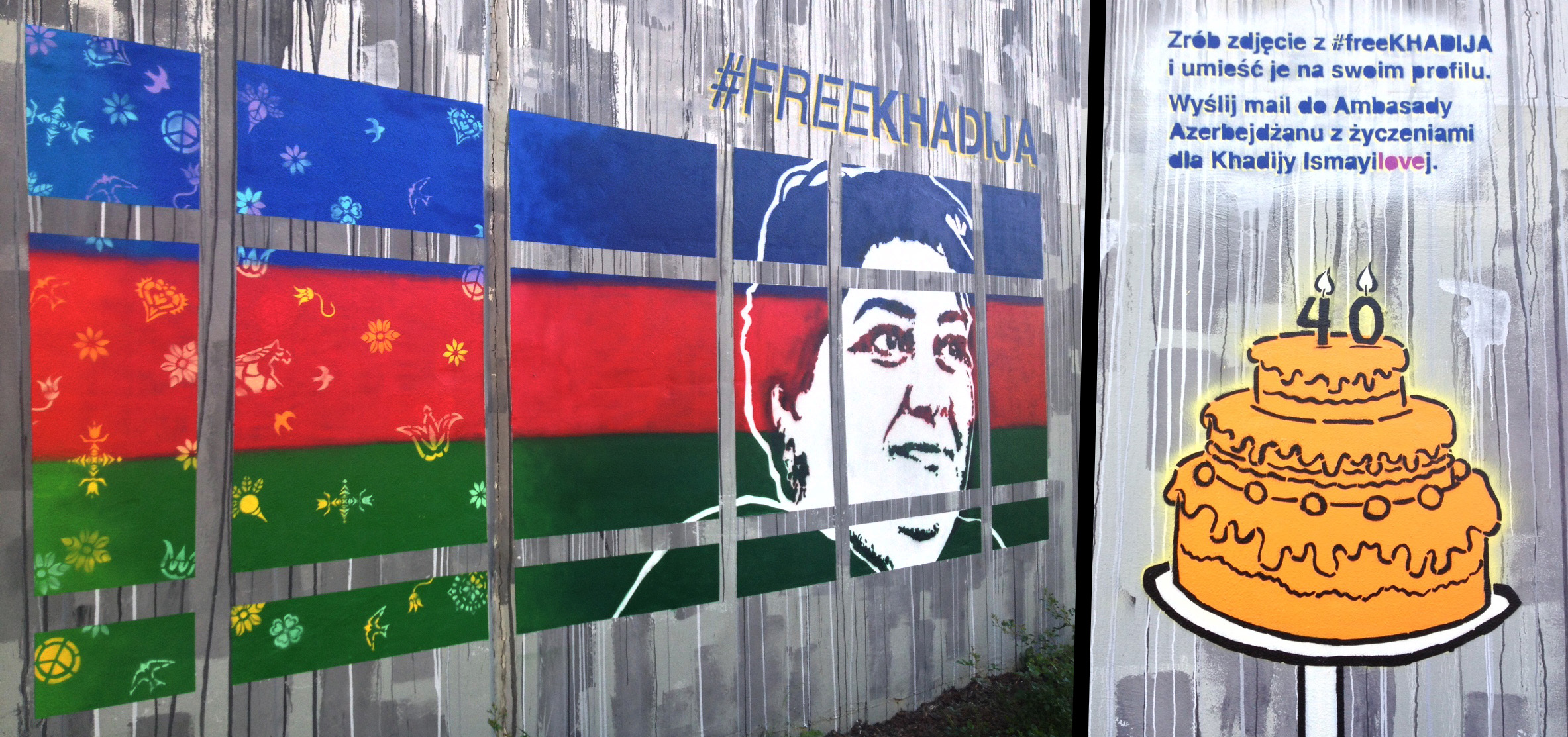
We managed to speak to the families of those we know in jail. People like Elmira Ismayilova whose daughter, the investigative journalist Khadija Ismayilova, has been jailed for seven and a half years on false charges.

Ismayilova’s real crime was her journalism, which exposed the corruption reaching all the way to Azerbaijan’s president and his family. Elmira is proud of Khadija’s work, “I used to tell her to be careful, but never prohibited her from doing what she does. I think what she is doing is great and every citizen of this country should be doing this.”


Photo by Laure Cops, Wouter Vanmol and Berber Verpoest.

Khadija is an outspoken critic of the Aliyev regime and BP, the oil company they have worked hand in hand with since 1994. The British oil company has been the biggest foreign investor in Azerbaijan for over two decades after it became the operator of the largest oil field in the country. Today it is leading the consortium of oil companies involved in the Euro-Caspian Mega Pipeline.

Despite the deteriorating human rights situation, cooperation between BP and the Aliyev family has intensified over the years. The Aliyevs depend upon BP to maintain the flow of oil revenues to the state and the personal finances of the “first family”.

Khadija was clear about BP’s responsibility for human rights in Azerbaijan: “The Aliyev regime is good for BP. It allows their operations and they can sort out issues with the regime. Political influence is part of the bargain. BP is blamed for bringing Aliyev senior to power but it’s not just historic — the UK government is silent about problems with democracy in Azerbaijan. BP’s interests are dictating the agenda.”

BP are involved in every stage of the Euro-Caspian Mega Pipeline, they are determined that the gas they are extracting should reach a European market. In the process, they are ensuring the continuation of their successful relationship with the Aliyevs, and making the dynasty richer and more powerful.

Yet it is a rocky time for the BP-Aliyev alliance. The low oil price has seen both suffering economic misfortune — with half of Azerbaijan’s reserves being spent in one year, forcing the government into discussions with IMF to secure a $4 billion emergency loan package. BP hasn’t fared much better – reporting its biggest ever annual losses last month.

Such economic instability would throw an ambitious and expensive project like the Euro-Caspian Mega Pipeline into doubt if European public money wasn’t being used to underwrite the pipeline.

The western portion of the route, known as the Trans-Adriatic Pipeline, is slated to receive €2 billion from the European Investment Bank (EIB), the largest loan by the EU bank in its 57-year history. Another loan of €1 billion for the eastern part of the corridor through Turkey, the Trans-Anatolian Pipeline (TANAP), is soon to be announced by the EIB.


Locked in

Gas is being sold to us as a clean fuel. But the reality is different: this pipeline will lock us into fossil fuels for the next fifty years and ensure our politicians continue working with repressive regimes like Azerbaijan.

The final place we visited for Walking the Line was a London estate. We went to Bannister house in Homerton where we met a community who, like the people of Puglia, want to take back control of their energy system. This community has put solar panels on top of every roof on the estate and set up a co-op. They collectively own the energy they produce, selling on what they don’t use and putting the money back into their community.


Photo by Laure Cops, Wouter Vanmol and Berber Verpoest.

The recent growth in community energy shows that we don’t need yet more import pipelines. Groups like Switched on London are calling for publicly controlled, renewable energy companies that can offer community energy co-ops secure contracts and sell electricity onto people at an affordable rate.

Whether it’s in Italy, Azerbaijan or the UK, people are fighting against the devastating impacts of import pipelines and wrestling back control over their energy system. By following the pipeline, we have been able to connect these stories — just as the extraction, pumping and burning of fossil fuels links us to places and people we know almost nothing of.

The European Investment Bank will be meeting this Thursday 10 March. You can tell the directors you don’t want our money spent on the Euro-Caspian Mega Pipeline.

Walking the Line is produced by Global Motion, Counter Balance, Platform and Re:common.

[Campaign update] Key costs still missing in Montenegro coal power plant debate


It was never likely that this week’s roundtable in Podgorica on the planned 254 MW Pljevlja II lignite power plant would end in agreement between NGOs and the representatives of Montenegrin electricity company Elektroprivreda Crna Gora (EPCG). Even the main two shareholders in EPCG – the Montenegrin government and Italy’s A2A – don’t agree about the project, with the Montenegrin government pushing it like their lives depended on it and A2A trying to stay as far away from it as possible.

The high profile roundtable, organised by MANS and Green Home, came hot on the heels of a revealing report by MANS [pdf] that shows just how shaky the foundations of this controversial project are.

But what surprised me most was that after almost four hours of debate, and at least 3-4 years of project preparation, the representatives of Elektroprivreda Crne Gore (EPCG) and the Pljevlja coal mine did not come up with answers to the crucial questions of how much the electricity generation cost from the new unit will be and what the sales price projections are.

These questions are particularly salient given that even the existing unit at Pljevlja is currently turned off, partly due to low electricity prices on the market. Whatever a new plant might gain from greater efficiency would be more than offset by higher costs due to loan repayments, so how it would be more economic to run is far from clear.

What EPCG did disclose is that together with the costs of financing, the costs of Pljevlja II could go up to around EUR 450 million, rather than the EUR 338-366 million figure solely for construction that is usually used in public.

Apparently a new feasibility study is due to be carried out soon, after a consultant has been selected, to update the project on the basis of the preferred bid by the Czech Republic’s Skoda Praha. Let’s hope the public will be able to see it once it is done.

Tens of questions remain unanswered about costs related to the new unit and plans for state aid, and there are serious unexplained discrepancies between different official sources for costs of opening new mines, rehabilitating old ones, the cost of coal, and the cost and location of a new ash dump. With the Prime Minister’s brother being the third largest single shareholder in the Pljevlja coal mine, the risk of corruption and data manipulation in this project is extremely high.

Sostanj 6 in Slovenia has shown us where the route of secrecy, shaky data and corruption can lead, so it’s encouraging that Pljevlja II is attracting a high level of public scrutiny before the contracts are signed. It might be the only way to prevent Montenegro from making an expensive mistake.

« Previous Page
Next Page »

Footer

CEE Bankwatch Network gratefully acknowledges EU funding support.

The content of this website is the sole responsibility of CEE Bankwatch Network and can under no circumstances be regarded as reflecting the position of the European Union.

Unless otherwise noted, the content on this website is licensed under a Creative Commons BY-SA 4.0 License

Your personal data collected on the website is governed by the present Privacy Policy.

Get in touch with us

  • Bluesky
  • Email
  • Facebook
  • Instagram
  • LinkedIn
  • RSS
  • YouTube