• Skip to primary navigation
  • Skip to main content
  • Skip to footer

Bankwatch

  • About us
    • Our vision
    • Who we are
    • 30 years of Bankwatch
    • Donors & finances
    • Get involved
  • What we do
    • Campaign areas
      • Beyond fossil fuels
      • Rights, democracy and development
      • Finance and biodiversity
      • Funding the energy transformation
      • Cities for People
    • Institutions we monitor
      • European Bank for Reconstruction and Development
      • European Investment Bank
      • Asian Infrastructure Investment Bank
      • Asian Development Bank (ADB)
      • EU funds
    • Our projects
    • Success stories
  • Publications
  • News
    • Blog posts
    • Press releases
    • Stories
    • Podcast
    • Us in the media
    • Videos
  • Donate

Home > Archives for Blog entry

Blog entry

Who really benefits from Georgia’s Nenskra hydropower plant?

Today the Asian Development Bank started its annual meeting and one of the projects that we will be discussing with the bank’s management and Board of Directors is a loan for the 280 megawatt Nenskra hydropower plant in the Svaneti region of Georgia. The ADB is planning to provide a loan of USD 176.70 million and a Political Risk Guarantee over USD 100.00 million for Nenskra, with a total cost of the project of USD 930 million. The project is under appraisal for co-financing by the Asian Infrastructure Investment Bank, the European Investment Bank and the European Bank for Reconstruction and Development.

All of these funders are state owned institutions.

The project promoter is JSC Nenskra Hydro – which is jointly owned by K-water, a Korean government agency (80% shares) and Georgian state owned Partnership Fund (20% shares).

Both of them are state owned institution.

And yet the project falls into the ADB’s category of private sector development.

The project’s contract is confidential, therefore issues like guaranteed power purchase terms, rate of tariffs, roles in distribution, payments of taxes, obligations of each party, etc. are unknown to the public. The government claims that the company requested the confidentiality of the contract as it carries out negotiations with development banks to receive funding.

Wait a moment, a company owned by two states (through their agencies) have difficulties with disclosing information because of negotiations with publicly owned international financial institution (in most of which Georgia is a shareholder)?

But this is not all – one of the documents disclosed by ADB stated that that the Power Purchase Agreement with the JSC Nenskra Hydro uses a “Take or Pay Model” of 1.196 GWh which equals the average annual production of the project. Furthermore, the Government of Georgia will be responsible for the construction of high voltage transmission lines and related infrastructure to transmit the electricity generated by Nenskra. All of this means that the project will have preferential treatment over other electricity producers in Georgia, including the government owned Enguri dam or private companies that currently operate in Georgia.

I am sure that there is some private interest in the project, but it still needs to be dug out. So far it is clear, that it is not the interest of local people – Svans – that for centuries live in the valleys impacted by the project, and who are losing their land and livelihoods. They will have to deal will all local project impacts.

Farmers in traditional Georgian attire are doing manual work on a field.

Doing the same thing and expecting different results: Mongolia plans to curb air pollution with more coal

A new law on air pollution recently adopted by the Mongolian government is in part the result of massive demonstrations that swept the streets of Ulaanbaatar during the winter months, when pollution in the capital is at its worst. Mobilised under the umbrella movement ‘Moms and dads against smog’, the protestors signed petitions calling on the government to come with an urgent plan for tacking the overwhelming situation in the city, where emissions from the coal burned in the surrounding ger districts and three combined heat and power plants reached some of the highest levels in the world this past winter.

The new policy will soon be followed by a yearly action plan for reducing emissions, but the protestors and civil society groups working for cleaner air in the country should remain cautious. That’s because the government’s plan involves even more reliance on coal – hauled in from the massive Tavan Tolgoi mine in the south and then cleaned in as yet constructed processing plants before being burned in the ger districts that are now responsible for 60 per cent of total emissions in the capital. So the plan does not appear to tackle the underlining problem in Mongolia, which is its dependency on coal.

A new Bankwatch report presented this week in Ulaanbaatar argues that the energy plans of the Mongolian government – which have the backing of international financial institutions – are disconnected from the urgent need to improve the efficiency of an ageing energy system and at the same time address the massive potential of solar and wind energy in the country. The report shows how the 12 gigawatts of planned installed capacity by 2030 would exceed even the governments’ own projections for electricity demand. This is in part because it represents an unrealistic twelvefold increase in the current installed capacity of coal.

The report surveys a number of Mongolia’s coal power projects in the pipeline, including the 600 MW Tavan Tolgoi power plant in the South Gobi region, which would benefit mostly just three mines close to the Tavan Tolgoi deposit, including the EBRD and IFC-financed Oyu Tolgoi mine. In the capital, plans for a new combined heat and power plant supported by the Asian Development Bank and with potential involvement by the EBRD, would only add to emissions while not tackling the problem of burning coal in the ger districts, as these are not connected to the public utilities.

To better understand what is at stake with the governments’ plans for the continued use of coal, more than 40 members of civil society groups from the country gathered on 1 May at the Water Conservation Centre in Ulaanbaatar to discuss the risks of coal-based energy and the involvement of financial institutions in pushing for coal-based energy projects in the country.

Mongolia is at a crossroad, and the movement started by civil society this past winter is a sign for international financiers like the EBRD and the ADB to rethink their energy strategies for Mongolia and prioritise energy efficiency and renewable energy solutions for the the ger districts, rural areas and the people of Mongolia.

National and local levels play secondary role in Green Climate Fund, European Investment Bank project illustrates

Established as part of the UN Framework Convention on Climate Change ‘to address the needs of developing countries in overcoming the negative impact of climate change’, the Green Climate Fund (GCF) approved its first round of projects of 2017 earlier this month.  At the beginning of April, 8 new projects worth USD 755 million were approved, bringing the total number of projects under the fund to 45 and a value of USD 2.2 billion.

Typically recipient countries access the fund directly or, increasingly, via an international entity like international financial institutions. The reason for this is that the requirements for the smallest funding category are the same as for bigger projects. This bureaucratic hurdle creates competitive disadvantages for national or subnational entities that want to directly access the fund.

Civil society observers monitoring the activities of the GCF have warned about the lack of such small-scale projects. Big projects hide more risks and the potential for negative impacts by lower levels of transparency and the impossibility to track the variety of funds, contracts, projects and activities.

One recently approved project is GEEREF NeXt, administered by the European Investment Bank. GEEREF NeXt represents exactly the type of project that the GCF should not focus on.  It is a fund that will further distribute USD 765 million to other national funds. Instead of tackling specific climate issues, GEEREF NeXt will provide investments into a variety of subprojects in various funds to implement energy efficiency and renewable energy projects. It is unclear what these specific subprojects will be and what communities GEEREF NeXt will target.

Before the April GCF board meeting, the management of GEEREF NeXt discussed its proposal with civil society representatives, with the main topics covering the transparency of subprojects, the absence of criteria for hydropower and biomass energy sources, a commitment to paying taxes and the development of a gender strategy.

Some improvements to the project resulted from the discussions. Fund managers responsible for specific subprojects are obliged to report on how it meets particular standards, and a significant redesign of a Gender Strategy, Assessment and Action plan was made. Another positive is the new “Stakeholder Engagement Framework,” which might ensure that projects will be in compliance with the needs of local communities and other stakeholders.

At the same time, outstanding issues remain, the most significant being that the GEEREF team did not include criteria for biomass energy projects about what constitutes a ‘renewable’ source. In addition, there is a potential that the categorisation of hydropower projects could lead to financing environmentally-destructive ones. Finally, more ambitious targets for achieving gender equality, such as a specific rate of supported women-led SMEs, are needed.

It is a step in the right direction that project managers involved civil society in the project’s design, in order to embrace a diversity of opinions and to avoid the negative impacts posed by potential projects and to ensure that their goals are met. Moreover, the implementation of projects by national or subnational actors has a number of advantages: it enables increased country ownership of the funding and better equality and transparency. Finances are also more effectively allocated with no transaction costs and are better targeted to local institutions and harmonised with national priorities.

For further reading

IIED (2017): Delivering real change: getting international climate finance to the local level (pdf)

Both ENDS (2016): A CSO guide for engagement and local access


Why no Trans-Adriatic Pipeline (NO TAP), here or elsewhere

This article first appeared on the Re:Common website.


It was the end of February and the scene is Baku, the capital of Azerbaijan. During an official meeting, the Italian government was severely criticised for the considerable delays in the construction of the Trans Adriatic Pipeline (TAP), part of the Southern Gas Corridor.

With his tail between his legs, the Italian Minister for Economic Development, Carlo Calenda, declared that Italy would soon move forward with the pipeline construction. Calenda’s words sounded as a clear attempt to patch things up and reassure the banks – who are still to decide whether to grant the loans required by the Consortium- as well as the Azeri government and other international partners such as the European Commission.

Rather than seize this opportunity and prevent a project which will be a black hole for Italian and European public finances, the government chose to send hundreds of police to Melendugno, in the countryside of Salento, to defend the uprooting of olive groves to make way for the pipeline. This was despite lacking all the necessary permits to carry out such works.

While the inhabitants of Melendugno and Salento physically opposed the passage of vehicles in the field the mayors wearing tricolor sashes negotiated the suspension of the works with the police and the local government representative. Even the Governor of the Puglia region – Michele Emiliano – publicly denounced in a post on Facebook the removal of the first 211 olive trees (out of the 1900 to be “moved” in total) as illegal, and his statement rapidly spread in the news.

After three days of interventions, the mayors’ negotiations succeeded and the local government representative asked the company to suspend their operations. He also called the Italian central government to further verify the operations‘ compliance with the required permits, questioned by the inhabitants and the local authorities. As a consequence, the operations were temporarily stopped, but the central government’s consultation resulted in a renewed go-ahead for the company, who then resumed the removal of the trees.

But the protestors have not given up: just the night before the operations were supposed to start back, they put up stone barricades to block the access to the work site, making the continuation of the uprooting impossible. At the same time, as the situation echoed in the national and international news, more and more people expressed their solidarity with the protest, which now sees a solid front of around 500 supporters overseeing the construction site.

The works have not advanced since then, and are now officially interrupted again, due to a suspension of the permit by the Italian Ministry of Environment. The renewed temporary suspension was decided by court, following an appeal by the Puglia regional government which will be discussed in a hearing on April 19.

We stand in support of the No TAP Committee and the population of Melendugno and Salento against this unnecessary project. We believe it will do great, permanent damage to the areas where these communities live, as well as to the Italian and European citizens who are called on to fund this project.

Already in 2014, several months prior to the approval of the environmental impact assessment of the pipeline, we made clear the reasons of our opposition to the TAP project, which you can read here. Today, three years from 2014, and after more than four years of public campaigning and initiatives to expose the many negative aspects of this project and the deep gaps that are apparent in its economic and financial sustainability, we believe it is right to reiterate our NO to this mega project.

To those ten reasons stated previously as to why we stand against it, we can today add that:

TAP is not strategic

Oxford University has questioned the extent of the gas reserves in Azerbaijan. One of the members of its energy research team was interviewed during the Italian investigative tv program “Report” (RAI3 channel), which recently shed light on some of the dodgy deals concealed behind the Southern Gas Corridor project. The Oxford study can be consulted here.

Furthermore, the European Commission has justified the “strategic importance” of the pipeline by claiming the Southern Gas Corridor is an”alternative to Russian gas”. But in the past few years, relations between some governments which are part of the Southern Gas Corridor and Russia have changed.

Turkey has already signed an agreement with Gazprom to build the Turkish Stream. This will carry Russian gas to then be sold in Istanbul and to the European market including through the Trans-Anatolian Natural Gas Pipeline (TANAP) which is part of the Southern Gas Corridor. Greece has also signed an agreement with Gazprom for another pipeline that would connect to the TAP. The head of TAP in Italy, Michele Elia, has confirmed reports that his company is interested in selling gas, without being concerned about the actual source. This is not in the interests ofthe private citizen who actually pays for the construction of the pipeline.

TAP supports authoritarian governments

Azerbaijan and Turkey are two countries that in recent years have seen an escalation of repression by the State towards journalists, activists, intellectuals, and lawyers working in the defence of human rights. These countries are experiencing a profound crisis in their democratic structure, where hundreds if not thousands of political opponents have been arrested and where the ruling elites change the laws in their favour to weather the bad times, in violation of democratic principles.

Martial law is still in place in Turkey, while in Azerbaijan the latest reforms promoted by President Ilham Aliyev will allow him to be re-elected potentially forever, his son to become President despite his young age, while his wife has recently been appointed as vice President.

In this scenario, how can we believe that there may be independent oversight as to the construction of the project, or how the lands are acquired? How will European public funds for the project be managed, knowing that we are speaking here of billions of dollars?

It is undemocratic

From 2014 we have studied and compared our findings with activists, experts, and journalists from the different countries involved. We have visited over two-thirds of all the 870 kilometers of pipelines, and we have talked to the people whose lives will be impacted by the work – not only in Italy, but also in Greece and Albania.

We found that beyond the propaganda about “strategic importance” and how various executives point to define the pipeline as “a project of national priority” as well as of European interest, the reality is that families along the route have been imposed upon by this “pipe”, with little consideration of the direct harm it will cause them as a consequence.

Entire communities will see their economy distorted by not only the construction but also the future cohabitation with industrial personnel and equipment, which will be highly invasive. The project also potentially bears high industrial risks (including explosions) according to the standards established by the Seveso legislation, an EU law to guarantee safety for sites containing large quantities of dangerous substances, Many claim that in the TAP’s case this law has been bypassed, and even today this remains a controversial point. Different administrative appeals on the issue have been presented in Italy and Greece.

It is opaque and non-transparent

We do not feel at all reassured as to the real interests behind this project of 45 billion euros. We have made several requests for access to documents to the public institutions involved, organised public meetings at which the European Commission did not want to participate, asked specific questions to the TAP Consortium from which we haven’t had replies, sent letters to the European Investment Bank from which emerged the lack of due diligence around the project. For example, has anyone actually seen the TAP Consortium 2016 budget for the project? Has anyone read the agreement signed by the Italian Government with the TAP Consortium?Perhaps the Minister Calenda should seek to make this agreement public, so that today everyone could make their own assessment of the situation.

There is no gas – we do not need the pipeline

The European Commission has been knee deep in negotiations with Turkmenistan in persuading the government to sell its gas to European markets through the Southern corridor.

The talks, which began in 2011, foundered and Turkmenistan has begun construction of another pipeline that faces East, the TAPI. Without the gas from Turkmenistan, what exactly is the Southern Corridor? Selling Russian gas maybe? But do we still need this gas in Europe, following the collapse of gas consumption since 2009? We do not think so, and we believe that true independence from Russia will not be built on fossil fuels, including gas. The construction of the European gas market has nothing to do with our energy security and the future we want to build.

We believe that the European Commission should thank the resistance to TAP in Italy and the invaluable work of the experts and of persons and organisations that in recent years have spent time in achieving clarity on this project, which has consequently been found to be useless as well as harmful.

It makes no sense to build the TAP, not in Melendugno, nor anywhere else.

Balkans are gambling on coal as EU utilities opt out

This article first appeared on Climate Home.


EU utilities lobby group Eurelectric last week released a statement that its members would not build new coal plants after 2020.

This pledge simply describes the status quo in most of the EU, as the bloc transforms its energy sector. Eurelectric’s Polish and Greek members refused to sign on, cementing the marginalisation of these coal-dependent countries.

Eurelectric’s affiliated members in the Western Balkans – Elektroprivreda Srbije (EPS) and Elektroprivreda Bosne i Hercegovine (EP BIH) – have stayed quiet. No wonder –  they are in the awkward position of planning new coal plants even as their peers in the European electricity industry publicly acknowledge that there is no place for coal in the future.

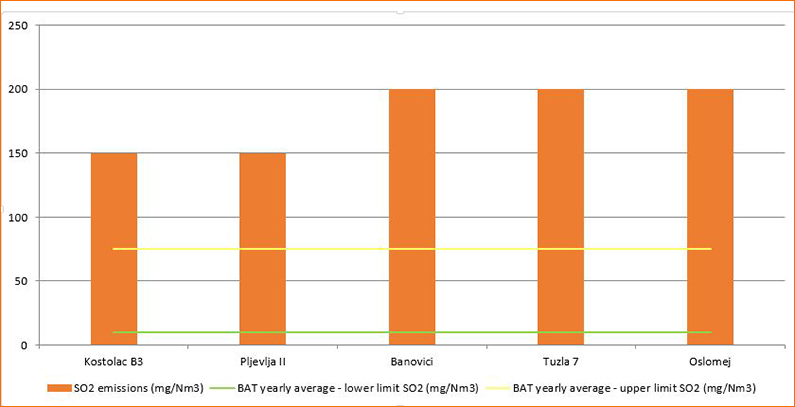
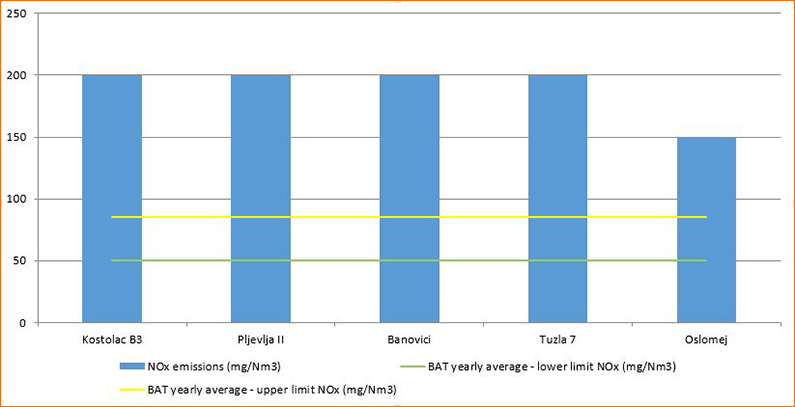
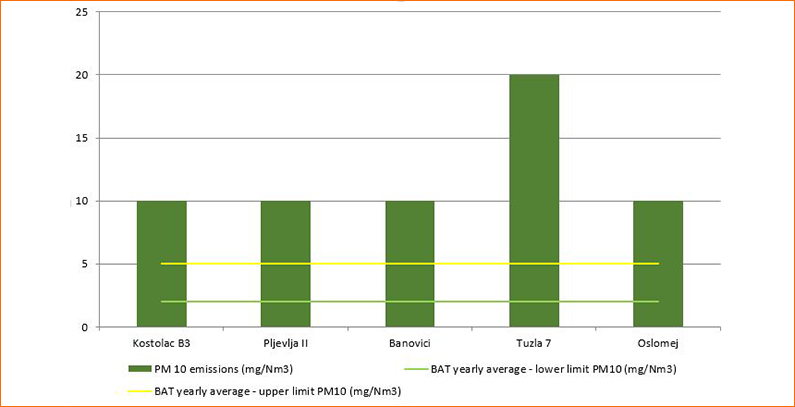
EPS plans several coal plants in the medium term and is concentrating on a lignite-fired 350MW unit B3 at the Kostolac power plant in Serbia. The project is supposed to be built by China’s CMEC and financed by the China Exim Bank but has been delayed for several years. The approval for its environmental assessment has already expired once and is currently being renewed.

Among other weaknesses, the project’s feasibility assessment does not include the costs of participating in the EU emissions trading scheme once Serbia joins the EU, and the plant is not designed to meet the new Best Available Techniques standards that are soon to be adopted at EU level, rendering it out-of-date before it is even built.

EP BIH is even more ambitious, trying to build a 450MW seventh unit at the Tuzla power plant in the eastern part of the country, as well as a less advanced 300MW eighth unit at Kakanj. Tuzla 7 is planned to be built by China’s Dongfang and financed by China Exim Bank, although the financing contract has not been signed yet.

The economics of both plants is shrouded in mystery, especially as another 350MW plant is planned by another state-owned firm just 30 kilometres from Tuzla at Banovići. Even the Director of EP BIH, Bajazit Jašarević, has admitted that both the Tuzla 7 and Banovići plants are currently unfeasible. EP BIH is going ahead nonetheless, in the hope that conditions on the electricity market will change in the future.

Eurelectric’s assessment is clearly that this is not going to happen. Its statement falls short of a commitment to closing existing plants, but overall, it signals a recognition that coal is not compatible with fighting climate change, and that it is not coming back.

The Western Balkan countries, under the Energy Community Treaty, are already having to gradually apply EU energy and environmental legislation, with the goal of creating a level playing field in a united electricity market. This means that they have to increasingly apply the same technological standards and that they are exposed to more and more competition from EU countries. Why, then, do Balkan utilities think they can succeed in making coal pay off, when EU companies have failed?

Making the coal phase out fair for workers – unions, companies and environmentalists discuss just transition in Romania

When the Paris Agreement was signed in 2015, a sense of doom must have pervaded across Europe’s miners, from the west of Spain to eastern Poland. It must have felt like another nail in the coffin, perhaps the last one, for an industry which has been aching in recent decades.

Coal mining regions, once pictured as the backbone of the economy, ensuring that nations don’t suffer from the winter’s cold or the summer’s heat, now feel abandoned. As Europe pledges to spend billions to undo the harm done in a century of unsustainable development, the communities which unearthed the fuel for this growth are left wondering what will happen to them.

On the other side are the environmentalists, fighting against a seemingly distant and invisible threat, climate change, by trying to make the giants of the fossil fuel industry reduce pollution and clean up the mess they left behind. For too long, these organisations were perceived as the enemies in the regions that depend on said giants. The companies were threatening employees with redundancy, claiming that the pressure of NGOs results in tighter regulations that make production too expensive. (The companies did not admit their own mistake to pretend the world wasn’t changing.)

The struggle for just transition changes these premises. Just transition is a development model that is based on locally designed public policies that aim at creating the context for fair income and a decent life for all workers and communities affected by pollution reduction measures. Working on just transition brings all actors to the same side of the table. Unions, NGOs and the industry can work together to find what is best for their regions and communities.

This is not environmental feel-good spin, but a reality that is beginning to unfold right now in Targu Jiu in the Romanian mining region of Gorj County.

Today all these stakeholders sit down at the same table to discuss a just transition for the County that is home to 10 lignite mines and two coal-fired power plants. Despite very different perspectives for the future, a common goal became already clear in the one-to-one meetings I’ve had with the different groups. Everyone shared the desire to create solutions that ensure that the community will no longer feel abandoned in Romania’s plans for growth.

The why and the how

A just transition must begin now, regardless of the future of coal. There are, of course, several factors which make things more difficult for the fuel: the emission trading scheme increases expenses, as do obligatory investments for pollution reduction, renewables became cheaper, more and more states are taking measures for decarbonisation, many units are old and uncompetitive.

Even if one is to ignore all these factors and believe that there will still be a market for coal in ten or twenty years, the alternatives created by a just transition will still be beneficial. First, because income opportunities other than working in the mines are scarce in these monotowns and other businesses are barely able to survive. Second, many of these regions have a potential for something else, but only one industry grew because it historically provided enough employment.

So what can be done? To start, the solution must come from the ground level, as numerous country strategies, devised by desk officers in the capitals, have come and gone throughout the years without much impact. But if a community believes in a project and everybody is involved, the chances for success grow exponentially.

The relevant local actors – unions, political parties, administration, businesses, informal leaders – then need to know their region’s potential development paths and the resources to realise the most promising one.

Only a few financing tools for just transition exist, even in the EU, but the calls for more are being heard – for example, in the reform of the EU’s Emission Trading Scheme. Once a solution and the funds for it are identified, long term political support becomes necessary to create the context for growth – be it public policy, fiscal benefits or infrastructure.

Thus a just transition of the coal regions, acceptable and beneficial to all, becomes possible. It is now up to the regions to demand it, and up to the politicians to support it. Action in this direction will be beneficial to the affected communities and the downsizing industry, but also to the security of energy systems, as change will occur gradually, in a context agreed and anticipated by all actors.

« Previous Page
Next Page »

Footer

CEE Bankwatch Network gratefully acknowledges EU funding support.

The content of this website is the sole responsibility of CEE Bankwatch Network and can under no circumstances be regarded as reflecting the position of the European Union.

Unless otherwise noted, the content on this website is licensed under a Creative Commons BY-SA 4.0 License

Your personal data collected on the website is governed by the present Privacy Policy.

Get in touch with us

  • Bluesky
  • Email
  • Facebook
  • Instagram
  • LinkedIn
  • RSS
  • YouTube