Rovinari unit 7, Romania
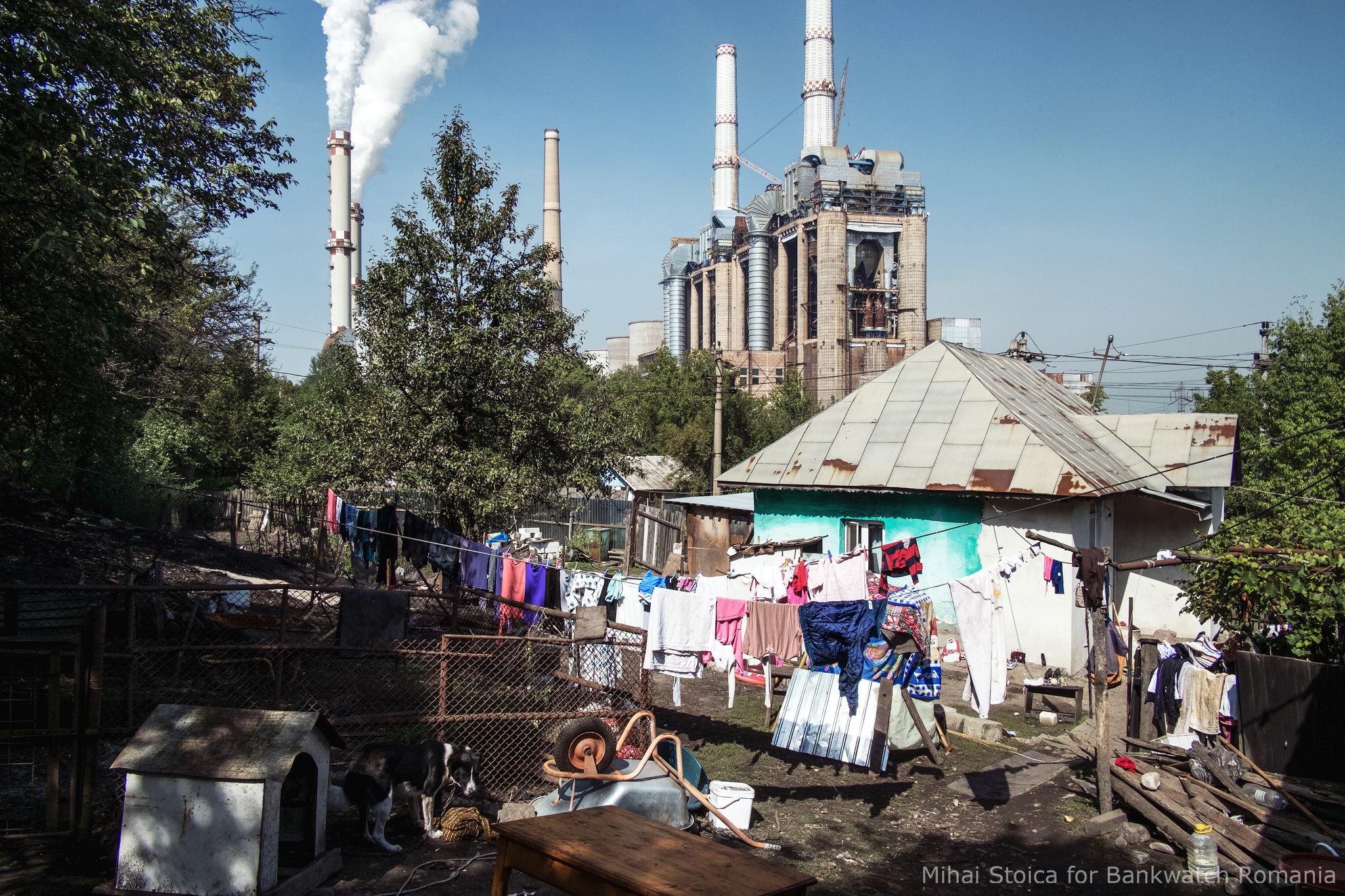
CANCELLED: The Romanian Government has been negotiating for several years with the Chinese Government to build a new 600 MW unit at the lignite power plant in Rovinari, Gorj County. The new unit would be built on the site of Units 1 and 2, currently decommissioned. A new up and running plant would pollute the whole region for at least 40 more years, a coal plant’s average lifespan.

Stay informed
We closely follow international public finance and bring critical updates from the ground.
Background
In December 2012 Oltenia Energy Complex (state owned company) signed a memorandum of understanding with China Huadian Engineering Co. Ltd for setting up a project company and the construction of a 500 MW lignite-fired unit at Rovinari. The initial information was that the new unit would be built at an estimated cost of one billion euros. Since then, more memorandums of understanding have been signed between the Romanian and the Chinese company or the respective Governments, laying down the steps to create a Romanian-Chinese joint-venture, which would implement the project. The most recent one dates to September 2015, when it was reported that the unit would have an installed capacity of 600 MW and would cost EUR 847 million. The project team has met since them, the latest visit of a Chinese delegation to Rovinari taking place in August 2017.
In January 2013, the general manager of the Oltenia Energy Complex said the new unit will export the electricity to Austria and Turkey. China Huadian conducted a pre-feasibility study in 2014 for the construction of this unit at Rovinari, indicating the need to dismantle some of the existing infrastructure, something that would increase the costs of the project and which the representatives CE Oltenia disagreed with at the time. In addition, China Huadian Engineering Co. requested customs exemptions for equipment imported from China, demanding at the same time a long term power purchase agreement or a guaranteed price for coal, which, under European legislation, may be considered illegal state aid. China Huadian would ensure the full financing of the investment, being the main shareholder of the joint venture IPP (Independent Power Producer) that would be created and CE Oltenia would have a share of under 9%.
If the project went ahead, the new unit would be located next to the town of Rovinari, increasing existing air pollution levels from the other 4 units. The lignite would be supplied from the nearby open-pit mines – Tismana I and II, Rosia, Pinoasa, all owned by the same Oltenia Energy Complex – which would require expansion of production capacity. Extending these mines would mean clearing huge land areas, in most cases accompanied by massive deforestation.
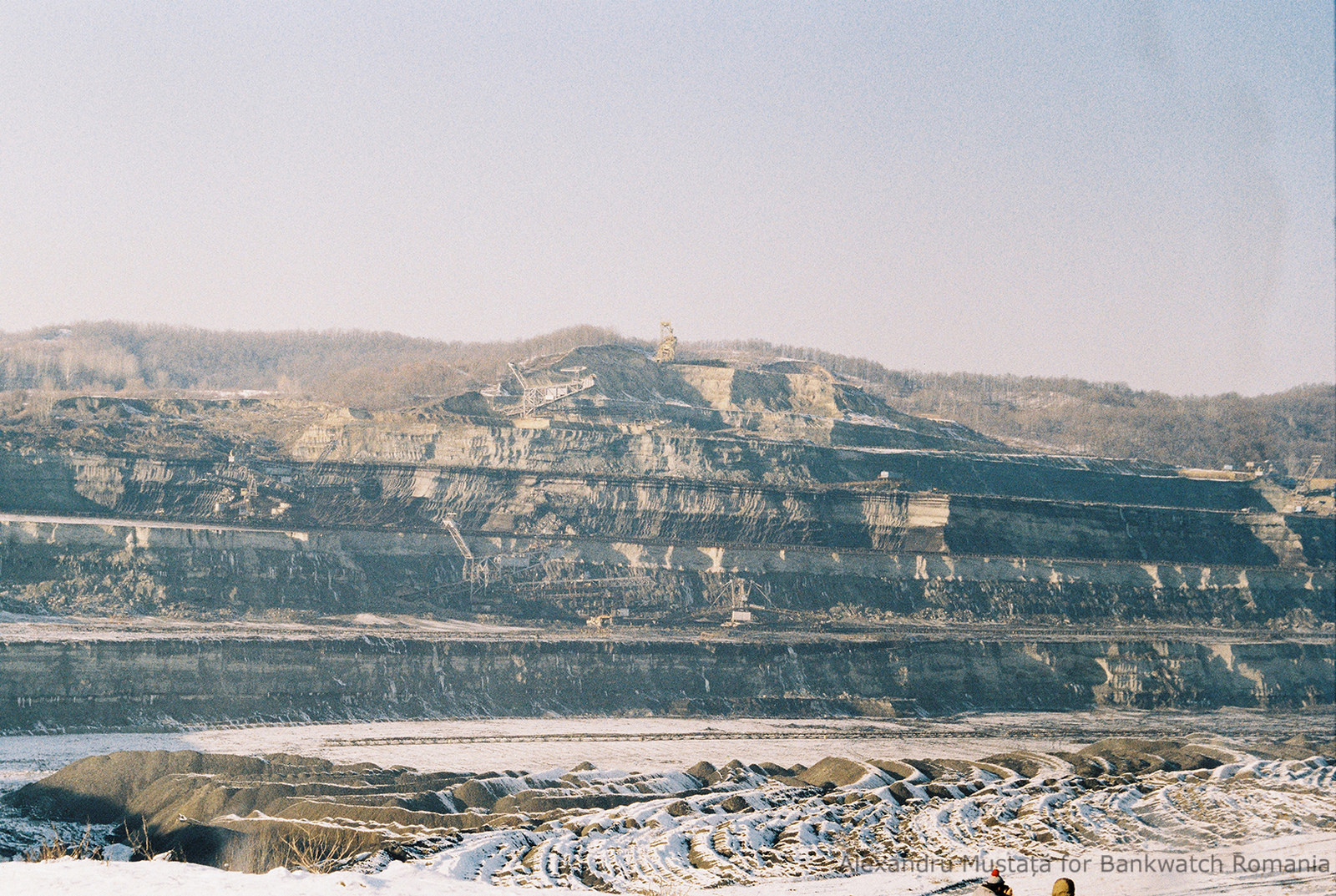
Since 2012, Bankwatch Romania has filed a series of complaints in court, requesting the annulment of illegally issued deforestation permits and mine expansion permits which did not assess impacts on the environment. Almost all the actions have been successful in court. After an infringement procedure was initiated by the European Commission, all expansions were reassessed. However, the new permits fail to evaluate the cumulative impact of the mines, and are therefore again the subject of Bankwatch Romania court action, one of them being currently suspended. To date (May 2018) no environmental impact assessment procedure has been launched.
In short:
The existing power plant:
- Part of Oltenia Energy Complex
- 4 units installed every 330 MW each
- Three functional units: 3, 4 and 6; unit 5 undergoing modernisation
- Location: southwestern Romania, Gorj county
- Year of commissioning: 1972
- Fuel used: lignite
- Environmental integrated permit expired on 31.12.2017
New power plant
- China Huadian + CEOltenia
- 1 unit of 600 MW
- Fuel: lignite (6 million tonnes per year)
- Life expectancy: 40 years
- Significant social and environmental impacts
Latest news
In contrast to the EU, Western Balkans’ coal investments still heavily outweigh wind – but for how long?
Blog entry | 27 May, 2016Last year in the EU, 12.8 GW of wind power capacity was installed – more than any other electricity generation source. This means that wind can now generate 11.4% of the EU electricity consumption in a normal wind year, according to Wind Europe. At the same time Belgium and Scotland have shut down their last coal plants, signalling the golden days of coal are far behind them.
Read moreWestern Balkan countries invest more than twice as much in coal as in wind power: new Bankwatch analysis
Press release | 26 May, 2016Western Balkan countries are planning investments in wind power, but these are being heavily outweighed by their investments in coal plants, according to a CEE Bankwatch Network analysis launched today. The region’s governments are actively planning 2800 MW of new coal plants but allowing only around 1166 MW of wind power plants to be built.
Read moreBosnia and Herzegovina signs deal for Tuzla 7 coal plant construction – but its economics are shrouded in mystery
Blog entry | 4 May, 2016In spite of an updated construction contract for a new unit at the Tuzla coal-fired power plant, the project’s economic feasibility remains a puzzle with missing pieces.
Read moreRelated publications
Comply or Close: Eight years of deadly legal breaches by Western Balkan coal plants
Report | 23 June, 2026 | Download PDFThis report exposes the systematic, deadly breaches of air pollution limits by coal-fired power plants in the Western Balkans – eight years after new pollution standards entered force.
Electricity market integration needs environmental compliance: Joint civil society position paper on CBAM and the Western Balkans electricity sector
Report | 19 March, 2026 | Download PDFThe inclusion of electricity in the EU’s Carbon Border Adjustment Mechanism (CBAM) has raised questions about CBAM’s impacts on EU-Western Balkans market integration.
The weakest link: Towards a transmission grid that supports decarbonisation in the Western Balkans
Briefing | 26 February, 2026 | Download PDFFor the Western Balkan countries to speed up their energy transformation, it is crucial to improve their transmission grids.

