Vienna’s district heating transition
Vienna is one of Europe’s leaders in district heating decarbonisation. Its district heating network, run by the publicly owned utility Wien Energie, covers 35 to 40% of the city’s heat market. In a city of nearly two million people, that makes it one of the biggest district heating systems in Europe, with more than 1,300 kilometres of pipes. However, the system was built over 50 years ago, when coal and gas were the standard. Today, the city is working to decarbonise it through thorough planning and long-term investment in renewable heat sources.
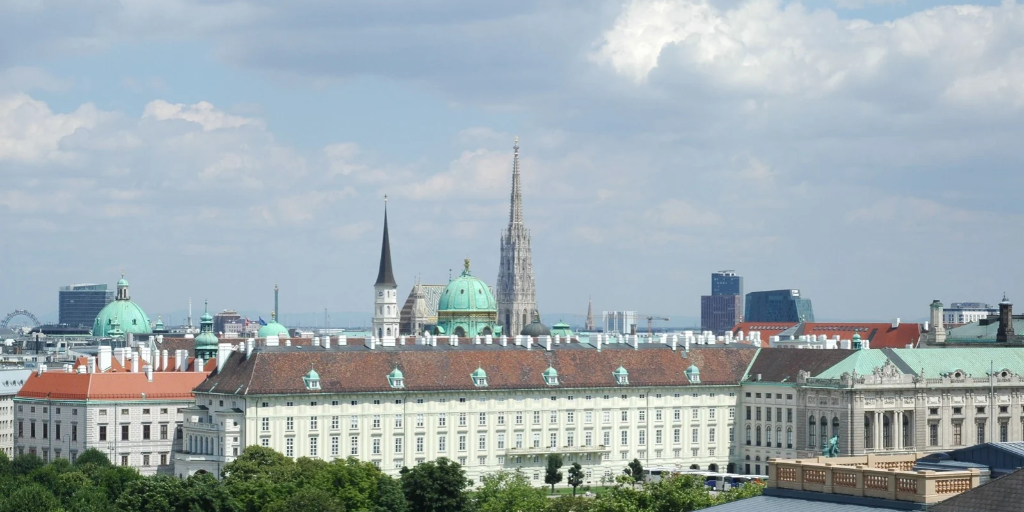
Panoramic view of Vienna's skyline, featuring iconic landmarks and historic architecture. (photo: Alfred Franz/Pexels)
Stay informed
We closely follow international public finance and bring critical updates from the ground.
Key facts
District heating operator: Wien Energie GMBH, part of Wien Stadtwerke- the Viennese Public Utilities Group
Size: 1200 km of pipes;
Customers: 479,000 households & 8000 businesses
Fuel mix: Gas cogeneration 53.56%, Waste heat from industry & waste incineration: 20.20%, Biomass & heat pumps: 16.43%, Heat only gas plants: 9.81%
Key issues
- Need to phase out gas, waste and unsustainable biomass from its heating mix, incorporating more renewables such as heat pumps, geothermal, and heat storage
- The EU’s Energy Efficiency Directive (EED) requires all municipalities over 45,000 to do a Heating & Cooling Plan which Wien Energie developed in 2022
- Wien Energie aims to double its district heating customers as a way to phase out standalone gas boilers
- Deep geothermal exploration is underway and should eventually add up to 60 MW of renewable heat
- An innovative long-term heat storage facility is also being piloted through the EU’s Innovation Fund with a EUR 17 million grant
Background
Heat mix today and in 2040
Today, most of Vienna’s district heating comes from fossil gas, waste incineration and biomass. In 2023, according to the City of Vienna’s energy report, gas-fired combined heat and power (CHP) and heat-only plants supplied 3,113 gigawatt hours (GWh) of district heating. Waste incineration supplied 943 GWh, biogenic fuels (mostly biomass) 874 GWh, oil 224 GWh, waste heat 98 GWh and electricity 8 GWh.
By 2040, according to Wien Energie’s DECARB21 study, 2,250 GWh should come from geothermal, 1,800 GWh from heat pumps, 1,600 GWh from gas-fired CHP and heat-only plants (which the study assumes will burn only green gases by then), 1,550 GWh from waste incineration, 200 GWh from industrial waste heat and 150 GWh from biomass.
Combustion-based district heating from fossil gas, waste incineration, or biomass all have negative externalities in terms of environmental, health, and climate impacts. To achieve a truly sustainable, renewable heating system, Vienna will ultimately need to phase out these fuels. While the plans to reduce combustion are admirable, they are only a first step towards full decarbonisation.
Planning
In 2022, the City of Vienna adopted its Climate Guide, an ambitious roadmap for becoming climate neutral by 2040. The Vienna Heating Plan 2040 sets out which climate-neutral heating systems are best suited to each part of the city as it moves away from oil and gas. Plans like this help the city meet the EU’s Energy Efficiency Directive, which requires municipalities with more than 45,000 inhabitants to prepare local heating and cooling plans1 It also is instrumental in deciding the city’s future. However, this is not the city’s first climate plan, they have already had one in place since 1999,2 a rarity at the time, which shows how important urban and climate planning has been to the city’s development.
In an interview with Bankwatch, Alexander Wallisch, a public affairs specialist at Wien Energie, said the plan was the result of many teams at the City of Vienna and Wien Energie working together, from the city’s planning department to the Wien Energie staff who build photovoltaic systems. Rather than relying on a few hired consultants or urban planners, the city draws on the know-how of its own administration and Wien Energie’s know how- a very useful approach to ensure that the plan comprehensive and useful to those who must implement it.
The city expects that the district heating connections will expand significantly, up to 7550 GWh by 2040, up from 5264 GWh in 2023. It aims to convert around half a million households and workplaces from individual gas boilers to district heating or heat pumps. One initiative supporting this shift is the city’s 100 Projects Phasing Out Gas, which helped replace 1,030 gas boilers in its first two years and won the Local Energy Action category of the 2026 European Sustainable Energy Awards.
Heat pumps, geothermal and storage
In 2023, a heat pump with a capacity of 55 megawatts (MW) that uses warm wastewater from the city’s sewage treatment plant in the Simmering district began supplying the district heating network. In January 2026, a 16 MW heat pump 4went into operation at the Spittelau waste incineration plant, capturing waste heat from flue gas cleaning5 .
Wien Energie’s first deep geothermal plant, developed with OMV in Aspern, is also under way. Tests found higher water temperatures and flow rates than anticipated, and the plant is now expected to deliver around 25 MW of baseload heat, up from the 20 MW originally planned, with commissioning scheduled for 2029. A second geothermal project of up to 60 MW is also being planned. Wien Energie and OMV aim to build up to seven deep geothermal plants with a total capacity of around 200 MW, so Aspern is a welcome first step.6 Neighbouring Hungary and Slovakia already operate geothermal district heating systems, showing that such projects can be replicated across the region.
Wien Energie is also one of the few district heating operators to have secured a grant from the EU’s highly competitive Innovation Fund. Its ScaleUp project received EUR 17.4 million to co-finance an underground heat storage facility of around 40,000 cubic metres. Acting as a seasonal battery that stores summer heat for use in winter, it will be Vienna’s first long-term heat storage facility7. According to Wallisch, the key to the application’s success was a straightforward proposal that made a strong case for the storage design being truly innovative. The facility is meant to serve as a proof of concept for long-term heat storage, not only for Vienna but for Europe.
Planning for hotter summers
As summers grow hotter, the need for cooling is becoming undeniable. Vienna is responding by developing a stand-alone urban cooling plan that prioritises structural measures to reduce cooling demand and directs cooling infrastructure to the buildings and communities that need it most. Wien Energie is also exploring low-temperature district heating networks for new buildings, which can also provide cooling. Similar systems have been built in Tartu and Tallinn in Estonia, both of which were groundbreaking for the region.
Investment and prices
Transforming a large, old heating system like Vienna’s requires significant investment. Projects such as deep geothermal drilling and seasonal underground storage, in particular, involve high upfront capital expenditure. However, Wallisch says district heating prices are much more stable because the system draws on such a diverse set of sources. He adds that district heating currently costs households about the same as gas but will become cheaper if gas prices keep rising. Predictable prices also make financial planning easier for the city and benefit industrial customers that use district heating.
A lesson for Brussels
Vienna’s experience holds a clear lesson for the wider European energy transition: local ambition must be matched by integrated planning and robust financial backing. As the EU follows up on its Electrification Action Plan, published in July 2026, and prepares a strategy for heating and cooling, it would do well to heed the Viennese model. By building up know-how and testing new technologies, Vienna could become one of the first European cities with a truly sustainable, renewables-based district heating system, leaving fossil gas combustion, waste incineration, and biomass burning in the past.
Replacing boilers and retrofitting pipes is only half the battle. True success requires treating the energy transition as a shared, democratic effort across utility sectors, while rapidly scaling up the next generation of thermal infrastructure. Vienna is proving that, with the right collective will, the path forward is clear.
Latest news
Before the money arrives, the work begins: how Kolašin in Montenegro is preparing for renewable district heating
Blog entry | 4 August, 2026Located below the Bjelasica mountain in northern Montenegro, the town of Kolašin is experiencing a rapid transformation. The expansion of the local ski resort, which attracted around 80,000 visitors during the 2025/2026 winter season, is accelerating tourism growth and new construction. As the town grows, local authorities face a critical challenge – ensuring that new heating infrastructure supports sustainable renewable solutions and avoids locking the town into fossil fuel-based systems for decades.
Read moreSerbia’s district heating utilities approaching breaking point due to gas import dependence
Blog entry | 14 July, 2026The current situation among district heating companies in Serbia provides a timely warning for Western Balkan governments still betting on new fossil gas infrastructure. In recent years, these governments have shown renewed interest in building new gas infrastructure. Many projects have been on the table for years, but new schemes are also being actively promoted by the United States.
Read moreHow a pioneering Slovak town is modernising its district heating system
Blog entry | 17 March, 2026With fossil fuel phase-outs underway across Europe, many municipalities must urgently find ways to replace their coal- or gas-based district heating systems. Several resources are available from the EU to help municipalities plan and execute their energy transitions. One town in Slovakia has used these tools to modernise its own district heating system.
Read moreRelated publications
What’s fueling the Czech automotive motor? How the EU Modernisation Fund subsidised Škoda Energo’s shift to forest biomass
Briefing | 12 November, 2026 | Download PDFThis briefing examines a troubling example of how the Modernisation Fund has been used in the Czech Republic – the EUR 89 million (CZK 2.18 billion) direct subsidy awarded to ŠKO-ENERGO s.r.o., the exclusive energy subsidiary of Škoda Auto a.s..
Waste incineration trends in the Western Balkans: A critical overview of energy and heat generation
Report | 21 April, 2026 | Download PDFThe following recommendations outline the steps required to advance the decarbonisation of district heating systems, enhance waste management practices and support the development of a truly circular economy.
Why the EBRD must end support for primary forest biomass in the Western Balkans
Issue paper | 7 May, 2025 | Download PDFThis issue paper presents case studies from Bosnia and Herzegovina that highlight how EBRD-backed large-scale biomass projects have faced significant challenges related to sustainability, affordability, and fuel supply.