
Ukraine Reconstruction Campaigner
Email:Tel.:
Anna is Bankwatch’s Ukraine Reconstruction Campaigner, working on green reconstruction and environmental safeguards in Ukraine’s recovery. Her work focuses on alternative sources of energy for communities, energy resilience, and the alignment of Ukraine’s energy policy and public investment management system with EU standards. Originally from Kyiv, she holds an MSc in Environmental Sciences and Policy from Central European University and is based in Bratislava.
More from
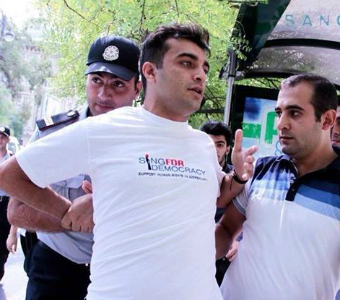
London — Human rights activists in Azerbaijan published yesterday a list of 98 people who are currently political prisoners in the country run by the authoritarian regime of Ilham Aliyev. Ironically, the list includes the names of two of its authors, prominent rights activists Rasul Jafarov and Leyla Yunus, who were arrested under false charges earlier this month while they were working on the report.
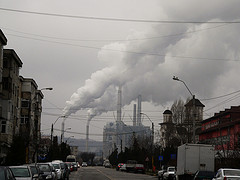
Forests sitting on lignite saved in Romania
August 14, 2014 | Read more
Bankwatch and Greenpeace won a court case* in Romania this week, which will effectively prevent 59 hectares (the equivalent of 118 football pitches) of forest from being destroyed by the expansion of one of the open-pit coal mines that supplies Rovinari, one of the largest coal plants in Romania.
Bankwatch Mail 60
August 8, 2014 | Read more
In Bankwatch Mail 60 we take a look at how the new Member States spending plans for EU funds are shaping up. Besides some signs of hope, we find still a notable lack of long-term sustainable strategies of central and eastern European countries. And while former British prime minister Tony Blair’s new advisory role for a consortium led by oil and gas giant BP is drawing criticism, the European Investment Bank has a real chance to champion EU climate policy – if it follows a few sensible suggestions.
Green spending shoots in eastern EU at risk of being crushed
August 8, 2014 | Read more
EU member states and the European Commission, after what has felt like a marathon two-year process, are now engaged in finalising agreements on the EU’s Structural and Cohesion Funds (ESIF) investment strategies and spending plans for the 2014 -2020 EU budget period. Where the 11 ‘new’ member states of central and eastern Europe (CEE) are concerned, their approach to economic and societal development via the EU funds is proving to be a double-edged sword: while their spending plans for climate action is set to increase ten-fold in comparison to the 2007-2013 period, and the ‘greenest Cohesion Policy legislation ever’ prevents them from committing major environmental crimes, a reasonable long-term investment strategy, and financing, to achieve the decarbonisation of these economies by 2050 is noticeably lacking.
The European Investment Bank, the biggest multilateral public bank in the world by lending volume and the self-styled ‘EU bank’, has recently announced that it will be reviewing its approach to climate change in the coming months. According to comments made by EIB vice-president Philippe de Fontaine Vive to civil society representatives, “The EIB wants to position itself between this October’s anticipated EU 2030 climate agreement and the Paris COP 21 meeting in December 2015”.

