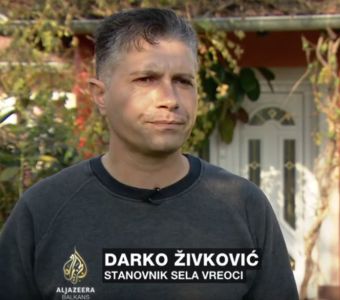
A ray of light for communities in Serbia’s coal heartland
Blog entry | 22 July, 2016For more than 50 years, the lignite mines in Serbia’s Kolubara basin have been expanding, effectively engulfing the few small communities living between them. For local residents, whose homes have quite literally been teetering on the brink of the mines, life has become unbearable. But a recent court ruling might be paving the way to a long overdue reprieve for residents who have been promised to be relocated.
Read moreNew report: institutionalised corruption in Romania’s third largest company
Press release | 12 July, 2016Counter Balance and its partner Bankwatch have launched a new report exploring corruption cases in Romania’s third largest company. The Oltenia Energy Complex (OEC) is a key player in the energy sector in Romania and today operates ten lignite mines and four power plants. Supposed recipient of a EUR 200 million loan from the European Bank for Reconstruction and Development (EBRD), OEC stands out for a long list of corruption scandals collected in the last decade.
Read more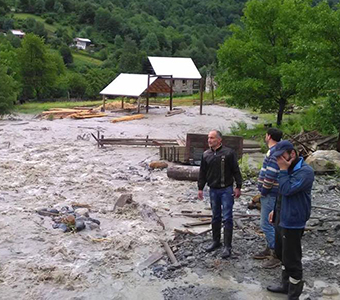
New mudflow hits Georgian village as rainy season reveals poor assessment of hydropower plans
Blog entry | 5 July, 2016As rains cause mudflows in Georgia’s mountains, locals from different regions unite to protest hydropower developments in geologically unstable areas.
Read more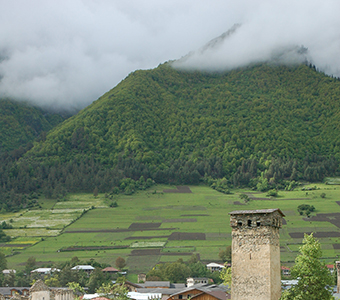
Campaign update: Georgian mountain communities consider restoring long abandoned tradition to tackle threats to their land
Blog entry | 29 June, 2016With hydropower and mining projects encroaching on their lands and livelihoods, Svan communities in Georgia’s northwest consider convening in an ancestral assembly to discuss their course of action.
Read moreNew damage to hydropower project a bleak reminder of development bank missteps in Georgia
Blog entry | 27 June, 2016On June 23 mudflows from the Devdoraki glacier again hit the Dariali gorge and washed away a road and infrastructure connected to two hydropower projects planned in the north of Georgia. The destruction included the water intake for the 19 megawatt Larsi hydropower plant and the derivation pipes for the Dariali hydropower plant.
Read moreSubmission to European Court of Justice: Request to release documents on European Commission decision on Euratom loan for Ukraine
Publication | 16 June, 2016Earlier in 2016, Bankwatch approached the European Commission’s Directorate General for Economic and Financial Affairs, and made a request for documents related to the EUR 300 million Euratom loan for Ukraine’s nuclear safety upgrade programme. Specifically, we asked for the evidence used by the Commission in making the first EUR 100 million disbursement from the loan.
Read more
Financial trouble of Ukraine’s nuclear operator calls Europe’s financial support into question
Blog entry | 6 June, 2016Energoatom is currently unable to serve loans from European institutions. Even though a European Commission study assessed the company’s credit worthiness, Ukrainian taxpayers now have to pay back part of the loans.
Read more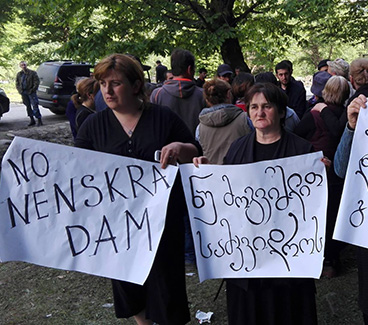
Eight arrested in protest against Georgian dam
Blog entry | 24 May, 2016Protests against large dams in Georgia’s Svaneti mountains have led to confrontations with police. Locals are losing patience over the protracted consultation process on the project.
Read more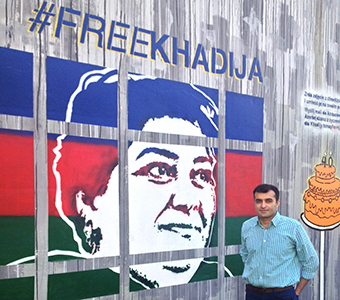
Happy birthday, Khadija!
Blog entry | 24 May, 2016A graffiti in Warsaw marks the upcoming birthday of imprisoned Azeri journalist Khadija Ismayilova.
Read more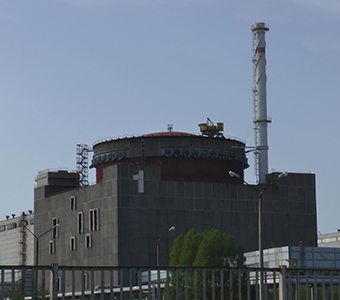
Time for Europe to stop supporting Ukraine’s risky nuclear power sector
Blog entry | 18 May, 2016Three decades after Chernobyl, nuclear power remains a mainstay of Ukrainian energy supply. Despite persistent safety problems, the Ukrainian government has approved lifetime extensions for four of its 15 nuclear units since 2010, and two more could be greenlighted later this year. What is more, Ukraine’s nuclear sector survives in part thanks to European support. The EU needs to stop supporting Kiev’s risky nuclear energy programme.
Read more
