Winstar oil and gas fields in southern Tunisia
Publication | 12 May, 2015In 2013 Winstar Tunisia, a subsidiary of Serinus Energy, obtained a USD 60 million loan from the EBRD to develop four oil and gas fields in southern Tunisia. In March 2015, Bankwatch met with local authorities, civil society representatives and labour unions in the two southern provinces and identified a number of problematic aspects, most notably the lack of transparency and communication from the side of the company with local stakeholders.
Read more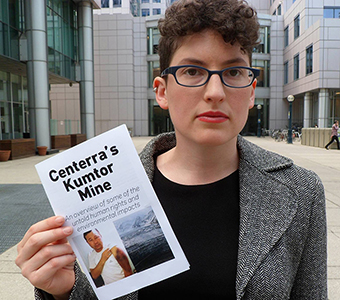
Guest post: Plight of locals at Kumtor mine brought to Centerra Gold’s general meeting in Toronto
Blog entry | 11 May, 2015Journalist and researcher Ryskeldi Satke reports on Centerra Gold’s annual general meeting where mining activists presented shareholders with information on human rights violations and the negative environmental and social impacts of the Kumtor Gold mine.
Read moreBoskov Most hydropower plant project
Publication | 6 May, 2015Following earlier publications about the Boskov Most project’s irreversible impact on nature, this paper provides an overview of the most recent developments concerning the planned HPPs in the Mavrovo national park.
Read moreHydropower in Georgia
Publication | 6 May, 2015Since 2011 the European Bank for Reconstruction and Development has provided USD 210.5 million to three greenfield hydropower projects (HPP) in Georgia – Paravani, Dariali and Shuakhevi. Instead of bringing improvements on the ground and environmental standards that are on par with best international practice, the EBRD has, by funding these projects, simply justified the wrongdoings that were from the beginning apparent: the degradation of river ecosystems, corruption and threats to people.
Read moreThursday’s decision to suspend operation of a Soviet-era nuclear unit in Ukraine should lead to its retirement
Press release | 4 May, 2015Prague, Kiev – CEE Bankwatch Network and the National Ecological Centre of Ukraine (NECU) welcome the Ukrainian State Nuclear Regulatory Inspectorate Council’s decision at its meeting last Thursday (April 30) to suspend the operation of unit 2 in the South Ukraine nuclear power plant once it exceeds its design lifetime next week. According to the Council’s decision, a lifetime extension license for this 30 year old nuclear unit could be considered in the future, but only if all required conditions are met.
Read more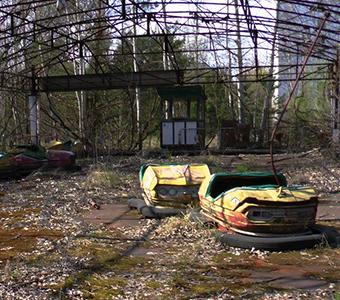
Ukraine’s Other Chernobyls
Blog entry | 30 April, 2015For safety reasons, Europe must help the Ukrainian government retire, not revive, its nuclear reactors. (This commentary originally appeared on Project Syndicate.)
Read more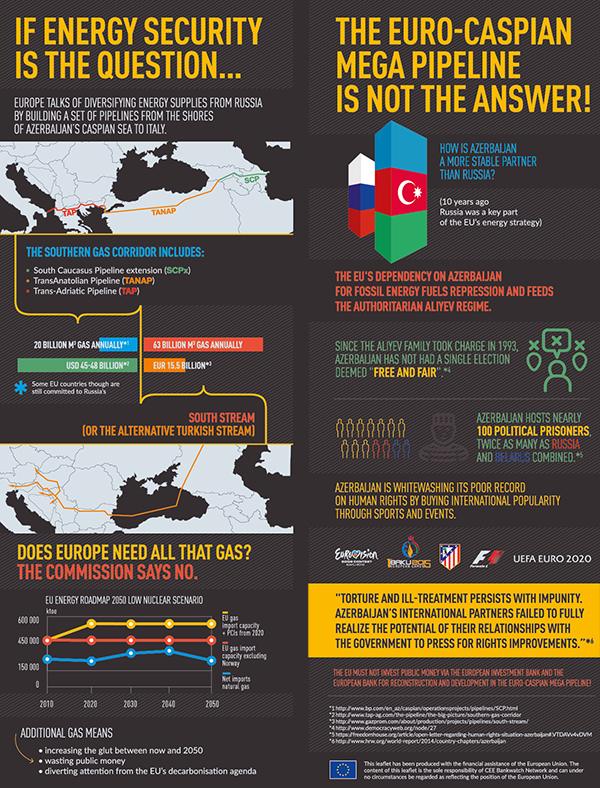
Infographic: If energy security is the question … the Euro-Caspian Mega Pipeline is not the answer
Publication | 29 April, 2015Europe talks of diversifying energy supplies from Russia by building a set of pipelines from the shores of Azerbaijan’s Caspian Sea to Italy. But the EU’s dependency on Azerbaijan for fossil energy fuels repression and feeds the authoritarian Aliyev regime. All the while, Europe does not need all that gas.
Read moreDiscovering Ukraine’s Nuclear Shadows
Blog entry | 27 April, 2015– UPDATING STORY – A Bankwatch fact-finding mission is currently in Ukraine to explore the state of nuclear energy in the country, particularly in light of intentions to extend the lifetime of 12 Soviet-era nuclear units.
Read moreJailing of prominent human rights activists in Azerbaijan casts a shadow over Europe’s planned gas deals with the Aliyev regime
Press release | 24 April, 2015London, Prague — Azerbaijan’s authoritarian regime has been intensifying its crackdown on civil society with the recent jailing of two leading human rights defenders. The Aliyev regime has gained much of its political and financial clout by siphoning off proceedings from the country’s vast oil and gas reserves. These are the same reserves that the EU is now planning to make its next big source of gas, and the same government that the EU still considers a legitimate partner.
Read moreLetter: EBRD and EURATOM support for life-time extension of Ukraine’s nuclear reactors is in breach of international law
Publication | 30 March, 2015In this letter 46 non-governmental organisations alarm European Union representatives involved in the decision-making at the EBRD and Euratom to the fact that Ukraine is pressing ahead with its plans to extend the life-time of its old nuclear reactors even though they are in breach of international law (Espoo Convention) and without proper impact assessments and despite UKraine’s obligations under the loans provided by the European Bank for Reconstruction and Development and Euratom.
Read more
