Proposed EU loan would make Tunisia’s debt problems worse, say CSOs
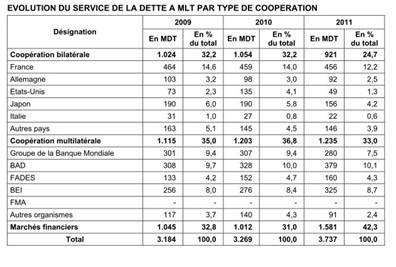
Press release | 28 March, 2014– MEPs to vote on new loan in April. – Tunisia is already paying more to its Western creditors than it receives in loans and grants, and almost all of the new loan would be used for debt repayments. Civil society groups from Tunisia and Europe are urging the European Parliament to concentrate on debt relief instead of voting through a EUR 300 million loan to Tunisia, arguing that this will only add to the country’s huge existing debt burden.
Read more
Whose Energy Community? Treaty improvements urgently needed
Publication | 20 March, 2014The EU-backed Energy Community Treaty, signed in 2005 and comprising the western Balkan countries, Ukraine and Moldova, has been widely hailed as encouraging regional co-operation. It also sets a legislative framework for the signatories (also known as the contracting parties) that should contribute, along with the EU accession process, to addressing the environmental and social impacts of the energy sector. Indeed, examples of the Energy Community’s added value are its adoption of renewable energy targets in October 2012, as well as a requirement for power plants to comply with EU emissions limits.
Read more
Slovenia’s shoddy Šoštanj 6 busts the myth of cheap lignite power
Publication | 20 March, 2014Bankwatch has been monitoring and campaigning against the ill-conceived EBRD- and EIB-financed Unit 6 at Šoštanj in Slovenia for several years now. Yet the project never ceases to amaze with its myriad flaws and scandals – and the first few months of 2014 have been no exception.
Read more
The good, the bad and the uncertain: the new energy policies of Europe’s public banks
Publication | 20 March, 2014The European NGO coalition Counter Balance has recently published a short overview of the new energy policies now in place at the European Bank for Reconstruction and Development (EBRD) and the European Investment Bank (EIB). Both banks’ new policies were finalised towards the end of 2013 following extensive consultation with stakeholders from the energy sector, civil society and academia.
Read moreBankwatch Mail 58
Publication | 20 March, 2014Issue 58 of Bankwatch Mail, published as stakeholders meet in the European Parliament to discuss the future of the ‘Energy Community’. Comprising the countries of the western Balkans, Moldova and Ukraine, the Energy Community aims primarily to extend EU internal energy policy to south east Europe and the Black Sea region. Its modus operandi and achievements are now being evaluated at high level, which – as this issue shows – is undoubtedly necessary given the stunning number of highly questionable coal and lignite fired power plants that are proceeding in various Energy Community members.
Read moreAssessment of opportunities for pre-accession assistance IPA 2 in Macedonia
Publication | 15 March, 201492 organisations prepared and submitted this joint statement on the opportunities for financing in Macedonia from the EU pre-accession instrument. The assessment was done for all sectors included in the Country Strategy Paper for Macedonia.
Read more
The EIB’s double standard for human rights in Ukraine and Egypt
Blog entry | 24 February, 2014While drawing concrete consequences from the violence that happened in Ukraine, the European Investment Bank seems to be unmindful of the ongoing human rights abuses and killings in Egypt.
Read more
EIB commits to review tax haven policy
Blog entry | 14 February, 2014During the annual meeting between civil society and the EIB’s Board of Directors, the European Investment Bank committed to review its outdated tax haven policy this year. The commitment which followed a letter from several NGOs expressing such demand, is the most concrete outcome of the meeting which took place on 3rd February in the bank’s headquarters in Luxemburg.
Read moreEIB lending for the Czech Operational Programme Transport 2007-2013
Publication | 12 February, 2014The Operational Programme Transport 2007-2013 is expected to provide EUR 5.8 billion for transport projects in the Czech Republic. Of this amount, up to EUR 1.3 billion should come from the EIB via the Structural and Cohesion Funds Transport Framework Facility for 2007-2013, with some 55 percent earmarked for investments in new motorway corridors and the rest for upgrades to existing rail corridors. An analysis of the OP project showed many cases of misuse of the public funding.
Read moreIndicators to measure the results of EIB operations must differ inside and outside EU
Publication | 10 February, 2014This briefing presents concern regarding the proposal to formalise one set of result measurement indicators for operations inside and outside of Europe. The EIB has worked now since 2012 on a framework for assessing and measuring development results for operations outside the EU called the Results Measurement Framework (REM). After its 2012 capital increase, the EIB began a revision of the Value-Added (VA) assessment of the bank’s operations within the EU and Pre-Accession countries. As a result, the Three Pillar Outcomes Assessment (3PA) was implemented in 2013.
Read more
