• Skip to primary navigation
  • Skip to main content
  • Skip to footer

Bankwatch

  • About us
    • Our vision
    • Who we are
    • 30 years of Bankwatch
    • Donors & finances
    • Get involved
  • What we do
    • Campaign areas
      • Beyond fossil fuels
      • Rights, democracy and development
      • Finance and biodiversity
      • Funding the energy transformation
      • Cities for People
    • Institutions we monitor
      • European Bank for Reconstruction and Development
      • European Investment Bank
      • Asian Infrastructure Investment Bank
      • Asian Development Bank (ADB)
      • EU funds
    • Our projects
    • Success stories
  • Publications
  • News
    • Blog posts
    • Press releases
    • Stories
    • Podcast
    • Us in the media
    • Videos
  • Donate

Home > Archives for Blog entry

Blog entry

Local initiatives champion sustainability and resilience in central and eastern Europe

Environmentally friendly and people-centred economic activities at a local level are enjoying increasing popularity as a sustainable alternative in an ever more urbanised and globalised world. Various initiatives – from local energy production to community supported agriculture – show how local, small-scale projects usually have a much smaller environmental footprint while providing high quality goods and services that are often more conducive to well-being than their industrialised and centralised substitutes.

While already fairly well-known in western Europe and the United States, the explicit reorientation towards local economies is still in its infancy in central and eastern Europe. (Just take a look at Transition Network’s Big Transition map for instance.)

On the one hand this is consistent with the generally lower civic engagement in the region. Yet on the other hand, community-based solutions should almost be a no-brainer considering the lack of social security and safety nets provided by central and eastern European countries and an infrastructure still in desperate need of modernisation.

Whichever way we want to look at it, the local economy sector has started to pick up speed in central and eastern Europe over the last few years and – if all goes well – community projects will become a force to reckon with in the region.

Zooming in on local ingenuity

Whether it is a village becoming energy self-sufficient by using local waste for heat and electricity production, a group of urban food enthusiasts working directly with farmers or a cooperative grocery store, several initiatives have sprung up in central and eastern Europe over the last five to ten years.

At least as interesting as the wide range of activities and sectors, however, are the stories of the people and communities who have been driving these local economy projects. It is their stories, their motivations and their struggles and imagination that we tried to capture in full size for our new Local Economies website.

The stories we tell on the website are a true showcase for local ingenuity. They remind us of the power of communities and illustrate how local and small-scale solutions are often exactly what best serves the needs of people.

For example, one of the better known cases is the Czech village Kněžice which switched its heating from coal to locally sourced biomass, significantly reducing local air pollution. As if that wasn’t enough, the town also installed a biogas plant that covers most of the village’s electricity needs.

Or take Rudolf Miklós, a farmer in a poor region in Hungary who combined his idea to restore the local natural landscape with a scheme that allows locals to borrow cows to produce milk products for themselves and the local market.

While the characters and motivations of the people behind these and the other local economy projects couldn’t be more diverse, they are all rooted in their local communities and they produce very real benefits, including lower prices (e.g. for food or heating), healthier products (e.g. organic vegetables), employment for locals, reduced pollution and more.

The next steps – reproducing local success

Rather than just collecting a few feel-good stories, our hope is that the website inspires others in our region to make their ideas become a reality. Each story also contains some useful tips for local activists, social entrepreneurs, municipalities or organisations.

Through the website individuals can get in touch with our local economy experts in the Czech Republic, Hungary, Latvia, Poland and Slovakia. We may be able to help with finding funding opportunities and navigating national regulations, or we can put them in touch with other initiatives.

EU funds for local economies

Our aim in Bankwatch and our member groups for the next few years is to make sure that sustainable initiatives like these have a real chance to receive EU funding.

To some extent we already succeeded by making sure communities and municipalities have more say in how EU funding is allocated in our countries. We have also seen increasing recognition of local economy development at EU, national and regional level.

Money has been set aside in the EU budget for sustainable urban development, sustainable local agriculture and low-carbon energy strategies on local level. Several central and eastern European countries have included support for local economy as an anti-crisis measure into their national Operational Programmes for EU funds.

But there is still a lot to do to make sure that sustainable community projects really get a piece of the pie. The development plans of municipalities as well as the specific calls for proposals need to recognise and be tailored to local economy projects. At the same time communities and local leaders themselves need to become active in local advocacy.

This kind of advocacy is often technical, abstract and seems far away from the real world. The Local Economies website will also help us remembering why and for whom we are doing it.

Exhibition brings coal-affected communities in Colombia and Croatia a step closer together


From 13 – 30 March a ground-breaking photo exhibition is running in Labin, Croatia, aimed at making a link between communities impacted by coal extraction in Colombia and those affected by the combustion of coal at the Plomin power plant on Croatia’s Istrian coast.

The photos and testimonies are the outcome of a visit to the world’s largest coalmine, El Cerrejon, by Luka Tomac of Zelena akcija/Friends of the Earth Croatia, which took place last December.

Local people report that the mine has led to a lack of water for drinking and crops, forced resettlement and physical violence against those who complain.


Image: The photographer Luka Tomac at the opening ceremony.[*]

According to a presentation by electricity company HEP, around 25 percent of the coal used at Plomin comes from Colombia, making it one of the largest sources of coal for the plant. Yet hardly anyone in Croatia is aware of this, and still less are they aware of the impacts on communities living near the mines.

Use of Colombian coal is likely to further increase if the planned 500 MW Plomin C unit is built.

The plans are unpopular, with 64% of Croatians opposing the construction of the plant according to a survey commissioned by Greenpeace in 2014. In addition, a one month long public consulation in Istria County that ended on March 15 resulted in 92 per cent of the over 9000 respondents stating they were against Plomin C using coal as a fuel.


Image: A visitor at the exhibition’s opening ceremony.

Local people in the Labin area feel the negative effects of pollution from the existing plant and do not see sufficient benefits to outweigh the disadvantages. The existing plant already strikes a very visual blow to the local tourist industry, and sets the town of Labin into competition with the power plant for good quality drinking water – an issue which would be worsened with the new unit.

The impacts in Colombia are without doubt on a much larger scale and more dramatic, but at both ends of the coal chain they are linked by failure to take into account the needs and opinions of local people and by steamrolling ahead in the name of ‘development’.


Image: Portraits of people in Colombia affected by the coal mine El Cerrejon

Here in Croatia we cannot stop everything which is happening to the communities at El Cerrejon, but we can at least do our bit. Stopping Plomin C would be a good first step.

For more about the El Cerrejón mine see also this article by Friends of the Earth International Chair Jagoda Munić.


[*] All images by Tomislav Turkovic

[Campaign update] 92 percent of public consultation respondents against Plomin C coal power plant


Already back in 2002 Istria County included in its spatial plan a provision stipulating that any third unit at the Plomin coal power plant must be run on gas (not coal) and that the total capacity of the plant (new unit plus existing units) must not exceed 335 MW. This should have closed the case for Plomin C before it even opened, but here we are thirteen years later still wondering what part of ‘No!’ the Croatian government didn’t understand.

In 2011 the public hearings on the environmental impact assessment study showed that the majority of people were still very much against constructing a coal plant at the location, especially one which is four times larger than the one it is replacing.

Since then numerous legal challenges have been made towards the project by NGOs, local people and the Istria County authorities, but the government has continued pushing the project forward, albeit much slower than anticipated.

In response to this, the Istria County authorities held a public consultation from 16 February – 15 March with the question:

Are you for or against the Plomin C power plant using coal as a fuel?

The results of the consultation, in which 9085 members of the public and 183 clubs and associations participated, is that 92 percent of respondents stated that they are against a new power plant using coal at Plomin.

Will the Croatian government now take the hint and stop the negotiations with potential Marubeni while it still can?

Western Balkans electricity plans: where will all that power go?


Hardly a week goes by without the media in the Western Balkans reporting on some progress with a coal or hydropower plant projects or reporting grand statements from politicians about their countries becoming regional energy hubs. In some cases this seems deeply improbable at first glance, with countries like Albania and Montenegro historically being electricity importers, but for others like Bosnia and Herzegovina and Serbia – already net exporters most years – it seems reasonably plausible.

But what will happen if everyone becomes a regional energy hub? Where will all the electricity go? Is there likely to be a market for it at all?

For a few years, the answer seemed to lay in Italy, which looked like it would have difficulty in reaching its obligatory 2020 renewable energy target. It planned in its National Renewable Energy Action Plan to import significant amounts of renewable electricity from the Balkans. Yet in recent years Italy has pulled ahead (pdf), managing to meet the electricity component of its target already. It also has a large generation capacity surplus with much of its fleet lying idle. This led Germany’s E.On to leave Italy earlier this year and sell its thermal power assets. Presumably it also contributed to ENEL’s welcome decision announced earlier this week, to stop constructing new coal plants. This does not necessarily mean that Italy will not import electricity, but that any imports must be cheap enough to compete with domestic production or other imports.

Since we had already been concerned that some of the planned Balkan electricity generation projects may be uneconomic, (see for example unit 7 at the Tuzla lignite-fired plant (BiH) and the Boskov Most hydropower plant, we decided to investigate with the University of Groningen and the Advisory House consultancy what will happen if the promised electricity generation capacity really materialises. We know what to expect on the environmental side from coal and poorly-sited hydropower plants. But what about the economic side? Could coal and gas plants in the Balkans end up lying idle like their counterparts in Italy?

Download the study:
Stranded assets in the Western Balkans – report on the long-term economic viability of new export capacities

Such significant electricity capacity expansions designed to meet export demand create the danger of becoming dependent upon the export market.

Read also

By the numbers: where will energy come from in the western Balkans?
Blog post | March 19, 2015

Electricity export ambitions may prove risky for Western Balkans, shows new study
Press release | March 19, 2015

Export dependence a real possibility

The first surprise was how difficult it was to find updated and realistic information on planned generation capacity investments. Some of the countries do not have any recent official energy strategy at all while others have but they do not contain sufficient information and/or are internally contradictory.

Not unexpectedly, we found a large gap between government wish-lists of electricity projects and reality.

  • Only one coal power plant (Stanari, BiH) is under construction in the region but up to 15 more are planned.
  • Albania has 10 wind farms planned, but none are under construction.
  • Small hydropower plants are being built – often in controversial locations – but still the number under construction is dwarfed by the number planned.
  • Only five larger hydropower projects (10 MW+) are under construction or near to starting, compared to 37 others planned.

If no new capacity is built except that which is already under construction or near construction, and nothing is closed except that which is already announced, then the region will need to import electricity starting somewhere between 2018-2023, depending on demand levels.

At the other end of the spectrum, if the countries realise all their planned capacity extensions and demand growth is low, the region will have a 56% electricity surplus in 2024.

In particular Bosnia and Herzegovina could turn into the largest exporter of electricity (up to 20 000 GWh), followed by Serbia (18 000 GWh). The other countries have a much lower potential contribution to the regional surplus, but measured in terms of their domestic demand, their export potential is substantial.

Such significant electricity capacity expansions designed to meet export demand create the danger of becoming dependent upon the export market. The export analysis shows that there will not only be competition within the Western Balkans but also from other nearby competitors such Bulgaria, Romania and the rest of the EU. Given an expected excess supply in Europe, increased competition may put pressure on export prices and increase the risk of incurring stranded assets – power plants that will become simply uneconomic to even operate. For this reason, the study suggests closely examining investments that are directed to serve export markets and to also consider the trade-off of producing or buying electricity. Taking measures to reduce electricity losses is also crucial.

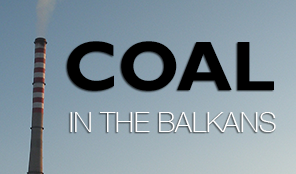
Coal in the Balkans

Find out more

Better planning is crucial

No-one knows exactly what the future holds, but several things emerge for me from this study.

First, planning in the energy sector needs to be seriously improved in the region. Strategies need to be better justified, clearer and more coherent. They should avoid including old projects which have already practically failed and take serious note of public comments.

Second, less is more. Why have huge lists of projects that are proving difficult to implement, when with more rational planning and analysis, a much smaller amount of investments would suffice? Energy efficiency should come first, and governments should not be afraid to cancel projects which have been hanging around for decades but never proved worth building.

Third, cross-border co-operation in the region has great potential to save money and natural resources. Making increased use of regional co-operation to meet peak demand would increase stability and lower the overall amount of electricity needed. Peak demand in the Western Balkans for 2024 without cooperation is estimated at approximately 17630 MW in 2024 in the high growth scenario while with cooperation it is only around 15000 MW. So far most of the countries are thinking in very national terms and failing to take advantages of regional synergies.

By the numbers: where will energy come from in the western Balkans?

Today we’ve published a new report analysing future energy trends in countries of the western Balkans.

From a robust dataset we researched together with the University of Groningen and the consultancy ‘The Advisory House’, we’ve pulled out a couple of illustrations.

The first looks at what the energy mix might look like in Albania, Bosnia and Herzegovina, Kosovo, Macedonia, Montenegro and Serbia, depending on how they move forward projects from their national energy strategies.

These figures include the annual output of those plants that are expected to be in operation in 2024. (For a more in-depth view of some of these projects, have a look at our country profiles.)

The next chart then looks at those same projects operating in 2024 and whether a particular country will be a net importer or exporter. The results show that nearly across the board, irrespective of the demand scenario (be it high, medium or low), Balkan countries will have excessive amounts of electricity and a number of plants that run the risk of not being used efficiently.

Among other conclusions that can be drawn from the study are that if Western Balkan countries improved their planning in the energy sector and placed more emphasis on energy efficiency and cross-border co-operation, a much smaller amount of investments would be needed without sacrificing supply stability.

European Parliament intergroup ITCO condemns new transparency policy of the European Investment Bank


In response to the adoption of the controversial new transparency policy of the European Investment Bank on March 10 (see our press release from March 11), the European Parliament’s Intergroup on Integrity, transparency, corruption and organised crime has issued a press statement (see below) condemning the slide towards more secrecy that the new policy entails.

The Intergroup has no website yet so we reproduce the statement here with their permission.

The group’s statement emphasises the EIB’s role in the European Fund for Strategic Investments (EFSI) and the challenges that less transparency may bring in this context.

Noteworthy is also the reference to potential cases of maladminstration:

“[…] whenever there are indications that projects do not deliver value for money, or worse, that there have been irregularities, such as fraud, corruption or abuse of the projects for tax evasion, citizens want to have full access to the documents concerned. Cases of maladministration and corruption should not be covered-up […]”

Press statement

European Parliament Intergroup on Integrity, transparency, corruption and organised crime is disappointed with the EIB’s new transparency policy

(12.03.2015) – The European Parliament Intergroup on Integrity, transparency, corruption and organised crime (ITCO) is disappointed with the new transparency policy of the European Investment Bank, which is weaker than its original policy. This is particularly worrisome as it happens on the eve of the implementation of the European Fund for Strategic Investments (EFSI), in which the EIB plays a crucial role.

The intergroup acknowledges that improvements have been made since the first draft of the new transparency policy was published in July. De Jong: “Contrary to the original proposal, the EIB now admits that Regulation (EC) No 1049/2001 on access to documents applies to documents relating to its administrative tasks. Any other solution would have been a clear violation of Art.15 TEU. However, a lot of problematic issues still remain unsolved.”

A serious flaw in the new transparency policy is the vagueness that surrounds the publication of information on EIB projects. Still not all projects have to be published on the website. De Jong: “It is in the interest of the EIB itself to inform citizens about its projects, since they often have a direct impact on society. Mere summaries do not suffice. Moreover, whenever there are indications that projects do not deliver value for money, or worse, that there have been irregularities, such as fraud, corruption or abuse of the projects for tax evasion, citizens want to have full access to the documents concerned. Cases of maladministration and corruption should not be covered-up, more secrecy is not what people want.”

Elly Schlein, co-president of the Intergroup on ITCO adds: “It is important that more people have access to information. With the EFSI about to start, the EIB cannot choose for a less transparent policy. People have a right of information concerning all activities of the EIB, including the support to companies operating in the developing countries.”

The intergroup is committed to address the problems raised by this new policy. De Jong: “We will certainly address this issue in the context of EFSI, but also as part of the budget discharge of the EIB in the Budgetary Control Committee. Moreover, we shall write a letter to the board of directors of the EIB explaining in detail which articles of the new transparency policy of the EIB have to be amended. We trust that the EIB will not ignore our requests.”

—

The bureau of the intergroup on integrity, transparency, corruption and organised crime

Dennis de Jong (co-president)

Elly Schlein (co-president)

Ana Gomes

Monica Macovei

Benedek Jávor

Marian Harkin

Ignazio Corrao

Timothy Kirkhope

« Previous Page
Next Page »

Footer

CEE Bankwatch Network gratefully acknowledges EU funding support.

The content of this website is the sole responsibility of CEE Bankwatch Network and can under no circumstances be regarded as reflecting the position of the European Union.

Unless otherwise noted, the content on this website is licensed under a Creative Commons BY-SA 4.0 License

Your personal data collected on the website is governed by the present Privacy Policy.

Get in touch with us

  • Bluesky
  • Email
  • Facebook
  • Instagram
  • LinkedIn
  • RSS
  • YouTube