• Skip to primary navigation
  • Skip to main content
  • Skip to footer

Bankwatch

  • About us
    • Our vision
    • Who we are
    • 30 years of Bankwatch
    • Donors & finances
    • Get involved
  • What we do
    • Campaign areas
      • Beyond fossil fuels
      • Rights, democracy and development
      • Finance and biodiversity
      • Funding the energy transformation
      • Cities for People
    • Institutions we monitor
      • European Bank for Reconstruction and Development
      • European Investment Bank
      • Asian Infrastructure Investment Bank
      • Asian Development Bank (ADB)
      • EU funds
    • Our projects
    • Success stories
  • Publications
  • News
    • Blog posts
    • Press releases
    • Stories
    • Podcast
    • Us in the media
    • Videos
  • Donate

Home > Archives for Blog entry

Blog entry

Cautionary tales: how the new EU Biodiversity Strategy 2030 can make good on the European Green Deal

Read our full report and set of recommendations here. 

One of the deal’s key initiatives is a biodiversity strategy for 2030 to protect nature, restore damaged ecosystems and promote the sustainable use of forests and other ecosystems. Though the Commission had planned to announce the strategy on 29 April, it has been delayed like many other initiatives of the day. Too long of a delay of this initiative would have significant consequences, as new research shows just how quickly wildlife species and natural ecosystems could collapse. 

Yet in spite of a growing chorus to ensure that the EU’s pandemic response is tied to the principles of the deal, several Member States have used the moment to call for culling the initiative entirely. Unsurprisingly, those states most in favour of dropping the deal and going back to business as usual are the ones who regularly flaunt existing rules on biodiversity protection.

Across central and eastern Europe and the EU’s southern and eastern neighbours, countries are continuing to pursue projects harmful to the environment and in violation of European laws on nature protection, often using funding from the EU. 

To be sure, in many cases the Commission has not actively checked the consistency of this funding with its own environmental legislation. Instead of trying to reinvent the wheel of biodiversity protection, the EU should pick the low-hanging fruit and focus on shoring up gaps in enforcement.

At present it relies on what is called the “presumption of legality”: a project is approved for money if it is in line with national legislation, even though it may be at odds with EU laws. This led to Poland building the S7 expressway over a Natura 2000 area and destroying the habitat of key species. With every second kilometre of road built in Poland being financed by the EU, this creates an untenable situation for the country’s rich biodiversity.

Outside the EU, a significant source of funding for projects that damage nature come from the EU’s public banks, the European Bank for Reconstruction and Development and the European Investment Bank. Whilst both are mandated to align their lending with EU principles, the two have found themselves funding projects at odds with nature protection, like the Nenskra hydropower plant in Georgia.

It is imperative that the EU’s new biodiversity strategy ensures that European environmental legislation is complied with and that no EU funding supports projects or practices that adversely affect biodiversity in Member or non-Member States. Outside the EU, additional funding for future Natura 2000 sites and the inclusion of the nature protection directives into the Energy Community Treaty would be a way to circumvent current practices. 

Any new biodiversity strategy should make the most of the legal tools already at the disposal of the EU in order to allow more space for nature to strive, even when the regular pace of life returns.


How Bulgaria’s Mining Strategy can make the ICT industry more sustainable

The electronic device industry has changed the way the world works. Yet it relies on huge quantities of metals like copper, gold, silver, and other rare-earth elements for its products. The very basis of the ICT supply chain, the primary extraction of these raw materials, has been found to have significant negative environmental and social impacts.

Biodiversity degradation, landscape destruction, toxic pollution, indigenous land grabbing, labour issues and massive health problems are permanently associated with the impacts of the mining and smelting of metals. Furthermore, the extraction and production of these mineral resources requires a lot of energy and often transportation over tens of thousands of kilometres.

These persistent issues highlight the need for the continuous strengthening of the environmental and social obligations related to metal mining in national and global regulations, strategies and policies, as well as those of economic and financial mechanisms. This includes putting stricter rules for public procurement in place and encouraging changes to consumer behaviour through increased public awareness.

Currently, the Balkans are receiving massive investment interest from local and international metal mining companies. Thousands of exploration concessions have been granted, new mines are opening and existing ones are expanding their production.

Bulgaria is one country experiencing rapid growth in the mining industry. We looked at the Bulgarian Mining Strategy in order to analyse the existing problems in the mining sector and the government’s approach to them. Although Bulgaria is just one country, most of the issues identified are relevant to the entire Balkan region, due to similarities in the geological context, the level of social and institutional development and the legacy of the mining sector inherited from the past decades of state management.

Although Bulgaria is a member of the EU and its strategic documents should be in line with the relevant EU policies and legislation, our research concludes that the Bulgarian Mining Strategy does not properly consider these. The Strategy should be adapted to reflect the economic and environmental goals and standards defined in the UN Sustainable Development Goals (2015), Paris Agreement (2016), EU Green Deal (2019), EU Industrial Strategy (2020), EU Circular Economy Action Plan (2020) and EBRD Extractive Mining Industry Strategy (2017) and EBRD Environmental and Social Policy (2019).

In particular, important issues such as the pollution legacy of metal mining, public opposition to mining projects, the implementation of labour standards, and the import and export of toxic materials are not addressed by the Strategy.

After the adoption of the Strategy in 2015, deficiencies in the related national legislation led to infringement procedures launched against Bulgaria regarding possible breaches of leading EU legislation in the mining sector: the Mining Waste Directive and Environmental Impact Assessment Directive. This serves to highlight that the EU has long been aware of the issues our research identifies, and yet nothing has changed. At the same time, according to the Ministry of Energy’s response to a recent access to information request, the Minister of Energy has not issued biannual reports and action plans as required by the Strategy!

We call for a revision of the Strategy to reflect the aforementioned strategic demands and tackle the problems with clear goals, measures and action plans. In this way, the Strategy can ensure the Bulgarian mining sector becomes more sustainable and resilient to crisis, as well as a valuable part of the European circular economy.

Montenegro must stop incentivising the destruction of its precious rivers

In 2009, Montenegro had seven hydropower plants of less than 10 megawatts capacity. By the end of 2018, it had twenty-three. In 2018 they generated just 2.3 per cent of the country’s energy, and cost EUR 7.3 million in renewable energy incentives. 

Compared to many other countries’ incentives schemes, the number of hydropower plants and the sum used to support them may seem tiny. But in a country of 600,000 people it was enough to cause an outcry. 

In the last few years, protests against the construction of small hydropower plants have increased, sometimes feeling like a new flashpoint is emerging every week. Outraged locals have stood up against the destruction of their local rivers and streams. Roads and forests have been churned up by heavy machinery. Entire rivers are dry downstream from the intakes, having been diverted into pipes to increase the water velocity. 

Almost as often as protests have erupted, the country’s more independent-minded media have reported on scandals involving the approval of incentives for hydropower plants built by businesses close to the ruling party.  One small hydropower plant company, BB Hidro, is even half-owned by the son of Montenegro’s President, Milo Đukanović.

The country’s current Law on Energy stipulates that no new renewable energy producers will be admitted to the incentives scheme if Montenegro meets its renewables target. Considering that Montenegro had already fulfilled its 2020 target, largely by adjusting its biomass data, the Government in 2017 decided not to accept any new requests for energy permits for renewables, with some minor exceptions, and in 2018 repeated the decision.

In January 2019 a new regulation entered into force, which foresees a gradual decrease in incentives to plants already in the system, starting in 2020, and the Government announced that it would continue to promote renewable energy without guaranteed buy-off of electricity.

So what has changed?

Despite the amount of digging the Government had to do to get itself out of the hole its incentives system created, a new draft Law on Energy, the public consultation for which ends today, looks set to relaunch Montenegro’s controversial foray into the world of renewable energy incentives.

The country could in any case have restarted the approval of new entrants to the incentives system once it set 2030 renewable energy targets, but the new amendments would allow it to grant incentives in the meantime, as long as they are “according to market conditions” and based on a “competitive procedure of collecting bids on the basis of clear, transparent and non-discriminatory criteria”. This sounds like a nod to the EU’s Energy and Environment Aid Guidelines, but the proposals are so sparse that it is hard to tell what exactly is being proposed and whether it is in line with EU rules. 

Several provisions on incentives are left untouched compared to the current Law, so for example Article 23’s provision that the Government will stipulate the price level paid for incentives still gives no hint whether it will create an auctions and premium methodology in line with EU rules or merely continue approving administratively set tariffs, or both. 

Likewise, the reference to a competitive procedure does not make it clear whether the selection of bidders would be based on a strike price to define a premium or it would in fact be a tender for a concession, as was the case so far. While not every detail should be defined in an umbrella law such as this, the lack of clarity is worrying.

Watch out, here comes the “public interest”

What is clear, though, is that the Government plans to make sure it can push through any renewable energy project it wants to. A new provision in Article 18 would declare it a matter of “public interest” to achieve renewable energy targets committed to in international agreements. 

If there is any phrase which makes active citizens across the Balkans roll their eyes, it is surely the dreaded “public interest”. The concept is invariably invoked by decision-makers when using fast-track procedures to push through unpopular projects that mainly serve narrow private interests.

So as much as we in Bankwatch want to see the advance of sustainable and carefully-sited renewable energy, the appearance of this provision in the Law is not going to help. Energy policy has to be formed by consultation and developing a public consensus. 

“Public interest” status may occasionally be needed to allow exceptional projects to go ahead but must not be an excuse for arbitrarily exempting entire sectors from democratic scrutiny. Surely it should be clear by now that this approach often generates public resistance and ends up counterproductive? Is Montenegro about to repeat the same mistakes all over again?

Incentives regimes require public trust and strong safeguards

Wind and solar prices are dropping fast and in 2018 Montenegro was the first Western Balkan country to launch a tender for a utility-scale solar plant without feed-in tariffs or premiums. The tender for the 250 MW plant at Briska Gora was won by a consortium of state-owned EPCG and Finland’s Fortum. The plant is not yet built so its feasibility cannot yet be assessed, but it raised the question of how many other projects could now go ahead in the Western Balkans without support schemes.

So far there are very few examples and certainly smaller projects for prosumers and energy communities look set to need incentives for the foreseeable future. For this reason, in Bankwatch we generally remain supportive of well-designed incentive schemes with strong environmental and integrity safeguards.

But this is certainly not how many people would describe Montenegro’s incentive regime so far. And as long as President Đukanović’s son keeps his hydropower and solar businesses, any kind of support scheme is likely to be viewed with suspicion, especially if it leaves a trail of environmental destruction in its wake. 

The EU tries to maintain a balance between renewable energy development and environmental protection by applying legislation like the Birds and Habitats Directives and the Water Framework Directive. Its rules on subsidies for energy projects explicitly state that any hydropower plants receiving incentives need to be in line with environmental legislation, and specifically mentions the Water Framework Directive. 

But so far the approach in the Western Balkans has been to cherry-pick EU legislation. So while 2020 renewable energy targets were set, adoption and implementation of nature protection legislation trails far behind, with alarmingly destructive consequences. Without strong nature protection rules being adopted and implemented, soon it will not just be hydropower causing a public outcry.

But there are other reasons to stop incentivising hydropower as well. For one, it is a mature technology, so prices are not dropping, unlike for solar or wind, so the support is simply a subsidy for construction, not an investment into a developing technology.

In addition, large hydropower plants generate 45-60 per cent of Montenegro’s electricity, depending on the year, so the country’s electricity system is already excessively dependent on this highly fluctuating and climate-vulnerable source of energy. If it wants to look towards the future it needs to work much harder on energy savings diversification of renewable energy sources, not just adding more of the same.

The wind of change is still far from Galabovo

With regularly emerging scandals like the forced resettlement of the Beli Bryag village due to the coal mine expansion, or the burning of waste as a substitute for coal without the necessary environmental permits, the air pollution produced by Maritsa’s dozens of coal facilities is sometimes overlooked. But Galabovo, a town that is part of the Complex, cannot miss it: winds bring its residents only clouds of dust.

Galabovo is a small town in the heart of Bulgaria’s coal region. It is located less than 10 kilometres from the biggest lignite mining operation in the country, Maritsa East, and it is home to two coal-fired power plants. The newer one is the 670 MW plant, AES Galabovo, that started operation in 2011. Right next to it is the dinosaur Maritsa East 1, also known as Brikel, that started operation in 1962. Brikel produces both electricity, with an installed capacity of 360 MW (supposedly only 180 MW are currently in use), and district heating, with an installed capacity of 170 MW, for the town. Both plants are less than 2 kilometres north-east from the outskirts of Galabovo. In addition, the town borders an ash disposal site to the north, which is less than 500 meters from the nearest houses.

Brikel, together with the power plants Bobov Dol and Pernik, is part of the major waste burning scandal currently ongoing in Bulgaria., In 2019, a court ruling found that these plants were using waste as a substitute fuel  without the necessary environmental permits.

With all these capacities around the town, even when best techniques and practices are applied, it is inevitable that the air quality will be affected.

However, the official air quality monitoring station in Galabovo monitors only sulphur dioxide and nitrogen dioxide concentrations and does not monitor coarse (PM10) and fine (PM2.5) dust particles at all. 

Bulgaria was already reprimanded in 2017 by the EU Court of Justice over its failure to implement the Directive on Ambient Air Quality (AQD), but it seems that the ruling of the Court, which did nоt involve any fines, has not yet had the much needed dissuasive effect.

We installed our environmental dust monitor in the northern part of Galabovo, about one kilometer from the ash disposal site and two kilometers from the power plants. The location was chosen for its ability to provide some indication of the major sources of dust pollution, in addition to the levels of pollution themselves.

We monitored dust concentrations for 26 days in late Autumn 2019, between 14 November and 9 December, and then compared the results to the AQD and World Health Organisation (WHO) guidelines. According to the collected data, the 50 µg/m³ daily limit from the AQD for PM10 was exceeded on 5 days out of the short 26 day monitoring period (Chart 1). The number of allowed exceedances by the AQD is 35 days in one calendar year, which, given our findings, is very likely to be breached during the winter season.

Chart 1. 24-hour average PM10 values (blue line) compared to the allowed limit value (red line)

For the more health-damaging PM2.5, the WHO daily limit of 25 µg/m³ was exceeded on 11 days (Chart 2). This is already several times more than the three annual exceedances that the WHO recommends for proper health protection of the population.


Chart 2. 24-hour average PM2.5 values (blue line) compared to the WHO recommended value (yellow line)

When wind direction and wind speed data are included in the analysis of the high pollution peaks, it becomes visible that high levels of dust pollution originate from the direction of the ash disposal site and from the direction of the power plants. The windroses (Charts 3-6), created using the data on wind direction and wind speed together with the PM10 values, show lines that extend from the monitoring location in the direction of where the wind is blowing. The length of the lines is determined by the changes of the PM10 concentration in the ambient air. The longer the lines, the higher the amount of PM10 originating from that particular direction. 

Charts 3 and 4 clearly point to the power plants, which are located between the 70o and 90o marks on the windrose, as seen from our monitoring location.

Charts 3 and 4. Windroses of the contribution to dust pollution from the power plants

Charts 5 and 6, on the other hand, show the contribution of the nearby ash disposal site, spread between the 310o and 10o marks on the windrose, to the dust pollution in Galabovo. The situation shown in Chart 5 is especially worrisome, because it shows a huge cloud of dust picked up from the entire surface of the ash disposal descending upon the town.

Charts 5 and 6. Windroses of the contribution to dust pollution from the ash disposal site

As dust pollution from coal utilities is inevitable, it is unclear why the Bulgarian government is not monitoring PM10 and PM2.5 in Galabovo. There is a very clear requirement from the AQD that prescribes monitoring of all major pollutants near big industrial complexes such as the ones in Galabovo, so this is something that the government should fix immediately.

But even without measurements of the dust concentrations, it is recommended that ash disposal sites are encircled by a protective tree belt (see Waste Treatment BREF, p. 412) to reduce the spread of fine dust particles rich in heavy metals to the surrounding areas. According to our measurements, the area between the ash disposal site and the town must be recultivated as soon as possible in order to reduce the population’s exposure to dust particles.

At the same time, the Brikel power plant should be considered for shut down soon. It has already worked long beyond its advised economic lifetime of 40 years. Resources needed to reconstruct the power plant in line with environmental standards should be reallocated for solutions that will provide clean electricity and heating from renewable energy sources to Galabovo.

A herd of white elephants is approaching the EU’s neighbours

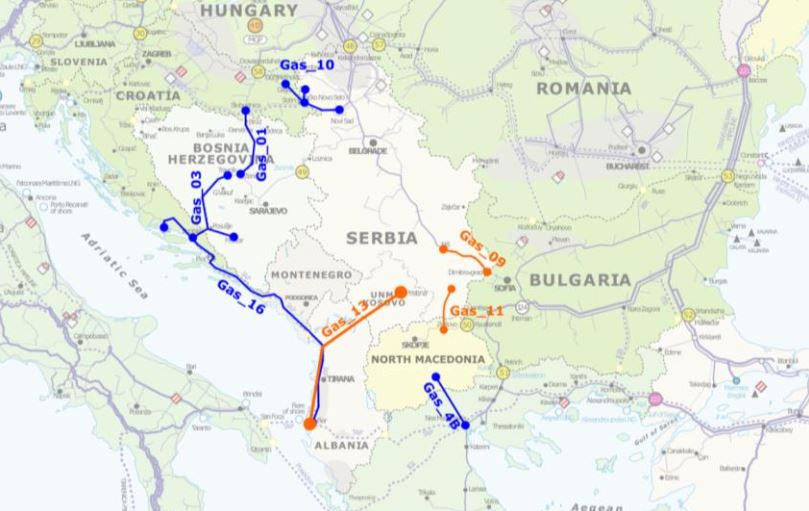
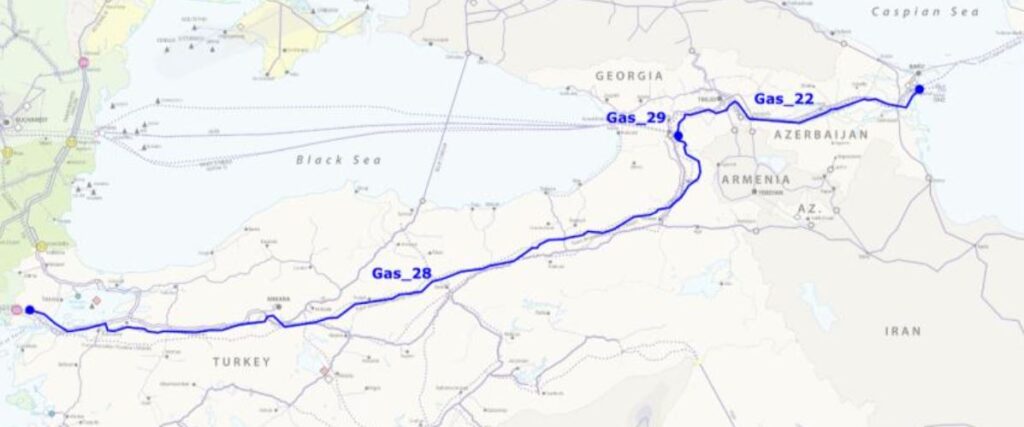
Today marks the last day of a public consultation on priority energy infrastructure projects under the Energy Community Treaty. Yet, 20 of the 26 projects put forward by the Western Balkans, Moldova, Ukraine and Georgia rely on fossil fuels – a clear no-no if the countries plan to align with the EU’s decarbonisation goals.

18 of the proposed Projects of Energy Community Interest (PECIs)1 and Projects of Mutual Interest (PMIs) consist of gas infrastructure and 2 are oil projects – some rehabilitation of old pipelines but mostly construction of new ones, expected to be commissioned in the next 3-5 years. The remainder are electricity transmission lines.

If the EU and its neighbours are on their way to decarbonisation by 2050, why are they still planning so many fossil fuel projects?

As last year the European Investment Bank (EIB) – the EU’s financing arm and the world’s biggest lender – announced it will bar funding for gas and oil at the end of 2021, sending a signal to all other international financial institutions, the list of potential PECIs bears a striking resemblance to someone committing to go on a healthy diet, but spending the last month before that eating junk food.

Of course, the comparison is only fair to some extent, as a person’s diet choices only affect their own health, whereas a regional increase in gas and oil infrastructure affects all of us, who suffer the consequences of climate change while also bearing the costs of these projects, paid for with public money.

Already in 2016 Oil Change International calculated that no more fossil fuel infrastructure can be built if we are to meet the goals of the Paris Agreement. The potential carbon emissions from the oil, gas, and coal in the world’s operating fields and mines would already take us beyond 2°C of warming, and even excluding coal, the reserves in currently operating oil and gas fields would take us beyond 1.5°C. 

Yet, the PECIs list includes projects which, if realised, would contribute to gasification of countries like Montenegro or Kosovo, that currently have very low use of gas in their energy mixes and are not connected to international pipelines. Additional investment in gas infrastructure, even when it is only for diversification of supply sources, is more likely to serve as a distraction from investments in renewable energy, energy savings and solutions such as heat pumps than to support them. According to the 2019 Carbon Budget, the global increase of greenhouse gas emissions is currently driven by gas and oil projects, so connecting completely new countries to gas pipelines at this stage is very much the same as allowing them to build new coal-fired power plants.

New gas projects are the wrong direction

Two of the five questions in the public consultation questionnaire refer to the projects’ contribution to decarbonisation of the energy sector by 2050 and to better integration of renewable energy in the market. In Bankwatch’s submission, we argue that the projects represent the exact opposite of those. 

Estimates of exactly how much gas contributes to climate change are continuously being revised upwards and depend on the Global Warming Potential assigned to methane as well as on assumptions about the extent of fugitive emissions during gas extraction and transportation. One estimate cited in the EBRD’s Energy Strategy is that in the best case, gas combustion saves a maximum of 30% of greenhouse gas emissions compared to coal, hardly an advantage worth investing hundreds of millions of EUR for. 

Regarding household heating, gas is likely to partly displace existing wood use, whereas using wood more efficiently and complementing it with solar thermal and heat pumps would better promote the efficient use of renewable energy. 

For electricity, intermittent renewable energy is not likely to be better integrated by the use of gas. Most of the Western Balkan countries have high shares of existing hydropower that can be used for balancing intermittent renewables, and gas is likely to be uncompetitive for power generation in the coming decades.

In the Western Balkans, there is a significant difference from EU countries with regard to gas: it is not a question of when to phase out an existing source of energy, but of making massive new investments in the opposite direction of where we want to be. The EU must not encourage this in any way.

EU decarbonisation policy needs to be coherent – and that means no new gas

In recent years, EU member states’ proposed Projects of Common Interest (the process which the Energy Community has adapted) have  also been riddled with critique over being way too reliant on gas infrastructure. A study by industry consultants Artelys warns that there is a risk of €29 billion being wasted on 32 mostly “unnecessary” gas projects.

The EU Ombudsman is looking into whether the European Commission has committed maladministration in failing to ensure an adequate climate impact assessment for the PCI fossil fuel project lists chosen so far. Therefore, our ask to the Energy Community is to ensure that a thorough GHG emissions assessment is carried out for any gas projects being seriously considered as PECIs or PMIs. 

Europe’s attention now should be clearly focused on how the economic recovery will be designed. This is crucial in determining the long-term pathways for emissions and whether the Paris Agreement’s 1.5˚C limit can be achieved. A recent analysis by Climate Analytics points to strong economic and climate change advantages if governments adopt green stimulus packages in response to the COVID-19 pandemic.

The countries of the Energy Community Treaty need to realise this on time, before they lock themselves into a carbon and debt trap.


1 Regulation (EU) 347/2013, as adapted for the Energy Community in 2015, establishes rules for identifying projects of Energy Community significance, called Projects of Energy Community Interest (PECIs) and Projects of Mutual Interest (PMIs). These projects will benefit from 1. streamlined permitting procedures within Contracting Parties – in case the Competent Authorities are put in place, 2. where applicable, from cross-border cost allocation.

From the Caucasus to Russia: Why this road?

This article was first published on Bankwatch, official publication of NGO forum on ADB. 

Starting in Armenia, the southestern-most of the Caucasus countries, the corridor crosses Georgia and continues to Russia.

This new massive construction will go through a precious valley of Georgia and it poses considerable threats to the livelihoods, biodiversity and cultural heritage of the pristine valley of Khada. It raises questions about the economic and political validity of the initiative. The Asian Development Bank is among the project’s supporters.

The ADB is the largest funder. Of the total USD 558.6 million-project, more than half, USD 415 million, comes from the ADB to the Georgian government. The government invests USD 83.6 million, and the European Bank for Reconstruction and Development (EBRD) has approved a loan of USD 60 million to co-finance construction of a nine kilometer tunnel.

Although its impact was almost unstudied and the promoters had failed to properly inform and communicate with the locals, international banks still allocated funds for this road.

The public protest against Kvesheti-Kobi intensifies and local communities are no longer alone in this fight.

Who will benefit?

According to the Roads Department of Georgia, the 23-kilometer Kvesheti-Kobi highway aims at better connecting Georgia and the South Caucasus to Russia and its neighbors with shorter and more convenient roads. An official statement from the Roads Department of Georgia, “the tunnel [of the road] provides for safer and reliable conditions during the winter for those using the road.” Promoters also argue that the road will cut distance. Compared to the existing section that connects the same geographic areas, the new one will be only 12 kilometres shorter. Also, the north-south corridor’s traffic time will be reduced by only 40 minutes.

Benefits of this road are debatable. No cost-benefit analysis has been done, both in terms of land transport development as well as its impact on the country’s fiscal parameters.

The current project does not promise a clear economic return, as the budget is unprecedentedly high for a 23-kilometer road that threatens to bulldoze the unique valley.

What will be lost? 

The Khada Valley is rare because it brings together an untouched landscape and a large number of cultural monuments in one place. The valley boasts unexplored archaeological treasures that confirm traces of life from the Eneolithic period, rare biodiversity species on the UN red list, and villages built at 1800 meters above sea leve, where old traditions of mountainous people are reserved.

All of this will be replaced by five tunnels and six bridges. One of the tunnels will be nine kilometres long: a rare length in construction, as mentioned by the Road department of Georgia. The bridges total two kilometres and include 426 metre and 166 metre arches.

The project owners suggest that one of the results will be a tourist centre in the valley. It is unknown if the visitors center will promote tourism in the gorge once the bridges and tunnels are in place and thus will have lost its value and identity.

In addition, part of the new road will be constructed by “23rd China Railway Bureau Group”. This company was banned from participating in tenders for nine months by the World Bank for fraud in June 2019.  The company was announced as the winner after the World Bank’s ban.

Against the road

The Kvesheti-Kobi road threats livelihoods. Locals of Khada are asking for the highway to avoid the valley. They have collected signatures, held protests and submitted letters to the ADB and EBRD, asking for help. In August 2019, a few days after Khadians had sent a letter to the ADB, the bank announced the loan approval.

Khadians said they will not give their lands for anything. They do not want to lose their ancestral  areas and are concerned that noise and air pollution will increase. The impact threatens healthy village crops and tourism opportunities.  Expected forced economic resettlement poses risks to incomes. And last but not least, the project is dangerous: geologists warn that the tunnel could pass areas with risk for volcanic activity.

In the struggle to protect the areas, some of the locals have said they have been refused by state agencies to register their traditional properties around the road area. Meanwhile, the project does not include a socio-economic baseline assessment on how it affects the population in terms of land acquisition or restrictions on land use. It does not identify social impacts, needs and rights of affected communities.

What happens to the 60 towers?

The Khada valley is also known as ‘the place of 60 towers’ that include special historic methods of construction and are unique in Georgia.

Churches, fortresses, towers, old cemeteries and other memorials are only a portion of the monuments in the Khada Valley.

The road project documentation suggests it will pass the cultural sites at 50 to 100 meters, which means they are very likely to be ruined. Even in the Environmental Impact Assessment drawn up by the government, it is stated that “it will have a significant effect” on the monuments. Sufficient mitigation measures are absent in the project documentation.

Experts and archeologists worry that the large scale construction will bring irreconcilable damage to the monuments, especially in light of the fact that the government began the project without detailed research.

Nature at risk

Khada Valley is a biodiversity hotspot in the Greater Caucasus. As the greenfield project crosses the Kazbegi national park and a number of Emerald sites, gthe Kvesheti-Kobi road will heavily impact its landscape and biodiversity.

As pollution increases and habitats change, the project will influence the reduction of species listed in the Red Book and will encourage the spread of invasive species in the valley. The road will affect bird watching areas that offer one of the unique possibilities for bird lovers in Georgia. The area is a host to more than 30 000 migratory species per year.   

Kazbegi Park is the home for at least six species found on Georgia’s red list. Most of those species were not even mentioned in the project documentation and environmental risk management plan for them is not present.

Then, why this road?

While locals and NGOs fight to protect human rights, save the valley and question the economic validity of the project, journalists have also raised questions about Kvesheti-Kobi: national security risks. Security experts note that larger, resistant to military transport roads directly cut to Russia – a country with which Georgia has ongoing military disputes.

The Kvesheti-Kobi road inspires a lot of questions, and they are not only political. When the project does not prove its economic benefits, causes human right violations, promises dangers, cooperates with a company that was banned for fraud and does not present an in-depth social-environmental studies and analysis, why do the international banks go against their own policies and support it.

For more information visit the project page.

« Previous Page
Next Page »

Footer

CEE Bankwatch Network gratefully acknowledges EU funding support.

The content of this website is the sole responsibility of CEE Bankwatch Network and can under no circumstances be regarded as reflecting the position of the European Union.

Unless otherwise noted, the content on this website is licensed under a Creative Commons BY-SA 4.0 License

Your personal data collected on the website is governed by the present Privacy Policy.

Get in touch with us

  • Bluesky
  • Email
  • Facebook
  • Instagram
  • LinkedIn
  • RSS
  • YouTube