• Skip to primary navigation
  • Skip to main content
  • Skip to footer

Bankwatch

  • About us
    • Our vision
    • Who we are
    • 30 years of Bankwatch
    • Donors & finances
    • Get involved
  • What we do
    • Campaign areas
      • Beyond fossil fuels
      • Rights, democracy and development
      • Finance and biodiversity
      • Funding the energy transformation
      • Cities for People
    • Institutions we monitor
      • European Bank for Reconstruction and Development
      • European Investment Bank
      • Asian Infrastructure Investment Bank
      • Asian Development Bank (ADB)
      • EU funds
    • Our projects
    • Success stories
  • Publications
  • News
    • Blog posts
    • Press releases
    • Stories
    • Podcast
    • Us in the media
    • Videos
  • Donate

Home > Archives for Blog entry

Blog entry

In Estonia, taming the IT tiger

Estonia is not a coal-mining country, but it is a country with oil shale, which is equally as polluting. It is a key factor why Estonia has the second-highest per capita CO2 emissions in the EU. 

When we started planning this visit, the risks of the forced oil shale phase-out were ignored by  Estonian politicians, but they had to face reality. Due to high CO2 prices in the electricity sector in the summer of 2019, the state energy company Eesti Energia had to suspend uneconomic operation of their power plants that were unable to compete in the energy market. This was the moment when the government started to look for short term fixes — such as the very inefficient co-burning of biomass or the even more bizarre proposal to resurrect production of oil from oil shale, an  industry that was hit by temporary crises in 2016. 

At the same time, there is still a positive side to all of this—for the first time in modern history, Estonia was able to operate its electricity sector without oil shale burning. When we met with the head of the Estonian Renewable Energy Association—Mihkel Annus—he said the Solar Energy Association had difficulty last year keeping track of all newly developed PV projects and indicated that there are a number of projects in the wind energy sector that are under preparation as well as  plans to build a pump storage plant in the mining area. It seems that the main problem remaining in Estonia is the Ministry of Defence, who is afraid that their obsolete radar system would not be able to deal with wind turbines in some parts of Estonia. Thus, they block development of wind turbines in some areas.

The Estonian Renewable Energy Association (EREA), at the end of 2016, already published a scenario for a 100% transition to renewable energy, showing that it is both economically feasible and technically possible. The scenario would allow Estonia to use its economical and geographical properties to act as a role model to help others realize that a strong political vision  and clear decisions are needed from the government.


The transition to zero-carbon is possible, as it was recently stated by the President of Estonia, Kersti Kaljulaid: “[w]hen looking at our experiences I feel that if there is one country capable of taking the leap ahead, it is Estonia. Countries that invest in future technologies usually win, as the success of our digital state attests.”

Indeed, a week ago, a group of 33 Estonian IT companies signed a Green Pledge prioritizing the environment as an integral part of their business.

First large-scale solar district heating plant in the Baltics opens in Latvia

In September, the town’s municipal district heating company completed the installation of the largest field of solar collectors in the Baltic states. This project will contribute to Latvia’s goal to increase energy independence and transition to renewable energy sources. It will help the country further diversify its fuel supply and upgrade its existing district heating to low-emission systems. 

Heating is Latvia’s highest energy-consuming sector. According to the Ministry of Economics, 70% of the country’s heat is generated in centralized systems, which suffer from aging infrastructure, insufficient or inefficient use of renewables and non-existent local or centralized cooling systems. There is a growing demand for innovative and emission-free heating solutions. 

Salaspils may provide a model for other towns in Latvia interested in weaning themselves off of carbon heavy heating. Salaspils Siltums provides 85 % of the town with a population of about 18,000 people with district heat.The company has now acquired 1720 solar collectors, which will generate an estimated 12,000 KWh of power per year. A 28 meter high storage tank and a 3MW wood chip boiler complement the collectors. 

The new system will enable a significant decrease in the utility company’s reliance on natural gas and the share of renewables in its energy consumption will grow by ~ 35%.  After the installation of solar collectors and the wood chip boiler, the district heating system will supply 90% of the energy required for heating water and buildings from renewable energy sources. Solar thermal energy will provide 20% of the total thermal energy transferred in the system. 

The system will also reduce service and operating costs, which may allow for a reduced heating tariff of at least 5% to be applied to the utility bills of Salaspils residents in 2020 if accepted by the Public Utilities Commission.

Inspired by the vast deployment of solar collectors in Denmark, Salaspils’ system was built in less than six months by Latvian and Danish companies working in close cooperation. Total project costs were EUR 7.08 million, to which EU Cohesion Fund co-financing contributed EUR 2.73 million. In addition to the EU funds, the SEB bank provided a  EUR 2.8 million loan. 

Salaspils Siltums, the local district heating company responsible for the project, is a well-known front-runner in energy efficiency and fuel diversification for its incorporation of renewable energy sources. In 2017, it received the Global District Energy Climate Award in the modernisation category. 

Ina Berzina-Veita from Salaspils Siltums, also the head of the Association of Latvian Heating Companies, led the project from start to finish: “This is a really important event, not only for inhabitants for Salaspils, but for anyone who is aware that sustainable solutions are increasingly needed also in district heating in order to meet everybody’s daily needs and reducing the negative environmental impact as well. With the realisation of this ambitious project, we have demonstrated that we are able to grow from a post-Soviet boiler house to a world-class company.”

At the ceremony marking the project’s completion, Latvian Prime Minister Krisjanis Karins applauded the solar project’s contribution towards local energy independence. Salaspils mayor Raimonds Cudars stressed that the project was an example of Latvia’s successful transformation from the Soviet legacy’s ineffectual district heating system into a sustainable, modern low-carbon heating system. Their words underscored that the event celebrated not only the conclusion of a single project, but also the start of a larger change in the energy system. 

In general, district heating in the rest of Latvia remains reliant on natural-gas imports, and most of the recent EU-supported modernisation projects have been woody biomass-based. In 2018, natural gas was used for 37.6% of the thermal energy produced in the boiler houses and 58.5% of the thermal energy produced in cogeneration plants.

 Yet according to a 2018 survey conducted by the research company SKDS, 85.2% of Latvia’s population supports the wider use of solar energy. Solar energy had the highest rating among all renewable energy sources: woodchip-powered cogeneration plants were supported by 56.6%, and gas-powered cogeneration plants by 34%.

With the support of Latvia’s National Energy and Climate Plan, a faster uptake of solar thermal energy in the urban heating networks is expected. Solar technologies have recently become more wide-spread and competitive, lowering their price. Financial institutions like the European Investment Bank have also indicated their intention to provide more affordable loans for renewable energy projects. 

Thus, the Salaspils solar project may be remarkable for its vision on long-term decarbonization, becoming a model for utility companies in other towns and cities.

Strike! Bankwatch and Fridays for future

Bankwatch and other NGOs are supporting the global strike. Our staff will be taking part in street actions, we’ll put up a protest banner on our website and post information about actions in our countries of operation, and we’ll do our best to show support to strikers everywhere. 

We also call on staff at the two banks we have monitored for years, the European Investment Bank and the European Bank for Reconstruction and Development, to do the same –  support the global climate strike. 

This summer, the EIB, the house bank of the EU, proposed an end to the financing of all fossil fuels beyond 2020, becoming the first multilateral financial institution to make such a commitment in line with the Paris Agreement. We at Bankwatch welcomed the news. 

While we’re waiting for the draft energy policy to be approved by the board of the bank, we call on the staff of the EIB to show their support for the global climate strike. This will demonstrate that the EIB is truly a bank for the future, and it will encourage political actors to make the right decision about future investments of the EIB. 

At the EBRD, on the other hand, the reality is less promising. The bank carries on with oil and gas projects and continues to provide financing to utilities which rely on coal. As the EIB example shows, the EBRD can and should do better. 

Therefore, we call on the EBRD staff too to support the climate strike. Show your support for the strike and tell the EBRD leadership and the national representatives on the board of the bank that it’s high time for the EBRD to become a bank for the future too. 

Dear EIB and EBRD staff,

Please join us in showing support for the strikes by joining the digital action – putting up a banner on your websites, posting content on social media accounts, selfies in the bank cafeteria with reasons why you support the strike – anything. Use this amazing global momentum to call for a real transformation of your bank. It’s in our common interest. 

Sincerely,

Huub Scheele

Interim Executive Director

On behalf of Bankwatch and its member groups

Montenegro finally cancels Pljevlja II coal power plant

For almost three years, since it lost its main source of funding in October 2016, the Pljevlja II project has been in limbo. A further nail in the coffin came at the end of 2018, when the Montenegrin government and state-owned electricity company broke off a deal with Czech company Škoda Praha to build the plant. Yet until now, the Government has been reluctant to write off the project completely, instead putting forward proposals about co-firing with biomass.

That this is a long way from becoming reality became clear yesterday at the Miločer Development Forum in Cetinje, where Premier Marković was quoted as saying “We decided to refrain from using the significant coal reserves in the Pljevlja region to build a second unit at the power plant, although this is a large investment and would bring a large number of jobs. We said no, we will build something in line with our economic policy, sustainable development and preservation of the environment. Maybe in 50 or 100 years future generations will think up some new technology for using coal in combination with biomass in a way that does not harm the environment”.

This news follows an announcement by the Government in June that Montenegro had experienced 10 days in a row of coal-free electricity generation – quite a breakthrough for a country that traditionally produces around 40 per cent of its electricity from lignite.

There are still plenty of problems to solve in Montenegro’s energy sector, for example reducing pollution from the existing coal plant, reducing energy wastage, and securing a just transition for the Pljevlja region. 

But the announcement that Pljevlja II is finally cancelled at least serves as a good example. Neighbouring countries like Bosnia and Herzegovina, Serbia and Kosovo are still pushing forward new coal plants, against all environmental and economic logic, and often in contravention of Energy Community Treaty rules on environment and subsidies.

The Montenegrin government’s courage in grasping the bull by the horns and admitting that coal is not the way forward must now be followed by its peers. Let us hope this is the first of many such announcements in the months and years ahead.

Prisoners of coal

Stanari power plant is owned by EFT Rudnik i Termoelektrana Stanari d.o.o., a subsidiary of the UK-headquartered EFT Investments SE. The power station is located near the Stanari coal mine, which is located approximately 70 kilometres east of Banja Luka in Republika Srpska. It is the first privately-owned power plant in the Western Balkan region. Originally the project was planned and permitted to be 420 MW, using supercritical technology, but was later changed to 300 MW and lower efficiency subcritical technology. No updated EIA was carried out based on the new plans.

The presence of the plant and mine is easily seen and felt in the village – they dominate the landscape, there is dust on the cars and the rivers are running brown and red from the overburden of the excavation. The company is also heavily involved in matters that are usually strictly municipal responsibility.

As one of the locals, who requested anonymity, describes it: „In this area, we are mostly dealing with heavy dust and noise coming from the nearby coal mine. Sometimes, especially when it’s windy, you can feel it in the air and see the dust on cars and other objects. At the moment there is only one water tank truck that is circling around the mine, but during the hot and dry summers we have this is far from enough. Also the biggest issue here in Stanari is the relationship between the coal mine and the local authorities – if a local wants to build anything near the mine, the municipality first needs to ask EFT for its expert opinion and future excavation plans before issuing a building permit. Also, when it comes to water supply, we cannot drill for new water wells without their (EFT’s) permission because of their concession for water exploration and usage for the area. Everything, just about everything here is done because and for the purpose of the mine and power plant.“

When we visited the mine mid-summer, even this water tank truck was nowhere to be seen and the trucks moving in and out of the mine, transporting soil and coal, were creating clouds of dust, impacting the health of workers and residents alike.

We monitored the dust pollution in Stanari between 4 July and 1 August 2019. The chosen location was at a similar distance from the power plant and from the mine in order to try and evaluate how they are impacting air quality separately. 

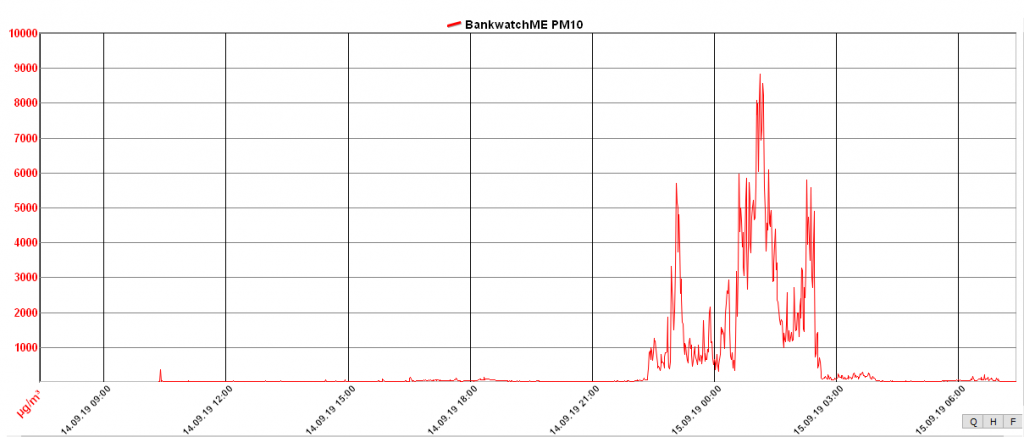
As can be seen from the graphs below, and as was expected for the summer period, there were not many breaches of the PM10 and PM2.5 limit values – the national (and EU) 24-hour limit for PM10 was exceeded twice and so was the WHO recommended 24-hour limit for PM2.5 – but short-term dust pollution peaks were alarming.


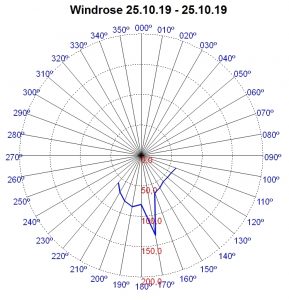
Analysis of the results reveals that the ash disposal site, the lignite mine and the conveyor belts, spread out north of the location of where the dust monitor was installed, are an enormous source of particulate matter pollution.

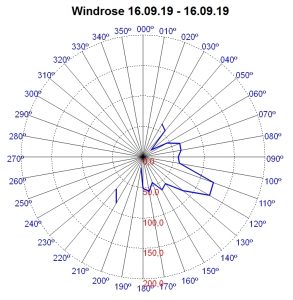
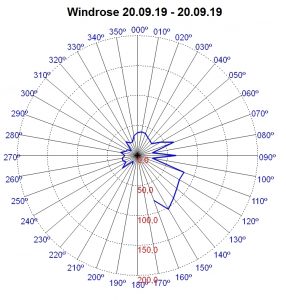
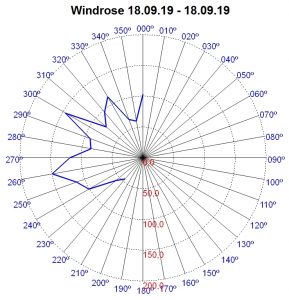
Every time the wind was blowing from the side of the mine, the monitor recorded high peaks of pollution regularly going over 300 micrograms/m3 – with the highest one on the morning of 17 July reaching 828 micrograms/m3. 

On the following graphs these peaks together with the polar-diagrams showing the source of the pollution can be seen. 

Historically, a lot more focus has been put on the long-term impacts of air pollution on public health and that is why legislation is also aligned to prevent long-term exposure. However, research into the impacts of short-term exposure is no less worrying. According to many studies, even a short-term increase of dust concentration in the ambient air of 10 micrograms/m3 can increase cardio-pulmonary mortality. With high and regular pollution peak events, this can become a serious public health problem for the population of Stanari, even without taking into account the chemical composition of the dust.

While there are no requirements regarding the short-term emission values in the national or EU legislation, having sources of pollution that can contribute significant amounts of dust in a very short timespan can be especially deadly during the winter months when air quality is aggravated by other sources and when pollution is trapped in the valley due to temperature inversion. 

At the same time, the Air Quality Directive requires continuous monitoring in the nearest residential area near industrial sources for the purpose of health protection, which Stanari does not have. This way sources of air pollution can be properly identified and mitigation measures can be taken for all of them because only by reducing emissions from all sources, can pollution levels be kept within legal limits. 

Since we have now shown that the mine is a major source of particulate matter, urgent measures, in the form of an automated sprinkler system and a properly-placed protective tree belt, should be taken as soon as possible. Continuous air quality monitoring with real-time publicly available information must be installed in Stanari to monitor the effectiveness of the measures taken and to provide input for their future improvement, as well as to alert residents when pollution peaks occur so they can protect themselves.

Uncertain future for Slovakia’s development funds

Despite the mounting concerns about blended finance, Slovakia’s export-credit agency (ECA) Eximbanka SR is about to join the club. The national parliament will vote on the new legislation in September, to take effect the following month. 

Experience shows, blended finance works best in middle income countries for “physical infrastructure” projects, and not so well – in truly vulnerable communities that urgently need development aid in the areas of health, education, and social justice.

Moreover, the involvement of the private sector in disbursement of development aid may add to developing countries’ debt vulnerability.

Delivering effective development aid through blended financing requires a particular development expertise, experience, and commitment, which is not at all Eximbanka SR’s focus.

Its primary role has always been to simply support Slovak businesses abroad without burdening public coffers, and some of its projects (e.g. crude oil financing in Cuba) are not just unaligned with the sustainable development mandate, but are in direct opposition to it.

In its new role, Eximbanka SR will be tasked with the implementation of blended finance mechanisms of the EU designed for development assistance and cooperation (External Investment plan, EIP, and European fund for sustainable development, EFSD), despite its sheer lack of experience of working with the primary target – vulnerable communities in low income countries.

It remains unclear how Eximbanka SR will be delivering on the development objectives while its own portfolio contains some heavy polluters in politically volatile countries with proliferating human rights abuses. If Slovakia is serious about its commitment to the Sustainable Development Goals (SDGs) and the Paris agreement, it should think twice before burdening an unrelated institution – Eximbanka SR – with the mission it has never signed up for.

More on the issues of blended finance: https://www.counter-balance.org/wp-content/uploads/2019/07/NGO-submission-to-High-Level-Group_July2019_final.pdf

« Previous Page
Next Page »

Footer

CEE Bankwatch Network gratefully acknowledges EU funding support.

The content of this website is the sole responsibility of CEE Bankwatch Network and can under no circumstances be regarded as reflecting the position of the European Union.

Unless otherwise noted, the content on this website is licensed under a Creative Commons BY-SA 4.0 License

Your personal data collected on the website is governed by the present Privacy Policy.

Get in touch with us

  • Bluesky
  • Email
  • Facebook
  • Instagram
  • LinkedIn
  • RSS
  • YouTube