• Skip to primary navigation
  • Skip to main content
  • Skip to footer

Bankwatch

  • About us
    • Our vision
    • Who we are
    • 30 years of Bankwatch
    • Donors & finances
    • Get involved
  • What we do
    • Campaign areas
      • Beyond fossil fuels
      • Rights, democracy and development
      • Finance and biodiversity
      • Funding the energy transformation
      • Cities for People
    • Institutions we monitor
      • European Bank for Reconstruction and Development
      • European Investment Bank
      • Asian Infrastructure Investment Bank
      • Asian Development Bank (ADB)
      • EU funds
    • Our projects
    • Success stories
  • Publications
  • News
    • Blog posts
    • Press releases
    • Stories
    • Podcast
    • Us in the media
    • Videos
  • Donate

Home > Archives for Blog entry

Blog entry

Georgia’s highlanders against hydropower

This article first appeared on openDemocracy.

Earlier this summer, I visited Georgia’s Svaneti region together with colleagues from Bankwatch. Svaneti, located high in the Caucasian mountains, borders the breakaway territory of Abkhazia, and is home to some of the most pristine rivers in the Caucasus. As a team of civil society members, we travelled there to talk with local people and analyse the quality of consultations over future development projects on their lands.

Together with the surrounding forests, Svaneti’s Nenskra and Nakra rivers have existed in a symbiotic bond with local communities for centuries. This strong interdependence between people and nature is visible everywhere in Svaneti — a constant reminder of the important role that local communities must play in designing infrastructure projects.

Yet in recent years, Svaneti has been transformed into a battleground between communities and the Georgian government with its plans for building large hydro power plants. The threat has united Svan people who are struggling to conserve what is left of their cultural heritage and the biodiversity of the region.

Public funding

The Georgian government’s ambition to build dozens of new hydro power plants (HPPs) in the Svaneti region has caught the attention of international financiers. The European Bank for Reconstruction and Development (EBRD), the European Investment Bank (EIB), the Asian Development Bank (ADB) and the new Asian Infrastructure Investment Bank (AIIB) have all expressed interest in financing the planned 280MW Nenskra HPP, the most advanced project in the government’s pipeline. Up to 75% of the project costs could come from international public sources and with the loan approval date coming up on 15 November for the EBRD, there is little time to act.

But while the dam is supposed to ensure energy security for Georgia during winter and eliminate imports from Turkey, locals and activists are opposing the project, which they view as a threat to Svan culture, the biodiversity of the region and the safety of local communities given the area’s seismic instability.

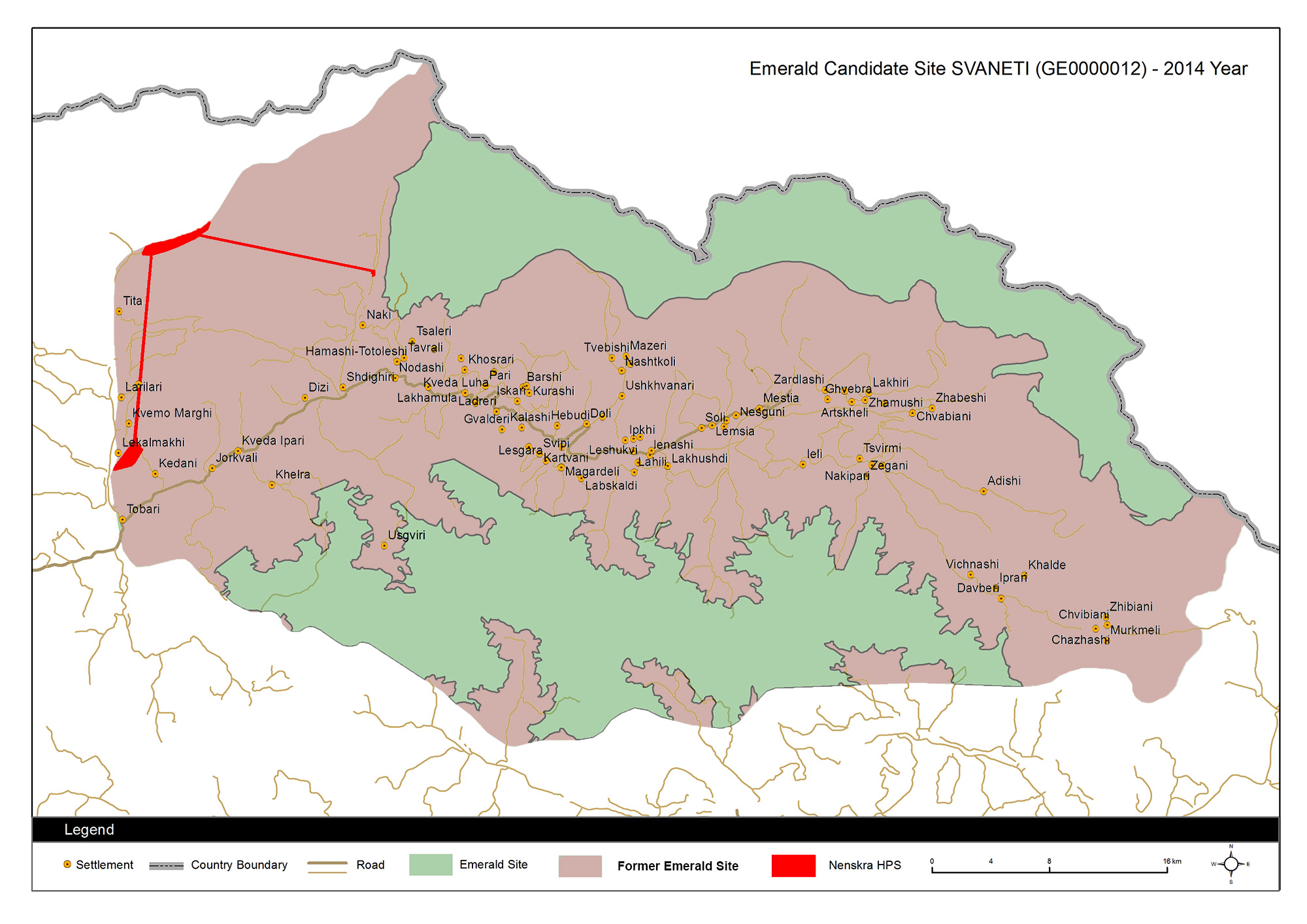
Seeing the awe-inspiring Svaneti region, the forests and rivers that will vanish for the Nenskra HPP, it is easy to understand these concerns, the anger and the feeling of hopelessness that locals express. Capturing water from these two serene rivers, the impacts of the project would stretch for dozens of kilometres, from the transmission lines to the power house, the site of the dam and over and across the mountains along the future water intake tunnel from the Nakra river. If the dam plans are implemented, it will get Nakra river down to 10% of its current flow and Nenskra to 5%. The project will affect numerous pasture lands and summer grazing areas for animals and its reservoir will flood hectares of forest.

A biodiversity expertise commissioned by Bankwatch identified several species of wild protected animals in the region including Eurasian lynx, brown bear, Persian leopard, booted eagle among many whose habitats will be disturbed by the future dam. Moreover, the region is experiencing annual mudflows and landslides and is well known for its geological instability, something people fear might be emphasized when the dam is built. Locals have also expressed great concerns over the impact the the dam will have on the humidity levels in the villages, causing numerous health problems as was the case of the Enguri HPP built in the region during soviet times.

A hiking trail in the Svaneti mountains. (Image (c) Rosa Vroom)

The project promoter is JSC Nenskra, a Georgian company established by Korean K-Water with a 10% share of a Georgian state owned company. JSC Nenskra has already benefitted from several deals with the Georgian government, among others receiving forest land for one dollar contracts (see page 20). The locals we spoke to and who have used this land for centuries told us they were not even aware of the deal.

Patronising perception of local culture

JSC Nenskra has committed to compensating the rightful owners for all pasture land and assets that will be lost due to the project. But during our visit and discussions with affected people, we discovered major flaws in the company’s assessment of the number of people that will be affected, their assets as well as the compensation they are entitled to. The shortcomings, which we have collected in a report, are proof and consequence of a lack of proper consultations with local communities.

The majority of people living in the two valleys own cattle that graze on summer pastures, lands which are inherited since generations and co-owned by up to five families. Customary law still dominates the region and people share both pasture and other assets such as summer cabins. During our discussions with affected households, we discovered that the project developer failed to map all the rightful users of these lands and assets. Instead, the company included single users in the compensation scheme, thus leaving behind numerous other co-users. This is the case for all the households we interviewed and from the assessment of the project documentation it seems it has been the practice for all the pasture lands that will be lost. In addition, a number of individual owners of land and cabins from the Nakra valley have been completely left out of the compensations scheme.

These systemic gaps in how JSC Nenskra assessed people’s land rights reveals not only the poor quality of public consultations, but also a patronising perception of local culture and livelihoods. Our visits to the region have left no doubt that the company has failed to recognise locals’ dependence on their land and the way their communities are functioning, based on strong internal rules of sharing and inheritance.

The poor quality of consultations is also reflected in the unjust amounts of compensation. As detailed in our report, the project documentation does not thoroughly assess the economic situation of affected households. The company’s assessment does not take into consideration the number of cattle that a family owns and which of these families would lose access to pasture and therefore to fodder. It also does not account for the numerous internally displaced people in the communities, or acknowledges the impact of changes in logging activities. In sum, the company has overlooked major aspects of the socio-economic profile of locals which are crucial for a just compensation scheme.

Khaishi villagers discussing the Nenskra HPP. (Image (c) Rosa Vroom)

Moreover, the company is still delaying an assessment of the impacts of facilities associated with the hydropower plant such as transmission lines and a waste disposal site. Needless to say that also the consultations with affected communities has not happened yet.

While the project documents made available by JSC Nenskra do not contain information on the location of these associated facilities, cadastral plans obtained from the Georgian authorities show that the location has already been agreed on. Local residents, who have signed letters demanding to be consulted about the locations of these facilities and the compensation they are entitled to, are understandably outraged.

Many still fear to speak out about the project and have asked for confidentiality during our interviews, afraid there might be repercussions on their families or jobs. A change in the logging licence system from 2015 has restricted the possibility for locals to obtain licences, forcing many into the illegal logging and timber sales business.

But the threat of losing parts of their identity along with the development of the project drove more than 300 people to sign a letter this June expressing their opposition to the project and their disappointment with the company’s failure to take account of customary law and local culture. And some are still taking the risk of openly opposing the project — in August, Bankwatch witnessed a large group of locals stepping out from the last round of public consultations held by the company.

International standards

Assessments of expropriation and compensation are not the residents’ own ideas, but international standards that JSC Nenskra has to respect to receive international public finance. Yet countless breaches of these standards are evidence that the Nenskra hydropower project is a serious threat to the local Svan communities.

If realised, this project will strip over 200 people, some of whom already living in poverty, of their pasture lands and livelihoods. The project must not go ahead until the project company is conducting individual assessments in order to have a full picture of the socio-economic situation and the fair amounts of compensations.

Multilateral development banks have so far delayed their approval date for loans for the Nenskra project in light of the numerous environmental and social concerns. With Georgia’s hydropower sector marked by controversies and major errors in the past, international investment ought to tread more carefully with approving any more projects.

When banks’ clients lack the capacity and willingness to understand the contexts in which they operate, the irreversible disruption of the fabric of entire communities is inevitable.

[Campaign update] EBRD confirms negative impacts of Albanian hydropower plants on people and the environment

It’s been a hot summer all over the Balkans. A heatwave called Lucifer struck Albania, drying up its river and causing numerous forest fires. Since Albania relies 90% on hydropower for its electricity, the drought resulted in a significant drop in production, forcing Albania to import 80 percent of it electricity. This is a stark warning to financiers and investors involved in the current hydropower frenzy that climate change is not only real but that it increases the risks of investments in climate sensitive hydropower.

It’s been a hot summer for the staff of the European Bank for Reconstruction and Development (EBRD) too. The EBRD commissioned teams to verify the findings from a Bankwatch fact-finding mission from June this year. During our mission we uncovered the destruction left behind by the Rapuni and Ternove hydropower plants that are financed by the bank. The EBRD’s own findings confirm many of our observations as the bank told us in our ongoing email communication. [1]

Rapuni

In a nutshell for the Rapuni 1 & 2 plants close to the eastern city of Librazhd, the EBRD confirms that the lack of water in the Quarishte and Rapuni river beds is causing among other impacts a lack of water for a cornflower mill that 200 people are using.

The EBRD also criticises the connected Rapuni 3 & 4 hydropower plant, saying that the construction “without an environmental flow and without a fish pass is unacceptable and shows a deficit of control by the Albanian authorities”.

The Rapuni 3 & 4 dam, owned by the Albanian Orthodox Church, is connected with Rapuni 1 & 2 projects with a water tunnel, but it is not directly financed by the EBRD.

The Orthodox Church declined to talk with Bankwatch and our partner Eco Albania about the environmental catastrophe their their dam has caused, even after repeated attempts to draw their attention to the problem.

A son of the miller's family standing next to the millstone that has become useless.
Erosion caused by constructions for the Ternove hydropower project.

Ternove

It is virtually impossible not to notice the heavy erosion and deforestation caused by the Ternove hydropower plant close to city of Bulqize. A system of lakes is used to feed the Ternove hydropower plant here. As part of the project, a system of channels transports water from smaller lakes to the main lake Liqeni i Zi from where the Ternove power plant is being fed.

Based on its own findings, the EBRD admitted to the need for revegetation of the area.

The bank, however, downplayed Bankwatch’s finding that the glacial lakes in the area are affected by the sediment inflow – calling the impact ‘limited’ – a judgement that is difficult to understand seeing the channels full of brown water that transport water from the other lakes to the lake Liqeni i Zi. With the water transported to Liqeni i Zi visibly containing large amounts of earth, the Bank must ensure that its own recommendation to install sediment traps will be implemented.

A map showing a system of lakes that is used both for hydropower and irrigation purposes.
Several lakes are used both for hydropower and irrigation purposes.
The channels transporting water full of sediment to Liqeni e Zi.

Lack of communication

The villagers that we met back in June reported a serious lack of communication with the company. The extremely hot summer, they told us now, caused severe problems with irrigation in August.

To our great surprise, a lack of a grievance mechanism was one of the EBRD’s findings. The villagers were not able to direct their complaints to the company. And the main complaint is everywhere the same: lack of water for irrigation. Since the same system of lakes is used for the hydropower plant, the farmers suspect that the lack of water in summer months has to do with the hydropower plant. The frustration was so great that it escalated into physical conflict a few years ago. Had the company established a contact point and a grievance mechanism for locals, these issues may have been prevented.


Since the monitoring reports and environmental and social action plans have not been made public, neither Bankwatch nor the Albanian public can find out what really happened.


Too little too late

What comes as a great surprise for me is how these problems haven’t been identified during previous monitoring missions of the EBRD. Or, if they have been identified, why nothing was done. Since the monitoring reports and environmental and social action plans have not been made public, neither Bankwatch nor the Albanian public can find out what really happened.

If the EBRD insisted on greater transparency, the company would have to be more accountable and to resolve the outstanding issues. But more than that, providing access to monitoring data can be beneficial to all stakeholders. If the EBRD went a step further and required from its clients to release open data about key environmental indicators (like residual water flow in case of a hydropower plant), public oversight could act as a controlling mechanism and save money and time by identifying problems early enough.

But just looking at the damage done by this year’s drought and the destruction unleashed by the hydropower plants built so far, I am more and more certain that a change in policies will not be enough. A shift in investment priorities is needed. The EBRD should prioritise solar and wind to be able to reach its renewable investment targets. Investors need a signal from big players such as the EBRD to choose other, more climate-resilient power sources. So that Albania’s people do not spend another summer with their rivers dried up while fire is destroying their forests.

The EBRD’s recently signed Memorandum of Understanding with the Albanian Ministry of Energy and Industry is only one step in the right direction to stimulate sound investments in solar power generation.

Notes:

1. The lack of transparency has been a major obstacle in addressing grievances of locals so far. Considering the severe problems that the plants have caused and the shortcomings in dealing with them, we decided to publish the EBRD’s email exchange with us.

Bulgaria’s Struma motorway becomes test case for European Commission’s commitment to EU nature protection law

Bulgaria’s government has proven yet again its determination to disregard inconvenient truths and opinions at a public hearing on the Environmental Impact Assessment (EIA) and Appropriate Assessment (AA) of the Struma Motorway, connecting Sofia and Thessaloniki, that was held on Monday, September 11, in the town of Kresna.

With two thirds of the motorway built, the bottleneck is the road’s middle section that threatens the Kresna Gorge, Bulgaria’s richest biodiversity site. But while five alternatives are on the table, the government has already decided that it should be the one that breaches EU law.

€756 million of EU taxpayers money were allocated for the construction of the Struma motorway, of which €274 million has already been spent for the other sections. Bulgaria’s environmental minister was quoted that Bulgaria is expecting to get €680 million from the EU for the finalisation of the project.

In view of this the European Commission and the Bulgarian Government must ensure that the project is completed by 2023 in full compliance with EU nature laws. Otherwise the Bulgarian Government risks having to repay some or all of the grants. At stake is a biodiversity hotspot of European importance containing 35 especially protected EU habitats for 92 EU-protected species, such as land tortoises, Leopard and Fourlined snakes, 12 species of bat, golden eagles, griffon vultures, bears, wolves, otters and other species.

The EIA and AA present five alternative routes of the highway. The main choice is between a full eastern alternative (G20), which by-passes the gorge completely, and a semi-eastern alternative (G10.50), which routes the south-bound traffic on the existing road through the gorge, but by-passing Kresna town, and the north-bound traffic over the hills east of the gorge.

Map of the Kresna gorge showing the alternative favoured by locals and environmental campaigners.

Environmental groups and nearly 1000 locals have supported a petition in favour of the full eastern alternative outside the gorge, which leaves the existing road for the needs of local communities.

People stressed at the public hearing that the existing local road through the gorge ensures a more direct and cheaper (toll-free) connection to their agricultural lands, to nearby mountain villages and to the main employment, business and educational centers, Blagoevgrad and Sofia, to the north. A semi-eastern alternative is designed to primarily serve the needs of tourists traveling at higher speed to the Greek seaside. It will force the locals to use a much longer, high-speed road at higher altitudes.

The government’s favourite alternative

As consultations often go, not all alternatives are equal.

Inside the overcrowded meeting hall project promoters, the Kresna mayor and the Blagoevgrad regional governor advertised the semi-eastern alternative and the promises for commercial zones on the motorway. They all emphasised that it is virtually the only option and that there is no real choice or room for discussion. Their argument was the urgent need to find a solution and to prevent the bottleneck, which has caused a significant increase of casualties in both the gorge and the town of Kresna.

The overcrowded meeting hall where the Kresna gorge was discussed.

The superiority of human life and safety and the imperative to prevent further road accidents were used very effectively by the event organisers to hijack the purpose of discussing the EIA/AA. Biodiversity protection was juxtaposed as an inferior cause of fanatical ecologists, not as a requirement of EU law and a condition for receiving EU funds for the project.

But the Bulgarian government and the Roads Infrastructure Agency, have actively promoted the semi-eastern alternative even before the public meetings. In fact already in April this year the Agency announced that it had selected an extended conceptual design for the motorway on the semi-eastern option, well before the EIA and AA were finalised. Accordingly, the EIA/AA presented at the public hearings had their scope and analysis carefully crafted to favour this option. But there are several serious problems with the semi-eastern alternative.

First of all a recommendation by the Bern Convention from 2004 requires from the Bulgarian government to find a route outside of the gorge. Based on this recommendation and after Bulgaria’s accession to the EU in 2007, an Appropriate Assessment from 2008 ruled that, to mitigate the impacts of the motorway on the Kresna Gorge, (i) transit motorway traffic must be routed outside of the Gorge, and (ii) the Kresna section must be completed before other sections, in order to avoid an increase in traffic on the existing road and avoid serious adverse impacts on the integrity of the Kresna Gorge. The second condition has already been breached. Now the government seems to believe it can get away with breaching the first condition, too.

The second major shortcoming is the scope of the assessments. According to public statements of Bulgaria’s minister for regional development, Mr. Nikolay Nankov, the semi-eastern alternative will require ‘widening, rehabilitation and straightening of the turns’ of the existing road through the gorge, as it will take the traffic from Sofia to Greece. The impact of these works are not assessed in the EIA or the AA.

Moreover at the public hearing in Kresna project promoters advertised to local people the additional commercial, parking and recreational zones along the motorway – to be situated in the most fertile agricultural land of Kresna. The impacts of these areas, and of the accompanying power and water infrastructure, have not been included in the EIA/AA scope and have not been assessed either.

The Bulgarian government has indicated that it plans to finance the ‘rehabilitation’ of the existing road through the gorge from the national budget. This will have adverse impact and will cause irreversible harm to the gorge. The hope, apparently, is that with EU-funding only channeled to half of the motorway, the other half, and the promised commercial zones, can be built in breach of EU Directives, and possibly without an EIA.

In short, EU money – EU rules; Bulgarian money – Bulgarian rules. This calculation of the Bulgarian government is extremely bold and dishonest. It can only pass, if the European Commission exhibits the same level disregard for EU law.

Systematic shortcomings will deprive people affected by Georgian dam of compensation

An official assessment of land assets and livelihoods of people affected by the Nenskra hydropower plant in Georgia contains many mistakes and inaccuracies, as a report released today reveals. The shortcomings of the so-called Land Acquisition and Livelihood Restoration Plan, which is a prerequisite for public financing for the project, will cause severe damage to locals in the Svaneti region in Georgia.

The Nenskra hydropower project in Georgia’s Caucasus mountains will have a significant impact on local communities of indigenous Svans. Since the plans for the project became known, locals have tried to influence the decision-making and protested against impacts they fear will undermine their livelihoods.

Partly to address these concerns, and those of international public lenders who are lining up to finance the project, the project developer JSC Nenskra Hydro released an extensive Environmental and Social Impact Assessment (ESIA) package earlier this year. With about 75 percent of the project costs planned to come from public financing sources, preparing an ESIA, which is a pre-requisite for such support, is a crucial stepping stone for JSC Nenskra Hydro’s plans.

The package includes a section on the Land Acquisition and Livelihood Restoration Plan (LALRP). Its content should provide a detailed mapping of the socioeconomic situation of people affected by the project, the use of their assets, the expected effect on livelihoods, etc.

However a field investigation conducted by Bankwatch in July revealed large discrepancies between the project promoter’s assessment and the reality on the ground. Severe shortcomings have been uncovered in the findings and the methodology used to assess the situation of the people affected by the project.

Confronting representatives from villages in the Nenskra and Nakra valleys with JSC Nenskra Hydro’s impact assessment, Bankwatch learned that the information initially collected was either incomplete or has been misinterpreted, resulting in inaccuracies in the data about people’s vulnerability statuses, pasture land usage, asset usage and ownership, and financial situation, among others. Much of the impact of the Nenskra hydropower plant on households has so far been overlooked due to these incoherencies. In consequence, the compensation offered to locals has been miscalculated in several cases, with dire results.

For instance, several households in the communities are dependent on the use of pasture lands for grazing purposes and wooden cabins that would be temporarily or permanently lost. The cabins are often used by several households in parallel. However in the cases investigated by Bankwatch, the compensations for the loss of such an asset were offered to a single user with no compensation guarantee for other users or households.

Accumulated mistakes

What is worse, a single household often suffers from a combination of such errors. For instance in the case of the women-headed household of Iso Chkhvimiani, the LALRP fails to indicate her ownership and usage of a cabin which would be temporarily lost despite it being built by her deceased husband. Instead, the compensation was offered to another household using the same cabin but with no further detailed instructions about dividing the compensation sum.

But other shortcomings and misrepresentations are additionally reducing the compensation Chkhvimiani’s and other households receive. Among others:

  • The number of household members is wrong.
  • Internally Displaced Persons (IDPs) – of which there are many in Svaneti following the conflict in the neighbouring region Abkhazia – are not recognised as a „vulnerable group“. This deprives them from additional or better services from the company, including jobs, trainings, compensation, etc.
  • Internally Displaced Persons are not defined as „poor“ in the company’s report, regardless of their financial and social status, defacto further depriving them of support. The basis for the company’s categorisation of people living in poverty is whether they receive a poverty allowance from the Georgian state. IDPs, however, receive a separate IDP allowance and are not entitled to receive the poverty allowance.

Assessment failed

One of the key aims of Land Acquisition and Livelihood Restoration Plan is mapping the situation of affected households and communicating it to them. Yet it was evident that the people we spoke to were unaware of the discrepancies between the assessment and their real situation. Neither had they been informed about their right to complain, feeling powerless against the developer’s actions. The aim of the Land Acquisition and Livelihood Restoration Plan has therefore not been fulfilled by the project promoter.

International financial institutions who are considering financing the Nenskra hydropower plant will have to make sure that these shortcomings have been rectified before deciding on pumping hundreds of millions of dollars into a project that’s set to ruin lives.

Read more:

Download the report as pdf >>

The true colours of Svaneti – A festival in the stunning Georgian mountains

The imposing mountain range in Upper Svaneti, Georgia has for a while been a hidden gem for hikers. With only few tourists passing through, being invited to a home by one of the local Svans is a real cultural and culinary treat. A glimpse into the authentic way of life in this remote region.

The ethnic subgroup of Svans has its own spoken language and traditions, but has recently come under pressure under the wave of infrastructure projects in the region. Settling in the deep valleys surrounded by snow-capped mountains, the communities on the banks of Nenskra and Nakra rivers are threatened by the impacts of the Nenskra hydropower project.

To relish and help preserve the local Svan culture and introduce it to an international audience, the We Are Svaneti festival was called to life. In the heat of mid-July, people of Upper Svaneti, Georgia, welcomed travellers from across the world to their back yard to witness the diversity of local culture and celebrate together.

Balkani Wildlife Society and Bankwatch as the festival coordinators joined the local community leaders from Chuberi, Nakra, Pari, Khaishi, Becho, Tobari and Mestia to prepare the festival grounds at the bank of the stunningly powerful Nenskra river and overseen by the awe-inspiring Caucasus mountains.

The festival programme offered something for everyone, from arts or music workshops, to challenging themselves on a slackline or enjoying the musical and dance performances during sunset to let the day unwind.

As the highlight of the day, the gathering crowd witnessed the musical and dance performances.

Children excel at a photo competition

Not surprisingly, the sparkly-eyed Svan children had the time of their life at the festival. They seemed to be everywhere, as if every single Svan kid had come to the festival. This was an important achievement for the organisers, since it will be these young, active people who will soon be the heads of the Svan communities and who will pass on their culture to the next generation.

For the kids, there is always something happening at the festival!

One of the highlights for the younger participants was a photography competition, which turned out to be a real hit. Nino Latali, the director of the Svaneti Museum in Mestia, who also gave a lecture at the festival, was especially amazed by the beauty of the shots taken in only a limited time.

The winners of the photo competition on Svaneti nature and people (left to right): Miranda Afrasidze, Veronika Chkhvimiani, Ana Ckadua.

Crafts and arts

Guests were also invited to participate in several arts and crafts workshops focusing on the beautiful local patterns and colours. A musical workshop with a Nigerian special guest was especially popular among the members of the local choir. (See their wonderful performance here.)

Everyone had the opportunity to try their hand in the arts and crafts workshops or watch skilled carpenters at work. Ready-made items were also available on sale.

International audience

Among the festival crowd, one could find participants with no particular resemblance to local Svans. These were the curious folk who could not resist taking a long trip to reach Svaneti and experience the welcoming atmosphere at the festival.

Guests from Poland, USA, Spain, Egypt, Turkey, Bulgaria, Estonia, Czech Republic, Russia, Romania, UK, Nigeria, Germany, Iran and probably more were thrilled and inspired after spending a few days in the nature dipped in Svan culture.

Tolu, a special guest from Nigeria, introduced the melodies and rhythms from his homeland and also teamed up with the local Svaneti choir.
A festival participant from America showing her skills on a slackline and passing them on to the locals.

Besides the international colours, the local Svans were more than happy to show their local dresses and kids wore them with pride.

The local kids showing their true colours.

The mountains and valleys in Svaneti are a paradise for hikers. Paul Stephens, the co-founder and executive director of the Transcaucasian Trail, an organisation working to create a hiking trail across the Caucasus to promote, connect and preserve the local culture and environment, attended the festival shared his plans of promoting the perfection of Svaneti to enthusiastic hikers across the world to ensure the development of the region.

The We Are Svaneti festival succeeded in showing that the Svan heart is beating steadily and surely. And what’s more important, the Svan youth will continue the traditions of their ancestors. We can’t wait for the second We Are Svaneti festival next year.

EU funds in central and eastern Europe: ‘partnership principle’ still not translating to ‘partnership in practice’

As a civil society organisation operating across central and eastern Europe, Bankwatch views its role as a watchdog on how effectively the EU funds are being spent in our countries seriously – with billions of euros on the line, we need to ensure that spending decisions are taken democratically, with transparency to the fore and with stakeholders having a real say in how scarce public investment money is being deployed.

To achieve these ends, our member groups around the region are active in EU funds participative processes such as consultations and dialogue with partners during the planning, implementation, monitoring and evaluation of projects financed by EU funds. Guiding all of this, the legally binding European Code of Conduct on Partnership (ECCP) lays down the standards for the involvement of various NGO partners. The ECCP also facilitates the sharing of information, experience, results and good practices for the current 2014-20 programming period.

Mindful of the ECCP’s importance and centrality to the 2014-20 period, Bankwatch regularly assesses its implementation in central and eastern European member states. This spring, in the middle of the programming period (and mid-term review), we asked environmental and – where available – social NGO delegates from the Czech Republic, Hungary, Latvia, Poland and Slovakia to provide their assessments of the state of play with the ECCP.


Read the report:
EU funds briefing: implementation of the partnership principle
Briefing | August 29, 2017


The assessments were based on a standardised questionnaire, and the main findings were the following:

1. The level of involvement of NGO delegates in EU funds programming

  • Across the board, NGO partner representation in EU funds monitoring committees has been formally accomplished.
  • The selection of delegates from environmental groups is organised in different ways, with umbrella organisations playing a crucial role. Adequate representation and thematic coverage are not always guaranteed, though.
  • When formulating their own rules of procedure, monitoring committees only formally took account of some of the provisions laid down in the ECCP.

2. NGO access to information, influence

  • Information flows between managing authorities (MAs) and monitoring committee (MC) members are often lacking and need to be made smoother. Even though the required timing (10 days for consultation) tends to be met, the reality is that procedural constraints make it difficult to establish and maintain a coordinated, working collaboration between NGO partners and Mas, or between partners.
  • The procedures and rules of the MC provide NGOs with only a limited opportunity to influence. The main problems are that governmental/authority representatives outnumber NGO representatives, and that government decisions are sometimes made before consultation within the MC, especially when it comes to major or priority projects. A further challenge is that efforts to provide effective input (including the production of detailed NGO papers, the forming of coalitions or stimulating public debate) requires significant time and capacity from the NGO side, yet capacity building opportunities provided by the MAs are limited. Some improvements in this regard have, however, been seen: including the new Slovak law for a more balanced voting system, and the Latvian practice whereby MC members become state officials.
  • Preparatory documents and minutes for MCs are not equally publicly accessible across the countries surveyed.

3. NGO involvement during implementation (calls, progress reports and evaluation, and monitoring)

  • Regarding NGO influence, relatively belated or unsatisfactory involvement of partners has been encountered during the preparation of calls for proposals. Early involvement took place only in Slovakia.
  • Insufficient consideration by MAs of environmental partners’ recommendations was commonplace, particularly regarding the integration of sustainability into the selection criteria of calls for proposals.
  • MAs do not tend to involve environmental NGOs during assessment of project proposals, particularly when it comes to the horizontal integration of sustainability into project selection.
  • NGO partners are involved in commenting on the largely statistical, uncontroversial progress reports developed by MAs only belatedly – thus the potential to provide meaningful, expert input is limited. Based on previous experience, too, the same applies to monitoring/evaluation.
  • Potential conflicts of interest related to project selection are not being adequately dealt with or resolved.

4. Strengthening the institutional capacity of NGO partners

  • There is no standardised approach to ensure capacity building for relevant partners, especially for environmental NGOs hoping to achieve the horizontal integration of sustainability into the EU funds, or for key thematic areas such as low-carbon development, climate change and environmental protection.
  • Where established, systemic capacity building efforts are rather fragmented and do not fully meet the needs of NGO delegates: while travel and other direct expenses may be reimbursed, nevertheless crucial elements recommended by the ECCP for strengthening the institutional capacity of partners tend to be lacking. There is often a lack of understanding by MAs concerning which capacity building costs are eligible under the available ‘technical assistance; funding.

Based on our assessment, Bankwatch recommends the following to EU decision makers:

  1. In order to improve the implementation of the European Code of Conduct on Partnership, and to fully realise the benefits of efficient partnership, further efforts are needed by MAs to enable timely access to all relevant information, to enhance the involvement of NGO delegates in strategic discussions and decision-making processes, and increase the capacity of stakeholders.
  2. More support is needed to strengthen partners’ institutional capacity and their ability to deal with the workload. Such support could take the form of better access to external expert assistance, the establishment of permanent MC secretariats which are independent of the MAs, and, possibly, a mechanism to disburse per diems to those Committee members who are engaged in addition to their normal duties. The European Commission (DG Regio) could also consider a financing framework for national watchdog experts, to come from technical assistance budget lines.
  3. The widely-experienced imbalance in voting rights should also be addressed because, in the current setup, governmental parties can always outvote civil society parties, and it entirely depends on the MA whether it takes civil society comments or recommendations into account, chooses to discard them without due consideration or explanation. The amendment to Law no. 292/2014, on the contribution from the European structural and investment funds, in Slovakia provides an important example – and precedent – of how to address this issue in other countries.

Photo by Crew on Unsplash

« Previous Page
Next Page »

Footer

CEE Bankwatch Network gratefully acknowledges EU funding support.

The content of this website is the sole responsibility of CEE Bankwatch Network and can under no circumstances be regarded as reflecting the position of the European Union.

Unless otherwise noted, the content on this website is licensed under a Creative Commons BY-SA 4.0 License

Your personal data collected on the website is governed by the present Privacy Policy.

Get in touch with us

  • Bluesky
  • Email
  • Facebook
  • Instagram
  • LinkedIn
  • RSS
  • YouTube