• Skip to primary navigation
  • Skip to main content
  • Skip to footer

Bankwatch

  • About us
    • Our vision
    • Who we are
    • 30 years of Bankwatch
    • Donors & finances
    • Get involved
  • What we do
    • Campaign areas
      • Beyond fossil fuels
      • Rights, democracy and development
      • Finance and biodiversity
      • Funding the energy transformation
      • Cities for People
    • Institutions we monitor
      • European Bank for Reconstruction and Development
      • European Investment Bank
      • Asian Infrastructure Investment Bank
      • Asian Development Bank (ADB)
      • EU funds
    • Our projects
    • Success stories
  • Publications
  • News
    • Blog posts
    • Press releases
    • Stories
    • Podcast
    • Us in the media
    • Videos
  • Donate

Home > Archives for Press release

Press release

European Ombudsman requests more lending transparency from European Investment Bank

A group of NGOs has welcomed the decision, published yesterday, but regrets the weak language used, which only makes suggestions and encourages the Bank to adopt certain levels of transparency.

The decision was adopted following a complaint from NGOs ClientEarth, CEE Bankwatch Network and Counter Balance, challenging the non-compliance of the transparency policy of the EIB with international and EU standards applicable to access to information.

The Ombudsman did not conclude that there was maladministration but highlighted two key areas where the EIB should raise the bar: transparency of its investigations and of its operations via financial intermediaries – typically commercial banks and investment funds.

Senior lawyer at ClientEarth, Anaïs Berthier said: “The EIB should take on board the suggestions of the Ombudsman and bring about its transparency regime in line with international and EU law on access to information so that it ensures that it is accountable for every Euro of public money spent.”

Director of Counter Balance Xavier Sol said: “We welcome the Ombudsman’s recommendations for the EIB to raise the bar on transparency. It is now time for the EIB to start disclosing more information about its internal inspections, investigations and audits on fraud and corruption cases. In recent cases such as controversial loans to Volkswagen or infrastructure projects in Italy, the EIB has systematically hidden behind these restrictive provisions in its transparency policy not to disclose the outcome of its investigations. The culture of secrecy prevailing at the EIB needs to reach an end, as it is key for European taxpayers to know that European funds are spent in the public interest“.

Anna Roggenbuck, Policy officer at CEE Bankwatch Network, said: “We welcome the Ombudsman observation that the current Transparency Policy is misleading to the public in regards access to information on operations through the financial intermediaries. We regret the Ombudsman did not review the EIB’s actual practice which contradicts even the current disclosure requirements, as Banwkatch recent research showed. As this practice of confidentiality of projects significantly impacting environment may not be acceptable, we will lodge a new complaint tackling an issue of confidentuiality of financial intermediary operations.“

The EIB, which invests around €80 billion in projects annually, has a huge impact on the environment in the EU and beyond. This calls for the highest standard of transparency and accountability on how these funds are used.

While the language of the decision is quite weak on certain points, the Ombudsman, Ms O’Reilly, made several recommendations to improve the policy – confirming key demands raised by civil society in recent years.

She encourages the EIB to remove from its transparency policy the presumption of non-disclosure related to information and documents collected and generated during inspections, investigations and audits on fraud and corruption, including once these have been closed.

This is welcome, as the huge amount of funds lent to companies, States and national banks have already led to corruption cases.

The Ombudsman also suggests the EIB modify the wording of provisions related to its intermediated loans – which imply financial intermediaries between the EIB and the beneficiaries – in order to clarify that the transparency regime for these indirect financial operations should be similar to the one applicable to direct loans.

For more information:

Anaïs Berthier
Senior lawyer, ClientEarth
aberthier@clientearth.org
+32 2 808 34 68

Xavier Sol
Director, Counter Balance
xavier.sol@counter-balance.org
+32 2 893 08 61
Twitter: @xavier_sol

Anna Roggenbuck
Policy Officer, CEE Bankwatch Network
annar@bankwatch.org
+48 509970424
+48 91 831 5392

Post 2020 EU budget: Commission proposal promises sustainability but continues funding contradictory policies

For immediate release

The Commission’s proposed framework for the post-2020 EU budget acknowledges the need for Member States to spend in line with the objectives of the UN Sustainable Development Goals.

But the People’s Budget campaign cautions that references to the Sustainable Development Goals are not enough to ensure genuine reform of the EU budget. Equal considerations for social, environmental and economic aspects are essential for a future EU budget based on a set of sustainability principles [2] advocated by the People’s Budget campaign.

European decision makers now must bring more substance and ambition into the EU budgets’ legal texts, and ensure that spending plans strengthen European values, like democracy, the rule of law and protection of civil space.

Raphael Hanoteaux, EU Policy Officer, CEE Bankwatch Network: “The Commission’s proposal is a loud and clear signal to Member States that spending priorities need to change. Signaling less money for countries of central and eastern Europe, governments in the region need to ensure that spending is targeted and the focus is on quality. Now more than ever, transparency over the budget must be stepped up to ensure that taxpayer money best serves people, the environment and the economy. One of the easiest ways to do this is by eliminating wasteful and harmful subsidies for fossil fuels.”

Klara Hajdu, SDG Watch Europe: “The future EU budget should finally stop funding unsustainable development. Giving some money for saving nature, eradicating poverty or fighting climate change will not solve any problems, if we continue to fund fossil fuel investments, intensive agriculture or favour the rich beneficiaries in the funding rules undermining social equality.”

Dr. Raphael Weyland, NABU Brussels: “Shockingly the direct payments under the Common Agricultural Policy, widely recognised as the most dysfunctional part of the EU budget, are being protected against broader cuts. There is no real reform towards a more sustainable agriculture and land-use policy. The Budget commissioner ignores the collapse of biodiversity by failing to properly allocate within the CAP money ring-fenced for nature and by shifting money to the more sustainable second pillar. The tiny increase of LIFE will not bring back bees and insects back to life.”

Sergio Aires, President of EAPN Europe: “While we welcome the increased budget, the explicit focus on the Sustainable Development Goals and crucially, the European Pillar of Social Rights, we are worried about the potential impact of the proposed 7% cut in EU Cohesion Funds, traditionally a strong tool in the fight against poverty. We will be closely monitoring further announcements this month to understand the impact of this 7% cut. We count on Member States and the Parliament to ensure that the new  ‘ESF+’ ringfences a minimum of 30% to the fight against poverty and social exclusion, thus showing a clear political and financial commitment to the fight against poverty and social exclusion.“

Johannes Trimmel, CONCORD President: “With adopting the 2030 Agenda for Sustainable Development and the Paris Agreement, Europe has taken serious commitment towards global solidarity and a more sustainable world. By suggesting to increase the external action allocation in the new EU budget proposal in comparison to the previous framework, the EC reinforces this general commitment. Yet, the EU as a whole – including bilateral budgets from Member States – needs to take further significant steps to live up to giving itself the means to confirm its engagement.”


NOTES

[1] The People’s Budget campaign (www.peoplesbudget.eu) brings together more than 70 European and national civil society organisations from different sectors, calling for a sustainability reform of the EU budget. The campaign is supported by SDG Watch Europe (https://www.sdgwatcheurope.org/)

[2] Principles for sustainability reform are outlined here http://www.peoplesbudget.eu/wp/wp-content/uploads/Position_MFF_1December_2017.pdf

Slovakia: Platform for Coal Regions in Transition could benefit coal company instead of communities

Upper Nitra, Slovakia’s main coal region, is one of the priority regions of the European Commission’s Platform for Coal Regions in Transition, via which the EC aims to help regions moving away from coal to prosper.

The call for proposals came on 22 March, following a closed-door meeting between government representatives, the Vice-President of the European Commission Maros Sefcovic, and main Slovak coal company HBP (the final template for projects was sent even later).

The call included a very short deadline – little over a month – for submitting proposals. Such a short deadline is a clear sign Slovakian authorities care little about citizen participation in shaping the future of Upper Nitra. The only actor that will be able to mobilise fast and submit projects is likely to be the coal company itself.

Slovakia is one of the few countries in the EU to subsidise electricity coming from domestic underground lignite mining: HBP gets through Slovak electricity company about 100 million euros annually generated from a feed-in-tariff applied to Slovak consumers.

‘HBP already gets more state support than it should,’ says Lenka Ilcikova from Friends of the Earth CEPA Slovakia/ Bankwatch. ‘There is no reason it should be allowed to suck even more resources away from local communities – those made available under the Coal Platform.’

‘The European Commission must avoid being dragged into a dirty domestic Slovak game, whereby a coal company and politicians have helped each other keep power and resources for decades.’

What is even more outrageous about the short deadline for projects is that, only in January, the body representing local authorities in Upper Nitra announced the start of a participatory, bottom-up process to create an Action Plan for the region’s post-coal future. The process is meant to last throughout most of 2018 and be open to all citizens.

Today’s deadline for the call for proposals makes a mockery out of this process. It would only enable the coal company to cash in more resources, potentially with the excuse of promoting clean coal.

‘Kicking off work on the European Platform with such a dubious practice jeopardises the reputation and future of the Platform from the start,’ said Lenka Ilcikova. ‘Mr. Sefcovic, who knows Slovakia closely, should know better.’

For more information, contact

Lenka Ilcikova
Friends of the Earth CEPA / Bankwatch
tel. 00421 905 580 031
ilcikova@priateliazeme.sk
www.priateliazeme.sk/cepa/

www.bankwatch.org

Statement on today’s General Affairs Council

Brussels, April 12, 2018

“At the monthly meeting of the General Affairs Council (GAC), ministers have agreed on a number of limited conclusions on the Cohesion policy that are inadequate to efficiently reform the Cohesion Policy and unlock its transformative potential.

“This decision is particularly important in the course of the negotiations over the EU’s post-2020 budget plan, since cohesion and ESI funds make for a large share of Europe’s budget.

“Bankwatch and a growing number of civil society groups have been repeatedly calling on EU policymakers to ensure that no Europeans are left behind, and particularly not those in the EU’s least developed regions.

“As Europe is grappling with the polarization of social and political discourse, and specifically the rise of nationalism across the continent, the case for a strong, sustainable and democratic Cohesion Policy could not be clearer.

“Specifically, ensuring that EU public money helps transform our energy systems is key to Europe’s role in tackling the climate crisis, and it can also be instrumental in reinforcing the EU project as one that is citizen-led. A reformed Cohesion Policy could help unite Europeans around the much needed energy transition, but the GAC has failed to acknowledge this.

“The EU’s next Cohesion Policy needs to contribute to the global efforts to tackle climate change. To do so, it has to support replacing the dirty, outdated and carbon-intensive energy systems in central eastern Europe with clean, participatory and renewables-based ones. This is no favour – an ambitious Cohesion Policy with climate action and just transition at its heart would benefit both local communities and Europe at large. It’s the disparities and deep inequality between regions that threaten to tear apart Europe’s unique human fabric. And in their decision today, EU ministers have shown that this effectively a lower priority.

“There is also a need to ensure that EU spending is genuinely transparent, accountable and inclusive. Mounting scandals around the use of EU money only help breed euro-scepticism, and member states have the means to ensure that EU laws are adhered to. Increasing support for prosumers and community energy projects, as well as better tackling energy poverty should be prioritised for a Cohesion Policy that is citizen-focussed.

“Today’s General Affairs Council has failed to make the necessary steps for Europe to reconnect to its citizens. In three weeks, the European Commission is scheduled to publish its own proposals for the EU’s next Cohesion Policy. It is crucial that this document draws up a comprehensive and ambitious vision.”


For more information contact:

Raphael Hanoteaux
EU Policy Officer, CEE Bankwatch Network
raphaelh@bankwatch.org
Tel. +32 496 205.903

International banks fuelling a hydropower tsunami that’s decimating pristine Balkan rivers – study

The study [1] finds that the number of hydropower projects in the region that enjoy financial support from multilateral development banks [2] and commercial banks, is even greater than previously known.

Since 2005, the European Bank for Reconstruction and Development (EBRD), the European Investment Bank (EIB), and the World Bank Group have extended loans and guarantees totalling EUR 727 million to no fewer than 82 hydropower plants. This includes 37 projects in protected areas like national parks and Natura 2000 sites, or internationally recognised areas of high biodiversity value such as Important Bird Areas.

The EBRD is the biggest known hydropower financier in the Balkans. The bank has supported a total of 61 plants with EUR 126 million, 29 of them inside protected areas, or internationally recognised biodiversity hotspots.

Although the bank has been more cautious in recent years, it is still considering financing for the Babino Selo plant on the Vrbas and Neretvica cascade in Bosnia-Herzegovina, both of which are planned in biodiversity-rich areas.

The study, which updates a report released in 2015 [3], also finds that commercial bank money is playing a key role in enabling controversial hydropower projects. Commercial bank financing is harder to track due to the lack of transparency in the sector, but the study authors have identified 158 plants with such financing, of which 55 are in protected areas or internationally recognised areas of high biodiversity value.

The most prolific commercial banks – as far as identified – are Austria’s Erste & Steiermaerkische Bank and Italy’s Unicredit Group, for which 28 loans each were found.

Among others, Erste has financed a cluster of seven plants on the borders of Serbia’s Kopaonik National Park. These, together with another eight plants in the area financed from other sources, have left large stretches of the local streams with little or no water for much of the year.

“The financiers need to take their share of the responsibility and ensure compliance with local and international standards. Reckless investment decisions can ruin hundreds of pristine Balkan rivers for good,” says Igor Vejnović, Bankwatch’s Hydropower Policy Officer and co-author of the study.

“The EBRD and EIB will be updating their environmental and social policies this year. This is a crucial opportunity to tighten their rules and exclude financing for hydropower in sensitive areas,” adds Pippa Gallop, Bankwatch’s Research Co-ordinator and co-author of the study.

“The Balkan rivers are of outstanding value within Europe. The dam tsunami is threatening biodiversity and local communities. It is unacceptable that also commercial banks like the Austrian Erste Bank and Italian Unicredit are supporting even the worst projects. They have decent rules on financing hydropower in theory, but aren’t implementing them properly in practice. Many of the plants they have financed would never be allowed in their home countries. They have to stop the financing of hydropower in the Balkans,” says Ulrich Eichelmann of Riverwatch.

“The good news is that more than a thousand planned hydropower plants have no financing yet, so there is still much that can be done to save the Balkans’ unique rivers,” says Gabriel Schwaderer, Executive Director of the EuroNatur Foundation.

The study and the accompanying databases can be found here.

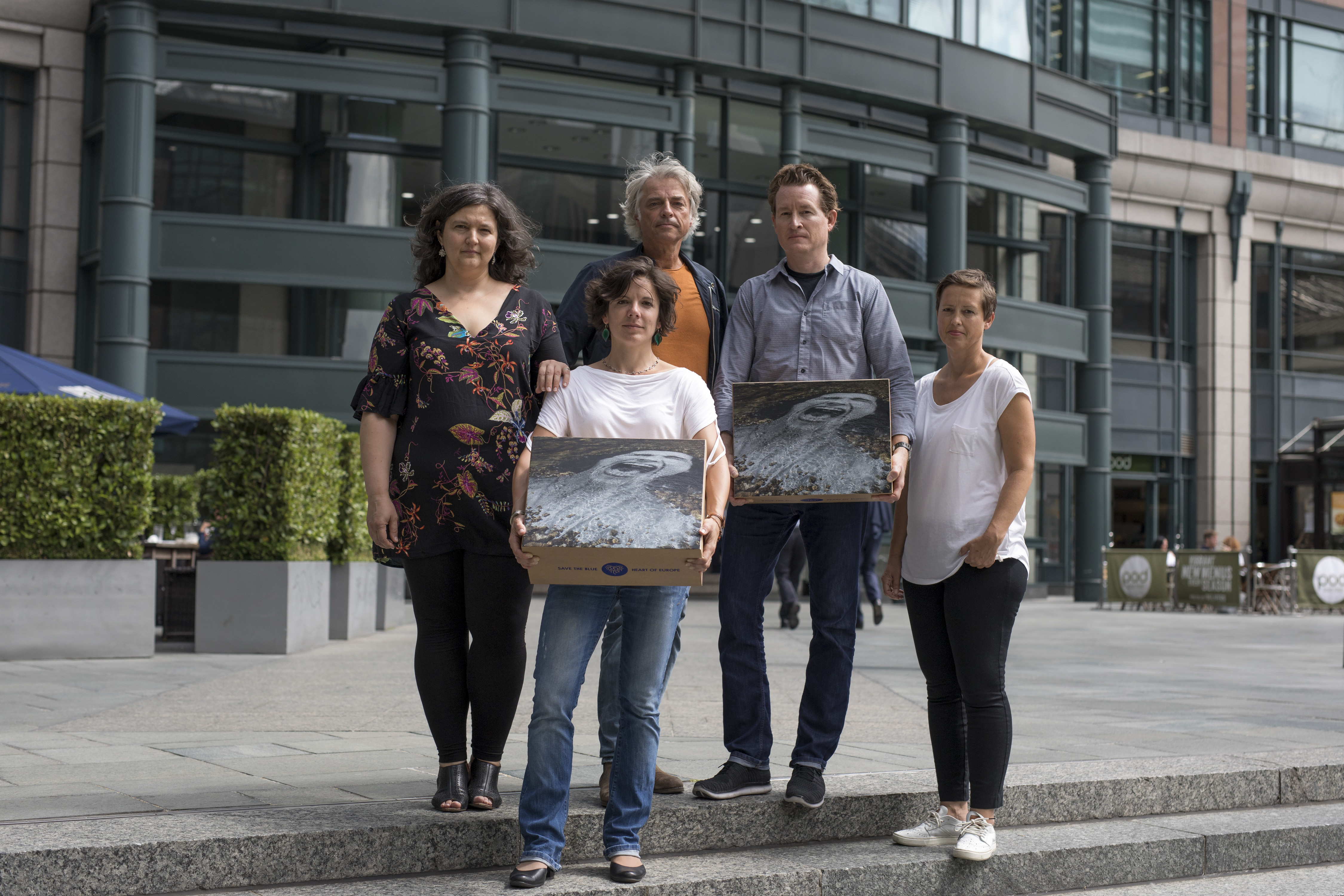
The study was commissioned as part of the campaign “Save the Blue Heart of Europe”

For more information contact:

Igor Vejnović
Hydropower Policy Officer

CEE Bankwatch Network

igor.vejnovic@bankwatch.org

+ 420 274 822 150

Pippa Gallop
Research Co-ordinator
CEE Bankwatch Network
pippa.gallop@bankwatch.org
+385 99 755 9787

Ulrich Eichelmann
CEO, Riverwatch
ulrich.eichelmann@riverwatch.eu
+43 676 6621512

Anja Arning
EuroNatur
Public Relations
anja.arning@euronatur.org
+49 7732 927213

Notes to editors:

[1] The study covers Albania, Bosnia-Herzegovina, Bulgaria, Croatia, Kosovo, Macedonia, Montenegro, Serbia and Slovenia. It examines hydropower plants which have either been built since 2005 or are now being planned. It is an update of Bankwatch’s December 2015 report on this issue, with expanded information on Serbia, Bosnia-Herzegovina, Bulgaria and the role of commercial banks.

A total of 2112 hydropower plants were identified as being planned now or having entered operation since 2005. Most of the plants are only in the planning stage and for 1119 projects we believe that no financing has yet been found. Signed financing was identified for 239 projects and planned financing for 20 more. For 734 greenfield projects we could not trace financing due to the lack of transparency in this field.

‘Plants’ refers to each separate hydropower facility, so one loan or guarantee may cover several plants but still be classed as a single ‘project’ by a financier.

[2] The EBRD, European Investment Bank and the World Bank Group (in this case the International Financial Corporation and Multilateral Investment Guarantee Agency).

[3] Financing for Hydropower in Protected Areas in Southeast Europe (December 2015): https://bankwatch.org/wp-content/uploads/2015/12/SEE-hydropower-financing.pdf

Save the Blue Heart of Europe campaign:

About 2800 new dams are currently projected between Slovenia and Albania. In order to counteract this spate of destruction, ‘EuroNatur’ and ‘RiverWatch’ have launched the “Save the Blue Heart of Europe” campaign in cooperation with local partners in the respective Balkan countries. Find out more here: http://www.balkanrivers.net

Controversial Turkish-Azerbaijani gas pipeline gets major EU loan

Prague, Brussels, Rome, London – Today the board of directors of the European Investment Bank (EIB) green-lighted a EUR 932 million loan to the Trans Anatolian gas pipeline (TANAP), the Turkish section of the Southern Gas Corridor, a month after handing out the largest ever fossil fuels loan to the western section of the same project.

The Southern Gas Corridor is the biggest energy project the EU is currently pursuing, with the intention of annually delivering 6 billion cubic meters of Azerbaijani gas to Turkey and additional 10 billion cubic meters to the EU. Scheduled to be completed later this year, the 1800 kilometers long TANAP would traverse Turkey from the border with Georgia to the border with Greece.

Civil society groups – including Bankwatch, Counter Balance, 350.org, Re:Common, CEO, Friends of the Earth Europe and many others – have been repeatedly warning that the Southern Gas Corridor project is at odds with EU commitments on both human rights and climate action [1].

A study released by Bankwatch in late January has shown that, due to fugitive methane emissions and burning of gas, the Southern Gas Corridor’s climate footprint could be comparable to that of coal, the dirtiest source of energy, or even worse [2].

In addition, there are mounting concerns over corruption among both governments and companies involved in realising the Southern Gas Corridor. In Turkey, all subcontractors hired by the state-owned energy firm Botas for the project have close ties to President Erdogan’s AK Party, according to a Bankwatch report from December 2016 [3]. An international journalistic investigation published in April 2017 also unveiled the extensive network of politically exposed people in Turkey and Azerbaijan that stand to directly benefit from the project [4].

In light of the disturbing human rights situation under the increasingly authoritarian regimes in both Turkey and Azerbaijan, last December, 33 Members of the European Parliament wrote to EIB President Werner Hoyer, urging him to suspend plans to finance the TANAP project [5].

Today’s approval of the EIB’s loan adds to chain of investments in the Southern Gas Corridor from multilateral development banks now totalling over EUR 6 billion in public money.

This decision also took place a day after the European Court of Auditors criticized European financial support to Turkey for being particularly ineffective when it came to the independence of the Turkish judicial system, fighting corruption and media freedom [6].

Anna Roggenbuck, Policy Officer at CEE Bankwatch Network, said: “With the decision to finance TANAP, the EIB has shown its disregard to Europe’s commitments to climate change mitigation.This project has been approved without a proper climate impact assessment, and in contradiction to pledges under the Paris Agreement to keep global temperature rise to well below 2 degrees Celsius which entails limiting fossil fuels consumption.”

Xavier Sol, Director of Counter Balance, said: “The EIB today decided to give a blank cheque to energy companies controlled by the autocratic regimes of Turkey and Azerbaijan. The EU bank has been repeatedly ducking its responsibilities by hiding behind the political support of the European Commission and External Action Service to the Southern Gas Corridor. The bank has given no evidence of the human rights impact assessment it should have carried out at project level, and demonstrates that it simply disregards human rights issues effectively placing them at the lowest of its priorities”.

Elena Gerebizza, energy campaigner at Re:Common, said: “This decision raises serious concerns on the credibility of the EIB in the fight against corruption, in its respect for democracy as well as the core principles of the EU the bank is supposed to uphold. We expected the EIB to carry out an in-depth due diligence process on the politically exposed people linked to the Azerbaijani Laundromat scandal in Turkey and in Azerbaijan. Instead, the EIB chose to pour more money into companies that are at the core of the power structure in these countries, with no guarantee of delivering any good to the people. This is a shame.”

Colin Roche, extractives campaigner with Friends of the Earth Europe, said: “Like adding gas to a fire, today’s decision by the EIB, the EU’s investment bank, to pour more funds into new gas infrastructure is yet another cash injection for climate destruction. The more we invest in gas pipelines like TANAP the more we lock Europe into decades of fossil fuel dependency when we need to be moving to a fossil free future.”

Notes to editors:

[1] Human rights concerns over EIB loan to TANAP (September 2017): http://bit.ly/2HzUwX0 [PDF]

[2] Smoke and mirrors: why the climate promises of the Southern Gas Corridor don’t add up (January 2018) https://bankwatch.org/publication/smoke-and-mirrors-why-the-climate-promises-of-the-southern-gas-corridor-don-t-add-up

[3] Risky business – Who benefits from the Southern Gas Corridor (December 2016)  https://bankwatch.org/risky-business

[4] The Pipeline of the Three Regimes (April 2017) http://espresso.repubblica.it/inchieste/2017/04/18/news/the-pipeline-of-the-three-regimes-1.299786

[5] Letter from 33 MEPs to EIB President Werner Hoyer (December 2017) https://bankwatch.org/wp-content/uploads/2018/03/EIB-TANAP-loan-33-MEPs-signatures.pdf [PDF]

[6]  The Court of Auditors report “EU pre-accession assistance to Turkey: Only limited results so far” is available here: https://www.eca.europa.eu/en/Pages/DocItem.aspx?did=45148

For more information contact:

Xavier Sol
Director, Counter Balance
xavier.sol@counter-balance.org
+ 32(0)2 893 08 61
Twitter: @xavier_sol

Anna Roggenbuck
EIB Policy Officer, CEE Bankwatch Network
annar@bankwatch.org
Mobile: +48 509970424
Office: +48 91 831 5392

Elena Gerebizza
Energy Campaigner, Re:Common
egerebizza@recommon.org
+39 3406705319
Twitter: @elegere

Noelie Audi-Dor
Keep It In the Ground coordinator, 350.org
noelie@350.org
+447927110002
Twitter : @350Europe

Pascoe Sabido
Researcher, Corporate Europe Observatory
pascoe@corporateeurope.org
+44 7969 665 189
Twitter: @pascoesabido

Colin Roche
colin.roche@foeeurope.org
Extractive Industries Campaigner, Friends of the Earth Europe
+32 (0)2 8931021
Twitter: @ColinRoche

« Previous Page
Next Page »

Footer

CEE Bankwatch Network gratefully acknowledges EU funding support.

The content of this website is the sole responsibility of CEE Bankwatch Network and can under no circumstances be regarded as reflecting the position of the European Union.

Unless otherwise noted, the content on this website is licensed under a Creative Commons BY-SA 4.0 License

Your personal data collected on the website is governed by the present Privacy Policy.

Get in touch with us

  • Bluesky
  • Email
  • Facebook
  • Instagram
  • LinkedIn
  • RSS
  • YouTube