Vienna’s climate-resilient heating transition
Vienna is one of Europe’s leaders in district heating decarbonisation. The company running it is a publicly owned utility and its system is massive, covering 35 to 40 percent of Vienna’s heat market.
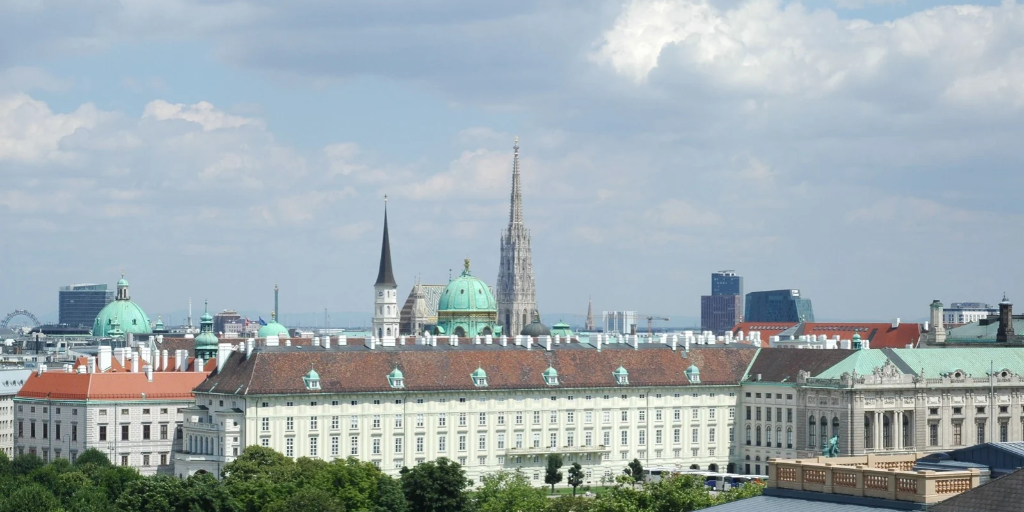
Panoramic view of Vienna's skyline, featuring iconic landmarks and historic architecture. (photo: Alfred Franz/Pexels)
Stay informed
We closely follow international public finance and bring critical updates from the ground.
Key facts
District heating operator: Wien Energie GMBH, part of Wien Stadtwerke- the Viennese Public Utilities Group
Size: 1200 km of pipes;
Customers: 479,000 households & 8000 businesses
Fuel mix: Gas cogeneration 53.56%, Waste heat from industry & waste incineration: 20.20%, Biomass & heat pumps: 16.43%, Heat only gas plants: 9.81%
Key issues
- Need to phase out gas, waste and unsustainable biomass from its heating mix, incorporating more renewables such as heat pumps, geothermal, and heat storage
- The EU’s Energy Efficiency Directive (EED) requires all municipalities over 45,000 to do a Heating & Cooling Plan which Wien Energie developed in 2022
- Wien Energie aims to double its district heating customers as a way to phase out standalone gas boilers
- Deep geothermal exploration is underway and should eventually add up to 60 MW of renewable heat
- An innovative long-term heat storage facility is also being piloted through the EU’s Innovation Fund with a EUR 17 million grant
Background
As a city of nearly two million people, that makes it one of the biggest district heating systems in Europe with 1200 kilometres of pipes. However, the system was built over 50 years ago when coal and gas were the standard. Today, the city is making efforts to decarbonise its energy systems through thorough planning and scaling up its renewable heating sources with long-term investments.
The district heating mix today and tomorrow of Vienna
Today, most of Vienna’s district heating comes from fossil gas, biomass, and waste incineration. In 2023, 3113 Gigawatt hours (GWh) of district heating came from gas sources (both combined heat & power and heat only plants), 943 GWh from waste incineration, 874 GWh from biogenic fuels (mostly biomass), 224 GWh from oil, 98 GWh from waste heat and 8 GWh from electricity. However, the goal of the city is that by 2040, 2250 GWh will be from geothermal, 1800 GWh by heat pumps, 1600 GWh by gas (both combined heat & power plants and heat only plants), 1550 GWh by waste incineration, 950 GWh by green gas CHPs and biomass, and 150 GWh by biomass.
Combustion based district heating coming from fossil gas, waste incineration or biomass all have negative externalities in terms of environmental, health, and climate impacts. Therefore, for Vienna, or any other city, to achieve a truly sustainable, renewable heating system, it will need to ultimately phase out these fuel sources. So, while their plans to reduce their combustion-based systems are admirable, it is only a first step to full decarbonisation.
Planning
In 2022, the city of Vienna created an ambitious roadmap on how it wants to become carbon neutral by 2040. This helps the city fulfil a requirement within the EU’s Energy Efficiency Directive which necessitates all municipalities over 45,000 to create comprehensive heating and cooling plans from 2026 onwards. It also is instrumental in deciding the city’s future. However, this is not the city’s first climate plan, they have already had one in place since 1999, a rarity at the time. This shows what an important role urban and climate planning has played in the city’s development.
In an interview with Bankwatch, Alexandre Wallisch, a Public Affairs Specialist for Wien Energie, said the heating and cooling plan is the result of many different teams working together from both the City of Vienna and Wien Energie. For instance, the city’s planning department is involved as well as those in Wien Energie building photovoltaic systems. By not only relying on a few hired consultants or urban planners to come up with their heat transition plan, but it’s also able to use the whole of the city and Wien Energie’s know how- a very useful approach to ensure that the plan is truly comprehensive and is a useful tool for those who should implement it.
The city expects that the district heating connections will expand significantly, up to 7550 GWh by 2040, up from 5264 GWh in 2023. It aims to convert around half a million households or workplaces from standalone gas boilers to district heating or heat pumps. This is being done by the city’s “100 Projects Out of Gas” initiative, which to date has replaced 1030 gas boilers and was the winner of the European Sustainable Energy Awards 2026’s Local Energy Action category.
In 2023, in the Simmering district of Vienna, a 55 megawatts (MW) heat pump using warm wastewater from the sewage treatment plant was added to the district heating mix. In 2025, a heat pump was added to the Spittelau waste incineration plant which captures the excess heat from the flue gas cleaning of the waste incineration process, which added 16 MW of heat capacity to the district heating system.
Additionally, the utility’s first major deep geothermal development is already underway and should deliver 20 MW of baseload thermal power. A second geothermal project is being planned, which should be up to 60 MW of additional heat. According to Walsch, the geothermal exploration and development is going even better than planned. From recent drilling tests, temperatures and the flow are higher than they had anticipated. As the city hopes to have 200 MW of geothermal heat by 2040, this is a welcome first step. Neighbouring countries Hungary and Slovakia already have operational geothermal based district heating systems, which show that these projects can be replicated across the region.
Furthermore, Vienna stands out as one of the few district heating operators to secure funding from the EU’s highly competitive Innovation Fund. With its “Scale Up” project, the city received a EUR 17 million grant from the fund which will go to cofinance a cutting-edge underground heat storage facility. Acting as a massive seasonal battery, this will be the first long term heat storage facility in Vienna. The key to success of the Scale Up application was putting together a straightforward application that made a strong case that this example of heat storage was truly innovative. The goal is that the facility will act as a proof of concept for long term heat storage not only for Vienna but also for Europe.
Further, as summer heat gets more and more intense, the need for cooling is becoming undeniable. Vienna is approaching this by developing a standalone urban cooling plan. Crucially, this strategy prioritises structural reduction measures and channels cooling infrastructure directly to the buildings and communities that need it most. In addition, Wien Energie is looking into new low temperature district heating systems that will connect to new buildings which can also be used for cooling. Similar systems have been built in Estonia in Tartu and Tallinn, both of which were groundbreaking systems for the region.
The economic mandate for high-CAPEX infrastructure
Transitioning an old, large heating system like Vienna’s comes requires a significant investment. In particular, projects like deep geothermal drilling and seasonal underground storage require massive upfront capital expenditure (CAPEX). However, Walsh explains that district heating prices are much more stable because it relies on such a diverse set of course. For instance, at the moment the district heating prices are similar to households using gas, but as gas prices keep going up, district heating will be cheaper. This is also an advantage for the city as it helps them with financial planning as it is easier to predict what the district heating prices will be. This is also an advantage for industrial consumers who are using district heating.
A lesson for Brussels
Vienna’s ongoing evolution reinforces a critical lesson for the broader European energy transition: local ambition must be met with integrated, systemic planning and robust financial backing. As policymakers in Brussels work on building heating and cooling frameworks through the Electrification Action Plan, the EU would do well to take heed of the Viennese model. By building up know-how and testing out new technologies, hopefully Vienna can be one of the first European cities to have a truly sustainable, renewable based district heating system, and leave the technologies of fossil gas combustion, waste incineration, and biomass burning in the past.
Replacing boilers and retrofitting pipes is only half the battle. True success requires treating the energy transition as a shared, democratic effort across utility sectors, while aggressively scaling the next generation of thermal infrastructure. Vienna is proving that with the right collective will, the path forward is clear.
Latest news
Before the money arrives, the work begins: how Kolašin in Montenegro is preparing for renewable district heating
Blog entry | 4 August, 2026Located below the Bjelasica mountain in northern Montenegro, the town of Kolašin is experiencing a rapid transformation. The expansion of the local ski resort, which attracted around 80,000 visitors during the 2025/2026 winter season, is accelerating tourism growth and new construction. As the town grows, local authorities face a critical challenge – ensuring that new heating infrastructure supports sustainable renewable solutions and avoids locking the town into fossil fuel-based systems for decades.
Read moreSerbia’s district heating utilities approaching breaking point due to gas import dependence
Blog entry | 14 July, 2026The current situation among district heating companies in Serbia provides a timely warning for Western Balkan governments still betting on new fossil gas infrastructure. In recent years, these governments have shown renewed interest in building new gas infrastructure. Many projects have been on the table for years, but new schemes are also being actively promoted by the United States.
Read moreHow a pioneering Slovak town is modernising its district heating system
Blog entry | 17 March, 2026With fossil fuel phase-outs underway across Europe, many municipalities must urgently find ways to replace their coal- or gas-based district heating systems. Several resources are available from the EU to help municipalities plan and execute their energy transitions. One town in Slovakia has used these tools to modernise its own district heating system.
Read moreRelated publications
Air pollution and associated health impacts in Novaci, North Macedonia
Report | 6 April, 2022 | Download PDFFor the last forty years, the municipality of Novaci has been home to North Macedonia’s REK Bitola complex, which consists of a 675 MW lignite power plant, open-cast mines and ash disposal sites. Its inhabitants have been breathing pollution emitted at
Efficient district heating in CEE-countries
Briefing | 28 March, 2022 | Download PDFRussia’s invasion of Ukraine has revealed Europe’s dependency on fossil fuels. The European Commission recently presented a Communication called Repower EU with the aim to make Europe independent from Russian fossil fuels well before 2030, starting with fossil gas. Energy efficiency measures that bring energy savings, like switching from inefficient to more efficient district heating networks that are based on exclusively renewable energy, are part of the solution and can structurally help solve EU dependency from energy imports.
Summary of the study: ‘Identification and analysis of potential sustainable heating solutions in Pljevlja, Montenegro’
Study | 25 October, 2021 | Download PDFIn order to address high levels of air pollution in Pljevlja, Montenegro, the municipality’s heating supply must become more sustainable. Although Montenegro’s 2030 Energy Strategy proposes the development of district heating systems based on biomass,