
Ukraine Reconstruction Campaigner
Email:Tel.:
Anna is Bankwatch’s Ukraine Reconstruction Campaigner, working on green reconstruction and environmental safeguards in Ukraine’s recovery. Her work focuses on alternative sources of energy for communities, energy resilience, and the alignment of Ukraine’s energy policy and public investment management system with EU standards. Originally from Kyiv, she holds an MSc in Environmental Sciences and Policy from Central European University and is based in Bratislava.
More from

The European Investment Bank (EIB) and the European Bank for Reconstruction and Development (EBRD) are ranked 16th and 17th respectively out of 17 multilateral organisations on the 2014 Aid Transparency Index (ATI) which is published today. The transparency index comes at a momentous time for the EIB as the institution is currently reviewing its transparency policy and NGOs fear that the ‘EU bank’ is preparing to further downgrade its transparency requirements.

Road construction in Poland can be a cause for great controversy in Poland not least when incomprehensible roads designs clash with nature.

Georgian Urban Energy (GUE), the company in charge of constructing the Paravani hydropower plant (HPP), has been keeping secret a study on the potential flooding risks associated with the facility, despite requests and promises from the EBRD that such an analysis would be made public.
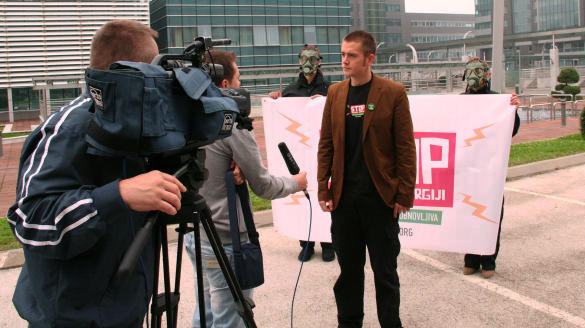
Bijeljina, R. Srpska, Bosnia and Herzegovina, 6.10.2014: The Environmental Impact Assessment (EIA) study for the planned Ugljevik III lignite power plant near Bijeljina in Bosnia and Herzegovina contains data on the plant’s SO2, NOx and dust emissions which is demonstrably false, and the study is missing key information needed to assess the plant’s environmental impact, according to a new analysis submitted by NGO Center for Environment to the responsible Ministry today.
This scientific analysis by NGO Center for Environment shows that the Environmental Impact Assessment (EIA) study for the planned Ugljevik III lignite power plant near Bjeljina in Bosnia and Herzegovina contains data on the plant’s SO2, NOx and dust emissions which is demonstrably false. The EIA study is also missing key information needed to assess the plant’s environmental impact.

