• Skip to primary navigation
  • Skip to main content
  • Skip to footer

Bankwatch

  • About us
    • Our vision
    • Who we are
    • 30 years of Bankwatch
    • Donors & finances
    • Get involved
  • What we do
    • Campaign areas
      • Beyond fossil fuels
      • Rights, democracy and development
      • Finance and biodiversity
      • Funding the energy transformation
      • Cities for People
    • Institutions we monitor
      • European Bank for Reconstruction and Development
      • European Investment Bank
      • Asian Infrastructure Investment Bank
      • Asian Development Bank (ADB)
      • EU funds
    • Our projects
    • Success stories
  • Publications
  • News
    • Blog posts
    • Press releases
    • Stories
    • Podcast
    • Us in the media
    • Videos

Home > Bankwatch annual report – 2018

Bankwatch annual report – 2018

Bankwatch in 2018

A banner year for protecting nature, climate and human rights across central and eastern Europe and beyond
Who we are
Stories
2018 in numbers
Financials
Our people
Connect with us

Dear friends,

In 1996 I accompanied a group of intrepid young activists to Sofia and the annual meetings of the European Bank for Reconstruction and Development, where a fledgling Bankwatch network emerged as a formidable force at a conference of the public development banks.

That this group would grow to become one of the strongest and longest-standing networks of environmental civil society organisations in central and eastern Europe is no surprise to anyone who has been around Bankwatch during the last two decades.

The organisation’s unwavering focus on investing in staff, valuing the quality of its members and aligning with laser-like precision its campaigns with its mission are what make Bankwatch unique among its peers.

What did come as a surprise is that I would be asked to lead the organisation in the interim following Mark Fodor’s departure after a decade at the helm. But the appointment is also an opportunity that I embrace with enthusiasm.

I have worn a number of hats in support of the network since that first meeting in Sofia – as a campaigner, trainer, fundraiser, evaluator, manager and mentor – and I believe this familiarity with the organisation will prove invaluable during this leadership transition.  

As I reflect on what we achieved in 2018 and look forward to the opportunities and challenges of 2019 and beyond, I am fortunate to have the backing of a committed and capable Executive Committee to oversee my work as Bankwatch embarks on the development of a strategic plan beyond 2020 and as well the implementation of recommendations for strengthening our organisational culture.

I am as well fortunate to have a management team, staff and member groups that continue the rich Bankwatch tradition of campaigning successes, which included in the last year:

  • preventing new loans for coal power plants in the Balkans;
  • delivering the largest ever public petition to the EBRD against hydropower;
  • convening a global gathering of human rights defenders and strengthening their cases to the development banks; and
  • mainstreaming the need for a ‘just transition’ for people in Europe’s coal regions within EU political circles and at the UN climate talks in Katowice;

In 2019, I look forward to leading this one-of-a-kind organisation through a transition and watching its continued growth and success in the years ahead.

Huub Scheele
Interim Executive Director
CEE Bankwatch Network

Bankwatch is the sum of its members

As depicted here, we currently have 16 member groups in 14 countries across central and eastern Europe. We also partner with other non-profits and communities, in particular in central Asia, the Caspian region and the Middle East and North Africa.

Where we made a difference

From stemming the tide of destructive dams and polluting coal power in the Balkans to advancing the rights of local communities to plan development on their own terms, we achieved a number of campaign successes featured in more detail here.

A stitch in time for coal in the Balkans

Though the region produces some of the highest levels of air pollution and hosts many of Europe’s most polluted cities, the Western Balkans and its residents should see bluer skies in the future thanks to the work of Bankwatch and our partners. No coal plants were legally under construction during the year, and no financing contracts were signed in 2018. Through a variety of tactics, Bankwatch achieved success after success on the project and policy levels.

In particular, the European Bank for Reconstruction and Development ended years of speculation by rightly stepping away from the Kosova E Re plant, a massive coal project close to the capital Pristina that would have been a bad deal for the country’s people, economy and environment. In neighbouring Montenegro, the government de-prioritised the Pljevla II project after losing the main contractor, Škoda Praha. Škoda Praha proved unable to raise financing for the project after the Czech Export Bank in 2017 declined to provide a loan. Working together with our partners at ClientEarth, the United Nations’ Espoo Convention Implementation Committee re-opened a case on the expansion of the Drmno coal mine in Serbia. Locals there worry about their futures as the open-cast mine inches ever closer to their properties, making every day life increasingly inhospitable.

In order to ensure that the coal tree falling in the forest was heard, we worked with reporters from local and international outlets to ensure that decision makers and financiers understood they were being watched. One of the most notable stories of the year featured our energy co-ordinator Ioana explaining the increasingly integral role of Chinese finance for coal projects across the Western Balkans for the BBC’s flagship programme, Newsnight, resulting in knock off coverage as far as China itself.


Giving voice to the voiceless

A central aspect of our work in 2018 was to support civil society and local communities asserting their rights to decide development on their own terms. We kicked off the year by convening a global gathering in Tbilisi of rights defenders and groups working to defend human rights, with 70 participants from 37 countries around the world in attendance. Such an event was an important occasion to highlight the role that international financial institutions play in safeguarding rights of local communities.

The Tbilisi meeting served as a stepping stone to facilitate the participation of rights defenders at official meetings with the institutions themselves, first in Luxembourg and London for summits between civil society and the European Investment Bank and the EBRD, and then later in Amman and Manila at the annual meetings of the EBRD and the Asian Development Bank.

While such occasions are an important moment to bring the voices of the concerned directly to decision makers, work in the field remains at the core of support work to communities and rights defenders. In 2018 our work in this direction spanned our region and included a training for local groups in Mongolia regarding gender and accountability and support for mediation between businesses and communities in the case of the Beli Briag-Maritsa East Mines in Bulgaria and three villages in Ukraine against the country’s largest agribusiness conglomerate.

A chicken crosses the road

At first glance links between the Netherlands and Ukraine are not immediately obvious, but for Bankwatch, the Western European country is the top destination for poultry imports from Ukraine’s largest agribusiness MHP, a conglomerate the has received nearly half a billion euros in development bank loans while steamrolling the rights of local communities in the process. So it was fitting that our campaigners presented their work supporting locals during the first ever international gathering of animal rights political parties in Haarlem.

Through continued monitoring and advocacy around the case, our Ukraine member in Kyiv Ekodia managed to generate considerable coverage in Dutch media about the topic of factory farmed poultry imports. This awareness raising paid dividends, as later in the year the controversies around the project fed into discussions in the European Parliament about its vote on an amended association agreement with Ukraine.

Eyes and ears on the ground lead to better enforcement

Not many have heard of the Energy Community, the intergovernmental body in Vienna that plays a significant role in ensuring that Europe’s neighbours are on the path to applying EU environmental standards. But our work with the Secretariat has paid dividends, as we push forward a coal free future for the Western Balkans.

The close eye we keep on the Balkan energy sector led to a number of wins in 2018, like in Bosnia-Herzegovina, where the government signed an agreement with the Energy Community not to use the current environmental impact assessment for Ugljevik III, based on a complaint that Bankwatch contributed to. This means that the permitting process would have to start again if the plant is to proceed. In addition, the Energy Community has asked Bosnia-Herzegovina parliamentarians not to approve a state guarantee for a Chinese loan for the Tuzla 7 plant, and opened an investigation into the case after our complaint.

Photo: Steffen Emrich via Creative Commons (CC BY-ND 2.0)

Building business relationships for big wins

The banks know Bankwatch. After more than two decades of monitoring public finance across the region, we’ve developed a reputable standing among the multilateral development banks as important and formidable stakeholders to consult on policy and project developments. So when groups other than Bankwatch get actively involved in monitoring their work, the banks take notice.

Nowhere was this more evident than the Balkans and our work to protect Europe’s last remaining wild rivers from hydropower plants. Together with the activist company Patagonia, we launched a petition against bank funding of dams that received more than 120 000 signatures, the largest ever energy related petition targeting the EBRD. Patagonia was instrumental in leveraging its international base of outdoor enthusiast supporters to join the petition, and as well has been a valued funder of our work.

After we delivered the petition to the bank in June 2018, the EBRD committed to organise a meeting between its management and other international financial institutions, civil society groups and commercial lenders in March 2019, a first of its kind summit on hydropower. In addition, both the EBRD and EIB have developed stricter policies and guidelines that would reduce the numbers of harmful hydropower projects financed by the banks in the region.

Extra! Extra! Read all about it

Arguably the most visible Bankwatch campaign in 2018 was our work to protect nature and people in the Balkans from hydropower developments. Using traditional and social media, tried and innovative campaign tactics, we pushed the needle forward in policy terms at the bank to ensure a hands-off approach to hydropower financing in the region.

Due in part to the backing of our campaign from a brand as renowned as Patagonia, our work featured in more than one hundred traditional and online media outlets. Major papers read by City of London bankers like the Telegraph covered extensively the financial aspects of the Balkan hydropower tsunami.

A fact finding mission with the Save the Valbona valley campaign resulted in a viral video that became an instant hit on social media and received nearly a quarter of million views in the first few days after posting. In this same vein, we teamed up with developers to realise an idea to monitor environmental flows of small hydropower plants that received second prize at the DesCon 4.0 conference, an event that joins activists and programmers for good causes. The proposed device should provide continuous monitoring of the quantity of water discharged from small dams, a crucial element in preserving ecosystems downstream.


A future we can call our own

There are 42 regions in Europe spread across 12 EU member states that have historically depended on coal mining for economic livelihoods, and many of these regions are located in countries where our members work. As the imperative to move away from coal has never been clearer, the European Commission established a new Platform for Coal Regions in Transition to assist them with transitioning to a low-carbon economy, which has been an important forum in which to leverage our vision for a fair and just society for communities in transition.

In Slovakia for instance, we supported the preparation of an action plan for the re-development of the Upper Nitra region, one of the Platform’s pilot areas, and we continue to work on a binding phase out of coal mining and combustion in Slovakia by 2023. To this end, we negotiated the removal of mining projects and defined fairer conditions in a key document related to the termination of domestic coal subsidies in Slovakia. We pushed through a plan for Trencin that would see post-coal developments after 2023, freeing up at least EUR 388 million that could be used for a more sustainable and just energy system, and we’ve improved cooperation with the office of the Prime Minister for local communities.

We were also integral in establishing the Slovak Climate initiative, a new network of civil society organisations and low carbon industries that work for an energy transformation and climate protection. Through such moves we hope to pave the way for our region’s communities as they determine for themselves the best form of development in a post-coal world.

Talk of the town

We crowned a successful year of work on just transition in Slovakia and elsewhere across central and eastern Europe with participation at the United Nations climate change conference in Katowice, Poland, where we contributed to making the topic an agenda setter. While the Polish government as hosts of the event had said that just transition would be a key theme of the meeting, our objective was to ensure that the concept was understood correctly, and not in the way that the Polish presidency might want it to be understood: continuing business as usual with more mining and burning coal.

We did our best to challenge this narrative by organising tours across the Silesian coal region with correspondents from some of the most influential media outlets including the New York Times, the Guardian and Agence France Presse, resulting in coverage about our vision of Silesia’s prospects for development. We also ensured high-profile media in Poland discussed just transition in terms that mattered most to people on the ground, by anticipating the end of coal in Poland as something inevitable.

Mayors and activists from coal regions in central and eastern Europe were brought together to the network and learn from one another. Their participation bolstered attendance and interest in our panel discussion during the conference entitled, ‘Heroes of Just Transition’, which communicated the personal stories of coal towns preparing for life beyond coal.

A year in numbers

1.2 million

social media impressions

4,015

new followers

193,552

pageviews

186

media hits

36

campaigns worldwide

Financials

Bankwatch is grateful to all of the foundations and organisations that have supported and made possible our work in 2018. Here we present a summary of our financial accounts.

Total income (EUR)

Total expenditures (EUR)

Assets (EUR)
Fixed assets 6 413
Claims 307 341
Cash in hand 4 172
Bank accounts 348 690
Valuables 0
Interperiod active clearances 1 866
Total assets 668 481
Liabilities (EUR)
Reserve Fund 165 803
Grant Fund 238 117
Committed Transfers 2018 136 086
Accumulated Financial Result – 15 147
Short Term Liabilities 136 640
Interperiod Passice Clearances 6 983
Total Liabilities 668 481

Our staff in 2018

A strong foundation is built upon the contributions of individuals, and our staff in 2018 helped lead the way to our success
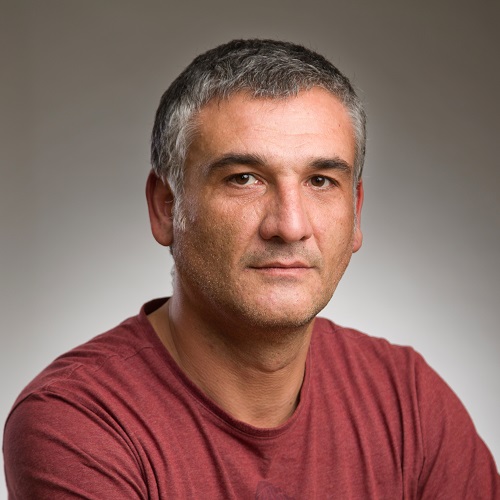
Alexa Botar
Alexa Botar
Alexandru Mustață
Andis Antans
Andis Antans
Andrey Ralev
Anelia Stefanova - bankwatch
Anelia Stefanova
Anna Kárníková
Anna Roggenbuck
Bara Urbanova
Bianca Polidoro
Daniel Popov
Daniel Popov
Davor Pehchevski
Dora Sivka
Fidanka Bacheva-McGrath - EBRD policy - Bankwatch
Fidanka Bacheva-McGrath
Gligor Radečić
Ido Liven
Ildiko Ladanyi-Benedikt
Ioana Ciută
Irena Škvárová
Izabela Zygmunt
Juraj Melichar
Kateřina Bolek Markelová
Laura Nazare
Lenka Ilcikova
Lenka Ilcikova
Maksis Apinis
Manana Kochladze
Manana Kochladze
Mark Fodor - Executive Director of Bankwatch
Mark Fodor
Mark Martin
Milena Antonowicz
Petr Hlobil
Pippa Gallop
Plamena Georgieva - Grant Writer at Bankwatch
Plamena Georgieva
Raphael Hanoteaux
Raphael Hanoteaux
Romana Kaclikova
Selina Vancane
Szonja Kovacs
Teet Randma
Todor Todorov
Tomas Funka
Tomas Funka
Violeta Keremidchieva
Vladlena Martsynkevych
Wawa Wang
Zuzana Kubešová
Zuzana Vondrová

Stay with us

Subscribe to our monthly newsletters to learn more about our work and ongoing projects*


… and connect on social media


By subscribing you agree that CEE Bankwatch Network processes the data you are giving above. Namely we will include your data in our subscriber database, send information about the activities of the organisation and use your data for statistical reasons. You can revoke this consent in writing at any time. We will not share your information with others or sell it to third parties. See Privacy Policy.

Footer

CEE Bankwatch Network gratefully acknowledges EU funding support.

The content of this website is the sole responsibility of CEE Bankwatch Network and can under no circumstances be regarded as reflecting the position of the European Union.

Unless otherwise noted, the content on this website is licensed under a Creative Commons BY-SA 4.0 License


Your personal data collected on the website is governed by the present Privacy Policy.

Get in touch with us

  • Bluesky
  • Email
  • Facebook
  • Instagram
  • LinkedIn
  • RSS
  • YouTube