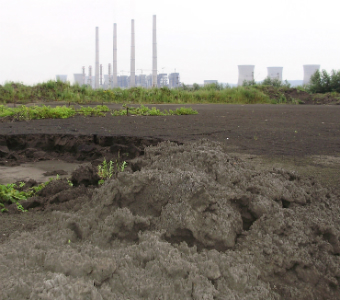
The future is ash-grey for people in Turceni, Romania
September 9, 2014 | Read more
People in the Submaidane-Turceni area in Romania live their lives in coal ash that still hasn’t been cleaned up after an accident that took place in December 2013 at an ash deposit belonging to the Oltenia Energy Complex in Turceni.
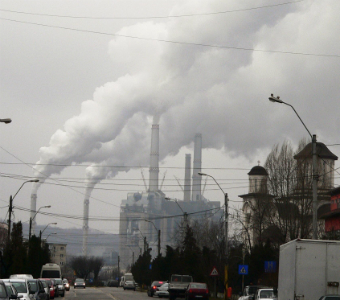
The renewables capacity installed in Romania has grown tenfold in the last five years and constitutes 23 percent of Romania’s installed energy capacity. Still, the government is pushing for new lignite-fired power plants.
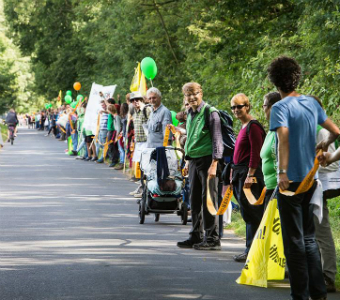
Human chain against coal mines crosses Polish-German border
August 25, 2014 | Read more
This weekend, over 7.500 people came together to form a human chain between Poland and Germany, in opposition to the expansion of lignite mines in the border area. The action, which was organised by Greenpeace with help from other NGOs across Germany and Poland, was meant to show solidarity with villagers in the south-west of Poland and south-east of Germany whose homes and livelihoods are to be destroyed if plans to expand coal mines by PGE in Poland and Vattenfal in Germany are to go ahead.
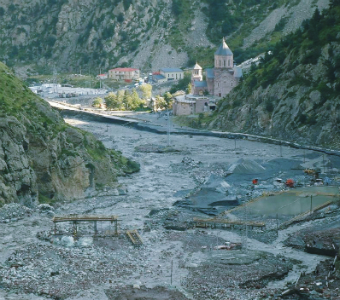
Second fatal landslide in Georgian Dariali valley
August 22, 2014 | Read more
While likely not the cause, the EBRD-financed Dariali hydropower plant is being constructed without proper assessment or mitigation of known geological risks. The construction must be halted to avoid further damage.
Forests sitting on lignite saved in Romania
August 14, 2014 | Read more
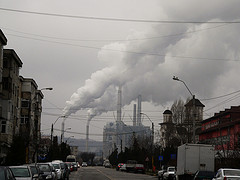
Bankwatch and Greenpeace won a court case* in Romania this week, which will effectively prevent 59 hectares (the equivalent of 118 football pitches) of forest from being destroyed by the expansion of one of the open-pit coal mines that supplies Rovinari, one of the largest coal plants in Romania.
Sharing the shale experience
July 29, 2014 | Read more
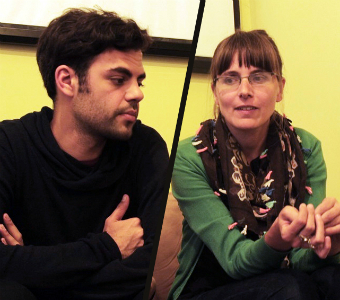
Shale gas has become a focal point of interest for central and eastern European governments, with oil corporations (not only) from the West ready to start drilling as soon as possible. But protests have sparked across the region from Zurawlow in Poland to Pungesti in Romania. We spoke with two anti-fracking activists working on the Neuquén province in Argentina where the struggles of local communities against conventional oil and gas exploration are now amplified by even more problems related to unconventional fuels.

