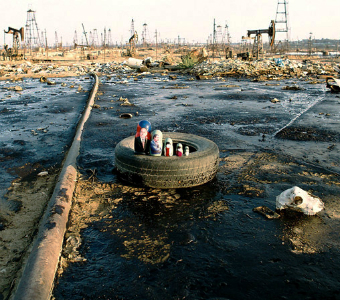
To illustrate its readiness to help Arab Spring countries, the European Bank for Reconstruction and Development draws on the Baku Tbilisi Ceyhan pipeline project as a positive example. Having closely followed the project, Manana Kochladze outlines why people in north Africa should be wary of what’s to come when the EBRD enters their countries.
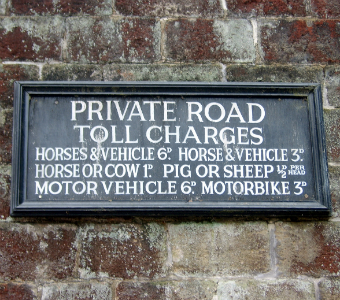
Infrastructure in the developing world: does it need PPPs?
March 14, 2012 | Read more
Public-private partnerships have garnered a lot of criticism but continue to be on the agenda of international development banks as a alternative way to finance infrastructure.

Poland’s veto against increasing Europe’s 2020 target for greenhouse gas emissions cuts to 25% is frustrating not only environmentalists in Poland and elsewhere.
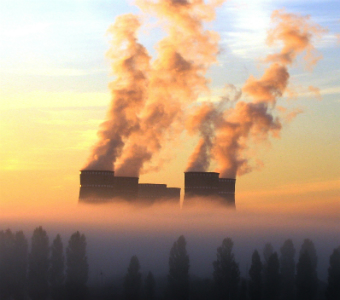
Ukraine plans to extend the lifetimes of its fifteen nuclear reactors, most of which will soon pass their expiration date. A new report shows how these plans that are pursued in utter silence have seen only an inadequate assessment.
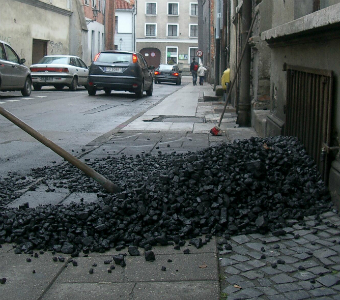
Poland is on course to place further large roadblocks in the way of the European Commission’s Roadmap 2050 towards a low-carbon economy unless certain demands being insisted on by Warsaw are met. These include the granting of free allowances for all 16 power plants that Poland has asked to be supported under the EU’s Emissions Trading Scheme.

Recent Balkan hydro projects suggest the European Commission could make much better use of its shareholder role in the European Bank for Reconstruction and Development.

