Azerbaijan: Sport for Rights coalition condemns sentencing of journalist Khadija Ismayilova
Press release | 1 September, 2015Коалиция «Спорт за права» решительно осуждает ошеломляющий приговор азербайджанской журналистке Хадидже Исмайловой, осужденной на 7,5 лет лишения свободы. 1 сентября Бакинский суд по тяжким преступлениям признал Исмайлову виновной по обвинениям в присвоении средств, незаконном предпринимательстве, уклонении от уплаты налогов и злоупотреблении должностными полномочиями. По обвинению в доведении человека до самоубийства Исмайлову оправдали. Коалиция «Спорт за права» считает, что обвинения против Исмайловой политически мотивированы и связаны с ее журналистскими расследованиями, в частности с разоблачениями коррупции среди правящей азербайджанской элиты.
Read more
Energoatom lawsuit against Ukrainian activists is the latest attempt to stifle public debate over an ageing nuclear energy fleet
Press release | 28 August, 2015A Kiev court held yesterday the first hearing in a case brought by Energoatom, Ukraine’s state-owned nuclear power plants operator, against the National Ecological Centre of Ukraine (NECU), a civil society group, member of the CEE Bankwatch Network.
Read moreUkraine nuclear lifetime extensions require impact assessment in compliance with Aarhus and Espoo convention
Publication | 18 August, 2015On several occasions the European Bank for Reconstruction and Development stated that operations of its clients should comply with all international treaties and other legal obligations. In spite of these reassurances, Energoatom in Ukraine keeps ignoring its international obligations, as outlined in the Espoo Convention, in the processes of assessing the life-time extension of its nuclear reactors.
Read moreLetter to European Commission: Reconsider disbursement of loans for Ukraine nuclear project
Publication | 10 August, 2015In this letter, Bankwatch asks the European Commission to reconsider the disbursement of the Euratom and EBRD loans for the Ukraine nuclear safety upgrade programme that effectively enables the lifetime extensions at Ukraine’s nuclear reactors. The letter provides evidence for the intertwined character of the upgrade programme and the lifetime extensions and for Ukraine’s refusal to meet its obligations under international conventions.
Read moreLetter to European Commission (DG ECFIN): Ukraine does not meet obligations under international law
Publication | 10 August, 2015The European Commission stated in an earlier letter that any decision by Ukraine to extend the life-span of any of its nuclear power plants will require assessment under the Aarhus and Espoo Conventions. In this letter, Bankwatch offers evidence for how Ukraine is indeed extending the lifetimes of its nuclear reactors but not meeting its obligations under the conventions.
Read more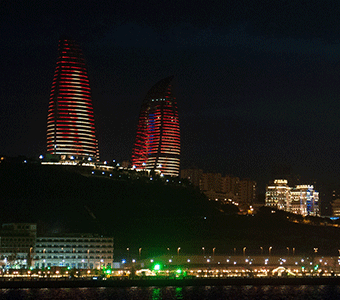
Guest post: Behind the glitz of oil riches – the shrinking space for democracy in Azerbaijan
Blog entry | 29 July, 2015Last week, the European Bank for Reconstruction and Development approved a loan over half a billion dollars for Lukoil’s share in the Shah Deniz gas field in Azerbaijan. In this guest post, rights activist Emma Hughes from Platform reflects on how business as usual resumes after the media attention on Azerbaijan’s human rights abuses has faded.
Read moreEuropean funding for a Lukoil gas project in Azerbaijan tramples the EU’s commitment to both climate action and human rights
Press release | 23 July, 2015A USD 500 million loan for the share of Russian gas giant Lukoil in a major gas project in Azerbaijan has been approved yesterday by the Board of Directors of the European Bank for Reconstruction and Development (EBRD). Yet, the decision will significantly hinder Europe’s commitments to decarbonise as well as to advance democracy.
Read morePublish What You Pay: ‘Lukoil loan would fundamentally contradict EBRD policies’
Publication | 21 July, 2015The Board of the Extractive Industries Transparency Initiative (EITI), a coalition of companies, governments, investors and civil society organisations has unanimously downgraded Azerbaijan to a “candidate country”. Azerbaijan will be suspended from the EITI in April 2016 if it does not comply with a set of requirements that ensure civil society can work freely in the country.
Read moreSport for Rights to EBRD: No public money for Lukoil and mega gas project in Azerbaijan
Publication | 20 July, 2015On Wednesday 22 July the European Bank for Reconstruction and Development (EBRD) will decide whether it will arrange a loan of up to $ 500 million to Russia’s Lukoil for the Shah Deniz II offshore gas project in Azerbaijan. Together with the campaigners of Sport for Rights and sixteen other NGOs, Bankwatch has written a letter to the EBRD’s president and its directors. We urge them to reject the project because Azerbaijan fails the EBRD’s basic requirements which include human rights, multi-party democracy, rule of law and pluralism.
Read moreLetter by Members of the European Parliament to the EBRD and Euratom regarding the Nuclear Power Plant Safety Upgrade Programme
Publication | 1 July, 2015The request is made in the context of Ukraine’s obligations under the Espoo convention, such that the EBRD and EuroAtom should “take steps for suspending the loan proceedings until a full trans-boundary EIA process for nuclear units lifetime extension is launched and carried out in accordance with international treaties to which Ukraine is a party.”
Read more
