
A Private Affair: Report shows how development finance institutions benefit the rich in Western countries
Blog entry | 11 July, 2014A new report shows how private western-based companies are benefiting from multilateral development banks’ support while governments and citizens in recipient countries are delegated to the sidelines.
Read moreEBRD in Serbia: Don’t use floods to prop up coal
Press release | 7 July, 2014The EBRD should stick to its newly approved Energy Strategy and reject any investments in the Serbian coal sector, argue a group of 7 international NGOs in a letter sent to the bank’s board of directors today. The groups were concerned with recent statements by the EBRD according to which the bank’s regional flood response in the Balkans could include “rehabilitation of (…) damaged power stations and transmission and distribution networks.”
Read moreLetter: EBRD flood response in Serbia should diversify away from lignite
Publication | 7 July, 2014This letter, co-signed by Serbian, regional and international NGOs and sent to the Board of Directors of the European Bank for Reconstruction and Development ask whether in the aftermath of the recent floods in the western Balkans, the EBRD’s response will prop up Serbia’s coal sector or whether it will ensure that its post-flood assistance is used for much needed residential energy efficiency improvements and sustainable renewable energy.
Read more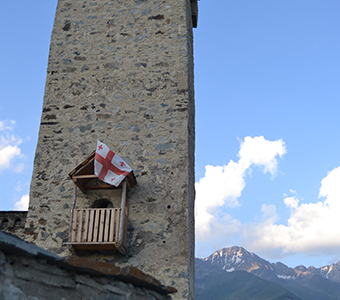
Will Georgia go green after EU association agreement?
Blog entry | 26 June, 2014On Friday Georgia will sign an association agreement with the European Union, meaning that our country will start cooperating more closely with the EU and even implement more European legislation. This is good news, particularly when it comes to the environment.
Read moreРуководство по Европейскому инструменту соседства и Международным финансовым организациям
Publication | 23 June, 2014В контексте обновленного подхода к Европейской политике соседства (ЕПС), очерченного в совместном коммюнике от 25 мая 2011 года, к 2014 году новый финансовый инструмент, а именно Европейский инструмент соседства (ЕИС), станет ключевым финансовым инструментом для 16 стран-партнеров к востоку и югу от границ ЕС (Алжир, Армения, Азербайджан, Беларусь, Египет, Грузия, Израиль, Иордания, Ливан, Ливия, Молдова, Марокко, Оккупированная Палестинская территория, Сирия, Тунис и Украина). В этом же коммюнике говорится о новом походе к расширенному внешнему мандату ЕИБ для восточных и южных соседей, а также расширении мандата ЕБРР на отдельные страны Средиземноморского региона.
Read moreNo public money for mega-gas pipeline projects – Projects of Common Interest for gas imports will be harmful
Publication | 12 June, 2014Projects aimed at increasing EU gas imports, included in the European Commission’s Projects of Common Interest (PCI) would surpass the five scenarios of the EC’s own Energy Roadmap 2050 which all foresee an overall decrease in gas imports. Additionally, they would support authoritarian regimes which repeatedly violate human rights and limit space for democratic expression.
Read moreNew mega gas pipelines redundant according to EU’s own projections
Press release | 12 June, 2014The EU’s plans for large new gas import pipelines and LNG terminals to Europe, outlined in the European Commission’s October 2013 list of priority energy projects as well as in the May blueprint for energy security to be discussed during tomorrow’s Energy Council, are not only counter to the EU’s long-term climate goals but also unjustified according to the EC’s own demand forecast.
Read more
Transition triumphs and traps – Assessing Poland’s recent economic journey, and where it goes next
Blog entry | 4 June, 2014During last month’s EBRD annual meeting in Warsaw, Bankwatch Mail convened a discussion about the state of the Polish economy between a financial journalist and a sociologist – both residents of the Polish capital – to hear their views on some of the pressing economic issues of the day, as well as the ongoing Polish ‘transition’ process. With the 25th anniversary of the end of communist rule in Poland a few months away now (today in fact marks a quarter of a century since the first Polish elections under communism), what have been the achievements and the lessons to be learned from the last two and half decades?
Read more
Transition triumphs and traps – Assessing Poland’s recent economic journey, and where it goes next
Publication | 4 June, 2014During last month’s EBRD annual meeting in Warsaw, Bankwatch Mail convened a discussion about the state of the Polish economy between a financial journalist and a sociologist – both residents of the Polish capital – to hear their views on some of the pressing economic issues of the day, as well as the ongoing Polish ‘transition’ process. With the 25th anniversary of the end of communist rule in Poland a few months away now (today in fact marks a quarter of a century since the first Polish elections under communism), what have been the achievements and the lessons to be learned from the last two and half decades?
Read more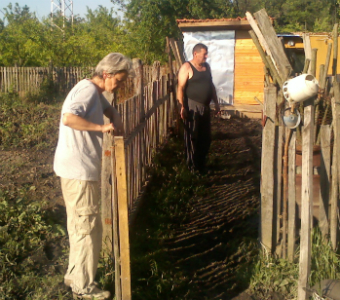
When water mixes with coal – The impacts of the floods in Serbia on people living next to lignite mines
Blog entry | 30 May, 2014People living next to the Kolubara lignite mine in Serbia have suffered more under the floods due to the vicinity of the mine. Their demands for resettlement and compensation have now become more urgent than ever.
Read more
