Appeal to the EBRD to freeze Ukrainian projects until government allows for a peaceful resolution of the current crisis
Publication | 20 February, 2014In light of the recent violence in Ukraine, Bankwatch is asking the EBRD, the largest foreign investor in Ukraine, to refrain from any further cooperation both on new and current projects until the government takes decisive and peaceful steps to end the escalation of the current crisis, ends human rights violations committed by government forces, shows clear commitment to settling the political crisis in a peaceful way and addresses the key concerns of the protests.
Read more
EIB suspends operations in Ukraine, EBRD ducks the question
Press release | 20 February, 2014Kiev – The European Investment Bank announced the suspension of all activities in Ukraine yesterday following the most violent day since protests in this country began. In its turn, the European Bank for Reconstruction and Development declared it would “concentrate on the private sector”, hardly a meaningful stance considering the close links between government and the business sector in this country.
Read more
Quantity over quality in EBRD food security initiative – Evidence from pig farms in Ukraine
Blog entry | 19 February, 2014The European Bank for Reconstruction and Development praises its own achievements in the agricultural sector. A look at Ukraine, however, reveals how sustainable food provision, local communities and the quality of soil are falling by the wayside with the bank’s focus on big industrial operations.
Read more
GMOs, water grab and ice cream for the masses – the EBRD gets involved with Nestlé Egypt
Blog entry | 13 February, 2014Update: The EBRD clarified in its correspondence with Baby Milk Action that its loan will not be used to finance infant nutrition.
Read more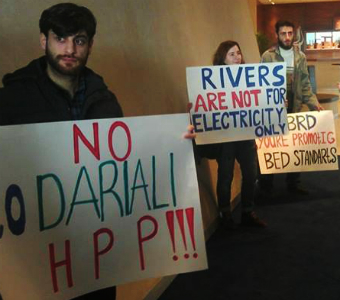
Georgian hydro projects are a test case for the EBRD’s good governance policies
Blog entry | 12 February, 2014As activists pointed out at a consultation meeting in Tbilisi, Georgia’s hydropower sector has plenty of lessons to be learned by the European Bank for Reconstruction and Development.
Read more
Ukraine and the EBRD: More than technicalities derail the fight against corruption
Blog entry | 6 February, 2014Before claiming the moral high ground on fighting corruption in Ukraine, the European Bank for Reconstruction and Development should first of all brush up its own transparency policy and drop old-fashioned arguments in favour of confidentiality and secret conditionalities in its projects.
Read more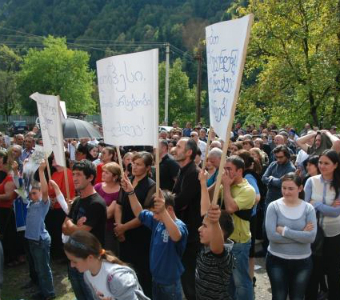
[Campaign update*] Georgian government and investors reject Ombudsman’s offer to mediate in controversy over Khudoni mega dam
Blog entry | 6 February, 2014The growing antagonism between promoters of the Khudoni hydropower plant project in Georgia and their local opponents from Kaishi is unlikely to ease when the investor and the Georgian Ministry of Energy boycott mediation by Georgia’s Ombudsman.
Read moreLetter to EBRD: Complaint filed with IFC on Danosha pig farms in Ukraine
Publication | 5 February, 2014Local communities in the Ivano-Frankvisk region in Ukraine have filed a complaint with the IFC’s complaint mechanism regarding the conduct of agribusiness corporation Danosha. This letter summarises the complaint’s content and asks the EBRD to follow the complaint process and derive lessons for its own support of industrial farming projects in Ukraine.
Read more
New EBRD policy too weak on tax havens in development finance
Blog entry | 3 February, 2014Debt and finance watchdog Eurodad has analysed the EBRD’s new policy on domiciliation and explains how it does not take the bold steps needed to tackle the use of tax havens in development finance.
Read moreLetter to EBRD re potential funding of coal power projects in Egypt
Publication | 29 January, 2014Read more

