• Skip to primary navigation
  • Skip to main content
  • Skip to footer

Bankwatch

  • About us
    • Our vision
    • Who we are
    • 30 years of Bankwatch
    • Donors & finances
    • Get involved
  • What we do
    • Campaign areas
      • Beyond fossil fuels
      • Rights, democracy and development
      • Finance and biodiversity
      • Funding the energy transformation
      • Cities for People
    • Institutions we monitor
      • European Bank for Reconstruction and Development
      • European Investment Bank
      • Asian Infrastructure Investment Bank
      • Asian Development Bank (ADB)
      • EU funds
    • Our projects
    • Success stories
  • Publications
  • News
    • Blog posts
    • Press releases
    • Stories
    • Podcast
    • Us in the media
    • Videos
  • Donate

Home > Archives for Blog entry

Blog entry

Hungary and the Energy Union: The devil is in the details


In a series of blog posts, Bankwatch campaigners are weighing in on the implications that the EU Energy Union, as laid out by Vice-President Šefčovič, could have for each of the countries.

For more introduction, see the first installation in our series on the Czech Republic, the world’s fifth largest electricity exporter. Don’t miss the next post on Latvia.

Subscribe to our blog via RSS or email


On his visit to Budapest in mid-June Vice President Šefčovič praised Hungary for being on track to meet its 2020 greenhouse gas emissions target, as well as its targets on energy efficiency and renewables. But this can hardly be considered a great effort. In the sectors not falling under the Emission Trading Scheme (non-ETS sectors such as transport, agriculture, buildings and waste), the Hungarian target was in fact a 10 percent rise above 2005 levels.

At the same time, the country’s renewables target is being met mainly through expanding unsustainable biomass, while solar and wind power investments are discouraged due to a generally insecure environment for investments: limited EU funding for citizen and community renewables, an unfavourable feed-in-tariff system, and a recently introduced solar panel tax.

Energy security

Hungary is heavily reliant on Moscow for its energy with 80 percent of its gas and 100 percent of its nuclear fuel imported from Russia, an issue Šefčovič made sure to stress in his Budapest speech. But the Hungarian government’s latest energy investment plans effectively bolster its bilateral relations with Moscow: a Russian loan for the Paks-2 nuclear power plant and also the Gazprom-led South Stream gas pipeline is still on the table.

While the dependency on Russia is problematic for obvious reasons, some important elements of the Energy Union, like swapping Russia with Azerbaijan or other autocratic regimes as providers of natural gas and nuclear fuel would not necessarily make Hungary’s energy supply more secure. And building more oil refineries, liquid natural gas (LNG) terminals and oil pipelines will certainly not make Europe any more climate-friendly.

Ultimately, the Energy Union must be about reducing countries’ reliance on gas and other fossil fuels, not just choosing between South Stream or the Southern Gas Corridor. With the falling gas demand in Europe and Hungary, and the still enormous potential for an increase in energy efficiency in Hungary, that Šefčovič acknowledged, this would not have to mean risking energy supply.

Energy efficiency

Now that Hungary finally decided to transpose the EU’s Energy Efficiency Directive – and not without an embarrassing infringement procedure – the government will hopefully realise the counry’s huge potential in boosting energy efficiency in residential buildings. That would be much more meaningful than government officials’ populistic mantra of „decrease energy bills at any costs” that has been used to justify far-fetched and unrealistic fossil fuels or nuclear infrastructure investments.

The European Commission’s assessment of Hungary suggests that EU financial instruments like the European Fund for Strategic Investment (EFSI) and the Emission Trading Scheme (ETS) can be used for targeted investments into energy savings as well as energy efficiency in buildings and in transport. ETS auctioning revenues in Hungary have already been used for improving energy efficiency in buildings but the government needs to ensure that most of the revenues serve this purpose if Hungary is to meet its energy efficiency targets.

For the transport sector, if past mistakes are to be avoided, the focus should be on support for better spatial planning and for railway development instead of the current tendency to favour unnecessary highways that are environmentally and socially harmful.

Financing tools

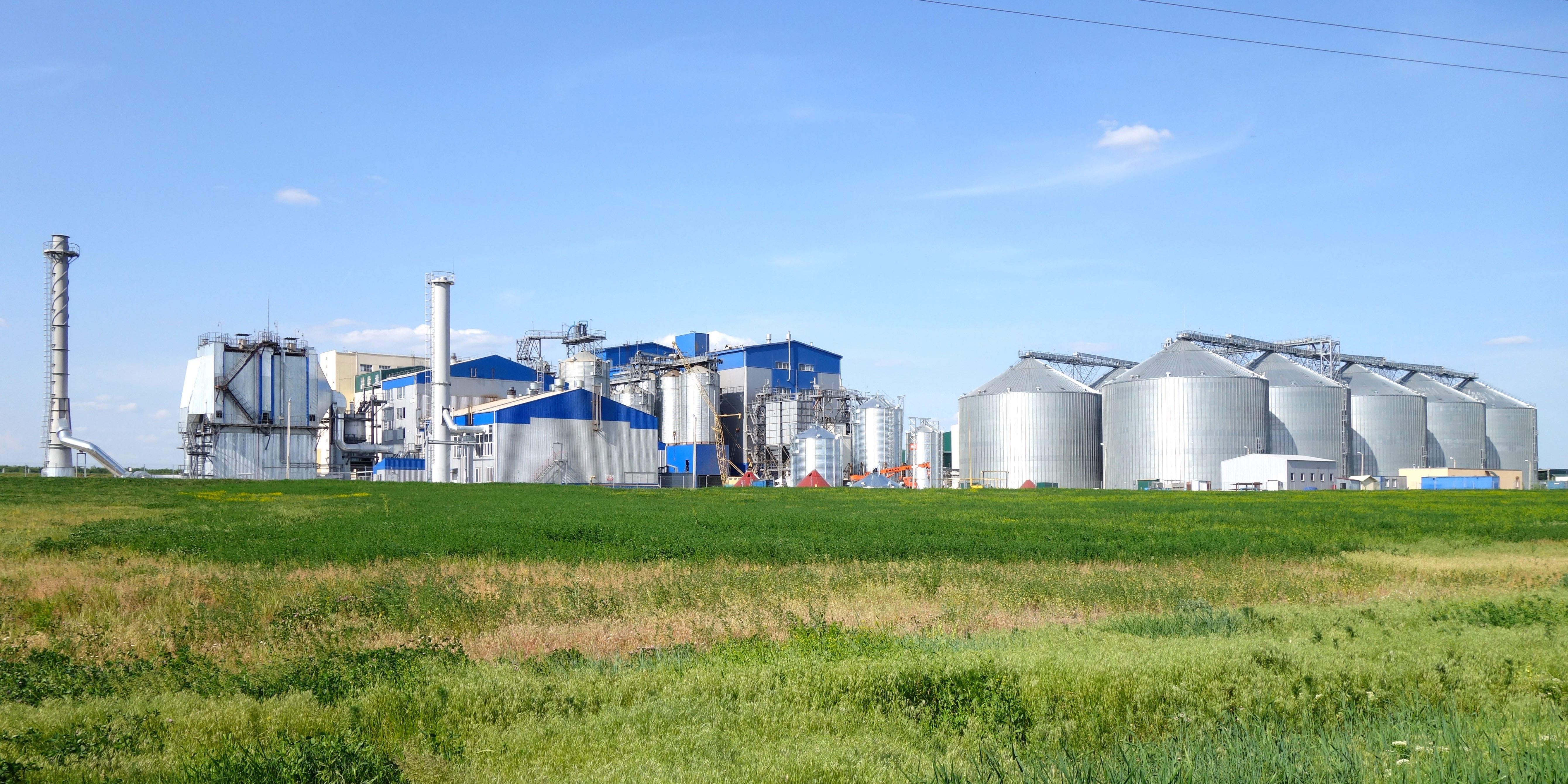
Speaking of financing tools, it will be important to introduce clear selection criteria, instruments, and indicators to ensure that only sustainable projects receive funding from the EFSI and the European Investment Bank (EIB) that manages the fund. One questionable Hungarian candidate for EFSI support is Pannonia Ethanol’s bioethanol plant in Dunaföldvár. Once equipped with a carbon capture and storage facility, courtesy of EFSI funding, it will be one of Europe’s biggest bioethanol plants. But funding Hungary’s large biomass projects, with their massive land and ecological footprints, and that could later be greenwashed as ‘green transport’ or ‘renewable energy’ is but one example for the risk of false solutions that has to be averted.

Similarly, the ETS allowances modernisation fund mentioned in Šefčovič’s speech in Budapest runs the risk of being used, for instance, to finance carbon capture and storage facilities which would only sink more money into costly, false solutions riddled with uncertainties.

Citizen power

Lastly, it is encouraging to see Vice-President Šefčovič calling for citizens „to take ownership of the energy transition”. These words need to be put into action with real financial support to help communities and municipalities become active players in the energy market. Because what could better reduce the dependence on one supplier than making citizens and communities provide the energy Hungary needs?

Energy Union benefits are full of paradoxes in the land of Kafka


The European Commission has been hard at work devising the EU’s new energy strategy. It is touted as an ambitious new path for a unified, sustainable energy future, and indeed some of its elements like boosting energy efficiency and expanding renewable energy sources could be an important contribution to the global fight against climate change and for cleaner air. Other parts of this emerging plan – primarily, but not only, prioritising additional imports of natural gas – are simply inconsistent with the EU’s overall energy vision and effectively risk undermining a genuine transformation of Europe’s energy sector.

Nowhere is this dissonance more salient than in central and eastern Europe. In fact, much about the architecture and operation of the Energy Union is still to be decided. The Commission’s Vice-President Maroš Šefčovič has toured some EU member states between May and July to promote the Energy Union strategy and explain the domestic relevance of its five pillars for each of the countries. He will continue his tour in September.

In the meantime, in a series of blog posts, Bankwatch campaigners will be weighing in on the implications that the EU’s new energy enterprise, as laid out by Vice-President Šefčovič, could have for each of the countries.

Don’t miss the next posts on Hungary and Latvia.

Subscribe to our blog via RSS or email


Much like the Czech national energy policy, the concept of the Energy Union is mostly full of paradoxes. Rather than helping the country move to a modern, clean energy economy that responds to the challenges of climate change, adopts new technologies and adjusts to a new market shape , the Commission’s new initiative first and foremost spells replacing gas imports from Russia with gas imports from similarly problematic Azerbaijan.

Instead of using its central location to help the EU transmission system and benefit from it, the Czech Republic will rather use EU priority funding to boost an imaginary, highly controversial nuclear power plant project.

For the Czech Republic the strategy’s most striking paradox, however, lies with the proposed reforms of energy production and distribution. The Commission hails the interconnection capacity of the world’s fifth major electricity exporter (yes, the Czech Republic). Projects of Common Interest (PCIs) which receive priority treatment and EU funding are proposed to further improve the cross-border flows. Looking at the projects at stake, however, we see that the importance of interconnections, as expressed by the Commission, is rather a path to facilitate the country’s wish list, in the Czech case new nuclear capacity.

PCIs in the Czech Republic include new power lines that would connect already well-connected parts of the country and – as if by coincidence – they add new transmission capacity for nuclear reactors that are planned to be built in some distant future. At the same time, another PCI, a phase shifting transformer at the border with Germany, would basically establish a “border guard” for the Czech transmission system. The installation would prevent German offshore wind electricity to go via Czech territory.

Instead of using its central location to help the EU transmission system and benefit from it, the Czech Republic will rather use EU priority funding to boost an imaginary, highly controversial nuclear power plant project.

In other words, while the Energy Union aims at increasing interconnectivity between the electricity grids of EU countries, the Czech Republic would rather see its borders closed for electricity imports (including renewables), but wide open for nuclear and coal electricity exports.

The outlook for renewables

Renewables are not only taking a backseat in the plans for grid connections. The Commission rightly identifies the country being among the most energy intensive and points to problematic changes in renewables’ support regimes. Because of this lack of support and administrative barriers, investment opportunities in the renewables sector are practically non-existent in the country, especially in the solar and wind sectors. Even the current EU funding to renewable power in the Czech Republic is minimal at less than EUR 54 million for seven years for the entire country.

Considering this, and the fact that one of the ideas underlying the Energy Union is about the EU becoming a world leader on renewable energies, the Commission will need to look closely at what is happening in reality if the Czech Republic is to be part of this effort.

The Commission lists the newly established European Fund for Strategic Investment (EFSI) and research and innovation among the main opportunities and benefits that the Energy Union can offer.
In view of the difficulties in the Czech electricity market, however, the government and the Commission should work closely together to present a credible, functioning mechanism that would allow Czechs to submit renewable projects for funding from the EFSI.

Energy efficiency

A look at the new EU funding period shows that the case is similarly difficult with energy efficiency. The Czech Operational Programmes (OPs) – the documents that outline funding priorities and will guide EU funded investments for the next seven years – lack a clear focus on energy efficiency with the issue being spread across four OPs. In addition, the financed projects would be more effective if the demanded efficiency standards would go beyond the minimal legal requirements.

It is difficult to imagine that the Czech Republic will treat energy efficiency as a strategic priority even under the Energy Union.

Questions remain

The intention of the Energy Union strategy to coordinate energy policies across countries and sectors will need to have a real impact on the ground. In the case of the Czech Republic, there needs to be clarity where priorities lie. Is it in the success of EU measures meant to bolster energy and money savings, or is it rather new gas import routes? Should cross-border connections for electricity and gas be financed if they actually do not contribute to the connectivity of the country? And just how is the Czech Republic going to benefit from innovations in renewable power with almost non-existing financing schemes or capacities to deploy new technologies?

Guest post: Behind the glitz of oil riches – the shrinking space for democracy in Azerbaijan


International sporting competitions can fix the beam of world attention on countries and places otherwise ignored. Especially when that competition is the Olympics – but the spotlight is usually fleeting and when the athletes leave so does the glare of media scrutiny.

This has been the case in Azerbaijan who hosted the inaugural European Games this June. Even before the Games began the ruling Aliyev regime proved they were not going to tolerate critical voices. They banned journalists and human rights organisations from entering the country – including the Guardian, Amnesty International and the oil watchdog Platform. It wasn’t Azerbaijan’s athletes that were getting media attention but Azerbaijan’s activists – people like Rasul Jafarov – one of the creative forces behind the Sport for Rights campaign. This highlighted the numbers of political prisoners in Azeri jails and, in turn, saw Rasul himself jailed for six and a half years.

For many years I have followed the situation in Azerbaijan, getting to know some of the people who have been imprisoned. And I have seen how systemic and brutal the regime’s crackdown has been, as dozens of Azerbaijani journalists and activists were arrested in quick succession, forcing many more to flee the country or go into hiding.

Civil society in Azerbaijan has been stamped on hard leaving a vacuum where a democratic culture should be. Azerbaijan has a strong history of democracy. It was one of the first countries to introduce universal suffrage in 1918 – a full ten years before the UK did. Yet in the intervening years this culture has been destroyed, first through Soviet rule and then by the Aliyev dynasty. After signing a contract with eleven international oil companies in 1994 to exploit the oil resources of the Caspian sea, the Aliyev family have been reliant on hydrocarbon revenues to secure their rule. It is oil and gas revenues which have provided the Aliyevs with the finance needed to pay security forces and establish a secure income base (meaning they don’t have to listen to citizens voices because they are not reliant on those citizens for a tax base).

The crackdown in Azerbaijan intensified in the year before the Games, but it really began in 2013 during the country’s Presidential elections. The regime beat and arrested opposition candidates and the growing youth movements who were demanding change. Real debate was shut down and the pervading atmosphere of fear meant free and fair elections were impossible.

The day before the polls opened a government mobile phone app accidentally ‘leaked’ the results. The official excuse was that the results were from the previous election but given that they listed the current candidates it wasn’t too convincing. On the day there was evidence of ballot box stuffing and carousal voting (where people get driven around to different polling booths to vote many times over). The OSCE/ODIHR Election Observation Mission concluded: “Significant problems were observed throughout all stages of election day processes and underscored the serious nature of the shortcomings that need to be addressed in order for Azerbaijan to fully meet its OSCE commitments for genuine and democratic elections.”

While many people will have heard about Azerbaijan as a repressive country hardly any will have learnt about the country’s democratic history. It was not inevitable that Azerbaijan would become a petro-state. Baku was the world’s largest oil producer in 1990, and the region was the focus of Soviet oil production from 1917 to the Nazi invasion in 1941. However, the USSR shifted exploration to western Siberian reserves and output declined rapidly into the 1990s.

When the Aliyevs came to power, they made the choice to place oil at the heart of the country’s economy and were encouraged to do so by western international oil companies. This choice has harmed the people and landscape of Azerbaijan: fostering inequality and corruption, strangling democracy and enabling the abuse of human rights.

As the glare of media attention fades it’s the resumption of business as usual in Azerbaijan. Last week the European Bank for Reconstruction and Development approved a loan to Russian company Lukoil to develop the Shah Deniz gas field off the coast of Azerbaijan. The bank’s establishing agreement states that they will only lend to “countries committed to and applying the principles of multiparty democracy”. Yet they agreed to lend to a country where neither a system or a culture of democracy exists. Azerbaijani and European civil society groups sent a letter (pdf) to the Bank’s President highlighting how the loan to Lukoil will squeeze the space for civil society, as the regime is entrenched even further.

It is this continued European support for the Aliyevs and the hydrocarbon extraction that props them up which moves Azerbaijan ever further from a democratic transition.

Slovakian dam project is a warning sign for Juncker’s investment drive


Late last month decision makers in Brussels approved the EUR 21 billion European Fund for Strategic Investment (EFSI). This new mechanism, the engine of the Juncker Investment Plan, is basically intended to stimulate investment in sustainable and resource-efficient projects of the kind that individual EU countries find it difficult to realise. But in its current form – that is without stringent economic, social and environmental criteria – this piece of legislation runs a serious risk of helping finance the wrong projects.

One such case is Slovakia’s Slatinka dam. With roots in the 1950s, this plan simply makes no economic, environmental or social sense. According to the plans, this dam is intended for storing water that can be released during the dry season for use by the Mochovce nuclear power plant and other nearby industries downstream. If realised, this large dam would involve the flooding of a vast tract of land to create a reservoir with a capacity of close to 27 million cubic meters.

Over the years, government officials have come up with a variety of reasoning to try and justify this project – from recreational purposes and support for agricultural irrigation to flood control and climate change adaptation measures. But eventually, the heavy toll that constructing this dam and its reservoir would take on the fragile ecosystems, the local residents and ultimately state coffers simply doesn’t justify any of its supposed benefits.

The 12 kilometre long Slatina valley in central Slovakia is a mosaic of protected forests, wetlands and wet meadows which are home to 158 butterfly species, 123 bird species, 27 mammal species and many others. A number of the animal and plant species in the valley are officially classified as critically endangered. The rocky banks of the Slatina river are rich with vegetation, including willows and alders that are over 100 years old.

In fact, in 2013 the European Commission has already ruled that the damage that the planned dam would cause to the valley’s natural habitats would constitute a breach of EU biodiversity regulations as well as counteract the objectives of Slovakia’s own Operational Programme for Cohesion Policy funding.

Moreover, the planned reservoir would also inundate its 625 year old namesake village. The longstanding plan has also meant that for decades local residents are prohibited from building new homes or even repairing existing ones. The local school, the medical clinic and even the train and bus stations have already been abolished. Some of the people still live in the village but, naturally, young residents were left with no choice but to leave for other towns.

Even the economic rationale for this project is highly questionable. The project’s estimated cost of EUR 114 million is based on extrapolation and its economic feasibility seems to rely on the rather dubious assumption it will be operated for at least 400 years.

And in fact, it appears that the project’s developer, the state-owned company Vodohospodárska výstavba, is having a hard time advancing it, failing to produce the necessary documents. Last month the company withdrew an application for a permit for felling 100,000 trees in the area slated for construction of the dam. The delays in the implementation of the project have also meant that the environmental impact assessment for the project, one of the requirements for land use permits, has expired in November 2012. Both documents are legally mandatory for realising the project.

“It is paradoxical that Slatinka has made it to the list of EFSI candidate projects,” said Martina Paulíková from the Slatinka Association. “This instrument is supposed to support innovative investments, growth and jobs, whereas this dam was planned by communist technocrats in the 1950s to support the development of environmentally destructive heavy industries.”

Yet, the Slatinka dam is not the only problematic project the European Investment Bank could be considering for funding through the EFSI. The European Parliament will soon be voting on the European Commission’s EFSI Scoreboard (pdf), that is the assessment methodology for candidate projects. To ensure that only those projects that genuinely contribute to a more sustainable Europe receive this financial support, the Scoreboard must be comprised of stringent economic, social and environmental criteria.

Resavica: Serbia’s canary in the coal mine


Resavica, a public company operating nine coal mines across Serbia, should have been the most obvious wakeup call. Employing close to 4000 people, it has struggled to pay salaries since 2005, with debts mounting to EUR 2 million, and triggering a chain of lawsuits from disgruntled employees.

Moreover, in January, Resavica’s general director was arrested on corruption charges.

At the same time, the company has suffered a shortage of workers, and after some employees retired, last month the economy ministry decided to recruit 200 miners to enable the mines to continue operations.

By more tragic circumstances, a number of employees have lost their lives in several accidents, most lately in December 2013 in the Rembas mine and then in September 2014 in the Strmosten mine.

The situation really couldn’t be more hopeless. An unnamed source told the Večernje Novosti daily, “we admit, for Resavica there is no solution in sight because employees earn only half their salaries. We will have to talk to international financial institutions because without state subsidies they will not be able to survive.” Resavica is already receiving nearly EUR 37 million from the Serbian state for wages and running costs – subsidies that are most likely incompatible with Serbia’s obligations under the Energy Community’s state aid rules.

The government has been trying to sell Resavica for over a year, and in late May it decided to suspend for a year the privatisation of the company, along with 16 other firms considered strategically important for the country’s economy.

“Those firms are ready to be privatised, but with Resavica we have a big problem because no one is interested in it and it is the only one receiving state subsidies, while the others have a potential to recover,” economy minister Željko Sertić was quoted as saying.

At this point, one would expect that a new direction might be in order. Studies have repeatedly shown that Serbia has much to gain – in economic, environment, health and social terms – from boosting energy efficiency and from expanding its still nascent renewable energy sources.

Other studies are unequivocal about the heavy price Serbians will be, and indeed already are, paying by perpetuating the country’s near total dependence on dirty coal.

Yet, instead of seeing Resavica’s poor performance as an opportunity to consider a more sustainable energy path, the Serbian government has dug its heels in. In a meeting two weeks ago with business association NALED, mining and energy minister Aleksandar Antić stated that a new mining law, designed to attract private investments, will be adopted in September.

Details about the bill are yet to be made public, but it would be fair to speculate that in its new version the law should make it easier for Serbia to privatise Resavica, possibly by lowering some standards to cut running costs.

Ivan Bošnjak, member of NALED’s Executive Board, said this law has already been amended three times in the past eight years. He also said NALED will be contributing to drafting the new law because of its potential to breathe new life into the mining sector.

“Our calculations [show] that five new mines could bring long-term investments of 4 billion euros, create 1,000 direct and 3,600 indirect new jobs in the sector offering salaries which are 2.5 times higher than the national average,” reportedly said Bošnjak.

This seems rather far fetched considering the state the global coal industry is currently in. The risk of investing in coal assets which could turn out unprofitable is ever higher and most development banks no longer invest in coal. Now Serbia has the choice between channelling new investments into a dying coal sector or into the promising prospects of improved energy efficiency and clean, cost-effective solar and wind power.

After Slovenia’s Sostanj coal power plant debacle, is any bank going to finance Croatia’s Plomin C?


This blog post is published jointly with BankTrack.

Slovenia’s newly built Sostanj 6 is expected to generate losses of around EUR 200 million over the next 3-4 years. This was the view put forward at a recent panel discussion in Zagreb by Blaz Kosorok, General Director of Holding Slovenske Elektrarne (HSE), Slovenia’s state-owned power generation company and the country’s largest company.

Given that Croatia’s Plomin C project shares some of Sostanj 6’s features – failure to really consider alternatives, a lack of transparency about costs, and failure to properly include the public in decision-making – could Croatia be about to repeat its neighbour’s mistakes? And how is the only major international financier involved in Plomin C to date – Crédit Agricole – viewing its own future in another looming Balkan coal power debacle?

Few people acknowledged what was happening until Sostanj 6 was half-built, leaving the government with the painful and expensive decision of whether to continue construction or to abandon the project.

In order to shed some light on the issue, on May 28 Zelena akcija/Friends of the Earth Croatia held a panel discussion in Zagreb. Kosorok, who became General Director of HSE only once Sostanj 6 was under construction, outlined the sorry story of how a small group of individuals, pushing the Sostanj 6 plant in order to maintain their own jobs, ended up dictating the direction of the whole country. Few people acknowledged what was happening until the plant was half-built, leaving the government with the painful and expensive decision of whether to continue construction or to abandon the project.

Lidija Zivcic from the Slovenian NGO Focus explained further during the discussion that Sostanj 6 was never part of a national energy strategy, but rather a wish-list of random projects. No alternatives were ever seriously considered, and the environmental assessment consultation was announced very discreetly, with mainly the communities nearest to the plant ever being consulted. Since the project was touted as safeguarding 3500 jobs (in the end it has maintained only 200), it was never likely that locals would criticise the project. It wasn’t until HSE requested a loan from the European Investment Bank (EIB) in 2007 that it even became clear that Sostanj 6 was progressing.

Coal in the Balkans

Find out more

The initial cost of Sostanj 6 mentioned in public – EUR 690 million in 2006 – more than doubled to EUR 1.4 billion by 2014. Key economic assumptions such as the price of lignite for the plant were clearly unrealistic, but objections made by Focus and others were not heeded. They have turned out to be correct.

In spite of the involvement of the EIB and later the European Bank for Reconstruction and Development (EBRD), Europe’s two multi-lateral development banks which like to believe they help to raise standards when they involve themselves in major infrastructure projects, Sostanj 6 has been hit hard by corruption allegations, for which ten people have been charged. The main contractor and equipment supplier for Sostanj 6 was Alstom, whose staff and subsidiaries have been found guilty of corruption offences in at least seven cases in seven years across different continents, and is under investigation for several more.

Alarmingly, Alstom is also the planned contractor for Plomin C, along with the Japanese consortium leader Marubeni, which has also been found guilty in two major corruption cases within three years, and was debarred from receiving loans from the Japan International Co-operation Agency for nine months from March 2014.

Bernard Ivcic of Zelena akcija also outlined how several of the hallmarks of Sostanj 6 are also true for the estimated EUR 800 million Plomin C, slated for development on the beautiful Istrian coastline. The project is touted as replacing the existing 125 MW Plomin 1 plant, but at 500 MW would in fact be four times larger.

Although in this case public consultations for the coal plant project’s environmental assessment have been better publicised, (in fact they’ve been marked by overwhelming public opposition to the project), the approach by Plomin C project promoter Hrvatska Elektroprivreda (HEP) to public comments throughout the process is similar to HSE’s in the Sostanj 6 case: to push the project along as if they didn’t exist. Among the issues raised by local people and NGOs have been the futility of replacing imported electricity with imported coal, the health risks, the worsening economics of coal, the project’s climate impact, the lack of consideration of alternatives and the clash with Istria county’s tourism industry. In March this year a local referendum resulted in 94% of voters delivering a clear “No” to Plomin C.

The lack of transparency sounds familiar too. HEP plans to sign a long-term power purchase agreement with Marubeni, which may well be incompatible with EU state aid rules. Negotiations are taking place without any hint of what HEP is offering Marubeni, but Croatian media reports suggest that Marubeni is requesting an electricity sale price double that of the current price on European electricity markets.

Plomin C differs, however, from Sostanj 6 in that the EBRD and the EIB won’t touch it with a barge-pole. As part of the global trend away from coal investments, in 2013 both banks virtually eliminated their lending for coal power plants. Notably, though, a senior bank source at the EIB has gone on the record to describe Sostanj 6 as “one of those projects that tend to haunt you”. The EIB almost never offers up such critiques of projects it’s been involved in – an indication of just how bad Sostanj 6 has been, and remains.

How exactly, then, has the Plomin C experience been for top French private bank Crédit Agricole, the only international bank to have involved itself in the project to date through the provision of ‘advisory services’ since September 2014? Have some of the project’s most egregious aspects, witnessed up close, started to haunt Credit Agricole yet? They certainly should have, and Friends of the Earth in Croatia and France, as well as Bankwatch and BankTrack, believe that the bank must immediately withdraw from the project.

For Crédit Agricole to carry on supporting new coal power plants would be inconsistent with its decision announced just last month to both end finance for new coal mining projects and stop all support to specialised mining companies. Moreover, not only do more than two thirds of fossil fuel reserves and more than 80% of coal reserves need to remain in the ground, but only zero-carbon utilities and infrastructure should be developed beyond 2017 since 80% of cumulative emissions allowable between 2010 and 2035 are already locked-into existing power plants, factories, buildings and services. Coal is the climate killer number 1 and, regardless of the technologies used, any new coal power plant would jeopardise global efforts to prevent a climate catastrophe.

If Crédit Agricole wants its decision to rule out support for the coal mining sector not to appear as a strategy simply for minimising financial risk in a dying sector, but instead to stand as a true commitment to fighting climate change, the bank must now end its support for all new coal power plant projects such as Plomin C and sign up to the Paris Pledge (pdf).

« Previous Page
Next Page »

Footer

CEE Bankwatch Network gratefully acknowledges EU funding support.

The content of this website is the sole responsibility of CEE Bankwatch Network and can under no circumstances be regarded as reflecting the position of the European Union.

Unless otherwise noted, the content on this website is licensed under a Creative Commons BY-SA 4.0 License

Your personal data collected on the website is governed by the present Privacy Policy.

Get in touch with us

  • Bluesky
  • Email
  • Facebook
  • Instagram
  • LinkedIn
  • RSS
  • YouTube