• Skip to primary navigation
  • Skip to main content
  • Skip to footer

Bankwatch

  • About us
    • Our vision
    • Who we are
    • 30 years of Bankwatch
    • Donors & finances
    • Get involved
  • What we do
    • Campaign areas
      • Beyond fossil fuels
      • Rights, democracy and development
      • Finance and biodiversity
      • Funding the energy transformation
      • Cities for People
    • Institutions we monitor
      • European Bank for Reconstruction and Development
      • European Investment Bank
      • Asian Infrastructure Investment Bank
      • Asian Development Bank (ADB)
      • EU funds
    • Our projects
    • Success stories
  • Publications
  • News
    • Blog posts
    • Press releases
    • Stories
    • Podcast
    • Us in the media
    • Videos
  • Donate

Home > Archives for Blog entry

Blog entry

Zagreb residents protest incinerator plans ahead of new waste management plan approval

I had a strong sense of deja-vu today. On 31 March 2008, residents of the Zagreb suburb of Resnik held a protest against plans for a 385 000 tonnes per year waste incinerator which was to be built nearby. It was a sunny day and the majority of Resnik’s residents came along to show their opposition to yet another industrial facility being built in their neighbourhood and to push for a waste management system built on waste prevention and recycling.

Later in the year, the City Council confirmed that the incinerator project would not go ahead, and it seemed that the space had finally been created to allow a sustainable waste management system to be put in place in Zagreb.

Yet six-and-a-half years later, on 21 September 2014, here we were again. Again in Resnik, again against the planned incinerator and in favour of recycling, again on a sunny day, and again with the majority of residents present.

There were some differences however. People are even more angry now. Even Resnik’s priest had some harsh words for the Mayor this time.

And there is much wider interest in Zagreb’s waste problem than there was then – still not enough, but more experts and civil initiatives are coming together to put pressure on the city authorities.

Read also


City of Zagreb still playing with fire
Bankwatch Mail article | July 18, 2014

Zagreb municipal solid waste incinerator, Croatia
Project background

This Thursday, Zagreb City Assembly will vote on a ‘new’ waste management plan for the city, which again contains an incinerator as one of its main components and fails miserably to finally implement a door-to-door recycling system or serious waste prevention measures.

So how come that in six-and-a-half years the City of Zagreb hasn’t managed to implement a sustainable waste management system and has instead gone back to the incinerator plan that it already admitted once it could not implement?

It is not due to lack of alternatives. For years already NGOs and civil initiatives like our Croatian member group Zelena akcija/Friends of the Earth Croatia have promoted a system based on prevention, recycling and composting, and mechanical-biological treatment, with landfill needed for only a small amount of stabilised waste left at the end of the process. Many cities all over the world are implementing such systems.

But it might be due to selective hearing. The fact that ostensibly ‘green’ countries like Denmark, Germany and Austria all use incinerators to some extent is seen as proof that they must be fine. There can be few people in Zagreb who haven’t heard the tiresome tale about Vienna’s legendary Spittalau incinerator in the middle of the city, as if it is inconceivable that something built in 1971 in Vienna – and re-built in 1987 after a major fire – might not be the optimal solution for Zagreb in 2014. Indeed Vienna’s recycling and composting rate, while head and shoulders above Zagreb’s at around 50 percent, is the lowest in Austria – is further progress being hampered by needing to fill the city’s incineration capacity?

Other countries too are finding that their progress in recycling and composting may be hampered by having too many incinerators. Germany, Sweden, Denmark and the Netherlands already have more incinerator capacity than residual waste (pdf) and import waste to feed their hungry incinerators. The UK soon will have overcapacity as well if it constructs the incinerators it has granted permits for. Denmark in 2013 came out with a waste management plan that explicitly aims at decreasing incineration and increasing recycling, as it recycles so much waste that it may even have trouble meeting its EU 2020 recycling targets.

More positive aspects of waste management from Germany, Austria and other EU countries such as door-to-door collection of recyclables and organic waste, as well as the promotion of home composting, are not getting a look-in in Zagreb, never mind that the EU now has a target of 50 percent recycling of municipal waste by 2020, which Croatia is a very long way from meeting. The Zagreb plan’s only move for increasing recycling is to increase the number of containers on the streets and the number of recycling yards, in spite of the fact that this approach obviously hasn’t brought high levels of recycling in the past, nor has it done so in other countries.

Such stubborn blindness on the part of the Zagreb authorities on how to implement a functioning prevention, recycling and composting system is extremely frustrating. But Resnik’s residents have today shown that they are ready to continue their fight to defend themselves from the incinerator, and let us hope that their persistence will force a turnaround of city waste policy, and soon. In the meantime, any potential investors in the incinerator would be well advised to keep away.

Cross-border coal pollution for the first time under scrutiny by UN body


When it comes to coal, Serbia really doesn’t do things by halves.

One of the coal-fired power plants that Serbia plans to build, Kostolac B3, is the first coal power plant to be under consideration by the United Nation’s Espoo Convention Implementation Committee for potentially breaching the Convention’s transboundary environmental impact assessment obligations. According to these a country is obliged to properly inform and consult neighbouring countries about transboundary environmental risks of projects it is promoting. So far, no coal power plants have ever been subject to consideration by the Committee.

This opens an interesting precedent for the numerous coal plants being planned across the Balkans. Countries might have to fulfil yet another obligation before receiving the environmental permits for their plants.

It was a submission by Bankwatch Romania that made the Committee take action and consider looking into the potential breach by the Serbian state. A letter we received on Friday confirmed the Committee’s decision.

In our submission, we argued that Serbia has not notified Romania about the potential environmental impacts of constructing a new 350 MW unit at Kostolac in north-east Serbia on the Danube river and only about 15 kilometres from the Romanian border. Kostolac B3 is supposed to be built by China Machinery Engineering Corporation (CMEC), that seems not to be the most reliable of partners, and would be a fifth block in the complex which also hosts two open-cast coal mines, Drmno and Cirikovac.

According to the Espoo Convention, Romania, as a potentially affected party, should have been notified by Serbia, but this has not happened as the Romanian Ministry of Environment and Climate Change stated in a document sent to Bankwatch Romania in March 2014.

The Espoo Convention stipulates that thermal power stations and other combustion installations with a heat output of 300 megawatts or more are considered to have transboundary impacts and should therefore undergo an environmental impact assessment in the neighbouring countries.

Additionally, the public in Romania, as potentially affected by this future coal plant, should have been given a chance to take part in environmental impact assessment procedures. This has not happened either: information about Kostolac was only ever published in Serbian, giving the Romanian public no chance to impact any decision about the future of the project.

A potential precedent

The decision of the Espoo Committee to consider the so-called “information communication” from Bankwatch Romania is momentous. This is the first time that the Committee is looking at issues around cross-border impacts of a coal fired power plant plant, having traditionally been more concerned with nuclear plants.

This opens an interesting precedent for the numerous coal plants being planned across the Balkans. Should the Committee eventually rule that Kostolac B3 breached this international law, countries might have to fulfil yet another obligation before receiving the environmental permits for their plants, namely to not only properly notify and consult their own citizens but those of neighbouring countries as well.

It is too early for anti-coal campaigners to celebrate since investigating a case under the Espoo Convention is a lengthy process and the decision about a breach is still months ahead. For now, the Committee decided to continue its consideration of this case at its next session (9-11 December 2014). Bankwatch Romania and the Government of Serbia were invited to provide further information about the case. Our submission to the Implementation Committee will therefore force the Serbian government to have to explain itself about why it has not notified other countries. We look forward to these explanations!

Other troubles for Kostolac

The Espoo Committee decision to look into Kostolac is just another element in a longer list of legal challenges to the project. The Serbian government’s decision to approve the Environmental Impact Assessment study for the construction of Kostolac B3 coal power plant is also challenged in the Serbian national administrative court by the Serbian Center for Ecology and Sustainable Development – CEKOR. In addition, a recent report (pdf) by the Belgrade-based Center for Research, Transparency and Accountability – CRTA shows that the Serbian government is supporting the Kostolac coal power plant and mines with loan guarantees and potentially VAT breaks.

Campaign tool: Kings of Coal


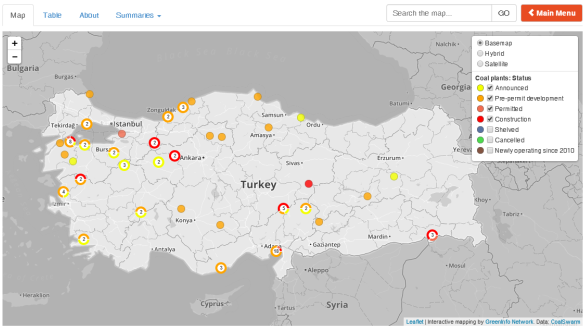
An online campaigners’ toolkit on coal financing in southeast Europe and Turkey.

Visit the website

The reality is that coal plants in Europe are increasingly hard to construct, because of ever more stringent environmental regulation and ever shakier economics of coal. To push coal projects through, authorities and project promoters often have to cut legislative and due diligence corners. Yet civil society in Europe, including in the Balkans, has also more and more tools to combat these bad practices. It seems today that the Espoo Convention is another such tool. After all, pollution from coal has no borders, and whether more coal will be built in the Balkans is a concern for all of us, no matter where we live in Europe.

Serbian energy sector needs overhaul

The news portal Deutsche Welle has visited the Kolubara lignite mine in Serbia and produced a short clip about the difficulties faced by the Serbian energy sector.

Our Serbian colleague Nikola Perusic speaks in the video about the terrible landslide that happened in May 2013.

See the video here

The clip doesn’t mention this year’s floods – which hit communities living next to the Kolubara mine particularly hard and dealt yet another blow to Serbia’s energy sector. But as Bankwatch pointed out in July, the floods are not a reason to fall back to lignite as a cheap fuel but rather exemplify the vulnerabilities that come with the hyper-centralisation and over-reliance on coal in Serbia’s energy sector.

Corporate interest on way to win over the EU bank’s transparency policy


The European Investment Bank is currently reviewing its transparency policy dating from 2010, and running a public consultation on the matter, which was started in early July and is meant to finish end of the year. A review of the institution’s transparency policy is more than welcome, considering that the bank is not faring that well on transparency compared to other global public institutions: according to the 2013 Aid Transparency Index, the EIB fared as “poor” on transparency and accountability, worse than the IMF, the African Development Bank or the German Development Bank KfW.

Although over the years, the bank has made attempts to improve its practices, campaigners active on the bank have a sense that as of late the bank has become slower at disclosing information.

A transparency policy like this would cater well to the secrecy preferred by corporate actors while the obvious public interests in a public bank don’t seem to play even a secondary role.

In a symbolic case this year, the EIB continues to withhold important information about tax evasion allegations surrounding its 50 million US dollars loan to Mopani copper mine in Zambia. Following accusations of tax evasion against the mine in 2011, more than 50 MEPs, in an open letter to the EIB, called for a moratorium on public financing for mining projects. The bank announced an investigation of the tax evasion allegations against Mopani Copper Mines plc, a Zambian company which is largely owned by Glencore. Yet despite complaints by civil society organisations to the bank and the European Ombudsman, an open letter to the EIB President and the advice of the bank’s own complaints mechanism to make the investigation public, the content of the report is still kept secret.

Mopani is just one case in point of how the bank is failing to meet transparency and accountability standards expected from a public institution. Since the consultation of the new transparency policy opened, NGOs such as Counter Balance, in which Bankwatch is a member, have been sending their input (pdf) to the bank in the hope of turning it into a more accountable institution, as it suits the bank of the European Union.

However, surprisingly, the bank’s current draft (pdf) of its new transparency policy, as it was released to the public in the beginning of July, would mean a major step backwards and a dilution of the actual policy in terms of access to information and the public disclosure of information.

The most worrying elements of the draft are:

  • The EIB wants to apply access to information requirements only when exercising its “administrative tasks”, but ignores the fact that there is currently no commonly agreed definition of what EIB administrative and non-administrative tasks mean – neither in EU legislation nor in the recent jurisprudence. Rather than hiding behind a restrictive interpretation of EU regulation 1049/2001, we advocate for the requirements on access to information – a right stated in the EU Charter on Fundamental Rights – to be applied to all activities performed by the publicly owned EIB.
  • The Bank proposes to significantly expand its existing exemptions to information disclosure and go beyond what is requested by EU legislation. As a result, EU citizens would be unable to access most of EIB internal documents, even if they are of public interest.
  • There is a new “presumption of confidentiality” that all documents related to internal investigations, reports and audits are confidential and not to be disclosed, even if they concern matters of public interest.
  • Apart from simplification of the text, the Bank has proposed no improvements to its existing transparency policy. This goes against the numerous statements from the Bank about its appetite for transparency – especially in the context of the capital increase which took place in 2013 and for which the bank promised that an increased lending would go in parallel to an increased transparency of its operations.

All in all, the policy draft is less concerned with transparency than it is with confidentiality. A transparency policy like this would cater well to the secrecy preferred by corporate actors while the obvious public interests in the dealings of a public bank don’t seem to play even a secondary role.

NGOs monitoring the EIB will not let this be the last word. Strong requirements for a pro-active disclosure of documents and the engagement of stakeholders must be included in the final policy. Also the bank’s website needs to be improved substantially, including better presentation of project information, a complete public register of environmental documents and a register of complaint cases.

Anything less would be a shameful result for the public bank of the European Union.

The future is ash-grey for people in Turceni, Romania


People in the Submaidane-Turceni area in Romania live their lives in coal ash that still hasn’t been cleaned up after an accident that took place in December 2013 at an ash deposit belonging to the Oltenia Energy Complex in Turceni. They can’t seed their land, they know their water is not fit for drinking and they have problems with air pollution, as ash is blown by winds when it’s dry.

These are the complaints that representatives of the Oltenia Energy Complex could have heard at a public debate on Sunday – had they been there. Rather than learning first-hand about the problems that still persist and which measures still need to be taken to help the locals, the Oltenia Energy Complex chose to send a document instead that lists clean-up measures that were implemented, but which didn’t address people’s current issues.

Turceni

Turceni is the largest coal thermal power plant in Romania and it is part of a complex consisting of several coal power plants and lignite mining operations. Out of the seven units that were built at the Turceni power plant, 3 units will continue to operate in the near future. The power plant uses local lignite and it was the second most polluting industrial facility in Europe in 2009; since then, facilities were built to comply with sulphur oxides emission standards.

The accident

In December 2013, following damage at the Oltenia Energy Complex’s Valea Ceplea ash deposit, located a few kilometres from the Turceni power plant, an ash and water discharge flooded 15 hectares of agricultural lands and 10 households in the Submaidane area of the Turceni and Ionesti settlements in Gorj County, Romania.

Images taken in February still show the level of devastation of both houses and farm land:

The company was fined earlier this year by the Environmental Inspectorate for not having taken all measures to prevent the accident from taking place.

In March 2014, the energy complex had committed to take all clean-up measures by September 30th 2014, i.e. removing the ash from gardens and lands, restoring the local road, cleaning the water discharge channel that enabled the flooding, rehabilitation of houses and commissioning soil analyses.

Insufficient clean-up

At this time, much of the agricultural land is still under a thick, one-meter high layer of ash, and fertile soil hasn’t been brought to people’s gardens where they normally grow their vegetables. Their road used to be a gravel one, now it’s a muddy space that isn’t fit for use on rainy days. Moreover, water in people’s wells is not fit for drinking and they also complain about heavy air pollution on dry and windy days, when ash is blown from the flooded lands and from an ash deposit located next to the power plant.

These images taken in August show how much still needs to be done.


(This is the same car stuck in sludge as in the picture from February.)

This is a long story described in a few words. But words are never enough – just as much as the company’s lip-service commitment towards sustainable development and social responsibility is worthless if it does not translate into action. The Oltenia Energy Complexy must clean up its act and it has to do so urgently.

–

Photos of the Submaidane area and the public debate are available at http://bit.ly/1tEnr2D and http://bit.ly/1pGIdqN respectively.

Romanian government is seeking financial support in China for time travel into a lignite past


Today, a four day visit of a high-level Romanian delegation to the People’s Republic of China is coming to an end. The visit includes a meeting with main representatives of Chinese companies and banks investing in Romania or seeking to do so, among others in coal power installations.

Chinese (and other new) investors have developed a big interest in Romania and the whole of south-east Europe, with coal power plants being among the popular investments. Since previous discussions with Romania this year have focused on large infrastructure projects and nuclear and coal power it is hard to deny that the Romanian government is trying to attract Chinese investors for the Cernavoda nuclear power plant Units 3 and 4 and the construction of new lignite power plants at Halanga and Rovinari. (One of the delegates, Minister of Economy and former Energy Minister Constantin Nita is a very passionate supporter of coal.)

Considering the sea change under way in Romania’s energy mix lignite cannot be seen as a viable way forward.

Megalomania

For many years, the Romanian governments have been locked-in the megalomaniac energy development plans, remainders of communist times, in which the country would become energy independent and a net exporter of electricity in the region. Just as its neighbouring countries, for that matter.

Although the currently installed coal capacity is twice of what is currently in use, the Romanian government makes a trip back in time and plans to build new lignite units. One of the likely reasons for falling back on lignite now is the fact that more than a dozen power stations in Romania are approaching the end of their viable economic lifespan and European laws further dictate near term decommissioning dates. The most relevant facilities that are listed for decommissioning total a capacity of 5,500 MWe.

Yet, considering the sea change under way in Romania’s energy mix (pdf) – the total installed renewable capacity has grown from a mere 1% in the early 2000s to almost 23% today (large hydro excluded) – lignite cannot be seen as a viable way forward.

Even until 2009 renewable energy production was almost non-existent in Romania. But with the creation of a support scheme in 2010 to encourage investments in clean energy, the Ministry of Economy’s National Action Plan on Renewable Energy triggered an unseen growth in the sector. Within one year the installed renewable capacity grew by more than 2.5 to 1233 MW in 2011. At the end of 2012 this figure was 2399 MW, more than five times the 469 MW from 2010. The trend is still ongoing – in July, Romania’s electricity system operator Transelectrica announced that the renewables share had again almost doubled to 4664 MW by July this year.

Rovinari

One of the planned new lignite-fired units where Chinese investors are involved is unit 7 at the Rovinari thermal power plant in the south-west of Romania. The China Huadian Engineering (CHE) is set to build the 600 MW unit while Chinese banks [ro] are to secure the financing. CHE would be the general contractor, but the actual construction would be done by Romanian companies.


Rovinari TPP, Units 3-4-5-6 (See more images from Romanian lignite installation in Bankwatch’s flickr set.)

The Romanian lignite-fired power plants at Turceni, Drobeta and Rovinari are among the most polluting industrial installations in the European Union. Coal burning in Romania is estimated to cause 2.731 premature deaths and 1.284 cases of chronic bronchitis annually.

Constructing a new unit in Rovinari is said to create 500 new jobs [ro] while burning 6 million tonnes of lignite per year. In January 2013, OEC’s manager stated [ro] that the new unit’s electricity would be exported to Austria and Turkey.

Local health impacts

The exact location of the new unit is still uncertain, but it will be somewhere very close to the existing units and therefore close to the town of Rovinari. So while the unit’s electricity will be exported, its pollution will remain in Rovinari.


The Rovinari town center

Coal’s significant impact on health has been shown by a Health and Environment Alliance (HEAL) study (pdf) from May last year. The study estimates that coal burning in Romania causes among others 2.731 premature deaths each year and 1.284 cases of chronic bronchitis. It also revealed that, based on data from 2009, 3 out of the 10 most polluting industrial installations in the EU are the Romanian lignite-fired power plants at Turceni, Drobeta and – Rovinari (the current units).

–

Burning more lignite is a poor alternative for an already heavily polluted area and for a country whose renewable energy potential is so large that its capacity grew ten-fold within five years. It is time for Romania to give up the construction of old-fashioned dirty energy stations.

« Previous Page
Next Page »

Footer

CEE Bankwatch Network gratefully acknowledges EU funding support.

The content of this website is the sole responsibility of CEE Bankwatch Network and can under no circumstances be regarded as reflecting the position of the European Union.

Unless otherwise noted, the content on this website is licensed under a Creative Commons BY-SA 4.0 License

Your personal data collected on the website is governed by the present Privacy Policy.

Get in touch with us

  • Bluesky
  • Email
  • Facebook
  • Instagram
  • LinkedIn
  • RSS
  • YouTube