Polish region an unexpected champion of green energy citizen projects

As EU Member States continue to negotiate with the European Commission their spending plans for the next Cohesion Policy funds for 2014-2020, the Polish region of Podlaskie in the northeast proves an unexpected champion for the green energy citizen’s revolution in Poland.

In its draft Operational Programme outlining spending plans for the Commission, Podlaskie’s regional authorities intend to support “an energy revolution, which will result not only in the increased share of renewables in the energy consumption mix, but also make local citizens and entrepreneurs the owners of decentralised energy sources”.

Recognising that efficiency, diversification and local production are key both to ensure long-term energy security and meet the EU’s 2020 climate targets, Podlaskie sees the solution in supporting the creation of a locally-owned, decentralised energy system, that utilises indigenous renewable resources and stimulates local development.

With more than 80 billion euros of available funding, Poland will be the biggest beneficiary of Cohesion Policy funds in 2014-2020. In response to the Commission’s push for greener spending of the EU Budget, Poland will dedicate approximately 9 billion euros to finance low-carbon development, including renewable energy and energy efficiency measures.

Podlaskie stands out as a champion of the citizen’s energy revolution in Poland, but there are also other regions – notably Małopolskie and Podkarpackie – who have expressed intentions to prioritise the development of small, decentralised renewable energy installations. This is particularly important, because it is on the regional and local levels where much of this greener spending will happen and where EU money can be used most effectively to support the development of green energy communities in Poland.

Drafted in Warsaw, the national spending plans focus mostly on large-scale, nationwide investment projects. With around 40 per cent of all Cohesion Policy funds in Poland to be distributed directly by its sixteen regions, local governments decide where the lion share of the money goes and who can play a major role in shifting local development on a more sustainable path.

The 16 Polish Regional Operational Programmes, submitted by the regional authorities to the Commission, outline funding priorities and will guide the investments on the regional and local level for the next seven years. But some Polish regions understand the transformative potential of the new EU budget better than others. Consequently, the resources assigned for low-carbon growth vary across regions, with some planning to spend 25-30 per cent of available funds from the European Fund for Regional Development and others keeping close to the minimum 15 per cent.

With 180 million euros allocated to low-carbon development and 60 million euros earmarked for investments in renewables – compared to approximately 20 million euros invested in renewable energy and energy efficiency in the previous 2007-2013 EU budget – Podlaskie’s local government has the means to support their forward thinking.

This is crucial, because in the continued absence of national laws effectively regulating the renewables sector or recognition of the benefits of local, decentralised energy production, priority support for “prosumers” (producers and consumers of energy, owners of RES microinstallations, producing energy to cover own needs and selling the excess to the grid) could be key to stimulating the shift towards citizens’ power in Poland.

As Polish regions prepare to release the so called “Detailed description of priorities” by-laws, which will include project selection criteria and detailed allocations by investment priorities, it is vital they include provisions allowing communities, cooperatives and individuals to become beneficiaries of low-carbon, energy-related funding. Following Podlaskie’s example, priority should be given to the smallest RES investment projects, in order to use EU money to bring about a new local and regional energy system, one where local people are the owners and consumers of green energy.

Public in Bosnia-Herzegovina to pay for shaky economics of Tuzla 7 coal plant, but will officials take heed?

After several years of developments related to a seventh unit at the Tuzla power plant in Bosnia and Herzegovina, the public is now able to understand the plant’s economics, thanks to a document published in the run-up to a debate in the Federation of BiH parliament this week. It might have been a better idea to have this debate earlier, considering that the news is not exactly good for the project developer, Elektroprivreda BiH (EPBiH).

In April, China’s Gezhouba was the only one of two shortlisted bidders to submit a final offer for the 450 MW lignite unit, with Japan’s Mitsubishi Hitachi Power System having been put off by the political situation in Bosnia and Herzegovina and reportedly also the plant’s unprofitability. But only now have concrete figures emerged that allow a closer examination of the situation.

Now the details: Gezhouba offered two options, one that uses a credit arrangement known as a Preferred Buyer’s Credit, at a cost of EUR 785.7 million, and one using a Buyer’s Credit, at a cost of EUR 835 million. Elektroprivreda BiH considers the first option economically viable, with a Net Present Value (NPV) of EUR 54.644 million over 25 years and an Internal Rate of Return (IRR) of 11.63 percent. The second is considered unviable, with a negative NPV and an IRR of only around two percent. In summary, EPBiH goes for the Preferred Buyer’s Credit.

But while the difference between EUR 785.7 and 835 million might sound like a lot, in the world of building coal power stations, it’s nothing.

The most drastic example from this region is the lignite unit at Sostanj 6 in Slovenia, whose costs doubled from EUR 700 million in 2007 to an estimated EUR 1.44 billion. The kanalysis by EPBiH document does take a look at coal plant prices from around the region in order to assess whether Gezhouba’s offer is reasonable, but it too easily dismisses Sostanj as incomparable and brushes over the problems it has suffered from, as if they could not happen in Tuzla.

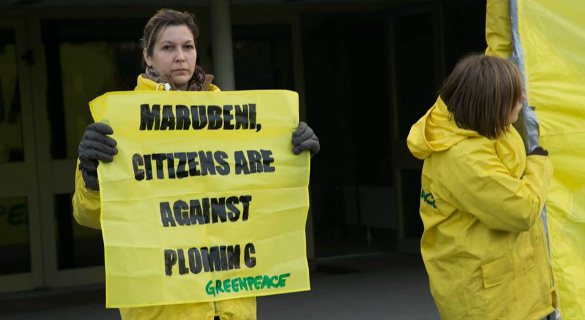
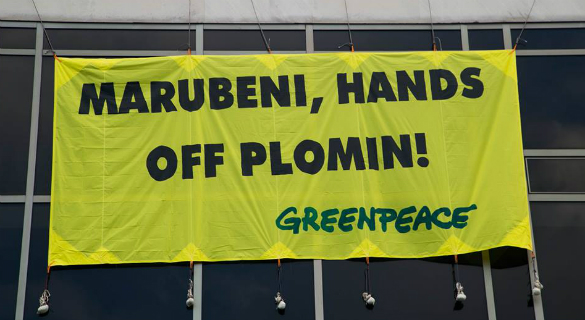
Even projects with less dramatic price increases show a tendency to pile on a few tens of millions of euros during development. For example the price of Plomin C in Croatia was set at EUR 800 million for at least the last three years, but in May costs suddenly jumped to EUR 827 million before a preferred bidder had even been chosen.

If Tuzla 7 picks up EUR 50 million more in costs along the way – which is far from unlikely – it will be economically unviable. Similarly it won’t be good economics if the costs of coal or electricity prices used in the calculations turn out to be wrong.

EPBiH is aware of the second problem, having mentioned that electricity prices in the EU are currently lower than the expected sale price for Tuzla 7’s electricity at EUR 56.75/MWh. The expected price of lignite from nearby mines is just under EUR 2.4/GJ (4.75 KM), but if the real price is higher, ‘the competitiveness of the existing generation and feasibility of building new units will be threatened’, says EPBiH’s document.

So rather than coming to the same conclusion as most utilities in Europe – that it is a really bad idea to invest in coal – EPBiH has merely re-stated its commitment to constructing Tuzla 7 and is crossing its fingers that before unit 7 comes online electricity prices will rise above 56.75 EUR/MWh.

In order to be sure about the price, the document mentions EPBiH signing a long-term power purchase agreement with the project company to increase the stability of the investment. However, there is a risk that such an agreement would be in conflict with Bosnia and Herzegovina’s obligations under the Energy Community Treaty, which does not allow state aid.

In the end, we’re back to where we started, with a proposed coal plant that may or may not be feasible, nobody really knows. Will Bosnia and Herzegovina’s elected officials realise that this foundation is too shaky for such a large project, or will we soon have another Sostanj 6 on our hands?