• Skip to primary navigation
  • Skip to main content
  • Skip to footer

Bankwatch

  • About us
    • Our vision
    • Who we are
    • 30 years of Bankwatch
    • Donors & finances
    • Get involved
  • What we do
    • Campaign areas
      • Beyond fossil fuels
      • Rights, democracy and development
      • Finance and biodiversity
      • Funding the energy transformation
      • Cities for People
    • Institutions we monitor
      • European Bank for Reconstruction and Development
      • European Investment Bank
      • Asian Infrastructure Investment Bank
      • Asian Development Bank (ADB)
      • EU funds
    • Our projects
    • Success stories
  • Publications
  • News
    • Blog posts
    • Press releases
    • Stories
    • Podcast
    • Us in the media
    • Videos
  • Donate

Home > Archives for Blog entry

Blog entry

City of Zagreb still playing with fire

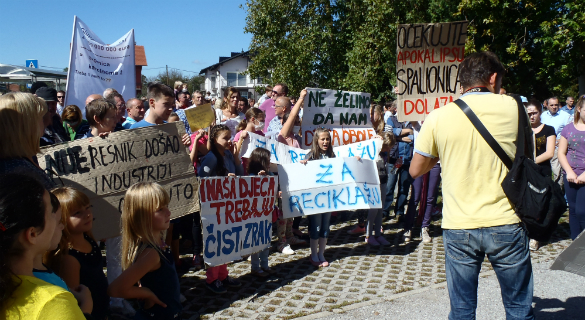
Seasoned Bankwatch-watchers may recall our successful four-year campaign to stop the EBRD from financing a waste incinerator just outside Zagreb. Between 2005 and 2008, we supported Zelena akcija/Friends of the Earth Croatia and local group UZOR to prevent the City of Zagreb from building a huge 385 000 tonnes per year waste incinerator in Resnik on the outskirts of Croatia’s capital.

The reasons against the project were clear: the low levels of recycling and composting in Zagreb, the lack of facilities to safely dispose of the bottom ash, fly ash and filter residues, the inflexibility of such a large facility and poor previous experience with environmental enforcement in Croatia.

Whether for these or other reasons, the EBRD and later the EIB wisely avoided financing the project, with the Mayor of Zagreb confirming in late 2008 that the project would not go ahead.

Since then however, the City of Zagreb seems intent on passing a waste management plan that includes almost exactly the same measures, in spite of Zelena akcija’s best efforts to promote alternatives. The city is again holding a public consultation for a plan that looks eerily similar to the previous.

Even though Croatia must recycle 50 percent of its waste by 2020 as per EU targets and Zagreb has almost a quarter of the country’s population, the city’s new draft waste plan still has the incinerator project as its centrepiece, now – incomprehensibly – with a capacity of 400 000 tonnes per year.

This in spite of the fact that Zagreb’s annual residual waste actually dropped to around 270 000 tonnes per year for the years 2009-2013, all with a very low percentage of recycling and no serious efforts to reduce the production of waste. So imagine what would happen if Zagreb’s authorities really made an effort on recycling, composting and waste reduction.

The proposed waste management plan foresees no less than EUR 360 million for the construction of the incinerator and an ash landfill, 35 times less money for recycling and separated collection, and zero for waste reduction measures. The costs of the incinerator alone total 83 per cent of the entire budget to implement the plan, turning the waste hierarchy on its head.

The only city-wide recycling measures include an increased number of recycling containers, which enable recycling only of a few materials and have long proven to be of limited use when people must walk further to use them and have no economic incentive to do so.

The need to treat waste sludge from Zagreb’s controversial wastewater treatment plant is often cited as a reason for the incinerator, but no alternative treatments are covered in the waste management plan, nor is there an explanation of what will happen once the backlog of sludge is burned and Zagreb does not produce enough other waste to fill it. Importing other people’s waste seems like the only outcome if the burner is built.

The incinerator would create around 100 000 tonnes of ash, but there have so far been no realistic proposals of where this could be landfilled, as all suggested locations have been met unsurprisingly with fierce local resistance. It is also unclear where the hazardous fractions of the waste eg. the filter residues, would be disposed of and how much this would cost, but considering that Croatia has no suitable facilities it can be expected that this could incur considerable costs and as well raise ethical questions about leaving other countries to bear the consequences of Croatia’s waste.

The frustrating thing is that the alternatives – waste prevention, recycling, composting and mechanical biological treatment with anaerobic digestion – are available and functioning in many cities, but the City of Zagreb refuses to see this. We must move quickly beyond this impasse and agree on a waste management plan we can all live with. And that means that the City of Zagreb will have to open its ears and start listening rather than blundering blindly on with its plans.

The question here is where the international financial institutions stand. A meeting with EBRD representatives in Zagreb in May 2013 showed that the bank is aware of the imperative of solving Zagreb’s waste problem and is interested in supporting the city’s efforts. But will it silently follow the City of Zagreb’s increasingly absurd plans or help it finally develop a waste management system we can be proud of?

A Private Affair: Report shows how development finance institutions benefit the rich in Western countries


The European Network on Debt and Development (Eurodad) launched today the study A Private Affair in which it shows how the world’s biggest multilateral lenders are using billions of euros of loans in developing countries to finance Western-based companies while excluding governments and citizens of countries they are meant to assist from decision-making.

The analysis, which looks among others at loans by the European Investment Bank (EIB) and the International Finance Corporation (IFC), the World Bank’s lending arm, analyses the consequences of the gradual shift from aid to private finance at the core of global and national development initiatives.

By 2015, the development finance institutions suveryed by Eurodad will be lending over 100 billion US dollars, the equivalent of almost two thirds of official development assistance.

Yet this huge amount of money hardly benefits those it is nominally meant to support, the most vulnerable people in developing countries.

The report A Private Affair (pdf) finds, among others, that:

  • Companies from wealthier nations have often received the lion’s share of contracts. Investments are sometimes routed through tax havens – which drain much-needed finance from developing countries.
  • Companies from low-income countries receive minimal support. For example, only a quarter of companies supported between 2006 and 2010 by the EIB and the IFC were domiciled in low-income countries.
  • Developing countries have virtually no say in how these institutions are run, or how the decisions they make. The World Bank’s IFC has the highest proportion of developing country voting share for decision making – but even in this case the voting rights of both middle and low-income countries are less than 30 per cent.
  • The financial sector – especially investment banks – have been favoured by DFIs in recent years, receiving on average more than 50% of funding that has been allocated to the private sector, even though serious questions have been raised about the kind of development impact this will have.

One of the examples studied in the report is the case of the EIB’s 14 million euro loan to the resort ClubMed in Morocco. While this amount may be generally added up to the institution’s support for North African whose plight was brought to world attention by the Arab Spring, in reality it is hard to argue that the loan benefits anyone but the European owners of the resort. While the EIB claims that the loan will contribute to sustainable tourism and local employment, local organisations in Morocco denounce the project’s impact on the environment and the land grab associated with the construction of such gated resorts.

A Counter Balance video shows how little the ClubMed resort has to do with development:

More background in this Counter Balance blog post

After going through these startling features of the activity of development finance institutions, Eurodad concludes with a set of recommendations to these institutions:

  • to align their investment decisions to developing countries’ priorities and national development plans,
  • to demonstrate clear financial and development added value,
  • to comply with the guidelines of responsible finance.

Otherwise, if such recommendations are not taken into account, rich countries are only pretending to finance development, when instead they finance their own businesses wreaking havoc in developing countries for private gains.

Video: A mockumentary about biodiversity offsetting


Наши друзья из общественной организации “Biodiversity Offsetting” (совместно с FERN, Re: Common, World Development Movement и Carbon Trade Watch) сегодня начали кампанию, направленную против планов ЕС разрешить компенсацию потерь биоразнообразия.

Компенсация потерь биоразнообразия позволяет девелоперам уничтожать природу до тех пор, пока они платят за его замену в каком-нибудь другом месте. Это равносильно лицензии на отстрел. С точки зрения охраны природы этот принцип выглядит очевидно абсурдным. Такая практика не принимает во внимание сложность определенных экологических систем и полна технических лазеек. Какую, например, компенсацию получила бы “природа” за нарушение популяции рысей в Македонии, которые находятся под угрозой исчезновения, в зоне ее восстановления? Как можно было бы компенсировать потери, если бы популяция рыси исчезла полностью?

Сатира как нельзя лучше подходит для того, чтобы донести эту точку зрения до общественности, и именно поэтому кампания начинается с демонстрации псевдодокументального фильма, представленного ниже.

Вы можете внести свой вклад в недопущение компенсации потери биоразнообразия, приняв участие в общественных слушаниях ЕС до 17 октября 2014 года и подписав петицию в ЕС на сайте http://naturenotforsale.org/letter2EU

Компенсация потери биоразнообразия делает мечты реальностью. Это лицензия, которая может сделать мечты недобросовестных застройщиков реальностью. Во всем мире компенсация уже служит откупом за разрушение незаменимых экосистем с целью освобождения места под реализацию горнорудных проектов, строительство автодорог, трубопроводов …

Европа является новым рубежом для компенсации биоразнообразия. Европейский Союз изучает возможность принятия законодательства, которое разрешает компенсации биоразнообразия.

Напомни ЕС, что природа не продается, приняв участие в общественных слушаниях до 17 октября 2014 и подписав нашу петицию ЕС на сайте http://naturenotforsale.org/letter2EU

Video: A mockumentary about biodiversity offsetting


Our friends at Counter Balance (together with FERN, Re:Common, World Development Movement, and Carbon Trade Watch) have today launched a campaign against the EU’s plans to allow biodiversity offsetting.

Biodiversity offsetting allows developers to destroy nature as long as they pay for its replacement somewhere else – it amounts to a licence to trash. From a perspective of nature protection the concept is just plainly absurd. The practice doesn’t take into account the complexity of certain ecological systems and is full of technical loopholes. How, for example, should ‘nature’ be compensated for disturbing an endangered lynx population in Macedonia in their reproductive area? How could the bill be settled if the lynx population was to disappear altogether?

Satire seems the best way to bring this point home, which is why the campaign kicks off with the video mockumentary below.

To help preventing biodiversity offsetting in Europe, you can respond to the EU’s public consultation before 17th October 2014 and sign a letter to the EU at http://naturenotforsale.org/letter2EU

Biodiversity offsetting makes dreams come true. It is the license that can make bad developers’ dreams a reality. Across the world offsets already justify the destruction of irreplaceable ecosystems to make way for mining projects, motorways, pipelines …

Europe is the new frontier for biodiversity offsets.The European Union is considering new legislation that permits biodiversity offsets.

Tell the EU that nature is not for sale by responding to their public consultation before 17th October 2014 and sign our letter to the EU at http://naturenotforsale.org/letter2EU

Cheap coal for Europe comes at high price for Ukrainian people


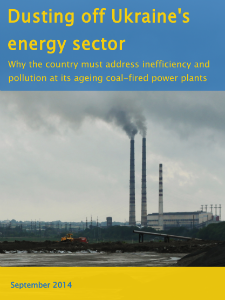
Last week I visited the Burshtyn and Dobrotvir coal power plants and the surrounding communities in western Ukraine. The power plants and the dark smoke rising from their sad chimneys have been part of the landscape for so long that they have become part of the scenery. People know that the pollution can’t be good for their health, but they don’t feel they have the power to do anything about it. And officials will tell you that they comply with their environmental permit.

Things are ‘absolutni normalna’.

While electricity is relatively cheap in Ukraine, it comes at a great environmental and health cost. None of the coal-fired power plants in Ukraine have any sulphur oxides and nitrogen oxides pollution control, while the equipment that filters ash at these plants have seen quite a few decades of operation.

At the same time, much of this electricity is wasted, with energy efficiency levels far below European standards. The amount of energy spent in Ukraine to produce 1 dollar of gross domestic product (GDP) is three times the European Union average, while Ukrainian carbon dioxide emissions per unit of GDP are the highest in Europe (Source: UKEEP, 2009). Despite these losses, coal power plants are still able to sell electricity at very low prices due to the country’s state aid regime.

Electricity goes to Europe

In western Ukraine, the coal power plants Dobrotvir and Burshtyn are connected to the European grid and export part of their electricity to countries like Hungary, Slovakia and Romania. In 2013, Ukraine exported some 4,300 GWh of electricity (mainly to Hungary) which would be the equivalent of a 500 MW net capacity power plant operating 24 hours a day throughout the year for export only. If the 500 MW power plant were new, it would ‘only’ cause 17 premature deaths each year; if it’s Ukrainian power plants from the 70s, you can’t really tell.

These power plants wouldn’t be allowed to operate in the European Union because of their emissions, or they would have a strict deadline to close down. In some countries, their low efficiency could make their electricity so expensive that they would not be able to compete with other sources like wind power.

But because of the coal subsidies in Ukraine, EU countries can import coal-based electricity at a price 25-50% below even the domestic price in Ukraine. (In 2013 the UA domestic wholesale price for electricity was EUR 0.07 per kwh. The export price was between EUR 0.035 and EUR 0.0525 per kWh.)

Difficult choices

Would you still pollute the air for your countrymen if the electricity you produce is not used by your people? Apparently, yes. It isn’t an easy choice. It’s a profitable business, it keeps jobs in mining and power plant operations while the premature deaths, respiratory and cardiac diseases aren’t visibly connected with air pollution from your power plant.

Should you still buy the electricity, in Hungary for example, if you knew that it comes from power plants that wouldn’t be allowed to operate in Hungary because they create too much pollution? Well, I think you shouldn’t, there’s no middle ground there.

Serbian government props up almighty coal


Since 2006 when the Energy Community was founded and its member countries committed to adhere to EU legislation on state aid, the Serbian government has provided several forms of support for the Kostolac lignite power plant and mines company, part of state company Elektroprivreda Srbije (EPS), and is now planning to provide further support by approving loan guarantees in the National Assembly for the construction of the 350 MW Kostolac unit B3.

  • A project that is currently being undertaken by China’s CMEC is the reconstruction of existing blocks B1 and B2 at the Kostolac power plant. It was the Serbian government, not EPS, who signed a contract for a USD 293 million loan (85 percent of the project value) from the China ExIm Bank.
  • Since part of the project consists of transportation infrastructure – a landing dock on the Danube and railway infrastructure – it is also possible that a clause from an annex (pdf) to the 2009 Serbia-China agreement will be applied, exempting the import and supply of goods and services for the project from VAT and customs duties.
  • What is still coming up is the construction of a new 350 MW unit at Kostolac B and expand the Drmno lignite mine, for which the Serbian government in November 2013 signed a contract with CMEC. The project depends on financing from the China ExIm Bank and unnamed commercial banks, and on a state guarantee from the Serbian government for these loans. The 2014 Serbian state budget allocates two guarantees for the project – USD 107 million for un-named commercial banks and USD 608 million for the China Exim Bank.

The state support for Kostolac outlined in the new report (pdf) is just one example of how Serbian state authorities are systematically propping up an already almighty coal industry. If plans for a new energy strategy for Serbia are anything to go by (discussions are ongoing about the blueprint for the energy sector for the period 2015-2025), Serbian authorities also plan to continue with this kind of support for the dirtiest of fossil fuels into the next decade.

On a path prone to disaster

Serbia, as a member of the Energy Community, has committed to abide by the EU’s complex rules on subsidies and it is not yet clear whether the support outlined above is in line with these. But in any case, as a candidate country for EU accession and a member of the Energy Community, Serbia needs to increase its energy efficiency and reach a renewable energy target of 27 percent by 2020. This implies a decrease in the percentage of coal in the energy mix.

But these are not the only reasons to pursue such a path. Serbia, like all of south east Europe, is vulnerable to natural disasters, including those exacerbated by climate change such as floods, heat waves, cold waves, droughts and forest fires. This May’s tragic floods – which claimed at least 51 lives and led to the evacuation of nearly 30,000 people from flooded towns and villages in Serbia alone – propelled the issue into the global headlines, but extreme weather events have been increasing in frequency for years already.

Among others, between 2000 and 2010 eight serious flood events affected 51 290 people and killed four (pdf), while a 2012 drought led to the loss of 45 percent of Serbia’s maize crop (pdf).

With each disaster costing huge amounts of money to clear up, Serbia, like other countries in the region, needs to be quicker in recognising its self-interest in slowing climate change and making its infrastructure more resilient to extreme weather events.

In this respect, lignite power stations are problematic in both cause and effect. On one hand, coal is the biggest contributor to climate change (IEA, pdf). At the same time, coal power plants are vulnerable to extreme weather, as the recent Serbian floods showed, in which two pits of the Kolubara open cast lignite mines were completely flooded – with estimated costs of EUR 100 million – and electricity generation was cut by 40 percent at the height of the floods. While a mammoth effort to stop the Kostolac B plant from being flooded was ultimately successful, here too it was a close shave and could easily have resulted in generation capacity being shut down.

At the other end of the scale, coal power generation is also extremely water-intensive and – like hydropower and nuclear – vulnerable to drought. Some countries have started to recognise this problem (pdf) however in south east Europe the discussion so far on drought has centred almost exclusively on hydropower.

The positive flip-side is that non-hydropower renewable energy is both a climate change mitigation tool and an adaptation one, since it is decentralised and with the exception of biomass has no CO2 emissions during operation, and energy efficiency measures are better still. Yet Serbia, along with its neighbours, consistently treats these as a side salad rather than the main dish.

After the recent floods it is high time for Serbia to think again about its energy strategy – a new one of which is currently in its draft stages – and avoid tragedies recurring again in the future. But as money often ends up being the defining factor in what goes ahead and what doesn’t, CRTA’s new report (pdf) gives every reason to re-think state support for the coal sector whether or not Serbia opens up its draft energy strategy for discussion again.

« Previous Page
Next Page »

Footer

CEE Bankwatch Network gratefully acknowledges EU funding support.

The content of this website is the sole responsibility of CEE Bankwatch Network and can under no circumstances be regarded as reflecting the position of the European Union.

Unless otherwise noted, the content on this website is licensed under a Creative Commons BY-SA 4.0 License

Your personal data collected on the website is governed by the present Privacy Policy.

Get in touch with us

  • Bluesky
  • Email
  • Facebook
  • Instagram
  • LinkedIn
  • RSS
  • YouTube