• Skip to primary navigation
  • Skip to main content
  • Skip to footer

Bankwatch

  • About us
    • Our vision
    • Who we are
    • 30 years of Bankwatch
    • Donors & finances
    • Get involved
  • What we do
    • Campaign areas
      • Beyond fossil fuels
      • Rights, democracy and development
      • Finance and biodiversity
      • Funding the energy transformation
      • Cities for People
    • Institutions we monitor
      • European Bank for Reconstruction and Development
      • European Investment Bank
      • Asian Infrastructure Investment Bank
      • Asian Development Bank (ADB)
      • EU funds
    • Our projects
    • Success stories
  • Publications
  • News
    • Blog posts
    • Press releases
    • Stories
    • Podcast
    • Us in the media
    • Videos
  • Donate

Home > Archives for Blog entry

Blog entry

The European Parliament resolution urges European financial institution to respect indigenous peoples rights

The European Parliament resolution of 3 July 2018 on violation of the rights of indigenous peoples in the world, including land grabbing  recognises the “central role” that international financial institutions can play in ensuring respect for the human and environmental rights of indigenous peoples. It “calls for the EU to be particularly vigilant when it comes to projects supported by international and European financial institutions so as to ensure that this funding does not entail or contribute to the violation of the human and environmental rights of indigenous peoples”.

The resolution “insists that the EU and its Member States must work to hold multinational corporations and international financial institutions to account for their impact on indigenous communities’ human and environmental rights; calls for the EU to ensure that all violations of the rights of indigenous peoples by European companies are duly investigated and sanctioned through appropriate mechanisms and encourages the EU to withdraw any form of institutional or financial support in the case of human rights violations.”

The European public financiers, however, still need to be reminded about this seemingly obvious and non-controversial demand – to respect indigenous peoples’ right to make informed decisions about their ancestral lands.

Geothermal developments in Kenya’s “traditional heartland”

In 2010, the European Investment Bank (EIB), together with the World Bank, Germany’s Development Bank (KfW), the French Development Agency (AFD) and the Japanese development financier (JICA) invested in the extension of the geothermal power plants Olkaria I and IV in Kenya, which resulted in the resettlement of four indigenous Maasai villages inhabited by around 1 000 people.

As stated in the EIB’s conclusions report on Olkaria, the entire central Rift Valley, from south of Lake Naivasha (including Olkaria) to Lake Baringo and the nearby plateaus in the north, was once part of the vast grazing lands, which the Maasai controlled in the early nineteenth century. Historical accounts suggest that Naivasha, including Olkaria, was the “traditional heartland” of Maasai territory, where some Maasai continue to seasonally graze their cattle to this day.

At the appraisal stage of the project, the company and its lenders failed to recognise the Maasai community as indigenous peoples, even though they identify themselves as such and their unique status is acknowledged by the international fora, including the United Nations and the African Union.

Their indigenous language Maa is a Nilotic language with considerable tonal complexity and a unique grammatical structure that differs significantly from the African Bantu languages.

The Project’s 2010 Environmental and Social Impact Assessment (ESIA) documented the cultural importance of the sites in the project area, such as the Ol Njorowa (or Orjorowa) Gorge, sacred caves that have been used for initiation rituals and other ceremonies, and deposits of ochre used for Maasai cultural practices and personal adornment.

Because the Maasai were not considered indigenous people, they were not offered sufficiently informed consultations conducted in Maa, compatible resettlement scheme, and a benefit-sharing framework for commercialisation of the natural and cultural resources and loss of cultural heritage, and the company did not seek their prior and informed consent. Long mediation process facilitated by the financial institutions left many unsatisfied and the geothermal project is still being developed around Lake Naivasha.

The Maasai case is, unfortunately, not a standalone blunder on the part of the EIB and its sister institutions.

Svaneti is my homeland

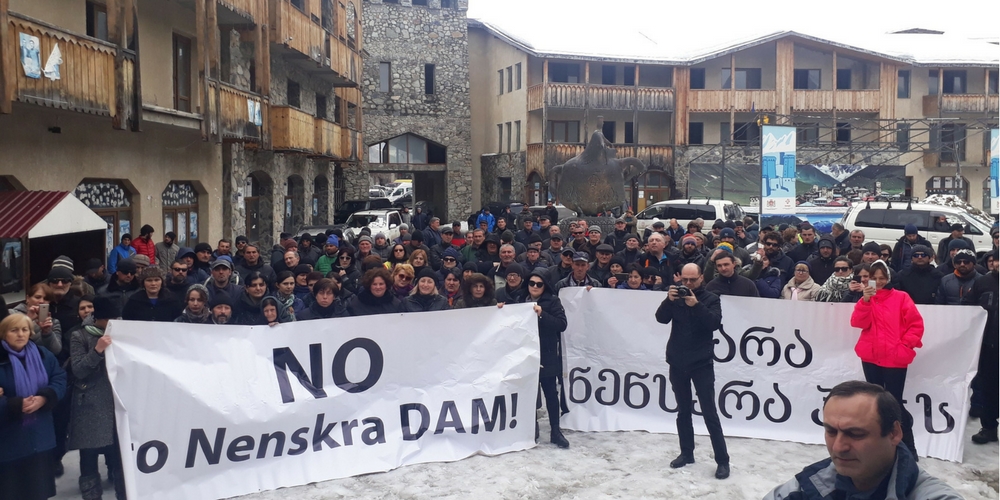
On 5 March 2018, representatives of all 17 communities of Upper Svaneti in Georgia gathered for a traditional Svan Council meeting, Lalkhor, to oppose the development of gold mining and hydropower projects in Svaneti threatening local livelihoods and ecosystems.

The Lalkhor issued a declaration that  restated protesters demands –  recognition of Svans as indigenous peoples with appropriate rights for customary and community property in Svaneti and a ban on the development of any infrastructure without their free, prior and informed consent (FPIC).

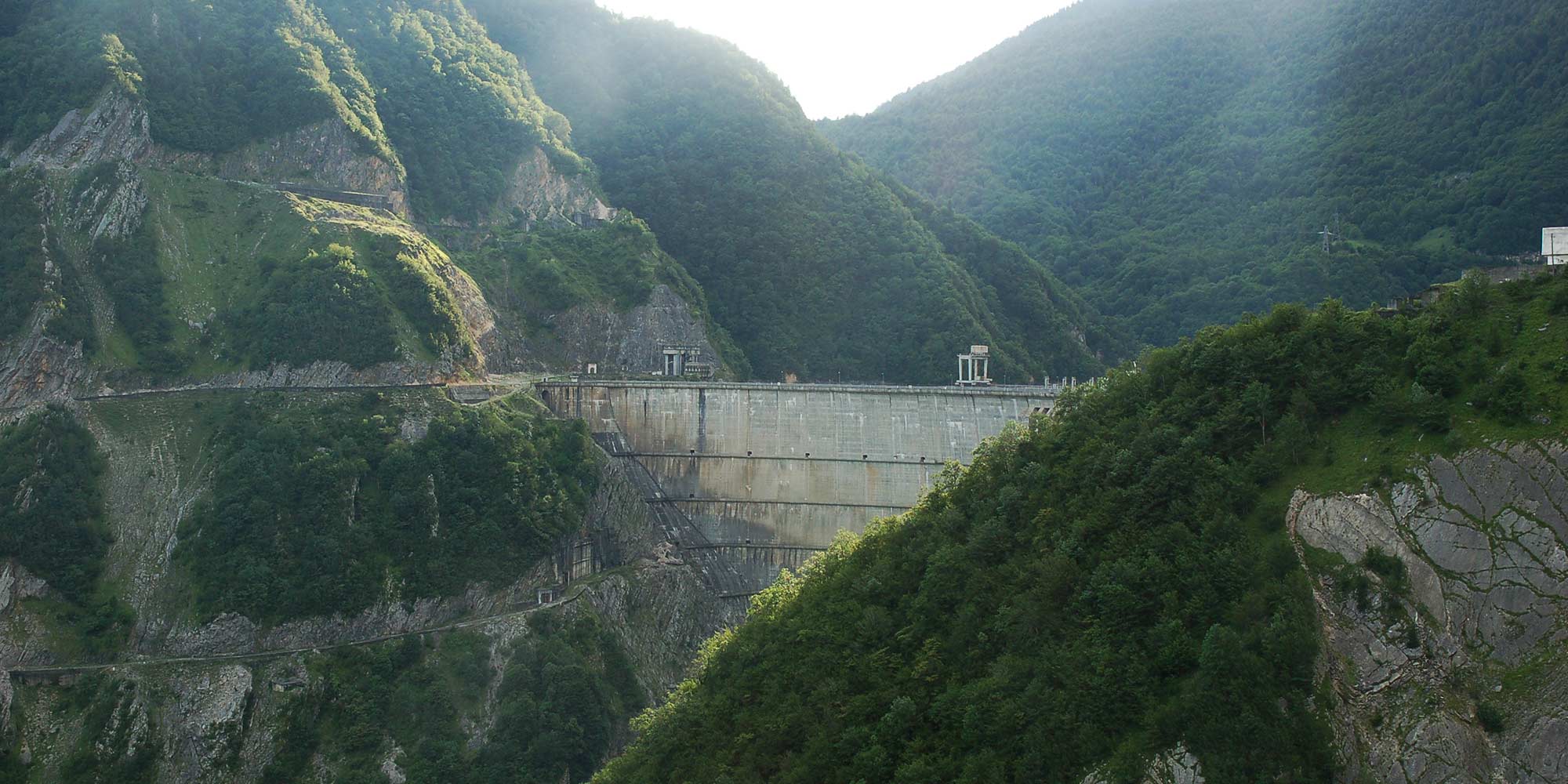
One of the planned dam is Nenskra hydropower plant, which represents one of the 35 power plants, planned to be constructed in Upper Svaneti with the approved investments of USD 150 and 229 million by the EIB and the EBRD respectively. In addition, power grid development from the Nenskra dam is financed by the EU Neighbourhood Investment Facility, German Development Bank KfW and the EBRD.

Complaints by Svans and Bankwatch to the accountability mechanisms of the EIB and the EBRD request review of the banks’ failure to recognise the status of Svans as indigenous peoples and to implement relevant environmental and social standards. They present evidence that the financiers have ignored the project significant impacts on Svans as indigenous people, including their livelihoods, culture, health and safety, and general well-being.

Svans are an ethnic group in Georgia, constituting approximately one per cent of the Georgian population, with their own distinct cultural and religious traditions, unique language and customary law, which runs in communities and the region. They recognise ancestors’ rules and customs on land ownership, carry on the traditional agricultural activities, pastoralist livestock herding, wood processing, crafting, among other things.

Free, prior and informed consent approach has to be effectively executed

Thanks to our engagement with the EIB and the EBRD, almost a decade ago both banks started to require project promoters to ensure a free, prior and informed consent by affected indigenous people to any relocation. It is high time also to require the banks to properly identify the most vulnerable communities – the indigenous ones, and to ensure that their indigenous peoples criteria and safeguards are coherent with the international law.

According to the UN, indigenous peoples are facing greater violations of their rights than it was the case 10 years ago. Front Line Defenders shared that of the 312 human rights defenders reportedly murdered around the world in 2017, 67 per cent were fighting for indigenous peoples’ land and defending environmental rights against extractive projects.

Indigenous peoples’ uniqueness should be celebrated. Today is their day, but it is also for us and our institutions to remind of our obligation to honour their rights.

Environmentalism and democracy on the rise in Albania

Take action

We call on the Albanian Prime Minister Edi Rama to stop the construction of hydropower plants inside the Valbona Valley National Park.

Sami Ismalaj remembers his father, Ram Alia, with the empathy of a son who now has children of his own. “My father was a simple, hardworking man. He got up early everyday and worked in in the fields to provide for his children and his family.” During a recent visit to his father’s grave in Dragobi, a village in the picturesque Valbona valley national park in Albanian Alps, Sami recalled his shock at discovering in 2016 that his father and others had given their approval in 2013 for a hydropower scheme that would have a detrimental impact on the community. An impossibility given Alia died in 2010.

Sami Ismalaj at the cemetery in Dragobi

The project that Alia is purported to have consented to is the Dragobia hydropower plant, which has been under construction since September 2016. The Dragobia plant is just one of hundreds of similar hydropower schemes that have saturated the energy market in Albania over the last decade – a country estimated to be already 98 to 99% dependent on hydropower. As the number of hydropower projects has grown, so too have the costs to people’s rights and the environment.

Albania was one of the first nations to sign the Aarhus agreement, the United Nations convention that grants citizens the right to access information from public bodies where environmental issues are at stake. Albanian law also requires that developers, in cooperation with local governments, carry out consultations with residents. Public participation is therefore supposed to be actively pursued as part of the development process. But in the case of the Dragobi, in order to fulfill this legal requirement, the project developer, Dragobia Energy, owned by Gener 2 – one of the largest construction and civil engineering companies in Albania – claims to have held a single meeting in 2013, during the course of which 20 people gave their support for the project. Based on the testimonies of villagers during a field visit in mid-June, the list of supporters was forged and is comprised of either dead people or employees and family members of a locally based construction firm. Over two dozen community members and a local campaigning group, The Organization to Conserve the Albanian Alps (TOKA), have filed formal charges requesting a criminal investigation of the project, and three months later, the case is still pending in the public prosecutor’s office.

Anatomy of a conflict

Public participation is a prerequisite to functioning democracy. Environmental justice is crucial to sustainable development.  But in Albania, a small, southeastern European country only recently emerging from decades-long, self-imposed isolation, democracy is still struggling to be born, and suffers from often being confused with unchecked capitalism. Dragobi and other faked public consultations are common, while the number of real public consultations can be counted on one hand.

However, a coalition of Albanian activists, civil society organisations and local citizens are seeking to change the status quo by demanding basic transparency in decision-making. Perhaps nowhere in Albania today is this seen more clearly than in the Valbona valley.

One of the most beautiful places in the Balkan peninsula, the Valbona valley and national park annually attracts a growing crowd of adventurous tourists from abroad who are rewarded by access to the relatively unknown and unblemished natural environment as well as the unwavering traditional hospitality of the locals. But in spite of its protected status as an IUCN category II national park – the second strictest level of internationally-recognised protection – Valbona valley national park remains under attack from developers seeking to turn it into a hydropower hub, pumping tonnes of concrete into building dams and diversion tunnels in order to extract energy from the wild and crystal clear Valbona river and its tributaries.

One such company is Gener 2, the Albanian firm behind the 2016 Dragobi scheme, who were also involved in building a controversial pipeline crossing the south of Albania that will transport Azeri gas across centuries-old olive groves. The Gener 2 attack on pristine nature in Valbona valley is one example of the hydropower rush in Albania, as well as more widely in the Balkans, motivated by hefty subsidies for hydropower projects, and power-purchase agreements ensuring steady profit margins for investors. Despite worrying reports about climate change impacts that will affect the availability of water, the ‘fuel’ of hydropower projects, the industry boom shows no signs of slowing.

A footbridge across the Valbona river

A sign of things to come?

There is hope, however, that the tide of democracy is starting to turn. On June 6, the administrative appeals court in the capital Tirana overturned a previous court verdict permitting the Dragobia project and upheld a request from TOKA and 27 villagers in Valbona for an injunction. The injunction was originally requested in January 2018, as part of a suit against the National Territorial Council of Albania over their decision in November 2017 to issue the developers a new construction permit. The plaintiffs argued that the new permit is illegal, as the Law for Protected Areas was amended in June 2017 to ban all hydropower projects in national parks. Under Albanian law, a stop work injunction should be granted in all cases where “irreversible environmental damage may occur during the period of the judicial process.” This should remain in effect until the final resolution of the suit from TOKA and the 27 locals, which could be some months or even years, depending on the appeals process. Locals are now waiting to see whether the stop order will be enforced. Once the injunction is in effect, any continued construction by Dragobia Energy or its parent Gener 2 would constitute a criminal act.

Remaining hopeful

That an official body ruled in favour of locals is a welcome sign of functioning institutions in Albanian and a relief for the locals who were forced into the streets in June in protest against rockfalls on their properties that were caused by demolitions Gener 2 used to excavate water tunnels. Two of the company’s engineers were arrested by local police as a result of the explosions. The people of Dragobia recently started a campaign to remove the kryeplak, the local village head, who helped fake public consultations. Even after being denied several times by local authorities in a bureaucratic back and forth, locals remain determined to exercise their democratic rights. The local fightback in Dragobi offers hope that environmentalism and democracy are on the rise not only in the Valbona valley but in Albania as a whole.


Catherine Bohne is the president and founding member of TOKA, the Organization to Conserve the Albanian Alps. David Hoffman is the communications coordinator with Bankwatch.


Done in cooperation with partners of A Voice of Tropoja project financed by the Visegrad Fund

Devastating floods are the latest warning sign about controversial Nenskra hydropower project

Community members in Georgia’s Upper Svaneti region and environmental groups, worried about the impacts of unchecked hydropower development, have long been warning that decision makers are overlooking the unstable seismological, geological and hydrological conditions in the area.

In early July, well before the completion of the Nenskra hydropower project, the largest in the region, all those involved received the starkest reminder when villages of the Chuberi commune were hit with major floods. Heavy rains and melting of snow and glacier ice triggered a mudflow in the Okrili river, a right tributary of the Nenskra river, which in turn created a blockage that diverted the floodwater right through the villages.

The water gushing through the villages inundated agricultural lands and heavily damaged road infrastructure, bridges, houses and electricity lines.

According to a July 25 emergency report from the International Federation of Red Cross and Red Crescent Societies, three families have lost their houses, including all their belongings, and all 1143 people living in the valley “remain without access to the sewage system, proper access to drinking water and electricity.”

From the outside, this tragedy might seem like a natural disaster, a force majeure. But one cannot ignore the human factors at play.

Scientists have repeatedly warned that climate change, fuelled by humanity’s unabated greenhouse gas emissions, is making such extreme weather events more likely by creating the conditions for them to appear more often and be more devastating than we are used to.

In the Nenskra valley, many of the local residents have been expressing their concern, since more than three years, that the construction of the 130 meters tall Nenskra dam is aggravating the situation in this geologically volatile region. In fact, the dam and reservoir site encompasses a number of other, even more active mudflow streams than Okrili, as well as several avalanche and landslide prone areas. In addition, forest clearing within the project area, which was documented barely three months prior to the disaster, could lead to the emergence of new mudflows and active landslide zones, thus further worsening the existing geological conditions.

Yet, planners have failed to properly assess the impact of these risky conditions on this questionable hydropower adventure. Evidently, the Nenskra project is quite literally on shaky ground.

Moreover, on the day the floods began sweeping through the Chuberi commune, JSC Nenskra Hydro, the project developer, was quick to deny any connection between the construction of the project and the disaster. In a statement it released, the company claimed that the floods occurred five kilometres from the construction site, even though the Okrili stream flows below the dam site but squarely through the construction area.

But this was not all. The following day, speaking to journalists, Prime Minister Mamuka Bakhtadze linked the disaster to sporadic logging in the area. However, there is no evidence to support such claim. According to a statement issued by Green Alternative and six other Georgian environmental groups on July 16, satellite monitoring of forests in the area shows no indication of tree cover loss in the relevant section of the Nenskra gorge in the years 2000-2017.

Rather, by shifting responsibility to local residents, the NGOs’ statement said, the Prime Minister is essentially trying to avert political criticism.

The July devastating floods in Upper Svaneti must be a wakeup call for the Georgian government that’s so keen on pushing the controversial Nenskra project, despite ongoing protests of the local communities and the warnings from experts and civil society groups.

This disaster is also a reminder for the international financial institutions which enable this project – namely, the European Bank for Reconstruction and Development, the European Investment Bank, and the Asian Development Bank – that a much closer attention should be given to the way Nenskra and other hydropower projects in Georgia are realised.

Specifically, the government and the project financiers should seek expert advice from the Netherlands Commission for Environmental Assessment (NCEA) in order to revise the Nenskra hydropower project’s documentation in light of the recent floods and other potential disasters. The NCEA’s contribution should also include an assessment of the cumulative impacts of all hydropower projects, in operation and under development, on geological processes.

The water in Chuberi has already subsided, but neither the community nor the government and the international investors can say ‘après nous le déluge.’

In Kenya, a motorway funded by the European Investment Bank runs over roadside dwellers

The nearly 1 000 km route connecting Mombasa and Lake Victoria has always been of key importance for the development of East Africa.

In the beginning of the 20th century, a railway line was the first big infrastructure investment in the region. But realising this massive project has also sacrificed the lives of 2 500 workers, who helped to build it. The railway bridge over the Tsavo river has become particularly notorious because of the two lions that killed tens of workers, and it is still known by the name Man Eaters’ Bridge.

A century later, construction works are taking a toll on those living in the road’s periphery, but this time the government agency is the culprit.

Part of the Mombasa-Mariakani existing road in Jomvu Varcol. Photo by K.Miękus

The EIB oblivious to ubiquitous violations

The narrow, crowded motorway is still the main traffic artery of the eastern Africa. Kenya’s National Highways Authority (KENHA) is working to expand a 41.7 km section of the route to the dual carriageway standard, a project that is planned to be completed by 2020. The EIB is one of the development banks supporting the project, but despite its own policies ensuring compliance with the highest standards, this important investment – before it even started – has destroyed lives of hundreds informal settlers in Mombasa’s suburbs.

Tomas Obongo in his workshop destroyed in 2015. Photo: by K.Miękus

In 2015, more than a hundred families were forcibly evicted from their homes on the roadside to make way for the construction works. Only later did the international lenders and KENHA halt the road works to mitigate the harm caused to the people and revised the Resettlement Action Plan (RAP) for the whole project. The mitigation process was not satisfactory, and affected people and KENHA are currently in the process of mediation facilitated by the EIB. But we found that there is still a high risk of further forced evictions along the entire project area.

The Resettlement Action Plan of such low quality should not have been accepted by lenders. It lacks key components such as a Stakeholders Implementation Plan, Livelihood Restoration Framework, projects maps and asset inventories, and its compensation methodology leaves affected persons with uncertainty and  fear for their livelihoods. None of the annexes to this plan are publicly available and the EIB has not responded to our requests. Translations into Swahili are also unavailable.

Most strikingly, we found that people are being handed the vacate notices without any relocation sites being offered, and financial compensation (if any) is given without any valuation reports. Some movable structures, small buildings, trees or tree nurseries have already been demolished, effectively constituting forced eviction under the international law.

George Ongaya on the way to his rented house surrounded by the trees planted by himself. Photo by K.Miękus

The most vulnerable groups, such as women and children, are at risk of becoming homeless and dropping out of school. Finally, community leaders are intimidated and receive death threats, as the EIB accidentally disclosed the confidential complaints of the project affected persons to the promoter and local authorities. The bank’s complaint mechanism has subsequently acknowledged this blatant mistake, but not before the complainants already suffered renewed reprisals.

What does this case say about the bank’s human rights standards during the projects’ appraisal and monitoring?

The example of Mombasa-Mariakani Dualling Project shows that the EIB is currently unable to manage human rights violations in the projects it supports.

It is particularly worrying given that out of 63 eligible countries under the bank’s External Lending Mandate for the period 2014-2020, as many as 43 are considered authoritarian or hybrid regimes by the Economist Intelligence Unit’s Democracy Index 2017.

Unfortunately, the recent mid-term review of the external mandate did not focus much on the problems related to the EIB’s approach to human rights, including its weak due diligence on the matter. Instead, in 2018 the mandate guarantee was increased by EUR 3.7 billion to deal with even more sensitive migration issues.

In its 2017 report on corporate social responsibility, the EIB proudly indicated that, during that year, it did not undertake a single human rights impact assessment, implying that the quality of its projects did not make it necessary. From Mombasa’s suburbs, this sounds as detached from reality as it can be. The bank’s operational weakness is unfortunately accompanied by a lack of political willingness to develop proper human rights due diligence.

What can be done

Violet Nabwango in her house. Photo by K.Miękus

As proposed in our report Going Abroad, the EIB should initiate a process to develop a human rights action plan in order to  implement the objectives of the EU’s Strategic Framework on Human Rights and Democracy and the EU’s Action Plan for Human Rights and Democracy.

Such plan should provide the rules and mechanisms required to prevent the negative impact on human rights and remedies in case of violations. This should then be used during the ex-ante assessment and ongoing monitoring on a project-by-project basis, whether funded directly or via financial intermediaries.

In addition, throughout the project cycle, the bank should take all necessary measures to mitigate risks of all forms of threats, attacks, or reprisals of community members, workers, activists, journalists, human rights defenders, and civil society organisations who either participate in project development, criticise or oppose a project, or otherwise speak out (or are perceived to speak out) against a project. The bank needs to incorporate clauses preventing reprisals in loan agreements and develop a rapid response system to address threats to project critics.

These policies and practices are still to be developed. Yet, the EIB already has the tools to provide a just and transparent resettlement scheme for the thousands of people living along the Mombasa-Mariakani route.

We informed the EIB about our findings and shared the collected evidence. Any forced evictions or even attempts that leave people in fear and uncertainty, must stop immediately. It is hard to exaggerate the gravity of the situation the local residents are facing.

As you read these lines, people in Mombasa’s suburbs – Changamwe roundabout, Kibaoni, Bangladesh, Jomvu Narcol – continue to fight for their homes: not to be forcibly evicted, and not to be trampled over by an ill-conceived project in the name of development.

Estonia’s dirty secret

Over 90 per cent of Estonia’s CO2 emissions come from burning oil shale for electricity, and oil shale contributes significantly to other pollution and waste levels in the country. The high concentrations of pollutants create health problems for local people: children living in the oil shale area have more respiratory diseases and are projected to live four years less on average. The country’s energy development plan 2030 commits to reducing the number of early deaths resulting from pollution by 50 per cent by 2030.

The consultancy firm Praxis has analysed the socio-economic costs of using oil shale, but in doing so has failed to interpret the cost of PM2.5 (particulate matter) air pollution and water usage. When factored in, the total socio-economic cost of producing electricity from oil shale far exceeds the benefits.

Environmental impact of the oil shale industry in Estonia

Source: Praxis socio-economic study on oil-shale (2011)

The Estonian electricity grid is well connected with the neighbours, and large amounts of oil shale energy are for export. The costs of wasted resources, damage to health, and environmental destruction, however, stay in Estonia. The oil shale industry seems to provide very little economic benefit in exchange for a massive pollution toll.

Flogging a dead horse

The arguments used by politicians defending oil shale industry are energy security, national income, innovation, electricity price, and underemployment in the mining region.

The only valid argument is that the oil shale industry indeed provides lots of jobs – about six thousand people work in mining and energy production. They have relatively high-paying jobs in a region with already high unemployment rates. Associated social problems should be a national priority, and new investments in the region are required to implement a just transition.

With the rising CO2 prices, electricity production is getting very expensive and new renewable energy sources are taking over the market. Solar energy is booming in Estonia and is expected to intensify after 2020 due to the requirements for near-zero energy buildings, but large-scale energy production is hampered by the market situation.

The oil shale industry is heavily subsidised: the industry enjoys exceptional marginal resource and water costs, which allow electricity to be sold below its actual cost.

If oil shale producers needed to pay for the damages caused to human health and environment, then they would probably go out of business.

Average total cost of electricity production from different energy sources (€/kWh):

Nuclear 0.08
On-shore wind 0.09
Solar PV 0.11
Gas 0.12
Off-shore wind 0.14
Coal 0.15
Oil shale 0.18

A subsidy for renewable energy produced to grid amounts to 600 GWh per year, and there are no incentive to build new wind energy projects. The few projects planned by private investors have been stopped by legal battles citing national security concerns, as wind energy farms can reduce radar picture quality.

But even such favourable conditions created by the government are not enough to keep the oil shale business afloat: occasional large capital injections of Estonian and European taxpayers’ money are still required.

Exploiting European money

In 2012, the European Commission approved a grant of 18 million tonnes of free CO2 emissions for a state-owned company Eesti Energia to build a new 300MW oil shale and biomass co-firing electricity plant. At the time of the transaction, with a tonne of CO2 costing approximately EUR 7.5, this concession amounted to roughly EUR 135 million.

The total cost of constructing the plant was EUR 638 million, scheduled to be launched in 2014. As of April 2018, the plant is still not fully operational, as the contractor could not keep the pollution under the required levels. In 2016, the plant was devaluated by EUR 39.6 million.

The originally planned co-firing of 3.4 million cubic meters of wood would represent one third of the total Estonian forest output, and such a sudden increase of wood use would devastate the forests.

Thanks to the strong citizen opposition to massive wood burning, a further devaluation of power plant by EUR 200 million is likely to follow, as the company cannot sell ‘green’ electricity from wood burning.

In another project, in 2014, the European Bank for Reconstruction and Development issued a loan of up to EUR 35 million to finance VKG, the largest producer of liquid fuel from oil shale. The total CO2 savings with this loan have been estimated at 126 000 tonnes per year, but the company has increased CO2 emissions from 801 000 tonnes in 2014 to 1 053 000 tons in 2016.

The company also laid off a hundred people in 2014 and another five hundred – in 2016. This forced the government to further reduce the resource tax on oil-shale, which has been extended until 2019.

Estonia still has not made plans to reduce its use of oil shale. The current oil shale development plan for 2016 – 2030 does not see a need for reducing mining quotas, and the current limit of 20 million tonnes is above the actual mining quantities. The current oil shale plan is to replace the electricity production gradually with liquid fuel production. The new, lowered resource costs are motivating the companies to ramp up production, and a boom in oil shale mining is expected in the upcoming years.

CO2 emissions per unit of GDP:

Sources: IEA (2016), IEA CO2 Emissions from Fuel COmbustion Statistics (database); OECD (2016), National Accounts (database)

Urgently needed reforms

Estonian Green Movement, a member of Bankwatch, recently presented the national parliament with a proposal for a strategic oil shale exit plan, signed by 1 079 Estonians. The first meeting in the parliament’s environmental commission was held on the 5 June.

All who attended the meeting saw the need for a strategic plan to exit from the oil shale energy era, though this issue has been discussed for the past twenty years with no results. The trade union is also in favour of having a strategic plan that will replace jobs through new investments, but the investments should come in the region before the existing plant closes to avoid hardships for workers. The high unemployment rate is already a problem in the region, and the current regional development plan is not ambitious enough to fully combat the problem. This might become a problem in 2019, when the state-owned energy company Eesti Energia closes three oil shale electric plant blocks built in the seventies.

The required investments for just transition could be provided by the European Union as part of the next Multiannual Financial Framework: most eastern European countries struggle with energy poverty and high emissions in the energy sector.

For example, Cohesion Policy instruments like the European Social Fund or the European Fund for Regional Development could prove instrumental in helping the transformation of Estonia into a much lower carbon-intensive economy. This would help improve the environmental situation in Estonia itself, while supporting the country fulfil its European and international climate pledges.

The transformation from an energy stone age to renewable sources will require a comprehensive plan, political determination and hard work, but the benefits of such endevour will provide a good basis for stable, sustainable, economic growth in the future.

Momentum building in Latvia for transition to a low carbon economy and independence from Russia’s gas

Krisjanis Karins

  • Member of the European Parliament (MEP)
  • Prime minister candidate in the upcoming Latvian parliamentary election in autumn 2018
  • EEP Group coordinator of the industry
  • Member of Research and Energy (ITRE) committee
  • Member of the Economics and Monetary Affairs (ECON) committee

Mr Kariņš’s opinions and vision for the sustainable development of the energy sector development in Europe and Latvia emphasise that it is in Latvia’s interest to free its energy sector from fossil fuels like gas, and, as a result, reduce Russia’s economic and political influence in the country.

“[Latvia] must find a mechanism to ensure equal conditions for competition in the energy sector. For years, natural gas has dominated and has been heavily supported, making it harder for renewable energy to compete. In a fair market situation, manipulative schemes like mandatory procurement would be eliminated,” said Mr Kariņš.

Mandatory procurement was introduced in 2005 to help Latvia reach its goal of having 40 per cent of all energy produced from renewable sources by 2020. It is a complex support system based on a feed-in tariff, which also includes elements of  quota system and tenders meant to stimulate renewable electricity generation.

Mandatory procurement means that every electricity end-consumer pays a portion of this component in their electricity bill, thus leading to a higher price of the electricity proportional to their consumption.

However, this good idea to boost renewable electricity production turned into a fraudulent scheme, and thus the price increase for electricity end-users. Favourable terms also guaranteed high profits for non-green producers. The scheme also subsidises large thermoelectric power station that produce electricity from natural gas (which used to receive the largest portion of the support), thus promoting fossil fuels along with the renewables.

No new allowances for entering the support scheme have been issued since 2011, when it became clear that the mechanism was exploited and appeared too burdensome for the economy. In 2013, a new tax on subsidised electricity helped to add additional limitations on inadequately favourable conditions for contracted producers.

In 2016 the Ministry of Economics decided that the current scheme needs to be redesigned in order to avoid the possibility of fraud and corruption. Only now in 2018 the Minister of Economics Arvils Aseradens and energy experts established a group to develop new mechanisms and support tools that could replace the existing one by 1 August 2018. On 18th of June, the group proposed 15 possible solutions to be used for forming the new support scheme.

On 16 July, Ašeradens declared that the current system would end, although admitting that it would not be easy and may take three years to get rid of the mechanism completely and introduce a new system.

The upcoming elections in autumn this year will show whether the government is ready to make a real effort in dismantling the mandatory procurement mechanism completely. But coming out of the existing contracts promises to be very difficult from a legal standpoint.

The participants of the meeting took this opportunity to also discuss energy market developments, support for renewable energy, possibilities to implement a “polluter pays” principle in the energy sector, energy efficiency for the residential sector, decentralised renewable energy production, and the carbon price growth tendency.

The session served as a good stepping stone for broader discussions on the Latvian energy future. “If we want to move towards a carbon neutral economy, it must be a collective decision of the whole society,” concluded Kariņš.

Participants of the meeting with Mr Kariņš on 12th of July (from left to right: Lilija Apine, Girts Beikmanis, Kaspars Osis, Ojars Balcers, Agris Kamenders, Selina Vancane, Krisjanis Karins, Edgars Vigants, Janis Irbe).

Green Liberty, in cooperation with CEE Bankwatch Network, organises regular energy expert meetings in Latvia in order to understand everyday problems in the energy sector and find the best way to address them collectively. Such meetings are important as actors are often working on different levels and organisations, unaware of others working towards the same goals.

This sort of cooperation can bring together energy policy experts, business owners, associations, researchers, and NGOs, united to advocate for common goals and build a stronger position to achieve desired changes in the energy sector.

« Previous Page
Next Page »

Footer

CEE Bankwatch Network gratefully acknowledges EU funding support.

The content of this website is the sole responsibility of CEE Bankwatch Network and can under no circumstances be regarded as reflecting the position of the European Union.

Unless otherwise noted, the content on this website is licensed under a Creative Commons BY-SA 4.0 License

Your personal data collected on the website is governed by the present Privacy Policy.

Get in touch with us

  • Bluesky
  • Email
  • Facebook
  • Instagram
  • LinkedIn
  • RSS
  • YouTube