• Skip to primary navigation
  • Skip to main content
  • Skip to footer

Bankwatch

  • About us
    • Our vision
    • Who we are
    • 30 years of Bankwatch
    • Donors & finances
    • Get involved
  • What we do
    • Campaign areas
      • Beyond fossil fuels
      • Rights, democracy and development
      • Finance and biodiversity
      • Funding the energy transformation
      • Cities for People
    • Institutions we monitor
      • European Bank for Reconstruction and Development
      • European Investment Bank
      • Asian Infrastructure Investment Bank
      • Asian Development Bank (ADB)
      • EU funds
    • Our projects
    • Success stories
  • Publications
  • News
    • Blog posts
    • Press releases
    • Stories
    • Podcast
    • Us in the media
    • Videos
  • Donate

Home > Archives for Blog entry

Blog entry

Talking too much in the marshrutka: how I came to treasure Saventi

During my first trip to Svaneti I got sick from talking too much in the marshrutka, a Georgian share taxi: too many passengers, lots of local roadside food and one experienced mountain driver. The marshrutka dropped us off directly at the doorstep of Mimoza’s house, a friend of one of my co-workers: more food, more wine and more chacha, the ‘Georgian grappa.’

“I will not survive this,” I remember thinking to myself. “And tomorrow I have to teach teenagers photography,” recalling the reason for this long journey.

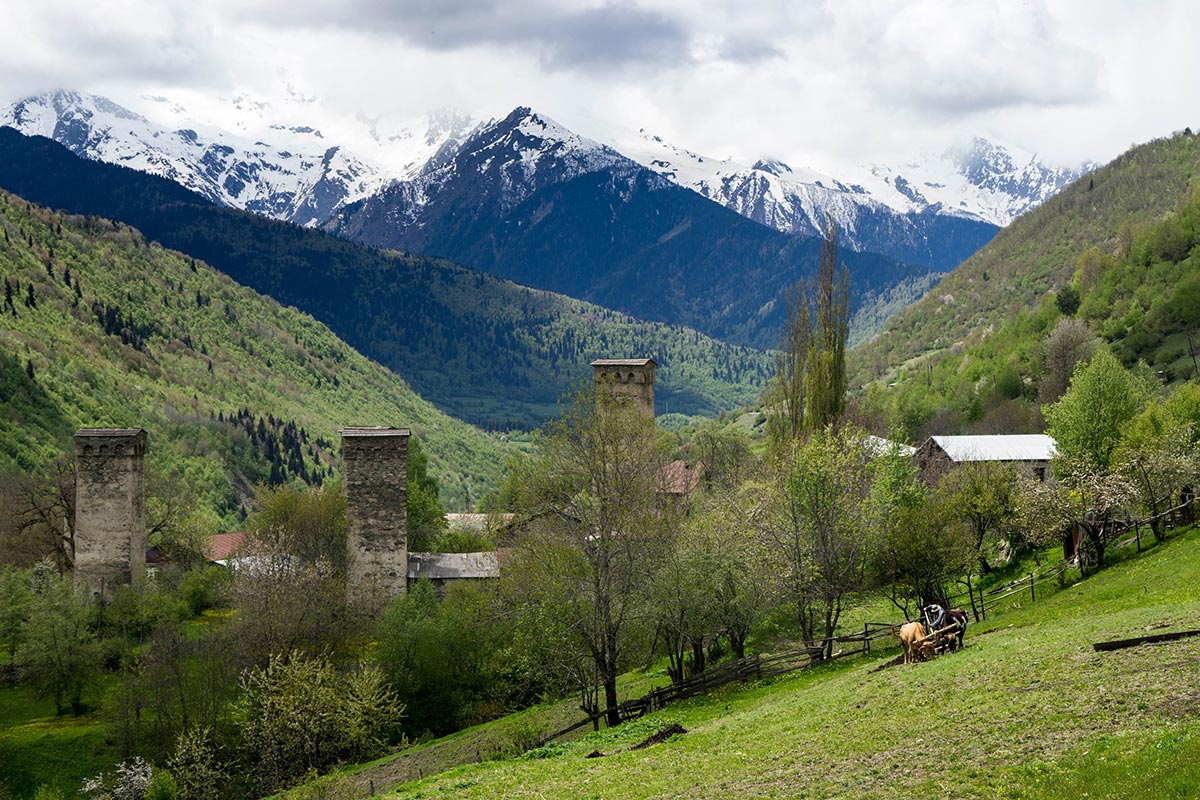
The next morning I was surprised to see where I actually was. No snowy peaks, nor magical towers on the horizon. And I think I haven’t see anyone with the traditional Svan hat. Is this my hangover?

I had landed in a remote village full of people, houses, gardens and domestic animals running between fences, all surrounded by a pristine forest.

And still, I was feeling like home, and when I entered the local school the feeling only improved. The youngsters in Svaneti are not only good students, they are also full of talent.

Then I decided that Svaneti will become my second home: a place I’ll never stop visiting, a place full of warmth and tenderness, a place where I must reciprocate what had been offered to me.

I admire the Svan people. They are strong, passionate and proud – proud of their culture, their traditions and livelihood.

We have established a faithful, and passionate, relationship since the moment I entered their houses.

But I am worried. Plans to build 35 hydropower plants across Svaneti would change it beyond recognition, and the people I met there know their region is facing a chain of threats: climate change, loss of natural resources, and flooded lands.

The promises they have heard from both the government and the company building the Nenskra dam, the largest hydropower project in the region, are ambiguous. And if the Svans’ demands have been ignored until now, what guarantees do they have that things will not get even worse?

Tomorrow (January 17), the board of directors of the European Bank for Reconstruction and Development is expected to decide on a USD 214 million loan for the Nenskra project. If this project goes ahead, it will change the lives of people and landscape of this unique region forever.

Join my journey through Svaneti to understand what’s at stake.

[Campaign update] Montenegro drops Skoda Praha as partner for Pljevlja II coal plant – now time to drop the project altogether

This week, the Montenegrin government and Elektroprivreda Crne Gore (EPCG) finally announced the termination of the contract with Czech company Skoda Praha to build the controversial Pljevlja II coal power plant.

More than a year after the withdrawal of the Czech Export Bank from financing the project, Skoda Praha has not managed to find financing for the project, as it was obliged to do under the contract.

This is another nail in the coffin for a project which groups like Green Home, MANS and Bankwatch have argued is not only climate-damaging but also economically unviable. Even the EBRD’s then representative in Montenegro, Giulio Moreno, stated earlier this year that the EBRD does not support the new unit as Montenegro can generate electricity from other sources, and that its construction was clearly a political decision.

Montenegro certainly generate electricity from other sources. We are talking about a country of 600,000 people here, not 60 million. In addition to its existing hydropower plants, in 2017 the 72 MW Krnovo wind farm started operating and construction started on the 46 MW Možura wind farm. But the country’s significant solar potential has hardly been touched yet, nor has its energy saving potential. That much more can be done has been shown by a range of energy scenarios by NGOs, think-tanks and the International Renewable Energy Agency (IRENA).

Unfortunately, instead of using this ideal opportunity to consign Pljevlja II to the history books where it belongs, EPCG and the Government have emphasised their commitment to moving forward with it, and promised to make a proposal on an alternative solution for carrying out the project by the end of January 2018.

But it’s not too late to stop digging this ever-bigger hole. Finding a new partner, adjusting the project to meet the latest LCP BREF standards and re-assessing the project’s finances will all take years. Better to stop now, turn Montenegro’s energy policy around, and make the country into a real ecological state, as required by its constitution.

Pyromaniacs in Budapest want to burn EU funds in new waste incinerator

The Hungarian government clearly wants to build more waste incinerators. Recent national waste management strategies and plans include various tools and incentives for incineration and declarations and propaganda materials point out that more municipal waste incinerators are needed.

As part of these plans, a waste incineration time bomb is ticking for a yet unknown location in Budapest.

According to the Ministry of Development and the potential beneficiary the City of Budapest the new incinerator HUHA II is needed to solve the sewage sludge issue of Budapest and thus to meet new EU waste regulations of a maximum of 10 percent landfilling and an increase in waste utilisation.

Both institutions have claimed that careful planning would precede the project, including an examination of various national waste scenarios. Since HUHA II would require EU funding, such an approach would be necessary anyway.

However, contrary to these claims it seems that the decision for HUHA II was made well before other options were even considered. For instance, the EU tender for the HUHA II development under the Environment and Energy Operational Program (EEOP) was announced in early spring 2017, well before the Sewage Treatment and Disposal Strategy was adopted in summer, as well as other regulations that were supposed to set the waste framework and help decide whether such incinerators are needed at all or not.

Not surprisingly, Hungary’s new waste strategies and a new national decree now just „happen” to support the development of HUHA II by advocating for a scenario that favours waste-to-energy solutions, including the co-firing of waste and other materials. As an additional negative consequence public, health and environmental interests will most likely come second to economic considerations when HUHA II’s feasibility is being examined as required by the EEOP, including decisions on location and technology.

Nearly one-third of the EEOP waste–related funds, 50 billion forints (160 million eur) would be used by HUHA II. This will not leave enough EU Funds to set up a proper national waste prevention and recycling system.

The European Commission’s stance

Also the European Commission considers HUHA II a problematic and risky project. In its Communication on “Waste to Energy” and in the Country Report for Hungary, the EC recommends to prioritise waste prevention, selective collection systems and recycling infrastructures, especially for Hungary and similar countries where the incineration/combustion rate is still low and dumping rates are high. Hungary specifically has a rare opportunity to develop a waste management system that is not dependent on incinerators or landfills but are in coherence with the circular economy principle.

The Commission also underlined to avoid the build-up of new incinerators that cause overcapacity and risk becoming stranded assets. HUHA II would definitely create overcapacity because the sewage sludge plus the residential waste from Budapest would not be enough to maintain its operation.

It is possible that EU financing will ultimately not be available for HUHA II, because it goes against the circular economy package and the OP ex-ante priorities. In that case, however, if Hungary’s authorities remain stubborn and the incinerator is built, it must be “fed” continuously, even if its maintenance is economically unprofitable and there is not enough waste coming from the region. Local governments and residents will be forced to pay the price for waste imports and transporting from other parts of Hungary or from abroad, in addition to the health or social impacts due to pollution.

The perils of sludge incineration

Combustion of household waste – especially when it is burnt with sewage sludge – causes far more problems than it seems to solve. Due to the high moisture content of sewage sludge, its burning requires extra energy, and the residual slag still only ends up on landfills – so it is not a recycling process or real utilisation, just less disposal.

The problem is even more exacerbated if the sludge is co-fired with mixed communal waste with a high moisture content. Then additional fuel is consumed for combustion, so the energy gain is even lower. After the incineration, approximately one fourth of the input material becomes hazardous waste, which is even more difficult to depose safely.

A better solution for neutralising (communal sewage) sludge can be composting: the composted sludge can be a useful fertiliser substitute in agriculture and can be used in the same region where the sludge was produced, without extensive transport costs. There are some good examples for this in Italy and France. It is important that the sludge does not contain high heavy metal or other toxic levels. This can be ensured with public awareness raising and proper sludge treatment before composting.

As the list of reasons against incinerating waste, and especially against co-firing sewage sludge with communal mixed waste, goes on, Hungary’s authorities increasingly appear like pyromaniacs who only care about torching it all off:

  • The household waste going for incineration is not properly sorted, so it still contains valuable raw materials like plastic and paper, which are burnt although they could be recycled and thus utilised in a much more economical and environmentally friendly way.
  • Incineration is a very expensive technology compared to other waste management solutions and it hardly creates jobs – as opposed to recycling or reuse industries.
  • The incinerator emits an average of 28 times more toxic, carcinogenic dioxins and three times more carbon dioxide and nitrogen oxides than a coal-fired power plant producing the same amount of energy.
  • Waste incineration takes local governments to a dead end for 30-50 years as the investment and operation costs are expensive and long term, so it prevents municipalities from being able to switch to other more advanced waste management methods.

Hungary must learn from the mistakes of the EU’s old Member States: for example, in Austria since 2013, the rate of recycling decreased due to an increase in the incineration rate. This resulted in non-compliance with the EU’s waste management obligations that can result in serious legal consequences. Hungary can still avoid this if it does not force waste incineration.

Friends of the Earth Hungary and its partner, the HUMUSZ Association, follow the HUHA II case from the beginning and propose to withdraw the project from the EEOP. FoE Hungary also has an NGO delegate in the EEOP Monitoring Committee and advocates for spending the EEOP funds for proper waste management for Hungary: waste prevention, recycling and public awareness raising.

Guest post: One beast with many heads – a hydropower hydra in the Balkans

As the Greek myth goes, once upon a time there lived a water monster called the hydra that had many heads. Every time its head was chopped off, the hydra regrew new ones. Its breath was poisonous and its blood so virulent that even its scent was deadly. No one could possibly kill the hydra until Hercules finally slayed it.

This old myth dogged a team of activists during a field visit to Macedonia to monitor several hydropower plants financed by the European financial institutions, the European Bank for Reconstruction and Development (EBRD) and the European Investment Bank (EIB). We visited six mountain rivers and nine small dams that interrupted their flow, and though the projects were numerous, we had a feeling that we were looking at one and the same problem.

A map of Macedonia with four hydropower installations marked in different places.
Four tentacles of the hydra: Lipkovo, Tearce, Tresonecka and Brajcinska 1 and 2

Head number one: suffocating rivers with inadequate flows

According to Macedonian rules, the residual flow of a project, i.e. the amount of water that is allowed to flow in the section of the river modified by the hydropower plant is defined only as ten per cent of the average water flow. Under this definition, the river on which a dam is located is sentenced to an everlasting low water period, which makes fish inactive and leads to extremely degraded populations.

This poor “ten percent” definition of residual flow is applied in only one EU Member State, Bulgaria. And even in Bulgaria, its first River Basin Management Plans 2010-2015 ruled that in all protected areas – like Natura 2000 sites – the minimum residual flow is set at 70 per cent in order to achieve a site’s conservation objectives.

Most of the projects we looked at in Macedonia are located in protected areas, whether Emerald sites or National parks. However, we discovered that for both hydropower plants working during our visit – Brajcinska reka 1 and Tearce 97 – even this minimal requirement was not fulfilled. Water samples taken at Tresonecka indicate that this minimum was not respected there either.

Left: Abundance of water above the intake of Brajcinska reka 1, even during the dry season. Right: The result of damming the river: a dry river bed below. (Photos by Andrey Ralev)

Head number two: faulty fishpasses

Fish passes are built on dams, usually in the form of a series of pools shaped like a staircase so that fish can in theory ‘climb’ the dam.

Intake and a fish pass on the Kamena reka, Skopska Crna Gora (Photo by Andrey Ralev)

As a lifelong fisherman, I take special interest in how fish passes function – or, more often than not, do not function. The team made detailed measurements and assessments of each fish pass (see the full report HERE ), and the most extreme example comes from the case of Kamena reka.

The river bio corridor through which species pass was fully blocked, meaning that the fish pass had a manmade plug at the upstream exit and there was an artificial wooden barrier in the riverbed above the lake.

A zoom exposes the blocked fish pass (Photo by Andrey Ralev)

This is done to catch leaves and branches to protect the intake grates from clogging, but it also becomes an impassable obstacle to migration. No water was running through the fish pass, and the lake was full of silt with traces of eutrophication – gas bubbles constantly emerging on the surface – almost like the hydra’s poisonous breath.

Blocking a fish pass is a common practice in Bulgaria, as this diverts all water from the river for hydropower production, rather than to provide the necessary flows for the ecosystem’s survival.

All intakes were equipped with pool-type fish passes, which, even if perfectly implemented, are still questionable in terms of effectiveness. This is why independent monitoring is needed, but such oversight cannot be provided by project developers.

In spite of our best efforts, though, independent monitoring is essential to challenge our findings – the latest technologies, like underwater video cameras, could be used. Monitoring also should be carried out during the upstream trout migration period, which depends on the climate in the autumn.

Pristine nature is at stake

As stated above, most of the hydropower plants that we visited are located within the boundaries of proposed Emerald sites and national parks in Macedonia. The biological monitoring discovered species listed in Annex II of the EU’s Habitats Directive, some of which are of priority conservation status. This would mean that any hydropower should be prohibited on these rivers.

Left: Stone crayfish (Austropotamobius torrentium), priority species found above the Kamena reka intake, right: Butterfly and vegetation in Mavrovo national park (Photos by Andrey Ralev)


Of course all life in nature is interconnected. Rivers provide for animal and plant species alike, so one cannot remove a river and expect that the rest of the life will thrive. This is particularly evident in the case of the cascades at Tearce 97-99

More broadly, cascades have had a devastating, long-term impact on river ecosystems, due to the problems caused to the migration of fish and other aquatic species. During the spawning period, fish are supposed to migrate to spawning spots as quickly as possible. Even if fish passes are perfect – which is not the case – too much time is needed for the migration through cascades, not to mention the downstream migration.

This is why cascades are not permitted especially in Emerald sites or other protected areas, even though the Tearce cascade is located within the boundaries of the Shar planina proposed Emerald site.

Left: Bear cub footprints in Pelister, right: a road carved through the forest in the Pelister national park

Conclusion

We only caught two operators red handed – Brajcinska reka 1, who did not release water into the river, making them gunpowder dry below the intakes, and Tearce 97, who violate the residual flow requirements. But the operational assessments for other HPPs are also negative due to the disrupted bio corridors.

Though blocked upstream migration of aquatic species is not supposed to have an immediate impact, this will inevitably lead to long term impacts on a river. Even if the fish pass is operated by the book, this pool type has already proven unsatisfactory.

Upstream migration is but one issue. Downstream fish migration is an unsolvable problem for these types of fish passes. This is why we found fish held back downstream in most of the pools during our monitoring. Providing only one way for fish to migrate is unacceptable.

We must find solutions to these challenges soon, as there is only so much time to chop the hydra’s heads off.

Construction permit denied for Banovići coal power plant in Bosnia and Herzegovina

The Federal Ministry for Spatial Planning in Bosnia-Herzegovina has denied RMU Banovići a construction permit for its planned Banovići 350 MW lignite power plant. Key issues such as water supply, coal supply, wastewater, flue gases and ash disposal have not been resolved, leading the Ministry to conclude that the project is not in line with the spatial plan for Tuzla Canton.

The issues had already been raised repeatedly by non-governmental organisations Ekotim and Center for Ecology and Energy Tuzla during the environmental impact assessment procedure, but in January 2016 the Federal Ministry of Environment and Tourism issued an environmental permit regardless. For this reason Ekotim initiated a court case in April 2016, which is still pending.

The Spatial Planning Ministry’s decision shows that the Banovići project, in addition to its climate and health impacts, is plagued by a series of problems that should have been acknowledged years ago.

For example, a new reservoir is planned at Ramići that would be used for the coal plant. However, filling the reservoir during drier periods may be in direct competition with filling Lake Modrac, which is used for drinking water for Tuzla and for cooling the existing Tuzla power plant.

Financing for the Banovići project is being sought from the Industrial and Commercial Bank of China (ICBC), and would be backed by a state guarantee. It is to be hoped that the bank now realises the risks of backing such a poorly prepared project and declines financing.

Romanian coal mine blocked from expanding, but neighbours remain without water

The wells in the village of Lupoaia in southwest Romania have run dry. Lupoaia now depends on the mining company Oltenia Energy Complex (OEC) to deliver water twice a day, as OEC pushes against a suspended environmental permit in order to expand the mine further on to the land of Lupoaia and beyond.

Their life without water is featured in a short film released by Bankwatch Romania.

From nine to eleven in the morning and four to six in the afternoon, OEC maintains a water distribution timetable, which is not always respected. This makes it impossible for residents of Lupoaia to secure enough water for the day. Requests to authorities to adapt the delivery schedule have fallen on deaf ears, and last year there was no water for three weeks during the winter holidays.

Lupoaia hosts one of eight mines that OEC plans to expand. Romanian law requires a thorough analysis of the impacts on the environment and the health of locals. The permit issued by the Agency for Environmental Protection for the expansion carries out a superficial assessment, so Bankwatch Romania brought a suit to the Bucharest Court, which then suspended the environmental permit and halted the expansion. Until a final decision on the environment permit’s cancellation, OEC cannot carry out any work in the expansion perimeter.

Like all forms of resource extraction, surface mining has a significant impact on the environment. In addition to the noise caused by heavy machinery, air and soil pollution, the depths of excavation dozens of meters underground often leads to the destruction of groundwater and drinking water sources for those surrounding the mine. Lupoaia is not alone: the nearby village of Rosia de Jiu faces equally precarious living conditions – a lack of water, noise pollution and unbreathable air.

« Previous Page
Next Page »

Footer

CEE Bankwatch Network gratefully acknowledges EU funding support.

The content of this website is the sole responsibility of CEE Bankwatch Network and can under no circumstances be regarded as reflecting the position of the European Union.

Unless otherwise noted, the content on this website is licensed under a Creative Commons BY-SA 4.0 License

Your personal data collected on the website is governed by the present Privacy Policy.

Get in touch with us

  • Bluesky
  • Email
  • Facebook
  • Instagram
  • LinkedIn
  • RSS
  • YouTube