• Skip to primary navigation
  • Skip to main content
  • Skip to footer

Bankwatch

  • About us
    • Our vision
    • Who we are
    • 30 years of Bankwatch
    • Donors & finances
    • Get involved
  • What we do
    • Campaign areas
      • Beyond fossil fuels
      • Rights, democracy and development
      • Finance and biodiversity
      • Funding the energy transformation
      • Cities for People
    • Institutions we monitor
      • European Bank for Reconstruction and Development
      • European Investment Bank
      • Asian Infrastructure Investment Bank
      • Asian Development Bank (ADB)
      • EU funds
    • Our projects
    • Success stories
  • Publications
  • News
    • Blog posts
    • Press releases
    • Stories
    • Podcast
    • Us in the media
    • Videos
  • Donate

Home > Archives for Blog entry

Blog entry

Leaving Paris, the European Investment Bank steps on the gas

By revising its energy lending criteria in 2012, the European Investment Bank (EIB) has limited its support for fossil fuels projects in the energy sector and effectively eliminated the most polluting power plants from its portfolio, most notably those burning coal.

The move has been welcomed but is still far behind what is needed to limit global temperature rise to no more than 1.5°C. To reach this goal, no more fossil fuel infrastructure should be built at all, according to a 2016 Oil Change International study.

However, fossil fuels and especially gas still play a big role in the energy portfolio of the EU’s house bank. As a recent Bankwatch briefing on the EIB’s gas lending between 2013-2016 shows, gas projects received nearly EUR 10 billion in total during this period. In 2017 the EIB continued supporting gas transmission and distribution networks with over EUR 1.5 billion.

And this may not be the full picture of the bank’s investments in gas infrastructure, since additional funds may be channeled through intermediary banks and investment funds. For example, almost 2000 kilometers of gas and oil pipelines were constructed or renewed in 2016 with the support of a guarantee from the European Fund for Strategic Investments through intermediated loans for small and medium enterprises and mid-caps.

  2013 2014 2015 2016 2017
Gas transmission and distribution (including storage, smart metering and LNG) 1827.4 1593 2056.6 1255.5 1517.2
Gas-fired power plants 173.3 250 664.5 105 0
Gas exploration 200 1280 200 0 0
Total 2200.7 3123 2921.1 1360.5 1517.2

EIB support to gas projects (in EUR million), 2013-2017


Since the EIB’s annual lending to fossil fuels peaked at EUR 5 billion in 2010, a year after the Copenhagen summit debacle, it has halved to an annual average of over EUR 2 billion between 2013 and 2017. The year after the Paris Agreement saw the most dramatic decline in EIB support to gas when the gas-related loan volume decreased by more than half.

But last week, as it approved its largest ever energy loan for the Trans Adriatic Pipeline (TAP), the EIB has effectively reversed what would have otherwise been an encouraging trend. At EUR 1.5 billion, this loan alone is nearly as large as the EIB’s entire support for gas projects in 2017.

Passing through Greece, Albania and the Adriatic Sea before reaching shore in Southern Italy, TAP is the western section of the gargantuan Southern Gas Corridor project, a 3500 kilometre chain of pipelines from Azerbaijan to Europe. The project is designed to annually pump 10 billion cubic meters of gas to Europe starting 2020 and has been heavily promoted by the European Commission in spite of studies confirming that no additional gas is needed to satisfy Europe’s gas demand.

Moreover, a study released two weeks ago finds that due to fugitive methane emissions, the Southern Gas Corridor project is likely to have a climate footprint that is even worse than power generated from coal that is widely considered the dirtiest fossil fuel.

Just when the urgency to tackle the climate crisis becomes ever clearer, investments in gas infrastructure perpetuate rather than eliminate fossil fuels dependency, and crowd out renewables and energy efficiency projects. By green-lighting this massive loan for TAP, the European Investment Bank has stepped on the gas on Europe’s way to irreversible climate damage.

[Campaign update] More EBRD cash for Georgia dams should be cautionary tale for other development banks

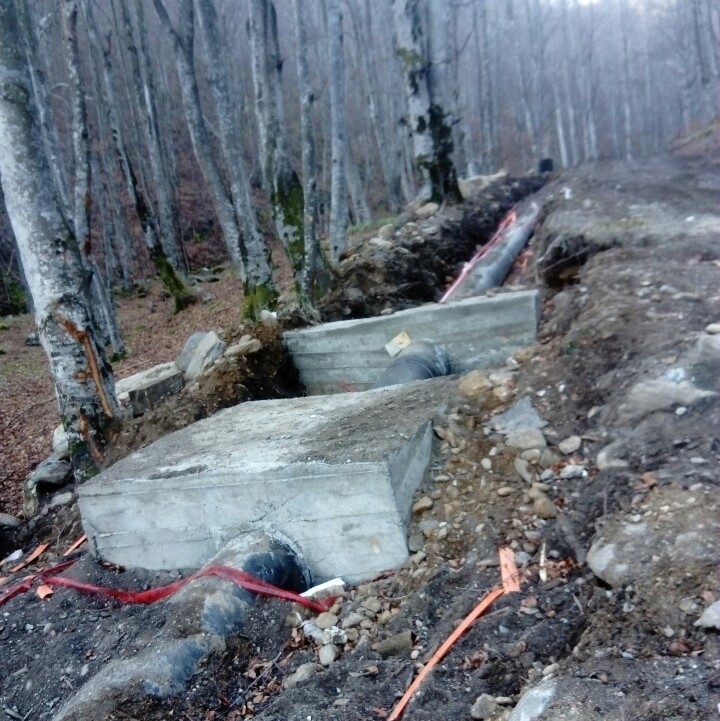
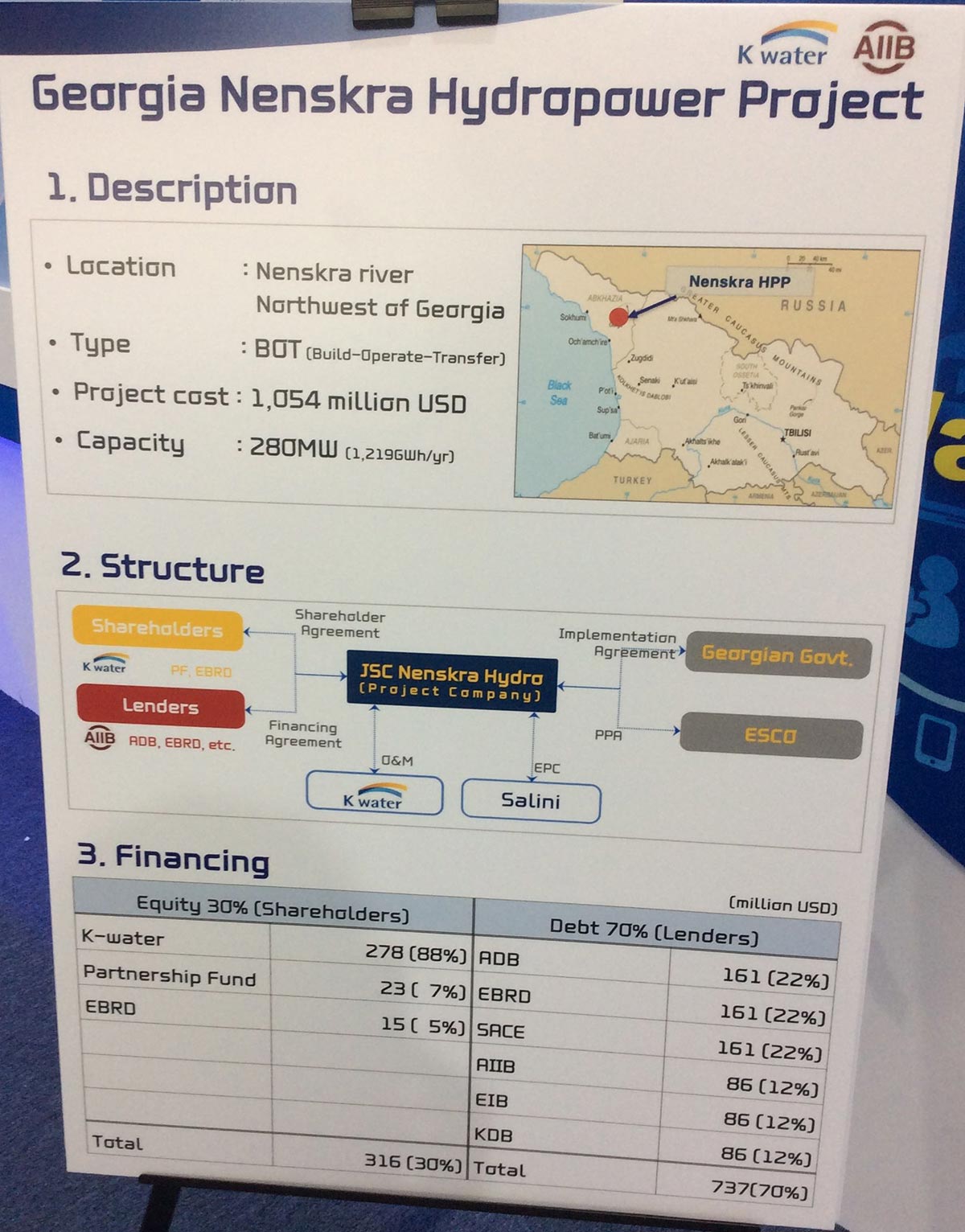
On 31 January the EBRD approved a loan of USD 214 million and USD 15 million in equity for construction of the Nenskra hydro power plant. It is a disappointing decision for those who care about the rights of local communities and about the people of Svaneti . The board had been made well aware of the incomplete environmental and social impact assessments, about the flawed project consultation, conflicts with the Bern Convention and the concerns of local people about natural hazards like lands slides. And yet they listen to bank staff and believe the arguements of the project sponsor arguments that these issues can be addressed later.

What will happen if those issues are not properly addressed? Will Svans in the Nenskra and Nakra valleys be able to hold accountable the EBRD and those responsible for the project? Locals have no reason to believe in the Georgian court system, and it is not surprising that the EBRD, together with other development banks, is fiercely opposed to any suggestion that their actions could be reviewed by independent courts. However bad this decision, it does not mean that we will stop looking to explore new avenues for redress, including those within the EU.

There are still another four development banks yet to decide on the Nenskra project – including the EIB on Tuesday 5 February – and it will be interesting to see how much their boards will honour the policies of their respective institutions and insist that staff ensures that these policies are fully applied before an investment decision on the project is made.

As pollution blankets Pristina, so do protests

“Hazardous” is the name of the protest, as has been the level of particulate matter (PM2.5) pollution throughout the last month. Just this morning, the measured air quality index (AQI) stood at 235 units, or 185 micrograms/m3, worse than Beijing and New Delhi otherwise famous for their lack of air quality. This is no less than 7.4 times the recommended World Health Organisation’s upper limit for the 24-hour average for PM.25, of 25 μg/m3

Locals of Pristina have been complaining since the beginning of the year about worsening conditions, which so far has led to the adoption of an emergency action plan, to be implemented by the local police. In yesterday’s meeting between the Pristina Municipality and the Ministry of Environment and Spatial Planning, it was decided that the emergency response to the extremely unhealthy levels of pollution would be limiting the access of cars to the city between certain times of the day (6-9 AM and 4-10PM).

Restrictions on traffic in city centres have been growing in popularity in many European capitals and large cities, but it is not a silver bullet solution. Particularly not in the case of Pristina, where there is a much bigger elephant in the room. According to a 2016 report, the old and polluting Kosovo A and B lignite power plants create up to 352 EUR million per year in annual health costs, and Kosovo A is the Western Balkan region’s biggest emitter of PM2.5 – fine dust particles so small they enter blood stream and pulmonary alveoli. Moreover, the plant should have been closed in 2018, according to a commitment towards the European Commission. However, the Kosovar authorities are now linking the decommissioning of Kosovo A to the construction of Kosovo C, and give 2022 as closing date in their newest Energy Strategy.

Plans to build Kosovo C have been around for over a decade, starting out as a planned 2000 MW unit that would turn the country into the leading energy exporter for the Balkans. In December, Kosovo has signed a contract with the only bidder in the tender – power generator ContourGlobal to build a 500-megawatt (MW). This means decades of pollution lock-in for a country that is overly reliant on coal for its electricity production, which civil society in Kosovo and Bankwatch have warned for years.

While authorities often chose the easy option of traffic restrictions in response to air pollution crisis, such as the one taking place now in Pristina, our independent measurements of particulate matter pollution in the region has already demonstrated twice (in Tuzla and in Gacko, in Bosnia and Herzegovina) that high peaks in emissions are generated by coal facilities, either power plants or coal open-cast mines, or both.

Pristina is now joining other towns in the Balkans, such as Skopje, Zenica, Pljevlja and Tuzla, where massive protests against worsening air quality have been organised in the past few years. Every winter, these towns face the same problem of heavily polluted air, and residents are increasingly concerned about the health implications. Only a joint effort of these countries to introduce and enforce strict emissions control legislation in the Energy Community Treaty would set the tone for a unified approach to tackle a problem that affects millions yearly.

The renovation will be televised: Latvia’s energy efficiency programme for multi-apartment buildings

The massive housing stock from the second part of the twentieth century needs a fundamental upgrade in terms of materials, utilities and modes of ownership. The EU-funded programmes for energy efficiency in Latvia is intended to meet the growing demand for renovation, yet its lengthy implementation and limited scope exposes the disproportionately large amount of buildings in poor conditions.

‘The Great Wall of China’ is a nickname for a 500 metre-long block of roughly 400 flats that house about 1000 people in one of Riga’s large-scale residential areas. The epithet connotes the distorted relationship of scale and size inherent in Soviet architecture, marking its tradition of social divides, alienation and emptied open spaces. In September 2017, the building was in the spotlight because of an event to raise public support for EU-funded energy efficiency measures.

A state-owned development financial institution – ALTUM – and the Ministry of Economy manage the implementation of the energy efficiency improvements for the multi-apartment buildings, with financing provided by the EU’s European Regional and Development Fund. These EU funds are the largest share of the state budget available for co-financing energy efficiency measures in the mixed-ownership residential sector. During the budget period for 2014-2020, around 1000 projects totalling more than EUR 176 million EUR are planned.

According to the Ministry of Economics, 20 000 buildings urgently need improved energy efficiency performance (deep renovation), which would cost an estimated EUR 5 billion. Yet the implementation of renovation and energy efficiency measures is rather slow, given the amount of housing units across the country.

So the story of one massive building draws attention to the many obstacles encountered in renovation projects. Technical improvements usually bring about better energy performance, and the costs are covered by a decrease in utility bills. However, there is often no agreement among the many owners of multi-apartment buildings about how to proceed with a project application. To receive public funding for up to 50 per cent of selected project expenses, complex contracts are needed to define the obligations of all parties involved.

‘Let’s live warmer!’ is the leading informational campaign from the Ministry of Economics about energy efficiency initiated in 2010 to coincide with the previous EU-funded energy efficiency programme to renovate 760 multi-apartment buildings. Over the last few years, ‘Let’s live warmer!’ has convened a number of presentations, publications and discussions devoted to promoting the renovation processes and procedures in Latvia.

This outreach to diverse social groups of homeowners offers two insights: a public resistant to self-organisation for achieving progress and an administration enacting complex technical procedures. At the same time, housing and maintenance firms, construction companies, engineers, banks, and managers are as well dominant actors in these schemes, and the links between the disintegrating built structures and public funding for their improvement must be established in spite of different interests, resources and capabilities.

The first successful renovation project in 2017 was a five-story house in the Kurzeme region. It was the last one in a group of five now well-insulated buildings. To see remote places connected in an effective way does not always need government involvement. The housing company that coordinated the projects attributes its success to evidence-based persuasion methods and direct social interaction among neighbours.

Motivations to join renovation projects are varied, and the demand for better and more accessible funding schemes is growing. Yet the dominance of inefficient buildings, fixed expenses and rigid energy consumption patterns are a major problem, as are tight administrative burdens and social inequality. Through the efforts of civil society and others, resilient and more efficient cities are possible, but also more difficult because of the old and new walls that make up the economic and built structures in the shared experience of common good.

A second coal fired power plant for the Tajik capital

Tajikistan has long suffered from serious energy shortages. Ninety six per cent of the country’s electricity is generated by hydroelectric power plants, and acute electricity shortages appear often in winter, when water levels in rivers are low. Many villages in Tajikistan still do not have access to the electricity grid, and until this year, cities were limited in electricity supplies in the autumn and winter periods.

Deliveries of natural gas from its only foreign supplier Uzbekistan stopped 2012, so residents have no choice but to inefficiently heat their homes with electricity. The Tajik government subsidises electricity supplies for three main groups: the general public, pumping stations for irrigation and large steel mills like the Talco aluminum plant , which are two significant contributors to the economy. 

In order to reduce power consumption and ensure uninterrupted electricity supplies, authorities have decided to build a second, 100 megawatt thermal power plant – Dushanbe-2 – in the the capital.  The president has said that in addition to securing supplies, the project will contribute to the industrial development of the  capital and agricultural and industrial production of the central region.

Costs for the Dushanbe-2 plant are estimated at USD 349 million, оf which USD 331 million is from the Chinese Eximbank and USD 17.4 million from the Tajik government’s largest energy holding company, Barki Tojik. The Chinese construction company Tabian Apparatus StocCo (TBEA) was selected as the main contractor for the construction. The project was implemented under a tripartite agreement between the Ministry of Energy and Industry (now the Ministry of Energy and Water Resources), JSC “TBEA” (China) Ltd. and “TBEA Dushanbe mining industry”. Barki Tojik is believed to manage Dushanbe-2, but some interviewed sources suggest that the holding company also oversees a process of transmission and distribution of electricity, but not generation.

Construction on the first stage of Dushanbe-2 began in November 2012 and was completed in 2014. The second phase of construction began in 2015 and lasted for 17 months, bringing the total capacity of Dushanbe-2 to 400 MW. However, the power plant is not working at full capacity during most of the year. Electrical substations at Shahrinav (220 kW), Hissar (110 kW) and Hissor Shahrinav (110 kW) were built as a part of the  TPP “Dushanbe-2” complex.

Dushanbe-2 is the largest thermal power plant in the country and the main consumer of domestic coal. It consumes about 45 per cent of the coal mined in the country. About 180 000 tonnes of coal are used monthly during the heating season. The coal is delivered to the plant by vehicles from the Ziddi coal deposit. Operation of the power plant has lead to a drastic increase of coal mining in Tajikistan.

According to official data, woven and electrical filtration systems are installed at the plant in order to ensure low combustion emissions into the atmosphere. Special scrubbers treat up  to 99.8 per cent of the emissions, while the plants solid waste is used in the production of building materials (blocks and bricks).

However, various sources deny the presence of the quality filters for cleaning emissions. As Dushanbe-2 began its operations, rumors spread that the contractors installed second-hand equipment from China, which the Tajik authorities deny.

In addition, the coal storage area – with a capacity of more than 120 000 tonnes – was built close to the plant and less than 50 metres from residential homes. The plant is located near the centre of Dushanbe, and is less than a kilometre from the city botanical gardens, amusement park and a soon-to-be-constructed sports complex.

Local residents living in the neighborhood of the project complained about dust deposited all over their streets during the first stage of the power plant’s operations in 2014. Employees and visitors to the amusement park repeatedly spoke of dark soot covering the area. 

While the storage of coal remained in the open for some time, it now is covered with a special construction.

Director of TBEA in Tajikistan Van Tszyan responded to a number of these complaints that because the project was just beginning, it would use diesel in the first stages of the project.

Many official agencies were against the construction, including the Dushanbe executive authority, Environmental Protection Committee, Agency for Construction and Architecture, State Committee on Investments and State Property Management, Ministry of Transport, Ministry of Finance and Ministry of Economic Development and Trade.

However local environmental groups maintain their concerns over the impacts of coal in the energy sector and its effects on the environment in Tajikistan.

Gacko: if only the laws were as strong as the air pollution

I first visited Gacko in 2015, on a bike tour of Bosnia and Herzegovina. The day had started in Sutjeska National Park, with stunning scenery along the Sutjeska river gorge and nothing but the sound of nature around us, occasionally interrupted by the few vehicles passing by.

Nothing could have warned me of the bleak view of the town we would reach after a blissful 400 meters descent. Not just an old and smoky coal power plant appearing out of nowhere, but also a huge dusty open-cast lignite mine dominating the town.

I remember thinking how the geography of the place really doesn’t do justice to local community, because they are stuck with all the smog at the bottom of the valley. On that hot summer day the air was thick, but it must be unbreathable during the cold season, when temperature inversion keeps the layers of polluted air close to the ground.

Two and a half years later, it turns out my gut feeling was not that wrong. Data from the only air quality monitoring station in Gacko is very difficult to obtain. So local residents, or anyone concerned about the air quality in town, have no way of knowing how bad the problem actually is in real time.

In November 2017, Bankwatch and partner NGO Center for Environment from Banja Luka brought our independent dust particle monitoring device to Gacko. It remained there for almost two weeks, between 13 and 25 November, at a time we expected air pollution levels to be rather high.

In the first half of the monitored period the results did not raise any concerns, with the exception of a spike in emissions on 19 November at 8:00 (see hourly measurements below).

Three such emission peaks stand out in the graph above: on 22 November at 23:00, the following morning at 8:00 and the absolute highest, on 23 November at 20:00. Our analysis, based on wind direction at these times, leaves no room for doubt that the first pollution spike, on 22 November, originated at the local coal-fired power plant, the second at the coal mine, and both the power plant and mine were the source of the peak on the evening of 23 November.

The apparent within-limits values during the first half of the monitored period can be explained by the weather conditions in Gacko on those days. Snow was just settling in on the day of the installation of our air quality monitor and remained throughout the following week. While we hear quite often that precipitation “washes away pollution”, its effect is really that snow (or rain, for that matter, just for shorter periods of time) makes the ground wet which makes it harder for dust to get picked up into the air again.

Yet, on a dry day, particulate matter would settle on leaves, rooftops or the ground, and get kicked up again when the wind blows. So the snow in Gacko that week offered only a temporary reprieve. Once the particle trap melted, the real face of air pollution became obvious. Daily emissions of PM2.5 – the more dangerous of the two pollutants, because it travels deeper into the lungs and persists longer – were constantly twice the WHO recommended limit for the 24h hour mean of 25 μg/m3.

The local air quality legislation, which should safeguard people’s health, is one of the reasons Gacko suffers bad air. The air pollution levels we recorded are in fact within Republika Srpska’s limits [PDF]. But these very same laws set the maximum yearly average for PM2.5 at 15 times the level recommended by the WHO. This is why we chose to refer to the latter, as the international benchmark, to assess air quality in Gacko.

Common problem, measured differently

Throughout last year, our independent air quality monitoring device has travelled across four other Western Balkan countries, all of which have different PM maximum limits in their national legislation, but nothing as lax and health-endangering as those in Republika Srpska.

For PM10 there seems to be an understanding in all national legislations that the daily average should stay around 50 μg/m3. One exception is Bosnia’s other entity, the Federation of BiH, where this limit was at 62.5 μg/m3 in 2017.

But for PM2.5 the situation is very mixed. Countries like Montenegro and Macedonia have adopted EU standards in their legislation capping the annual average at 25 μg/m3, and Serbia has an even stricter annual mean limit of 20 μg/m3, while the Federation of Bosnia and Herzegovina has no limit for PM2.5 pollution.

Seeing this, one must wonder who is this average year-round value for PM2.5 of 150 micrograms/m3 in Gacko made for, the people or the industry?

These differences in standards are just one of the reasons why we have repeatedly asked the European Commission to introduce air quality legislation into the Energy Community Treaty. Such a move would set the tone for a unified approach towards air pollution which affects tens of thousands of people in the Western Balkan countries every year.

Efforts in the EU to curb air pollution, finally visible after a decade of joint action, risk being thrown onto the rails unless close neighbours in the Western Balkans make this a priority as well.

« Previous Page
Next Page »

Footer

CEE Bankwatch Network gratefully acknowledges EU funding support.

The content of this website is the sole responsibility of CEE Bankwatch Network and can under no circumstances be regarded as reflecting the position of the European Union.

Unless otherwise noted, the content on this website is licensed under a Creative Commons BY-SA 4.0 License

Your personal data collected on the website is governed by the present Privacy Policy.

Get in touch with us

  • Bluesky
  • Email
  • Facebook
  • Instagram
  • LinkedIn
  • RSS
  • YouTube