• Skip to primary navigation
  • Skip to main content
  • Skip to footer

Bankwatch

  • About us
    • Our vision
    • Who we are
    • 30 years of Bankwatch
    • Donors & finances
    • Get involved
  • What we do
    • Campaign areas
      • Beyond fossil fuels
      • Rights, democracy and development
      • Finance and biodiversity
      • Funding the energy transformation
      • Cities for People
    • Institutions we monitor
      • European Bank for Reconstruction and Development
      • European Investment Bank
      • Asian Infrastructure Investment Bank
      • Asian Development Bank (ADB)
      • EU funds
    • Our projects
    • Success stories
  • Publications
  • News
    • Blog posts
    • Press releases
    • Stories
    • Podcast
    • Us in the media
    • Videos
  • Donate

Home > Archives for Blog entry

Blog entry

Ukraine’s nuclear energy fixation puts its European financiers to a test


Much remains unknown about the basis for the European Commission’s decision to contribute to Ukraine’s nuclear safety upgrade program, but Bankwatch will not give up until this crucial information is made public.

Earlier this year Bankwatch approached the Commission’s Directorate General for Economic and Financial Affairs, and made a request for documents related to the EUR 300 million Euratom loan for the project. Specifically, we asked for the evidence used by the Commission in making the first EUR 100 million disbursement from the loan.

According to our information, Ukraine has not met the loan conditions and has in fact been violating international environmental treaties – namely, the Espoo Convention and the Aarhus Convention.

But the response to our request (pdf) was insufficient, so we decided to take the case to the European Court of Justice. In our submission (pdf) we explain why we believe both conventions, as well as relevant EU legislation, apply to the Euratom Treaty and why transparency and improved nuclear safety are not mutually exclusive, as has been argued by the Commission.

A decision in this case can take some time, but old nuclear power plants could soon see their lifetimes extended, not only in Ukraine but across the EU. Yet, as we argued in a recent letter to the Espoo Convention’s Implementation Committee, any decision on prolonging the operations of nuclear power units beyond their design lifespan should be subject to a transboundary environmental impact assessment (EIA) and transboundary public consultations.

The Committee is the only body with the power to rule on violations of the Espoo Convention. It is currently preparing a report for the June 2017 Meeting of the Parties on Ukraine’s adherence to the convention and will meet today, Monday, September 5, in Geneva to discuss the Ukrainian government’s progress (or lack thereof) with implementing the Committee’s requests.

And there is reason to worry. In April 2013 the Committee ruled that Ukraine’s decision to extend the lifetime of its two oldest nuclear units in the Rivne power plant was in breach of the convention and, as argued in our letter, this decision should be considered a precedent applicable to similar cases for the sake of legal certainty and equal treatment.

Unmet loan conditions

International treaties on their own are not the only reason Ukraine is expected to carry out transboundary EIAs before rewriting the expiry dates of its Soviet-era nuclear reactors. Each of the two EUR 300 million loans Ukraine’s nuclear safety upgrade program has received, from Euratom and from the European Bank for Reconstruction and Development, is explicitly conditioned on full compliance with international environmental law, include the Espoo Convention that obliges the engagement with neighbouring countries in decisions on matters related to nuclear energy, such as nuclear units’ lifetime extensions. The European Commission has reiterated this obligation on several occasions.

Nevertheless, so far neither the Espoo Convention ruling in the Rivne case, nor the conditions to the European loans, have stopped Kiev from going ahead with lifetime extensions for two more nuclear units in the South Ukraine station without applying international requirements.

One other nuclear unit, in the Zaporizhia power plant, could see its lifetime extended as early as next week, and the state nuclear regulator contends these decisions fall outside the jurisdiction of the Espoo Convention.

In fact, Ukraine does not even have proper legislation on EIAs at national level. This has allowed Energoatom to release an “EIA report” for the Zaporizhia nuclear power plant which ruled out any significant transboundary impacts from the plant’s operations.

Yet, Energoatom’s claims look even more invalid with the latest Espoo Implementation Committee’s ruling on the planned nuclear power plant Hinkley Point C in the UK, stating that a worst-case scenario should be taken into account when considering transboundary impacts.

Moreover, a recent incident in the 29 years old Khmelnitski nuclear power plant is but the latest reminder for the risks in Ukraine. Following a leak of radioactive water, the power station’s unit 1 was shut down for two months. This unit will reach the end of its projected lifetime next year.

According to the state nuclear regulator, the reason for the leak might have been a micro-crack in a tube in the heat exchanger. An expert report released in March 2015 by Bankwatch’s Ukrainian member group NECU has warned of the possible appearance of micro-cracks in the reactor vessel of unit 1 of the South Ukraine nuclear power plant which has been granted a lifetime extension earlier.

The dire financial troubles facing Ukraine’s nuclear operator Energoatom raise additional questions about the government’s blind reliance on this source of energy, and should be another warning sign for Ukraine’s European allies in Brussels and across its borders.

Guest post: Realities in the Czech renewable sector defy the ideas of the Paris Agreement


The Paris Agreement, sealed 8 months and signed by more than 175 states by now certainly is a landmark deal in the effort to limit the rise in global temperatures to 1.5 degrees Celsius and achieving a carbon neutral economy in the second half of this century.

I have doubts, however, how many of the world’s leaders understand and are fully committed to the practical meaning of the Agreement. The end of using coal (and lignite) for electricity and heat production will only be the first step. Natural gas and oil consumption need to be reduced drastically as well, not only in the energy sector. But such a radical transition away from fossil fuels is most likely not to be found in the energy strategies of many countries.

It is politically much easier to support the Paris Agreement than a particular wind power plant project or to propose a support scheme for renewables which would lead to a higher price for electricity.

For example the government of the Czech Republic plans that 56 percent of energy demand in 2040 will be covered by fossil fuels. A carbon neutral economy is nowhere to be seen here.

Even worse, the Czech government is effectively fighting against the deployment of renewable energy sources. Renewable power production stagnates since 2013 because the government rejected the renewables support scheme.

Without a strong renewable energy sector, a carbon neutral economy is not possible. Even proponents of nuclear power have to admit that a complete replacement of fossil fuels by new reactors is not feasible. And despite the large potential of energy efficiency measures, these won’t bring us to carbon neutrality when electricity comes from fossil fuels.

It is politically much easier to support the Paris Agreement than a particular wind power plant project. It is much easier to talk about a carbon neutral future than to propose a support scheme for renewables which would lead to a higher price for electricity. But the Paris aim of keeping temperature growth below 1.5 degrees can be fulfilled only if renewables are developed quickly.

Renewable energy sources, in particular decentralised installations, have one additional positive element that could influence consumers’ behavior. The owner of a house with photovoltaic panels on its roof, designed for his own consumption, knows very well that this energy source is limited. He will be more likely to optimise his consumption than a consumer who is connected to the grid and has the illusion of an infinite amount of electricity. Optimising our energy consumption is a precondition for the much needed change in our energy systems towards carbon neutrality.

Read also

Guest post: Municipalities are crucial for citizen-owned renewable energy in the Czech Republic
Blog post | June 21, 2016

‘We have no other option’ – Albanian communities face unjust resettlement process for Trans-Adriatic Pipeline


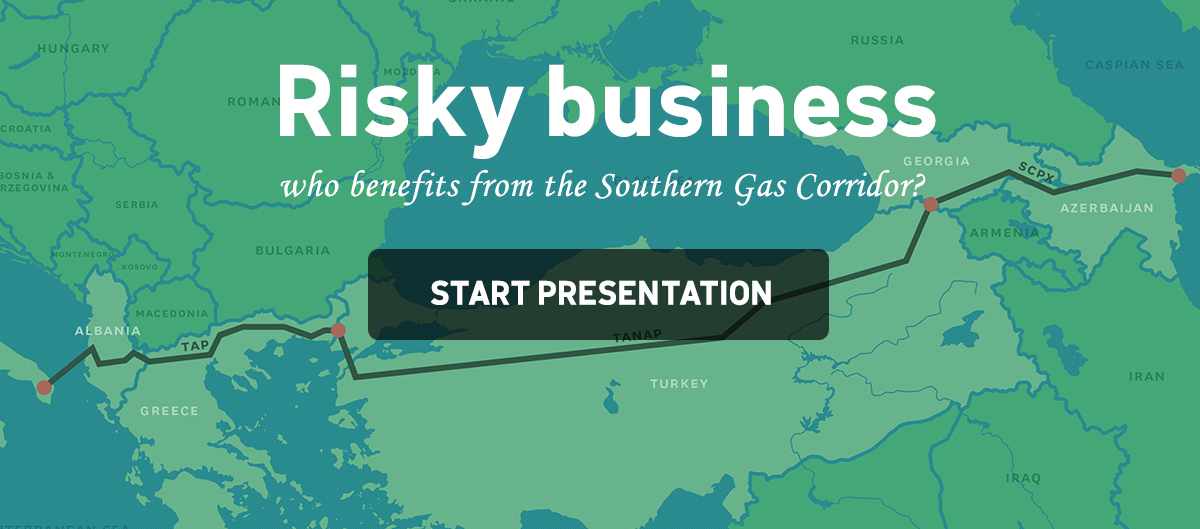
The Trans Adriatic Pipeline (TAP), the most western part of the Southern Gas Corridor, a pipeline project to bring gas from Azerbaijan to Europe is promoted by the European Commission as a strategic asset for Europe’s energy security.

Yet, leaving aside Europe’s falling gas demand and doubts about the level security the project really offers, a July visit to over 30 Albanian villages and the resulting report ‘We have no other option’ (pdf) reveal the high level of dissatisfaction and confusion for people impacted by the construction of the TAP gas pipeline.

The pipeline will cut an 8 to 40 metre wide corridor through Albania, requiring involuntary resettlement and compensation for loss of land and properties. Villages along the 200 kilometers long pipeline route are marked by scores of olive trees, orchards, pastures and fields providing the basis for people’s existence.


Orchards and olive trees along the TAP pipeline route in Albania.

But even though TAP is considered to be a priority infrastructure project by and for the European Union, and despite record loans promised by European public banks, the resettlement and compensation process is controlled by a private company, the TAP AG, and its representative, consulting company ABKons, without involvement of any European public authority to ensure the fair treatment of affected communities.

Download the report

“We have no other option” was the most common sentence we heard in those villages across Albania when people expressed their perception of the project and the resettlement process. Knowledge of their rights and options to appeal was almost nowhere to be found among the people we met. Most prefer to remain silent even though they consider the compensation offered to them as unfair and unjust, even though they are hopeless about a future without their orchards and olive trees.

According to statements from locals, the company seems to exploit this lack of knowledge and the high level of mistrust in the Albanian state by threatening villagers with even worse conditions if they rejected the company’s compensation and turned to state authorities.

Being forced to use a bank imposed by TAP and to pay additional fees for withdrawing their compensation even becomes a secondary problem in this situation.

The European Investment Bank and the European Bank for Reconstruction and Development are currently considering loans worth EUR 3.5 billion for TAP. The resettlement and compensation currently in progress will most likely be in breach with the banks’ policies on involuntary resettlement. Should they get involved nonetheless, it will be their responsibility to ensure that those affected are aware of the banks’ involvement and their own rights and that they have received sufficient compensation. A thorough review of the process in Albania will have to show where corrective actions are necessary.

Read more

‘We have no other option’ – Preparation of the Trans-Adriatic Pipeline in Albania (pdf)
Study | August 4, 2016

Southern Gas Corridor / Euro-Caspian Mega Pipeline
Campaign page with background, updates, documents

[Campaign update] Impact Assessment of Serbian Kostolac B3 coal plant nullified, two investigative reports published


Bankwatch has reported time and again about controversies in the Serbian coal sector. While the Kolubara lignite mine has been the most visible in the past, Chinese-backed plans for a new unit at the Kostolac lignite power plant have increasingly come under scrutiny for a possible breach of state-aid rules and undemocratic decision-making over a loan agreement with the China Export-Import Bank among others.

The most recent confirmation of the government’s preference for murky waters is a court decision from June nullifying the Environmental Impact Assessment for failing to inform and consult neighbouring Romania about the potential transboundary impacts of the Kostolac B3 lignite unit – an obligation that is part of the international Convention on Environmental Impact Assessment in a Transboundary Context (Espoo Convention).

In the end of July, the Serbian Center for Investigative Journalism (CINS) took a close look at the Kostolac B3 lignite power plant. The two resulting articles offer an overview of the range of issues surrounding the project. See them here:

Kostolac: Chinese loan, Serb rule-breaking – July 21
Serbia promisses clean, while investing into dirty energy – July 22


More materials about Balkan Coal investments

See our campaign section


Montenegrin power plant feasible only with creative accounting


The project preparations for the 254 MW Pljevlja II have been going on for years. Elektroprivreda Crne Gore (EPCG) and its main shareholder, the Montenegrin government, desperately want the project to go ahead, while the other major shareholder in EPCG, Italy’s A2A, is not keen due to the project’s poor economics. This has led to a stalemate which has lasted for at least a year and a half. But now, suddenly, there’s a huge rush.

In October there is a general election. And at the beginning of next year, new OECD rules on coal plant financing by export credit agencies kicks in, meaning that if financing for the Pljevlja II lignite power plant is not agreed by the end of this year, the Czech Export Bank, which is likely to be the main financier of the project, will have to pull out.

EPCG hasn’t been idling during this stalemate. As well as the never-ending negotiations with A2A and the preferred bidder Škoda Praha from the Czech Republic, the company has commissioned three new studies to bolster its claim that the project is feasible.

  • Fichtner, a company which previously found that some of the coal reserves around Pljevlja are not economically feasible to exploit, has now been engaged to show the opposite.
  • Poyry has been hired to forecast electricity prices in order to see whether a new plant would be feasible in the long-term.
  • Deloitte’s task, using the data from the first two, has been to establish the plant’s overall feasibility.

EPCG and the Montenegrin government have been delighted to announce that the studies show the project is feasible.

But actually, they don’t.

The full studies have not been published, but a comprehensive presentation (in the local language) of the Deloitte study shows the main findings.

And true enough, the phrase “it can be concluded that the project is feasible” does appear on the presentation.

But that’s where the feasibility ends and the creativity begins.

1) The study assumes that the Montenegrin government will manage to negotiate a delay in implementing the EU Emissions Trading Scheme (ETS) until at least 2026. Delayed implementation of ETS has not been the practice so far for states acceding to the EU in recent years and it is unclear why Montenegro should be an exception. Perhaps the Montenegrin government is counting on free emissions allowances, but these are in general no longer available for the power sector.

2)The forecast wholesale electricity prices seem very high, reaching 97 EUR/MWh by 2040 without inflation, compared to current prices of 39 EUR/MWh in Montenegro cited by an EPCG representative on 18.07.2016.

And this is where the real weirdness begins. The study takes a price 10% lower as a basis for calculations in order to appear “conservative” in its calculations. This price is still quite high and may never materialise. But more intriguing is that the calculations, for no clear reason, couple this “conservative” 10% lower electricity price with a 10% lower CO2 emissions price in the name of making a “conservative” calculation.

This is in fact the opposite of conservative, because lower CO2 costs do not pose a risk to the plant, but rather help it become feasible. So a lower electricity sales price and a higher CO2 price would form a more conservative scenario, not a lower electricity sales price and a lower CO2 price. I find it difficult to believe that Deloitte don’t know this, so it looks like a case of creative accounting to me.

Even with this bizarre coupling, if the wholesale price of electricity turns out 20% lower than expected (and the CO2 price turns out 20% lower lower), the investment is unfeasible. So if the CO2 price rises as expected, presumably the investment would be even more sensitive to lower than expected electricity prices. Considering the inexact nature of such forecasting, this seems quite a possible scenario.

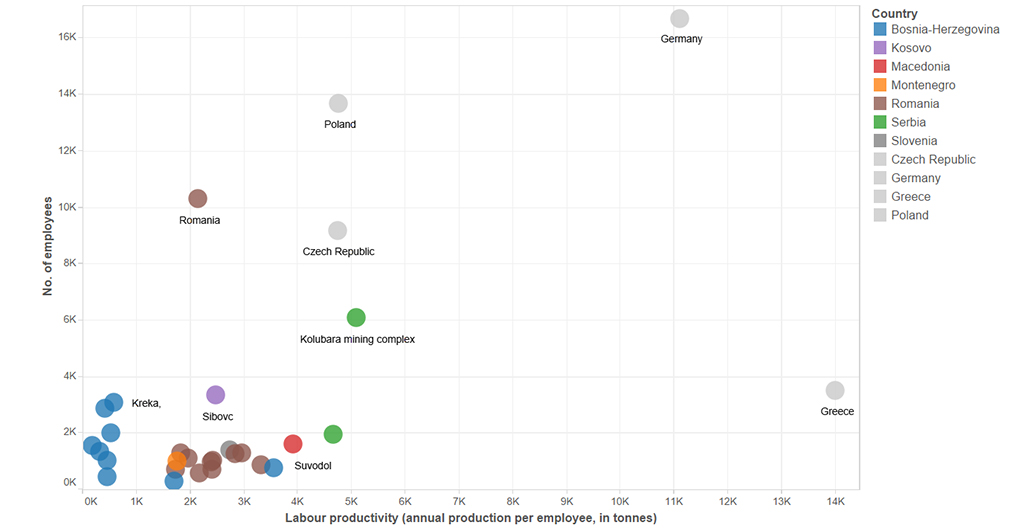
3) It is assumed that production costs at the captive lignite mines will be reduced from 24.21 EUR/tonne in 2015 to 17-17.5 EUR/tonne in 2027. However it is far from certain that such significant cost cuts will be achieved, and even 17.5 EUR/tonne is on the high side for lignite mines in eastern Europe, according to a 2014 EY benchmarking study. In order to reach the desired cost of production from the mine, the number of workers would have to be reduced by almost half. It is not clear whether there is any plan to ensure that this happens in a just and socially sensitive manner.

4) VAT is not expected to be paid on the equipment for the power plant. This is in line with recent changes to Montenegrin legislation, but decreases the investment’s value for the state and raises issues about state aid.

So, in summary:
If Montenegro somehow manages to delay the implementation of the ETS until 2026 and
If electricity prices more than double by 2040 and
If CO2 costs are 10% lower than projected and
If Pljevlja mine manages to reduce production costs from 24.21 EUR/tonne to 17.5 EUR/tonne within the next ten years and
If no VAT is paid for the EPC contract,
Then the Pljevlja II power plant might just turn out economically viable.

That’s a lot of “ifs”.

No wonder A2A is not very interested. But it also raises the question of why the Montenegrin government is so desperate to push through this project, despite its obvious weaknesses?

As is often the case with the Balkan energy sector, special interests and corruption come to mind. The fact that the Prime Minister’s brother, Aco Đukanović owns an 11% share in the Pljevlja lignite mine raises obvious red flags. With interests like these involved, the government’s ability to balance public and private interests is highly compromised.

Montenegro’s decision-makers – as well as the Czech Export Bank which is considering financing the project – would be well advised to examine the project documentation with a fine-toothed comb and see the numbers for what they are – a desperate attempt to make a rotten project palatable.

Ombudsman asks European Investment Bank to act on conflicts of interest issues

In a letter to the President of the European Investment Bank from July 22, the European Union’s Ombudsman Emily O’Reilly has asked the bank to review its governance arrangements to help prevent potential conflicts of interest in the bank’s governing bodies.

Noting the wide range of operations of the bank, including lending for large scale projects “such as expansion of energy distribution networks, renewable energy projects, modernisation of transport infrastructures and broadband investments”, the Ombudsman observes that “this requires effective mechanisms to assess and prevent possible conflicts of interests within governing bodies”.

Going into more detail, O’Reilly identifies a number of shortcomings in conflict of interest provisions in the two main governing bodies of the EIB, its Board of Directors, responsible for approving strategic and operational decisions, and its Management Committee, handling the day-to-day management.

To address these, the Ombudsman among others requests the EIB to “specify how conflict of interest assessments are performed before members of the Board of Directors and Management Committee [the two main governing bodies] are appointed”. She also points out that the level of detail that new members of governing bodies have to disclose seems either insufficient or not in line with the practices in other international financial institutions.

Also in contrast to the EIB, Board members at other public financial institutions such as the World Bank and the European Bank for Reconstruction and Development “may not engage in any outside activity without prior authorisation of the relevant Ethics Committee”.

Lobbyists in the EIB’s Board of Directors

The Ombudsman’s initiative is not coming out of the blue considering revelations about corruption cases with the alleged involvement of former EIB director Mihai Tanasescu in Romania and former Vice-president Magdalena Álvarez Arza in Spain. According to Irish media, the EIB’s current Irish Director John Moran is actively lobbying for the American ride-sharing company Uber.

For the EIB to work in the interest of European citizens, the EU bank needs to adopt stricter provisions to prevent conflicts of interest and “revolving doors” practices by its high-level staff. The Ombudsman initiative is therefore much welcomed by transparency advocates.

« Previous Page
Next Page »

Footer

CEE Bankwatch Network gratefully acknowledges EU funding support.

The content of this website is the sole responsibility of CEE Bankwatch Network and can under no circumstances be regarded as reflecting the position of the European Union.

Unless otherwise noted, the content on this website is licensed under a Creative Commons BY-SA 4.0 License

Your personal data collected on the website is governed by the present Privacy Policy.

Get in touch with us

  • Bluesky
  • Email
  • Facebook
  • Instagram
  • LinkedIn
  • RSS
  • YouTube