November 21, 2013 | Read more The complicated nature, hidden future debts and other characteristics of public-private partnerships have led the Czech Republic’s national security service to consider them a potential threat to public interests.
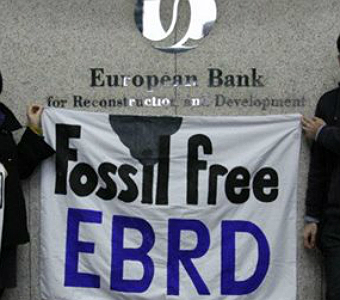
November 21, 2013 | Read more With the United Kingdom, another major shareholder of the European Bank for Reconstruction and Development is divesting from coal overseas. What does this mean for the upcoming decision on the EBRD’s energy strategy?
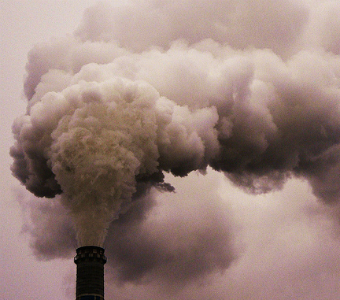
November 21, 2013 | Read more The pollution from EFT’s new 300 MW Stanari lignite-fired power plant in Bosnia and Herzegovina may be 2-10 times higher than EU limits allow, according to a new expert analysis commissioned by the Center for Environment from Banja Luka.
November 20, 2013 | Read more Strasbourg, France – Following final agreement today by the European Parliament on EU Cohesion Policy spending for the next seven years, CEE Bankwatch Network and Friends of the Earth Europe are calling on eastern European countries to now make the most of the funds available and commit to quality spending.
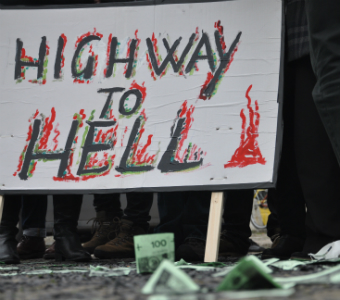
November 19, 2013 | Read more Monday morning in Warsaw, climate activists staged a public action in front of the Polish Ministry of Economy – the venue for the greenwashing Coal and Climate Summit – to voice their outrage and reiterate a simple reality: there is no such thing as clean coal.
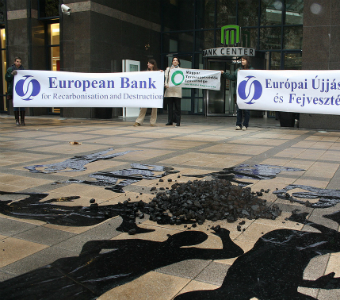
November 18, 2013 | Read more Warsaw – Actions are being organised today in several European capitals to protest the attendance of the European Bank for Reconstruction and Development at the International Coal and Climate Summit, organised by the World Coal Association in parallel to the United Nation’s climate conference in Poland.
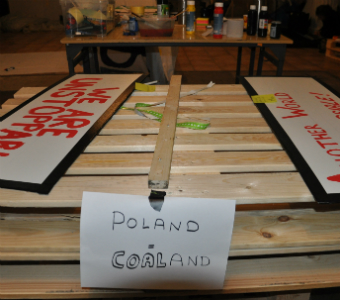
November 18, 2013 | Read more WARSAW – People from around the world gathered today in front of Poland’s Ministry of Economy in protest of the World Coal Association’s International Coal and Climate Summit organised on the sidelines of the 19th UN climate change conference.
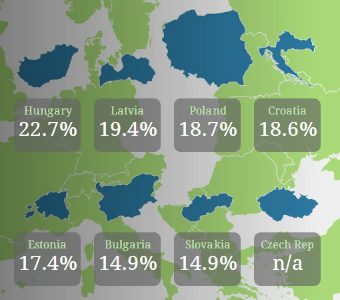
November 18, 2013 | Read more Brussels, Belgium – Ahead of anticipated final agreement in the European Parliament this week (Tuesday November 19) on the forthcoming EU budget (for the period 2014-2020), CEE Bankwatch Network and Friends of the Earth Europe have today published data that shows how eight central and eastern European countries are failing to tap the climate potential of future EU billions.
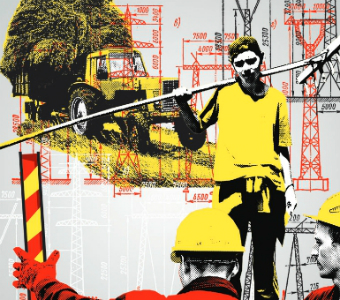
November 15, 2013 | Read more The European Bank for Reconstruction and Development helped solve conflicts between locals and Ukrainian state company Ukrenergo about an EBRD financed transmission line. On close inspection, the case illustrates that without close monitoring and support for local communities, it is left to chance and locals’ dedication that conflicts are being noticed in the first place.
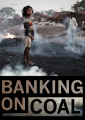
November 15, 2013 | Read more Coal is the single greatest source of CO2 emissions endangering our climate. Yet never before has so much coal been mined on the planet as today. Since 2000, global coal production has grown by 70% and has now reached a staggering 7.9 billion tons annually. And what’s more, the industry is still expanding. Who on earth is financing the enormous production increases of the world’s dirtiest fossil fuel?
Stay informed
Receive our monthly overviews of the latest developments on the ground.

