Gender impacts of the Shuakhevi hydropower project in Georgia and its compliance with EBRD requirements
Publication | 31 October, 2016A majority of the local population protests against the construction of the Shuakhevi HPP for various reasons, including issues related to land and water “grabbing”, geological risks posed by construction works, employment problems, etc. The purpose of
Read moreGender impacts of the Nenskra hydropower plant, Georgia
Publication | 31 October, 2016Based on the analysis of the project documentation, independent media reports, surveys and discussions with local civil society revealed that the Nenskra project represents the perfect example of a gender blind project, where the project sponsor fails
Read more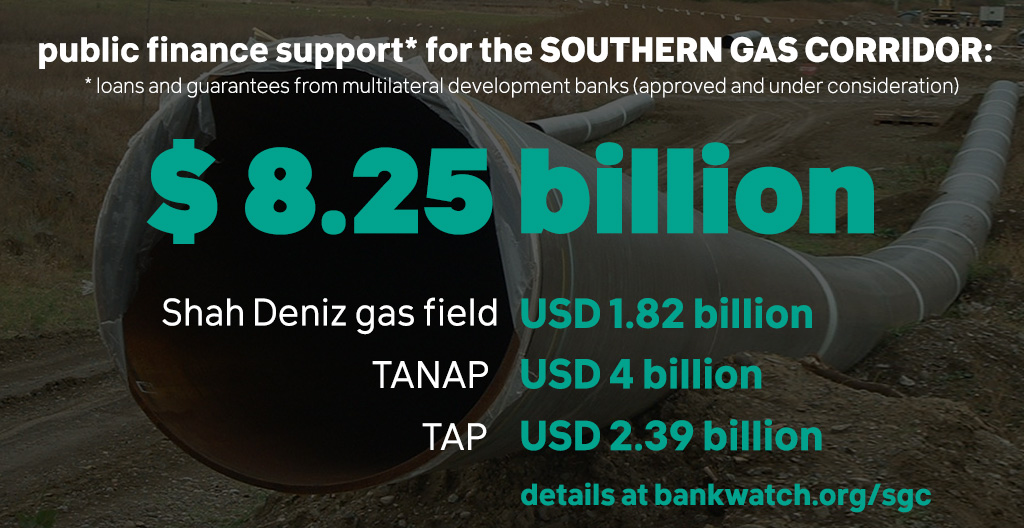
Azerbaijan’s crackdown on civil society must not be tolerated, international NGOs tell industry transparency body
Press release | 25 October, 2016The Azerbaijani government’s relentless repression of civil society should disqualify the country from participating in the Extractive Industries Transparency Initiative (EITI), 18 international groups wrote in a letter sent on Thursday (October 20) to members of the EITI board.
Read more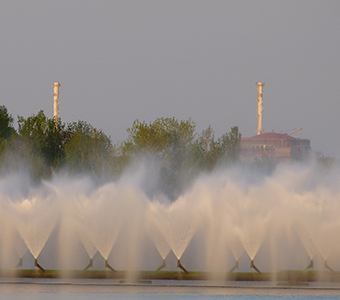
New life for old nukes in Ukraine means more risk for people and planet
Press release | 3 October, 2016A decision today by Ukraine’s nuclear regulator to extend the operations of another Soviet-era reactor has been made in spite of the country’s failure to implement fully the obligations it took on when receiving EU funding for its ageing nuclear fleet.
Read more
For European development bank democracy is an afterthought
Blog entry | 19 September, 2016Almost one in four euros lent by the European Bank for Reconstruction and Development in 2015 went to authoriatrian countries. The bank has clearly decided to ignore its own mandate, or else it would have to considerably shrink its business.
Read more
Ukraine’s nuclear energy fixation puts its European financiers to a test
Blog entry | 5 September, 2016In a meeting today, the Espoo Convention’s Implementation Committee will again discuss Ukraine’s compliance with the Convention’s rules. A look back at the last months does not suggest a positive outcome.
Read more
Dirty Precious Metals: Dumping European Toxic Waste in Tsumeb, Namibia
Publication | 10 August, 2016Based on a visit to Namibia this report assesses the environmental and social standards at the Tsumeb smelter, acquired by Canadian Dundee Precious Metals in 2010. The smelter specialises in working with some of the dirtiest copper concentrates half of
Read more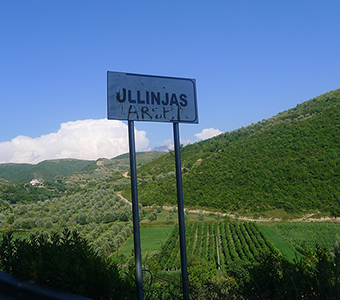
‘We have no other option’ – Albanian communities face unjust resettlement process for Trans-Adriatic Pipeline
Blog entry | 4 August, 2016What is a perceived source of security for some can cause instability for others’ lives.
Read more‘We have no other option’ – Preparation of the Trans-Adriatic Pipeline in Albania
Publication | 4 August, 2016The Trans Adriatic Pipeline (TAP), the most western part of the Southern Gas Corridor, a pipeline project to bring gas from Azerbaijan to Europe is promoted by the European Commission as a strategic asset for Europe’s energy security. A July visit to over 30 Albanian villages revealed the high level of dissatisfaction and confusion for people impacted by the construction of TAP.
Read moreUkraine’s nuclear programme and the Espoo Convention – letter to the Convention’s Implementation Committee
Publication | 1 August, 2016Espoo bodies sent several specific recommendations concerning its non-compliance with the Espoo Convention to Ukraine. Nonetheless Ukraine seems to be either ignoring those or taking insufficient steps towards compliance. Therefore Bankwatch summarises the state-of-play in this letter and asks the Implementation Committee to consider a number of steps to ensure the Convention’s requirements are properly met by Ukraine.
Read more
