• Skip to primary navigation
  • Skip to main content
  • Skip to footer

Bankwatch

  • About us
    • Our vision
    • Who we are
    • 30 years of Bankwatch
    • Donors & finances
    • Get involved
  • What we do
    • Campaign areas
      • Beyond fossil fuels
      • Rights, democracy and development
      • Finance and biodiversity
      • Funding the energy transformation
      • Cities for People
    • Institutions we monitor
      • European Bank for Reconstruction and Development
      • European Investment Bank
      • Asian Infrastructure Investment Bank
      • Asian Development Bank (ADB)
      • EU funds
    • Our projects
    • Success stories
  • Publications
  • News
    • Blog posts
    • Press releases
    • Stories
    • Podcast
    • Us in the media
    • Videos
  • Donate

Home > Archives for Blog entry

Blog entry

Will Georgia go green after EU association agreement?


At the moment in Georgia, we have too many cases in which infrastructure projects are implemented without regard for the environment and our people, and this is most obvious when it comes to hydropower projects.

Georgia has huge potential to develop energy produced from hydropower, and numerous dam projects are popping up all the time. Some of the most ambitious government plans include the construction of the 700 MW dam at Khudoni, a 450 MW cascade at Namakhvani, and 282 MW dam at Oni.

These plans, however, are happening in a very weak legal environment, with poor project planning often occuring from the onset. Georgia’s legislation does not address the issue of involuntary resettlement caused by infrastructure projects. The Environmental Impact Assessment (EIA) system is ineffective, in terms of providing the public with information and opportunities for public participation. Also an unclear legal rights regime offers next to no protection for communities that make customary use of the land that traditionally was in their hands. Unregistered land plots can be grabbed by investors for infrastructure projects. At the same time, promoting alternative sources of energy other than hydropower is difficult, because no legal regime is in place to ensure the development of energy efficiency or renewable energy programmes.

The result looks a bit like the Wild West, where unwieldy investors face off against people that have no choice but to rebel. And the consequence, often, is repression by authorities.

In March, 500 villagers protesting against the 185 MW Shuakhevi hydropower plant were forcefully dispersed by policemen and special forces. In Svaneti, people who have strongly opposed the construction of the Khudoni dam have been systematically sidelined by authorities and investors.

In May, a tragic landslide caused by huge floods at the Dariali dam site killed a number of workers. But this type of accident could have been avoided, if a proper Environmental Impact Assessment would have been conducted. Such an assessment would have identified different geological risks and as such, the current project site would necessarily have needed to be ruled out.

This is why our environmental legislation needs to improve. We need to think seriously about the impacts caused by this type of infrastructure and ensure that we only build projects that are useful for our people and in harmony with nature. Adopting more of the EU acquis would definitely improve our environmental legislation.

Expert proposals for Energy Community improvements are a promising step forward

South and eastern European member countries of the Energy Community may soon have to be much more ambitious about environmental standards in the energy sector. This is because the Energy Community, the body that aims to create a common energy market between the EU and some of its neighbours, may be about to introduce more of the EU environmental acquis into its Treaty.

The Energy Community brings together Albania, Bosnia and Herzegovina, Kosovo, Macedonia, Moldova, Montenegro, Serbia and Ukraine – and soon also Georgia – with the stated goal of extending EU internal energy policy to south east Europe and the Black Sea region. The Energy Community Treaty sets out, among others, which energy-related parts of EU legislation have to be adopted by the participating countries.

Six months ago, an expert group was commissioned by the Energy Community to review the institution’s set-up and working methods and to propose directions of reform. In its final report (pdf) presented today in Vienna, the so-called High Level Reflection Group says that much more of the EU environmental legislation should be adopted by Energy Community members, as well as procurement legislation and improvements in monitoring and enforcement.

This represents an important turning point for the Energy Community’s future. In our view, the key pieces of legislation proposed by the expert group to the Energy Community are those concerning:

  • industrial emissions and the adoption of the “best available techniques” requirements for power plants,
  • public procurement in the energy sector,
  • ambient air quality

There is also a proposal to use the EIB’s energy policy to screen investment projects for compliance with the EU’s long-term energy goals, which is a good step forward.

This increased focus on environmental issues at the Energy Community comes also as a result of the institution taking into account the views of NGOs, including those of CEE Bankwatch Network (pdf). The expert group even recommended that NGOs are included as non-voting representatives in the institutions of the Energy Community – this is an excellent opening to civil society we very much commend!

Of course any law is only as strong as its implementation, and this is where problems have hit the Energy Community so far. The expert group has recommended that financial assistance be conditioned on implementation of EU legislation and that the Secretariat’s capacity for monitoring and investigation should be strengthened. It is also proposed that the current dispute settlement mechanism – in which the Ministerial Council has to judge its own members’ performance in certain cases – is gradually changed to an independent court.

The proposals are a very good start for the discussion on the extended Energy Community Treaty. At the same time, a group of NGOs today also presented its own vision (pdf) about the future of the Energy Community. While there is a good deal of overlap, the expert group omitted some of the environmental acquis that we find important in preventing harmful impacts from the energy sector. Among these are norms and regulations concerning:

  • the impacts of power plant operations on water quality: Water plays a crucial role not only in hydropower generation, but also in extraction, cooling and processing in coal power. This could be addressed by adopting Directive 2008/105/EC, which establishes concentration limits in surface waters for pollutants including heavy metals and radioactive materials;
  • waste from extractive industries connected to energy generation, ie. coal mining:. This aspect is currently covered in EU member states by Directive 2006/21/EC;
  • climate change: there is an urgent need for binding greenhouse gas emission reduction targets in the revised Treaty, to enable those countries who are planning to join the EU to meet their upcoming obligations;
  • power plant operation: particularly hydropower or wind power, but also coal power plants can have a serious impacts on plants and animals. These could be tackled by integrating Directive 92/43/EEC on the conservation of natural habitats and of wild fauna and flora into the acquis. This Directive establishes the Natura 2000 network of protected areas which helps to prevent harmful impacts from infrastructure projects.

The plan now is to develop the expert group’s proposals further and approve the changes to the Treaty at the 2015 Ministerial Council meeting. The challenge now is to build consensus on the proposals among the Energy Community member governments who will cast their votes on the future of the energy sector next year. Considering the decades-long impacts of energy investments and the urgency of addressing climate change, biodiversity loss and air quality, it is in all of our interests to raise environmental standards and improve the rule of law in the Energy Community as soon as possible.

Big plans for a small country – Montenegro’s draft energy strategy


Looking at the Montenegro government’s draft White Paper on the country’s Energy Development Strategy until 2030, due to be approved on June 19, you would never think that this is a country of around 650 000 people that plans to join the EU within six years.

Why? One reason is that the amount of planned electricity generation infrastructure is reminiscent of a bigger country. Three new major projects are planned to be carried out simultaneously during the next few years – the Pljevlja II coal power plant (220-250 MW) and Moraca (238 MW) and Komarnica (168 MW) hydropower plants – which seems ambitious to say the least, especially considering that the last tender for Moraca hydropower cascade failed in 2011 when not a single investor applied.

New website for coal campaigners


Because of some investors’ undiminished appetite for financing coal power, Bankwatch created an interactive toolkit that explains how to contact the investors behind a project, which policies guide their decisions and how best to influence them.

KINGSOFCOAL.ORG

Why does Montenegro need so much electricity? The short answer is that it doesn’t. For decades Montenegro’s electricity demand has been largely dictated by the Podgorica Aluminium Factory – KAP – which has at times used around 40 percent of the country’s electricity. But the company has been in long-term decline and has been bankrupt since last year. Undeterred, the government’s draft White Paper sees the factory working at half capacity during the coming years.

Another driver for the ambitious plans is economic growth – notoriously hard to predict – which the White Paper puts at 3.7 percent from 2010 until 2015. But so far Montenegro’s annual GDP growth hasn’t hit that figure even once since 2010, let alone averaged it, and according to the EBRD’s (pdf) and the World Bank’s current forecasts it doesn’t look like it will do so by 2015 either.

Even that electricity that Montenegro does use could be reduced significantly if more attention was paid to residential energy efficiency and stopping wasteful practices such as using electricity for heating, yet the government is not pursuing this potential with anything like the zeal it reserves for new large infrastructure.

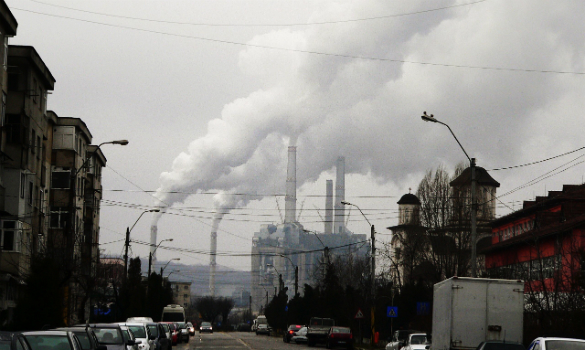
In addition to overestimating domestic demand, the Montenegro government is set on positioning the country as an ‘energy hub’ with spare electricity to export to its Balkan neighbours and Italy. This might be fine if it had a vast supply of clean energy sources to export environmentally benign electricity from, but this is not the case. The Moraca and Komarnica dams are both highly controversial due to their impacts on protected natural areas, and one of the planned sources of electricity for export is none other than the Pljevlja II lignite power plant. The town of Pljevlja is already choking from years of lignite pollution and its inhabitants can hardly be expected to be thrilled at the prospect of a new lignite plant that will export the electricity and leave the pollution behind.


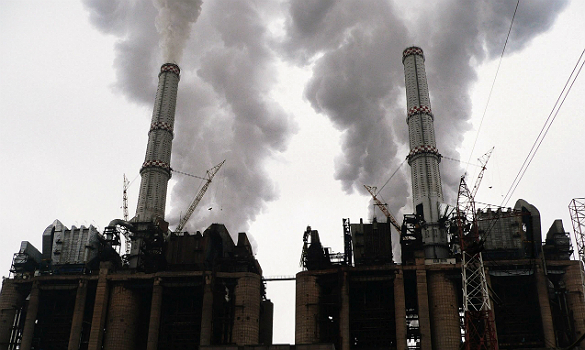
The existing power plant in Pljevlia.

Much of the draft strategy also overlooks EU rules and obligations, even though decisions taken now will only just be being implemented when Montenegro joins the EU, assuming it manages to enter by 2020 as planned. Montenegro has adopted a renewable energy target of 33 percent by 2020 as part of its Energy Community obligations, but it names Moraca and Komarnica as important for achieving it, even though the same document says they will be ready in 2021 and 2022 respectively. The strategy foresees an increase in greenhouse gas emissions until 2030, in a period when the EU as a whole plans to decrease its emissions by 40 percent compared to 1990 levels. And the Industrial Emissions Directive, which should play a decisive role in decisions about the planned and existing Pljevlja power plant units, is treated as something hardly worth mentioning.

In short, the draft strategy is outdated before it has even been approved. Rather than rushing ahead with it, the Government should scale down its ambitions to something more achievable and befitting of an ecological state.

Transition triumphs and traps – Assessing Poland’s recent economic journey, and where it goes next


This article was published in Issue 59 of our quarterly Bankwatch Mail.

Read it in full


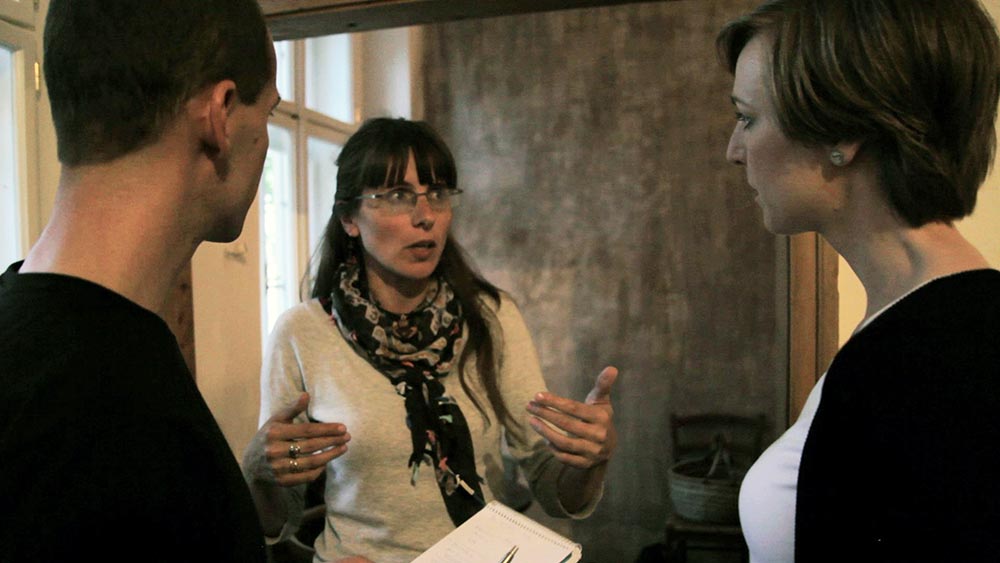
Some interesting cross-cultural and ideologically various perspectives were due to bounce around during the discussion, and we kicked off with a look at the so-called ‘Polish economic miracle’ that has seen the country enjoy the fastest rates of growth in Europe over the last two decades (over four percent a year), become the sixth largest economy in the EU, and resulted in living standards more than doubling between 1989 and 2012.

Just how miraculous has this economic miracle been?

Aleksander Nowacki: I hesitate to bring up personal anecdotes, but I remember being sent as a child to buy bread. My mother said to me that in the morning it cost 2,000, so she was giving me 4,000 at 3pm to be on the safe side. I ended up coming home without bread, as the price had more than doubled since the morning. When we talk about living standards, it’s not good just to talk about income per head. We also need to look at the fact that while the Polish economy in 1989 was maybe not as bad as Germany in the early 1920s, it was in terrible shape: there was hyper-inflation and the economy was collapsing.

About the participants


Aleksander Nowacki, who has reported for the Financial Times among other publications during his career, was born in Warsaw, and experienced higher education in the UK in the 1990s and 2000s.

Gavin Rae, a native of Birmingham in the English Midlands, moved to Warsaw in 1996 and currently teaches at the city’s Kozminski University.

And the fact that Poland is now one of the most developed countries in the world is, in some ways, miraculous, though there was nothing really miraculous about it – just hard work, and some luck, such as joining the EU.

Gavin Rae: I’ve lived in Warsaw pretty much permanently since 1996, and I’ve seen considerable changes in that time. I think the term ‘miracle’ involves an element of hyperbole, but it can be looked at as a positive example only really within the context of the post-socialist transition. In general, I would say that the post-socialist transition in eastern Europe has been a complete disaster. That isn’t supposed to be a justification of what existed before, but when you look at many of the ex-Soviet states, the declining GDP and living standards have been of an unprecedented scale in peacetime history.

When you look at Poland within this, of course, there has obviously been a much better experience, where GDP has risen significantly, living standards have risen, and so on. However, even within this, when you look at the very large deactivation of labour, the decline in many public services, particularly in health and pensions, and rising inequality, then I think that the Polish transition has not been the unprecedented success that the present government would like to portray it as.

AN: I would disagree quite strongly with some of these points. Regarding what Gavin describes as declining standards in public services such as health, between 1989 and 2010, average life expectancy grew in Poland by seven years – that’s much higher than the global average. The number of infections in hospitals was cut, I think, to 20 percent of what it had been in the eighties. The quality of health care is a lot higher than it was in the eighties: you don’t now get patients lying in beds in corridors, as was very common in the 1980s. We’ve also seen very significant advances in, for example, the treatment of and facilities for disabled people.

As for inequality, while economic inequality has indeed increased, in the eighties what we had in Poland and elsewhere in the region was ‘hidden’ inequality. In a socialist economy, how much money you had didn’t influence your position in society, or even your economic position. It was all about your contacts. So people who had contacts in the party, contacts in certain companies, could access goods that money couldn’t really purchase. So actually we had incredible inequality not in terms of income disparity but in availability of goods, and that was hidden. The inequality we have now is more transparent.

GR: To come back on health, I can agree that the system in Poland in the 1980s was particularly bad. But look at some of the figures: there are fewer doctors now in Poland than there were 20 years ago, there are fewer dentists, fewer nurses, fewer public hospitals. And we can see the health system now increasingly failing. That is of course not to say that things were great 25 years ago, and now they’re bad.

Continue reading

When water mixes with coal – The impacts of the floods in Serbia on people living next to lignite mines


When the floods hit Vreoci in Serbia on May 15, a nearby water reservoir broke and water rushed into the house of Nevena Radivojevic at 2 in the night. A rescue team came with boats and took away her grandchildren and her daughters in law, but there was no place for her in the boat. In the end her son, a hobby fisherman, came with a boat and managed to save her. It was a lucky escape.

Vreoci is a town surrounded by open pit lignite mine fields in the Kolubara mining basin in Serbia. Nevena, like many others, had tried for a long time to move away from the vicinity of the gigantic Kolubara lignite mine. The dusty air and the frequent tremors caused by the heavy mining machinery have for a long time been a burden on her and her family’s health. (See more in this video footage from an earlier visit to Vreoci.)

Yet, the Kolubara mining company has shown no interest in compensating Nevena and many other people living next to the mines. Without this support most people were forced to stay where they are and suffer under noise, air and water pollution.

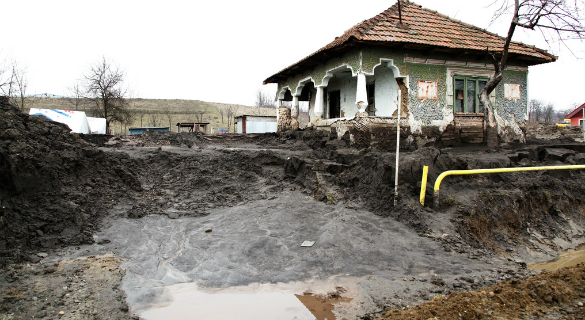
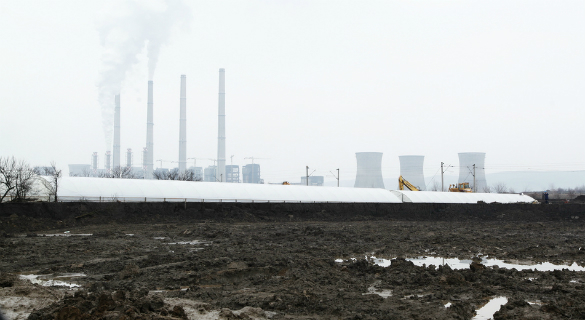
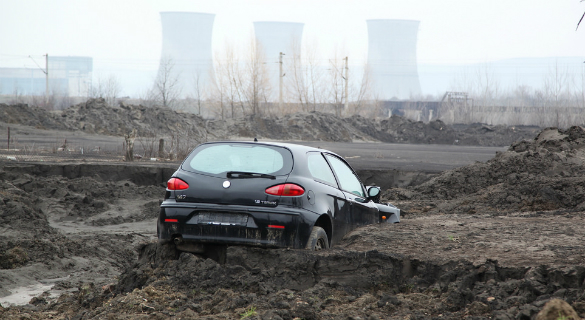
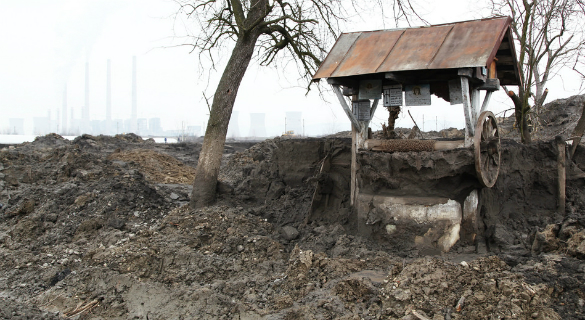
I’m a regular visitor in Kolubara and when I went there after the floods, I spoke to people in three villages located near mine fields (Junkovac, Vreoci and Radljevo). Many of them said that the flood’s impacts were much worse for those living near the mine, especially where the waters and mud mixed with pollution from the mine.


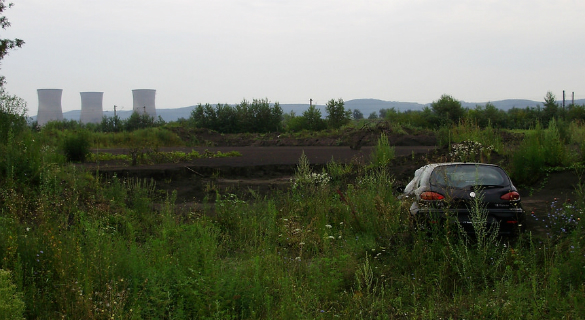
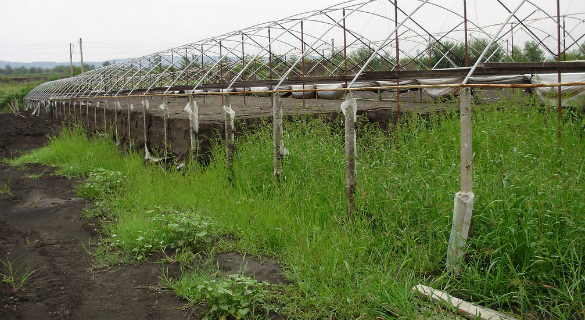
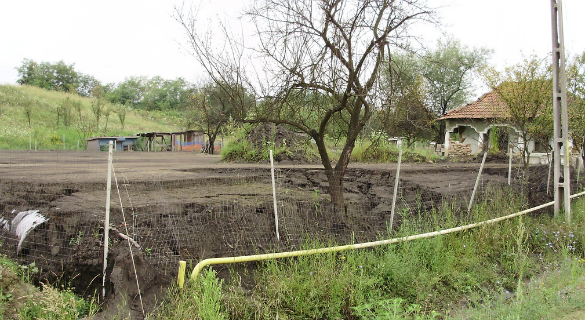
The soil is covered with black mud because the water mixed with coal.


People are taking their furniture out to dry in the sun. They help each other clean up.

The people demand to be resettled as soon as possible, but now that the Kolubara mining company has to prioritise cleaning up the mine fields and increasing production again it is very unlikely it will help the local families without external pressure. For years already we have been requesting the European Bank for Reconstruction and Development (a long time financier of Kolubara) to get active in the resettlement process and make sure its client cares about the families living next to the mines. After the floods, this has become an even more burning issue.

There is for example Milan Simic from Radljevo, who has fought long and hard (and unsuccessfully) for compensation after the mine had swallowed his apple tree farm. Milan is now living on the coast of a new lake that used to be the Tamnava West mine field. The lake is 15 square kilometers big, possibly the second biggest in Serbia. From his house Milan Simić cannot see the road anymore, it was taken by the water.

Kolubara from Airworx on Vimeo.

There are the families from Junkovac, who live in fear since a landslide destroyed thirteen houses and their road one year ago. Since then they wait to be resettled with appropriate compensation, but the Kolubara mining company is letting them wait, while continuing to dump more waste on the same hill that had collapsed.


An image of the destruction after last year’s landslide.

Nevena meanwhile is especially worried. Her town of Vreoci may become a focal point for disputes between the Kolubara mining company and villagers. To be able to continue coal production, it is likely that the company will speed up the expansion of mining towards Vreoci.

More repression, more money – Financing transition in Egypt


Last Thursday an office of the Egyptian Center for Economic and Social Rights (ECESR) has been raided by military forces just days ahead of the presidential elections in Egypt that are coming to a close today. In a joint statement Egyptian and international organizations condemned the raid as “reflect[ing] a repressive atmosphere, and rising threats to the existence and function[ing] of civil society organizations”.

It was the second raid on ECESR offices under the current military regime and only the most recent incident to suppress opposition. One of the reasons ECESR has been targeted may be a recent success in front of the Administrative Court. The ruling allows ECESR to appeal against amendments to an investment law that stipulate that no third party may challenge the validity of agreements made between the Egyptian government and investors – a practice that would mock transparency standards and increase the risks of corruption.

The investment law is just one of the many democratic shortcomings of the Egyptian regime. Since the military took control in July 2013 hundreds of people have been killed, imprisoned and tortured for holding on to believes that the Egyptian military did not approve of. Activists and protesters, not only from the Muslim Brotherhood have been persecuted and politically marginalised. The most striking example of the repression has been a court ruling sentencing over 529 Muslim Brotherhood members to death.

Throughout this time, with no functioning parliament in the country, the European Bank for Reconstruction and Development continued its lending in Egypt even though its mandate restricts its operations to countries that apply the principles of multiparty democracy and pluralism.

Increased lending while political situation deteriorates

A February briefing (pdf) by Platform London based on a six-month mission to Egypt illustrates the conflict between the country’s political situation and the EBRD’s mandate:

“The regime in Egypt has been implementing policies inconsistent with the EBRD’s purpose, in particular with the political aspects of its mandate. […] Since the military takeover in July 2013, progress has been negative on most factors defined by the EBRD as ‘essential elements of multiparty democracy and pluralism’.”

The briefing further details that the situation has become significantly worse in relation to 11 out of 14 of these elements (pdf), including those concerning the rule of law, the separation of powers, free elections, freedom of speech and freedom of organisation.

It concludes:

“The current atmosphere of systematic torture, persecution and censorship of any public critics of the military and the military-appointed government highlights clear non-compliance with the EBRD’s political mandate.”

Support for oil and multinationals, bypassing the people of Egypt

Since the beginning of its operations in Egypt, the Board of Directors of the EBRD which represents the Bank’s shareholders, has approved 9 loans worth up to USD 756 million.

Platform’s examination of the loans[*] shows the bank’s failure to channel its money to where it is mostly needed in a country ridden by widespread poverty and unemployment.

  • Only up to a meager 6.6 % or USD 50 million of the EBRD’s support has been allocated to small and medium sized companies (SMEs).
  • Instead, the EBRD focused on multinationals, oil companies and agribusiness. Funds have been directed to sectors that are not improving the human development situation in Egypt.
  • Furthermore, as civil society organisations in Egypt pointed out, there have been no public consultations over the funded projects, despite concerns regarding social and environmental impacts.

Aiding a military regime

Equally problematic is the EBRD’s support institutions that are under the regime’s control: the public Egyptian Electricity Holding Company and Egyptian National Railways receive almost half of the EBRD’s support (362 million) and the state-owned National Bank of Egypt an additional USD 100 million.

All three loans have been approved by the EBRD after summer 2013 – at a time when severe and repeated human rights violations were being committed by the military regime.

Faced with such criticism, the EBRD regularly claims it is ‘closely monitoring’ the situation on the ground. If that is so, should the bank’s not only continued but intensified operations in Egypt be understood as approval of the regime’s conduct? Is the killing of hundreds an unfortunate but necessary side-effect of transition to a market economy? Does ensuring the supply of mid- to up-market ice cream somehow outweigh the collective death sentence for 529 oppositionists on the second day of trial?

* Since the briefing was prepared in February this year, the numbers have been updated for this blog post. The loan for Kuweit Energy that is included in our numbers, is not featured in the EBRD’s list of projects in Egypt because it covers also activities in Ukraine.

« Previous Page
Next Page »

Footer

CEE Bankwatch Network gratefully acknowledges EU funding support.

The content of this website is the sole responsibility of CEE Bankwatch Network and can under no circumstances be regarded as reflecting the position of the European Union.

Unless otherwise noted, the content on this website is licensed under a Creative Commons BY-SA 4.0 License

Your personal data collected on the website is governed by the present Privacy Policy.

Get in touch with us

  • Bluesky
  • Email
  • Facebook
  • Instagram
  • LinkedIn
  • RSS
  • YouTube