• Skip to primary navigation
  • Skip to main content
  • Skip to footer

Bankwatch

  • About us
    • Our vision
    • Who we are
    • 30 years of Bankwatch
    • Donors & finances
    • Get involved
  • What we do
    • Campaign areas
      • Beyond fossil fuels
      • Rights, democracy and development
      • Finance and biodiversity
      • Funding the energy transformation
      • Cities for People
    • Institutions we monitor
      • European Bank for Reconstruction and Development
      • European Investment Bank
      • Asian Infrastructure Investment Bank
      • Asian Development Bank (ADB)
      • EU funds
    • Our projects
    • Success stories
  • Publications
  • News
    • Blog posts
    • Press releases
    • Stories
    • Podcast
    • Us in the media
    • Videos
  • Donate

Home > Archives for Blog entry

Blog entry

Energy Community Treaty violations dig Western Balkan countries deeper into coal hole

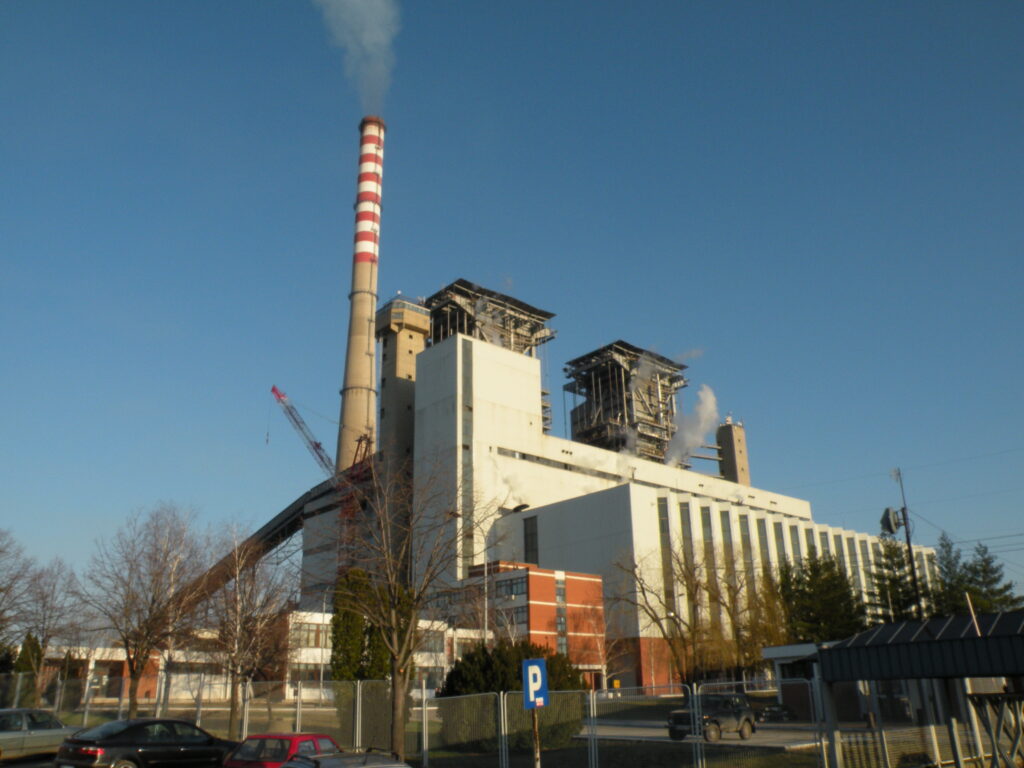
Just last week the Energy Community Secretariat announced it had pushed forward the second phase of a three-step process determining Bosnia and Herzegovina’s alleged breach of state aid rules in granting a guarantee for a loan to build the Tuzla 7* lignite plant. Given that the total sum of the guarantee is not even specified in the Federal Government’s documents, this guarantee could cost Bosnia and Herzegovina dearly.

How did the Tuzla 7 hole get so deep? 

In September 2018, the Sarajevo-based NGO Aarhus Resource Centre and Bankwatch submitted a complaint to the Energy Community signalling that the Federation’s plan to guarantee the EUR 614 million loan from China ExIm Bank did not comply with EU rules and should be investigated. The guarantee covers 100 per cent of the loan plus interest and other associated costs. Usually, only up to 80 per cent may be covered by a guarantee, and while there are circumstances in which a higher guarantee is allowed, these are not fulfilled in this case. 

The Energy Community Secretariat commissioned an expert analysis to look into the complaint in early March 2019, confirmed our claims: the proposed loan guarantee has elements of State aid. The Secretariat called on the State aid Council of the Federation of Bosnia and Herzegovina to re-examine the case and the Federal Parliament not to adopt the guarantee. The Parliament however was blind and deaf to the warnings and went ahead with the vote in favour a few days later. In response to this defiance, the Energy Community Secretariat opened an infringement case three weeks later. 

For a while, it looked like the Bosnian authorities had finally accepted the seriousness of the situation and agreed to bring this matter to mediation. However, in a textbook example of nose-thumbing, the Federal Minister of Finance signed the guarantee agreement without prior clarification of compliance with Energy Community State aid rules on 19 November 2019, leaving the mediation process void.

The reasoned opinion sent by the Secretariat on 16 January 2020 to Bosnia and Herzegovina is a reminder that compliance with the Treaty is not optional and that there are consequences for those who think otherwise.

Kosovo also learning the hard way

In December 2019, the Energy Community Secretariat also opened an infringement case against the Government of Kosovo, citing concerns over the illegality and existence of State aid in relation to the Kosova e Re lignite power plant project**. 

Several Kosovar NGOs*** supported by Bankwatch submitted a complaint in May 2019, which alleges that the 20-year power purchase agreement, signed by the Kosovar government with ContourGlobal in December 2017 for the construction of the 500 MW unit of Kosova e Re fails to comply with the Energy Community Treaty rules on State aid because it provides ContourGlobal a range of benefits that give it an unfair advantage over other energy producers. If the Government fails to bring itself into compliance, the Secretariat will pursue the case further. 

These cases are important because they are not just about breaking the rules. They exemplify how the Bosnia-Herzegovina and Kosovo governments are blindly pursuing new coal projects without understanding that coal is no longer a cheap option, but will actually cost them dearly. Unfortunately, the same is happening in Serbia, where the government has even taken a loan on behalf of the energy company developing the Kostolac B3 project.

The Kosovo power purchase agreement, in particular, is a rip-off that Kosovo cannot afford. Even the World Bank, which for years backed the preparation of the project, in the end found that it was not the cheapest option. Tuzla 7 too, presents untold risks for Bosnia and Herzegovina due to the over-optimistic assumptions about coal and carbon prices in its feasibility study, which are likely to result in nasty surprises later. 

Both Bosnia and Herzegovina and Kosovo are struggling financially, and cannot afford to ignore warnings from projects like Sostanj 6 in Slovenia and Ptolemaida V in Greece. Both these projects went ahead in spite of warnings from civil society and economics experts, and both are now a liability. Sostanj 6 is loss-making, while the future of Ptolemaida V is uncertain, even while it is under construction. The Energy Community Secretariat’s infringement cases really should be the last 12th hour warning.

* The 450 MW Tuzla 7 project would result in additional coal capacity compared to the current situation. The project would be implemented by the China Gezhouba Group Co. and be financed by a loan from China Exim Bank

** Kosova e Re is planned to have a gross capacity of 500 MW and in December 2017, the Kosovo government signed a series of commercial contracts with UK-registered ContourGlobal for a 20-year concession to build and operate the plant. All electricity would be bought off by the State at a “target price” of EUR 80/MWh, much higher than current electricity prices, leaving ContourGlobal with almost no commercial risks.

*** Balkan Green Foundation, GAP Institute, Group for Legal and Political Studies, INDEP

Funding the right incentives for the just transition

The idea for a JTF was proposed back in November 2018 by the Committee on Industry, Research and Energy of the European Parliament. The mechanism revealed today totals 7.5 billion euros, complemented by a dedicated scheme under InvestEU and a public sector loan facility with the European Investment Bank to mobilise additional investments to the target regions.

Governance of the fund is critical

Participation and consultation with concerned stakeholders is needed at all stages. To this end, the Partnership principle needs to be applied as within the framework of the Structural Funds. Moreover, the Coal Regions in Transition platform could assist the European Commission in specifying the details of the Just Transition Fund and its future revisions in a participatory manner.

Indeed, transformation should be tailor-made to regional needs, with an emphasis on broad and thorough participation, and activities that do not comply with the partnership principle should not be funded. Specifically, the territorial transition plans foreseen in the proposal should be designed with full transparency and the participation of local stakeholders. 

Strong safeguards against fossil fuels

Another key factor is the scope of the fund. To be successful, the JTM should have strong safeguards against fossil fuels. Even though the proposal doesn’t leave room for fossil fuels to be supported by the fund, the InvestEU part of the mechanism leaves the door open for supporting gas infrastructure.

We believe that this is a crucial mistake, and that the whole mechanism should build upon the criteria on the new EIB Energy policy as a minimum standard. Projects should prioritise energy efficiency, enable the scaling up of innovative energy storage, e-mobility and renewables, ensure grid investment, and set an Emission Performance Standard of 100g CO2/kWH in order to send a strong signal to both the power industry and investors (nb the current EIB energy policy has an EPS of 250g CO2/kWh, which should be more ambitious). 

Gas cannot be a part of the just transition

Investments should be sustainable and create long-lasting jobs. Natural gas will need to be phased out by 2035; thus investments in new capacities will create stranded assets. Prof. Broderick and Dr Anderson from the University of Manchester report that additional reserves of fossil fuels, including natural gas, clearly have a nonexistent role in energy production after 2035 if the objectives of the Paris Agreement are respected. Lifecycle emissions for conversion from fossil fuels to renewable energy sources are summarised in the chart below. Gas power plants are profitable only during peak demand hours — the costs are too high.

Lifecycle greenhouse gas emissions, kgCO2eq/MWh; source CEE Bankwatch Network, 2019 based on data (EBRD 2018) and (IPCC 2014 )

Stakeholders receiving funding from the Just Transition Fund should have a clear fossil fuels phase-out strategy. The goal should be to create incentives for the decarbonisation of industries, regions and member states in line with the Paris agreement (e.g. prioritisation of the most ambitious regions by providing higher co-financing with European funding for the best performing member states). 

The need for decarbonisation

Companies with a high proportion of fossil fuels in their energy and entrepreneurial portfolios should be eligible to draw EU funds only after they deliver a decarbonisation plan that is in line with the obligations of the Paris Agreement. The first emission reductions must be measurable already during the implementation of the project supported by EU funds.

Furthermore, no financial support should be directed to companies planning new extraction or new energy production from fossil fuels, including the purchase or upgrade of existing fossil fuels activities. There is a risk that investment in fossil-fuel infrastructure projects will lead to the construction and the prolongation of the lifetime of unnecessary resources that will produce overpriced energy.

Therefore, any support from EU funds to companies involved in the extraction and production of energy must lead to an absolute reduction in greenhouse gas emissions in both the short and the long term. The reclamation of land affected by mining and coal burning, should be in line with the polluter pays principle. Public finance also must not replace the obligations of private polluters.

Social aspects should also be taken into consideration, for example by building the capacities of local municipalities, regions, civil society, trade unions, and small and medium enterprises for implementing climate and energy policies (i.e. renovation of public buildings, sustainable transport etc.). 

Quality jobs should be supported through good wages; reliable standard employment and affordable social protection, lifelong learning opportunities, good working conditions in safe and healthy workplaces, reasonable working hours with good working and private life, and representation of trade unions and bargaining rights.

Most importantly, projects should prioritise activities that have positive social impacts and constitute long-term employment, e.g. municipal enterprises for reskilling and local production and consumption, not only focused on short-term profit.

Financing the transition

It is a positive that the Mechanism links itself also to Cohesion funding, which has multiple times the amount of funding proposed in the Just Transition Fund and can effectively support clean energy investments. Using resources jointly can create more positive synergies to effectively support the transition, especially if mandatory spending on relevant policy objectives (e.g. P.O. 2 – A Greener, low carbon Europe) is safeguarded during the trilogues on cohesion policy.

In Kenya, EU bank preventing forced evictions would be a Christmas miracle

They were subject to forced evictions and intimidation and are under imminent threat of losing businesses. Life in fear and uncertainty has become a reality for hundreds of people.

In 2015 forced and unlawful evictions in the Jomvu area led to a mediation process facilitated by the EIB, covering more than 300 affected people. On 11 December 2019 the EIB’s Complaints Mechanism (CM) closed another investigation into more than 200 complaints, including from those living around the Changamwe roundabout. 

The report concludes that there were shortcomings in the implementation of the resettlement process, but the mechanism notes the considerable efforts of the project promoter KENHA to address these challenges. As a way forward, it finds that the EIB should continue to cooperate with other lenders and the KENHA to address these issues.

Despite the mechanism’s findings and conclusions, the tenants and traders from Changamwe expect that the area will be demolished on 22 December even though a number of affected persons claim they have not received compensation and relocation assistance. In some cases only an oral resettlement notice was provided, while others received a written, one month notice instead of the three months that is in line with the adopted resettlement action plan.


https://bankwatch.org/wp-content/uploads/2019/12/Joel_2.mp4

Such an unacceptable resettlement process leaves people with uncertainty, without clear information, compensation for losses and relocation assistance. The EIB can still prevent this eviction if it stands firmly by its safeguard policies and pressures KENHA to act in line.

In May 2019 several residents and traders of the Changamwe traffic circle, complained that the resettlement process was not in line with bank standards and KENHA’s Resettlement Action Plan. The cash compensations proposed in 2018 were not based on the evaluation conducted in 2013 and failed to comply with the principle of “market price equivalent”. 

Witnesses told us that there were people who did not own or rent anything and thus were not entitled to receive compensation, while some of those from the 2013 evaluation were not included on the compensation list and were omitted when compensation was paid. Others also testified that their business stalls were demolished earlier in April 2019 without notice and compensation. 

We informed the EIB about this in August 2019, and despite the complaint mechanism’s findings of shortcomings, the bank responded on 10 October:  

“According to information received from KeNHA, the 83 businesses identified at the July 2014 cut-off date were fully compensated on 6 June 2018. We understand that, subsequently, some business-holders indicated that they would continue their businesses until the site was cleared and some sub-letted or even sold their businesses to third parties. These third parties were not informed, by the business-owners, that they would not be eligible for compensation, considering that they had arrived after the 2014 cut-off date and that the businesses had already been compensated. Several general community meetings have taken place, and each new business-holder was informed personally of their need to vacate the premises and the reasons behind their ineligibility for compensation. KeNHA confirmed that no PAP was removed forcedly.”

What will the EIB as the EU’s ‘development bank’ do to prevent this Christmas demolition?

A breath of fresh air: How Latvia can increase wind power capacity tenfold by 2030 

At the end of 2018, total wind power capacity installed in Latvia was 66 MW, and wind energy constituted a mere one per cent of the final electricity demand in Latvia in 2018. Estonia and Lithuania, by contrast, have installed over 310 and 530 MW of wind capacity respectively. 

Even though all three Baltic nations have signed up to the EU’s recently-agreed goal of carbon emissions’ neutrality by 2050, Latvia has a long way to go in transforming its energy system if it is to reach this objective. While  Latvia’s draft National Energy and Climate Plan plans to increase its total onshore and offshore wind power capacity to at least 800 MW over the next 10 years, little progress has been made towards this goal. 

A new analysis, “A breath of fresh air” examines the factors affecting the deployment of wind energy in Latvia and finds that the existing regulatory framework and public opinion are two major factors inhibiting wind power projects in the country. 

Main sources in electricity production: hydro and natural gas 

Approximately one third of electricity in Latvia is produced using large hydropower plants on the Daugava river, approximately one third is produced by large combined heat and power (CHP) plants in Riga and the rest is imported. These proportions change depending on the availability of water resources in the Daugava and the outside temperature during the heating season, when gas-fired CHPs produce most electricity and a large volume of heat owing to the well-developed district heating system in Riga.

Electricity production in Latvia, 2018

Wind cannot immediately replace gas-fired CHPs to provide district heating, especially in big urban centres like Riga. However, flexible solutions like wind power in combination with heat pumps for centralised and individual heating are the way forward. The theoretical potential of wind power could be up to 1,000 MW of installed capacity, but more moderate figures of around half of this theoretical potential are more realistic due to various barriers to deployment. Wind’s contribution to Latvia’s energy portfolio is variable; however, depending on different conditions, the contribution of wind parks to total electricity produced per day may reach up to 25%.

Land availability barriers and low social acceptance

Latvia has had a system of support for energy production in place for many years, based on compensating investment through a feed-in tariff. However, the support has been provided not only to producers of electricity from RES, but also to producers who use “efficient cogeneration” by burning natural gas. This means that the gas-fired CHPs in Riga have been receiving FIT payments both for the electricity produced as well as for the installed capacity. 

In addition the State has altered the legal framework for entrepreneurship in the energy sector (and RES in particular) more than 55 times since 1995. While it is natural that legislation changes when necessary, taking this to extremes creates confusion and drives away investors. The RES sector and energy sector more broadly requires a fundamental revamp of the legal and regulatory framework.

The current land use regulations, in combination with other factors, limit the available land where wind farms could be erected. Limitations on the minimum allowed distance for a wind turbine from a populated place, taken together with ownership fragmentation and the relatively small area of land lots, preclude much of the country’s agricultural land from being used for wind turbines. 

Despite conceptual support to RES, in reality the support system has experienced dynamics that have not facilitated energy production from RES and have discredited the whole idea of energy production from RES in the eyes of the public. There is strong public resistance to the installation of wind parks. Antipathy has increased over the last few years due to populist rhetoric on electricity prices.

The State plans to deal with barriers

The draft National Energy and Climate Plan aims to increase the share of RES in final energy consumption from 39% in 2017 to 50% in 2030. Increasing the total onshore and offshore wind power capacity to at least 800 MW is one of the measures to reach the target.  The National Energy and Climate Plan includes several measures to increase the deployment of wind energy, for example, implement transnational projects for offshore wind parks in cooperation with Lithuania/Estonia, develop conditions for the construction of wind parks in agricultural lands of national importance and forest areas and inform society on the role and necessity of RES and its contribution and benefits to the economy, society, nature and climate.

Building wind parks in forests has gains and downsides

“A breath of fresh air” indicates that from among the possible scenarios, enabling wind energy projects in forest areas would have the biggest impact on increasing wind energy capacity, taking into account that 52% of Latvia is covered by forests and state-owned company “Latvijas Valsts meži” as the biggest single owner manages 42% of forest land in Latvia.

The scale of impact depends on the scale of projects and several other key factors, like topography, type and status of the forest, existing road and power infrastructure. Building new roads is a particular concern in forests that have not previously been designated for commercial activity; the extent of the impact of building new power lines depends on technological solutions – overhead lines have more impact than underground cables. The infrastructure needed for access to installation sites can cause linear fragmentation of forested areas and, depending on terrain and other conditions, can have either a limited  on wildlife or a very negative impact by creating physical obstacles to animal migration routes.

Currently available wind turbine technologies allow for erecting wind turbines above the forest, thus eliminating the need for a clear field around a single wind turbine or a system of wind turbines. Still, tree felling remains a concern, especially where monitoring and supervision is insufficient or weak. The actual physical impact of cut trees against installed MW of capacity can differ significantly, depending on the density and type of forest, presence of infrastructure, rules and regulations and how the latter are actually observed.

Implementation is crucial 

Wind power facilities on land have proven to be the most efficient and cost-effective solution to deploying new RES capacity, but it needs to be approached carefully to avoid unacceptable impacts. There should be different conditionalities to share benefits with local communities, avert deforestation and protect wildlife. Much depends on the monitoring of wind power projects and the capacity of authorities to carry out the monitoring function. 

Ashes to ashes, state aid to dust

Simnicu de Sus is a small village several kilometers north of Craiova – the biggest city in Romania’s lignite region. The wider city area is home to two coal-fired power plants, Ișalnița and Craiova II, with installed capacity of 630 MW and 300 MW respectively. They dominate the landscape of the city– especially the Ișalnița power plant with its 200 metre high chimney. What is not so easy to see, but which are an inevitable component of  all coal-fired power plants, are their ash disposal sites, one of which is located on the hill above Șimnicu de Sus.

Coal facilities can contribute to air pollution in many ways. Although the emissions from the power plants are visible and strictly regulated in the legislation, this is not usually the case with pollution to the air from coal mines and ash disposals. Both require constant monitoring and application of mitigation measures, because even a well-managed site can quickly turn into a nightmare for the locals. People from Șimnicu de Sus testify that during dry periods, when the wind is blowing from the side of the hill where the ash disposal is located, clouds of dust descend onto the village.

Although these are instances of dust pollution from the ash disposal and not continuous emissions, ash from coal burning usually contains high concentrations of heavy metals, volatile organic compounds and other dangerous pollutants that can accumulate in a certain area. Continuous exposure over time can create serious contamination of the surrounding soil and surface waters and create public health problems in the long term.

At the end of 2018 the government published a draft decision for the expansion of Craiova II’s ash disposal site, Valea Mănăstirii. Under the pretense that the project is of public interest, the state offers financial support for the cost (RON 2,775,721 or approx. 580,000 EUR) of the expropriations necessary for the expansion. The money is supposed to be used by Olternia Energy Complex – the utility which operates both the power plant and the ash disposal site – to handle the expropriations, which should be done successively until 2025. This can be seen as state aid offered at the expense of all Romanian tax-payers and the health of the local population. They already suffer from exposure to high levels of PM pollution and aggravating this situation is by no means public interest.

In an effort to get more details on these occurrences of flying ash, we monitored the dust concentrations in Șimnicu de Sus for a total of 45 days between 14 September and 28 October 2019.

Allowed concentrations of coarse particles (PM10) and fine particles (PM2.5) in Romania are regulated by the Directive on Ambient Air Quality. The established limit values for PM10 are a 50 µg/m³ 24-hour average – which cannot be exceeded on more than 35 days in one calendar year – and a 40 µg/m³ annual average. For PM2.5, the Directive has only an annual limit of 25 µg/m³. However, the World Health Organisation (WHO) recommends a health protective 24-hour limit at 25 µg/m³ that should not be exceeded on more than 3 days in one calendar year.

These 24-hour limit values were exceeded on a significant number of days during our 45-day monitoring period. The 50 µg/m³ 24-hour limit for PM10 was breached on 14 days with an increasing trend in the 24-hour concentrations starting from mid-October (chart 1). Assuming this trend continues, the limit of 35 exceedances seems impossible to achieve during one year.

Made with Flourish

Chart 1. 24-hour average PM10 values (blue line) compared to the allowed limit value (red line)

The extremely high PM10 concentration on the second day of monitoring was a result of a dust storm in the area, reported by the locals. The storm lasted for around 5 hours, bringing short-term PM10 concentrations up to almost 9,000 µg/m³ during its peak (chart 2). The area became well known for this phenomenon last year, when a dust cloud originating from the ash disposal site north of Craiova – the one next to Șimnicu de Sus – was reported by national  media.

Chart 2. 1-minute PM10 values (red line) during the dust storm

PM2.5 daily mean concentrations compared to the WHO 24-hour limit show 17 breaches of this limit (chart 3). Their trend also increased starting from mid-October, when we began to get regular 24-hour values two times higher than this health protective limit value recommended by the WHO. This is explained by a change in the weather pattern during this period – a lower cloud ceiling and the appearance of fog. These are values that can cause significant health issues for the local population and must be addressed immediately. Authorities tend to use weather conditions as an excuse for the “inevitably” higher pollution levels, when in fact such episodes should prompt higher protection measures.

Made with Flourish

Chart 3. 24-hour average PM2.5 values (blue line) compared to the WHO recommended value (yellow line)

By using wind direction to determine possible sources of air pollution, there are some cases where the ash disposal site, spread out east of the monitoring location (50-140° on the graphs), can be singled out as a major source. The most obvious ones, given in the charts 4 and 5 below, are on 16th and 20th September, but similar results emerged on several other days. 

Charts 4 and 5. Windrose of the contribution to dust pollution from the ash disposal

On many occasions, the direction points also to the Ișalnița power plant (250-280° on the graphs) and the Craiova II power plant (140-180° on the graphs), as can be seen on charts 6 and 7:


Charts 6 and 7. Windrose of the contribution to dust pollution from the power plants

The Romanian Environmental Guard should publish the data collected by Oltenia Energetic Complex (OEC) regarding the PM pollution produced by the two nearby power plants: Craiova II and Ișalnița, and also by their respective ash disposal sites. But, they should also produce their own independent measurements of the PM pollution in Șimnicul de Sus area. At the same time, they need to make sure that OEC respects the existing laws regarding air pollution with PM by making sure that OEC uses sprinklers to reduce emissions from the ash disposal sites.

Furthermore, the Romanian government should cancel the plans to offer state aid to Oltenia Energetic Complex for the expansion of Valea Mănăstirii ash disposal site, stop using public money to support coal facilities and turn their investments into air pollution monitoring and reduction and energy transition.

Bern Convention mission will investigate violations along the Struma motorway

An independent international expert mission will be sent to Bulgaria as soon as possible to verify the available information and documents and to consult with all interested parties. The aim of the expert mission will be to assist the Bulgarian government in choosing an alternative route that will ensure secure and quality transport links and biodiversity protection in the area of the Kresna Gorge.

European Commission questions Struma project’s application for EU Funds

In August, Bulgaria applied for EU Funds financing for Struma highway. However, in October the European Commission rejected the application, stating that the project would impact protected Natura 2000 zones and that the submitted application form was in violation of the European directives. The letter from Commission to the Bulgarian authorities elaborated that that timetable and the amount requested in the documents that Bulgaria sent to the EU were were not adequately justified and did not comply with EU directives. The Commission’s official letter also makes clear that the route approved by the Environmental Impact Assessment (EIA) two years ago is not the same as the route that financing is sought for.

In practice, the Commission letter signaled that the project cannot be financed with European funds, and if implemented, there is a risk of infringement procedure for Bulgaria breaching the EU Habitats Directive.

Berne Convention’s Standing Committee meeting

Last week in Strasbourg, I represented the Safe Kresna Coalition at the Berne Convention’s Standing Committee meeting. I presented NGO reports providing detailed evidence of the project’s violations, including the questions raised by the European Commission in response to Bulgaria’s application for EU funds for the Struma highway construction.

Despite this, the government requested that the Berne Convention close the Kresna file. On behalf of the Bulgarian government, the chairman of the State Agency for Road Traffic Safety, Malina Krumova, avoided reporting on what actions she would take to correct the criticism from the Commission and did not admit to non-compliance with European legislation. Instead, the presentation of the Bulgarian delegation focused on attacking and discrediting the reports of conservation organisations from the Coalition.

A representative of the European Commission also presented their critical questions regarding Bulgaria’s application, again stating that violations of European legislation had been identified.

As a result, five countries party to the Convention, Germany, France, Hungary, Switzerland and Luxembourg, supported environmentalists and the assessment that violations of the Convention had already been committed, asking for a file to be opened against the Bulgarian government. In the ensuing heated debate on Wednesday night (4 December 2019), the government found protection from only three countries – Greece, Azerbaijan and Armenia.

The final decision was a proposal in the spirit of a compromise from the chair of the meeting to continue the monitoring case as a ‘potential file’. In order to increase the effectiveness of monitoring, the parties approved the proposal for an expert mission to Bulgaria. This decision enables the government to take advantage of international expertise in the preparation of the project in line with nature conservation goals, identifying mitigation measures and ways to prevent violations of European legislation in the choice of an alternative route.

« Previous Page
Next Page »

Footer

CEE Bankwatch Network gratefully acknowledges EU funding support.

The content of this website is the sole responsibility of CEE Bankwatch Network and can under no circumstances be regarded as reflecting the position of the European Union.

Unless otherwise noted, the content on this website is licensed under a Creative Commons BY-SA 4.0 License

Your personal data collected on the website is governed by the present Privacy Policy.

Get in touch with us

  • Bluesky
  • Email
  • Facebook
  • Instagram
  • LinkedIn
  • RSS
  • YouTube