• Skip to primary navigation
  • Skip to main content
  • Skip to footer

Bankwatch

  • About us
    • Our vision
    • Who we are
    • 30 years of Bankwatch
    • Donors & finances
    • Get involved
  • What we do
    • Campaign areas
      • Beyond fossil fuels
      • Rights, democracy and development
      • Finance and biodiversity
      • Funding the energy transformation
      • Cities for People
    • Institutions we monitor
      • European Bank for Reconstruction and Development
      • European Investment Bank
      • Asian Infrastructure Investment Bank
      • Asian Development Bank (ADB)
      • EU funds
    • Our projects
    • Success stories
  • Publications
  • News
    • Blog posts
    • Press releases
    • Stories
    • Podcast
    • Us in the media
    • Videos
  • Donate

Home > Archives for Blog entry

Blog entry

Estonia, the wild east of small nuclear reactors

Local environmental organisations are not against all forms of nuclear energy: if one day a solution emerges that is inherently safe and uses local nuclear waste as fuel for example, that technology might be worth consideration. But the current campaign by Fermi has none of those features, although the skillfully vague marketing has already recruited many high-profile patrons. What is Fermi energy really up to, and how can this one small company set a precedent to negatively impact the global transition to sustainable forms of energy?

Hardly a panacea for Estonia’s energy and climate needs

A recent conference organised by Fermi provided some answers. Prime minister Jüri Ratas used his keynote to make the case that ‘new generation’ SMRs can help achieve climate neutrality. When looking at nuclear plants in isolation, CO2 emissions are indeed limited. But when considering the construction, constant fuel supply chain and later waste management required, SMRs actually emit large amounts of greenhouse gases, albeit less than coal or shale-fired power plants. 

Fermi, in their pitch for SMRs that same day, ignored this reality. They furthermore dismissed renewables like wind and sun as insufficient for Estonia’s energy demand, and energy storage solutions and interconnections with other nations as inadequate– in spite of the fact that Estonia has one of the highest levels of interconnectivity in the EU. 

So what technology is planned for Estonia? Prioritising cost and market readiness ahead of safety, Fermi is likely to install third generation reactors, albeit in a smaller case. Although they have not stated this publicly, it can be assumed from a recent modelling study commissioned by the company, which concluded that fourth generation designs are still too far into the future to be worth consideration. Fermi CEO Kalev Kallemets has also confirmed this intention numerous times at various smaller public events. The only options that could reach a usable stage in the next decade are preassurised water reactors (PWR) and boiling water reactors (BWR) – see figure below.

This is neither a safe nor cost-effective choice for Estonia: third generation nuclear reactor technology still has known safety risks, no long-term waste solution and an estimated electricity price of 40-90 $/MWh. 

Comparative assessment of SMR technologies by Tractebel. Notice that MSR stands for molten salt reactors that are still possibly decades away from deployment

Follow the money

Is such a plan financially feasible? Fermi claims, based on a study they commissioned and run on estimates they have provided, that the plant’s financial return could be around 150 million euros annually. They have even proposed the possibility of exporting excess energy to neighbouring countries. 

Yet the run on figures assume high energy prices, and the analysis is based on fourth generation SMRs, which Fermi has ruled out as a viable option. On the contrary, a recent independent analysis by the German institute for Economic Research on current reactor designs has shown that on average, a nuclear power plant will incur a loss of about five billion euros, with “positive” scenarios totalling a loss of 1.5 billion. Crucially the authors note: “New” technology concepts do not change the outlook.

It seems obvious then that the local market in Estonia is too tiny for such a costly endeavour, so a bigger scheme must be at play: it appears Fermi’s interest in the country is rather in using it to pave the way to easier and faster licensing of perhaps hundreds of small reactors across the globe. Fermi CEO Kalev Kallemets appeared to confirm the company’s interest in this dangerous approach in his closing remarks of the conference day, and other speakers at the event provided similar arguments. 

For instance, Bret Kugelmass of the US-based Energy Impact Center argued that only nuclear energy can provide enough power to suck vast amounts of carbon from the air, the whole nuclear industry should be thoroughly de-regulated to cut costs, nuclear power plants could be built in densely populated city centers to prove their inherent safety, waste should be dumped in the oceans and nuclear fuel reserves will last for 26 billion years. 

Bret Kugelmass exhibiting a spoon, demonstrating the amount of supposedly released radioactive waste from the Fukushima accident

Estonia, with no prior experiences in regulating nuclear power, appears at risk of being conned into an era of countless, small third generation nuclear power plants. All the company needs to begin is to reach phase zero, which means getting nuclear energy included as a viable alternative in some national energy strategy. The recent National Energy and Climate Plan (NECP), which mentions nuclear as a possible option for meeting future energy needs, shows that this is almost the reality.

Can the market steer Estonia to the best solution? Even though Fermi employees insisted that SMRs do not compete with solar and wind, this is hardly so. If this were true, why did the company dedicate a whole presentation to bashing alternatives? Once on the market, nuclear power – with its long-term fixed contracts and subsidies – will clearly steal a market share from renewables. Wind parks, for example, are already required to compete at market prices, which was also correctly noted in the keynote by Sandor Liive from Fermi. 

Furthermore,  although the plant would be privately owned, public regulation would be required. Given the limited public financial resources that Estonia has, every euro spent on establishing a costly nuclear regulation body is an investment that could go towards renewables. 

Even an unbuilt SMR creates waste

Fermi seems bent on establishing a wholesale third generation SMR business. The strategy to sway public opinion seems to be to sending mixed messages about the technological choices and viable renewable alternatives, while quietly lobbying the state to start preparing for the inevitable nuclear renaissance. 

In order to push this message, they target renewables like wind and solar as “weak”, “too easy”, “unreliable” and “unacceptable”. With the climate crisis looming and the necessity of a just transition in the coming decade, spending resources on old and non-renewable technologies must be seen as a nuclear waste of time.

Red alert: how alarming levels of air pollution in the Western Balkans require urgent government action

Graph source

The Directive on ambient air quality and cleaner air for Europe (2008/50/EC) laid the foundations by which air quality in many European countries has been improving over the last decade. Air pollution was brought to safer levels, which in turn significantly improved the health of European citizens.

However, safer does not mean risk-free. The limits for even better health protection recommended by the World Health Organization (WHO) are considerably stricter than the ones given in the Air Quality Directive (AQD). But, WHO is also constantly reminding us that there are no safe levels of air pollution, a claim which is supported by a multitude of scientific research (see here and here).

Regardless of the fact that AQD limit values might not provide the best protection for human health, so far they have proven effective to push EU Member States to take action. When there is a risk that one or more limit or target values will be exceeded, Member States are required to draw up short-term action plans in order to reduce the risk or duration of such an exceedance. These plans are obligatory for levels of pollution from sulphur dioxide and nitrous oxides that are more toxic and are proven to have an immediate impact on health. For other pollutants, they are implemented where appropriate, which in practice means in most urban areas where there are many sources of pollution that can be targeted.

But, what happens when air pollution, specifically from dust particles (PM10 and PM2.5), is constant and levels are so high that these short-term action plans turn into annual plans? In Western Balkan countries it is currently impossible to keep air pollution levels within limit values. If the same practice is implemented as is in EU countries, the short-term action plans will be active almost every day throughout the winter months. While there is some prospect of improvement in the long term with proper implementation of the legislation already in place, something needs to be done now, too, at least to reduce the exceedances.

Several years ago, North Macedonia took a step in the right direction regarding this. In addition to the alert thresholds for sulphur dioxide and nitrous oxides, due to growing public pressure, the government introduced a similar threshold for PM10. The initial threshold, however, which activates emergency measures and recommendations if 24-hour PM10 values remain above 100 μg/m3 for seven consecutive days, proved pointless. The set limit value was quite ambitious considering the levels of pollution, but waiting for seven days (many of which had 24-hour values above 400 μg/m3) to trigger a response from the authorities offered little to no protection to the citizens.

This is why this threshold was changed in December 2017 to 24-hour PM10 values above 200 μg/m3 for two consecutive days. The new system also introduced an obligatory annual reduction of this threshold by 12,5 μg/m3. Although not perfect, this system proved more effective, and the annual reduction of the threshold provided a prospect for the reduction of pollution that the long term strategies should envision. The main setback of this system is that the emergency measures are canceled on the first day when the 24-hour value drops below the threshold, which as of December 2019 is set at 175 μg/m3, instead of extending them to the day when the legal limit of 50 μg/m3 is reached. It is not that 170 μg/m3 is less alarming than 175– it is still a long way from what needs to be achieved.

None of the other Western Balkan countries has an alert threshold for PM10; instead, they only have what the AQD prescribes– and in this case, that is the bare minimum. The levels of PM10 pollution in all of these countries in 2019 remained almost unchanged from previous years, and they are again making the headlines world-wide. At the same time, the new European Commission is working on the Green Deal that will very likely recommend bringing the EU’s limit values closer to the WHO ones. This will set a future standard for WB countries, all of which are aspiring EU members, that will be impossible to reach if action is not taken starting yesterday. 

Adopting an alert threshold for PM10, and maybe even PM2.5, in combination with the right short-term measures and proper air quality monitoring, can have some impact in preventing episodes of extremely high pollution during winter months and will set the vision for the long-term improvement of air quality. It will also show some ambition and some consideration for the citizens’ health. Good practices should be embraced and continuously improved so that the region as a whole is moving forward.

Latvia adopts climate and energy plan and long term strategy

On Tuesday the Latvian government formally adopted its National Energy and Climate Plan 2021-2030 (NECP) and Strategy towards Climate-Neutrality 2050 (also known as Long-term strategy, or LTS). The following is a more detailed look at specific aspects of both.

What incentives for housing improvements?

According to the minister of economics, Ralfs Nemiro, Latvia has prepared a “very ambitious and comprehensive” NECP which offers about 100 policy measures in 12 directions with energy efficient buildings as the first. The only objection to the contents of the NECP was raised by the minister of justice who did not support the idea of lowering cadastral values for properties with energy efficiency measures completed. Instead, he suggested using real estate tax without distorting the cadastral system. 

In addition, the minister of finance expressed doubts that reducing the real estate tax would have any profound effects because the sums are minor when compared to the costs covered by grants. Ahead of completing a new Latvia’s long-term housing renovation strategy this year,  finding the right economic incentives for efficiency measures remains an open question.

How transformative a strategy?

The minister of environment Juris Puce, introducing the LTS, stressed its “informational” status and noted that no strategic planning documents yet exist in the system to cover a period of 30 years. Its overarching goal is to reach climate neutrality, and the document paints a vision of a gradual transition to a low-carbon economy in all sectors and points towards technological change. 

While Latvia’s LTS may not have the power for a substantial transformative action, it is more specific than the NECP when it comes to the importance of climate change adaptation. Hence, the LTS entered the field of interest of the Ministry of Interior because of its links with civil protection and warning systems.

Most of the measures proposed in the NECP have been included in the draft National Development Plan 2021-2027, linking them with priorities to be funded by the European budget post-2020, also known as the Multiannual Financial Framework (MFF).

Funding to overcome economic disparities 

The ministries of economy and environment cannot reach agreement on implementation of the Modernisation Fund, which is supposed to support the modernisation of the energy systems in the Member States of Central and Eastern Europe thanks to the money generated by the Emissions Trading Systems (ETS). The government prefers to continue the national programme of emissions trading without increasing the present allocation in the Modernisation Fund. Yet opinions differ regarding the priority projects and recipients: either upgrade of small-scale heating systems or non-ETS emissions reduction in transport and farming. Since October 2019, the report on Latvia’s position has been withdrawn from the agenda already twice.

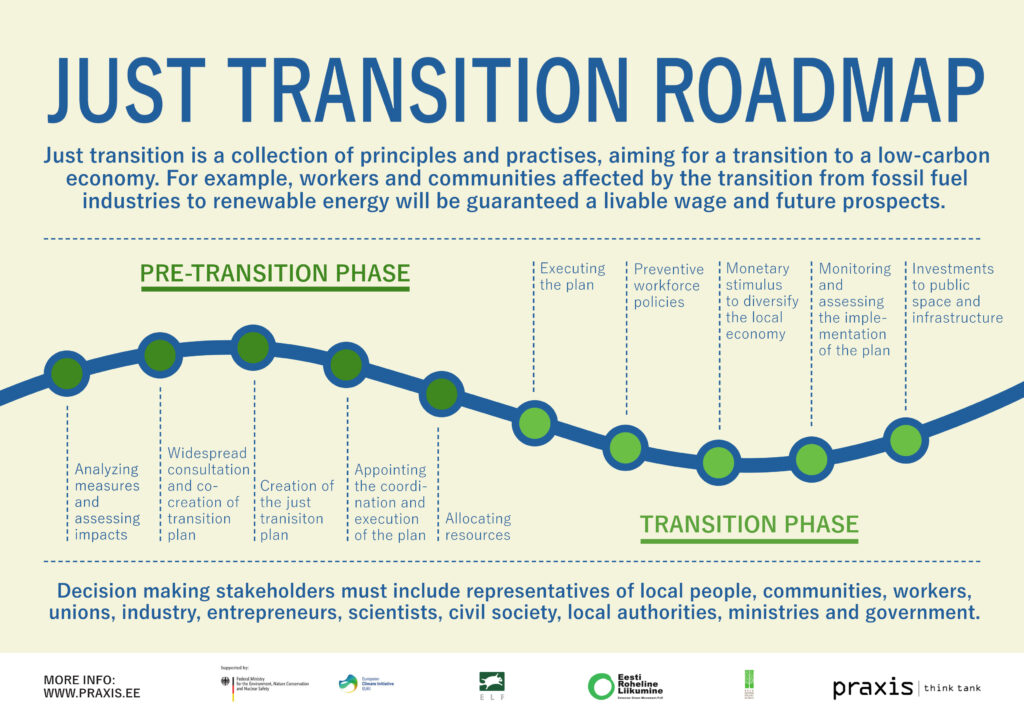
Despite the overall agreement on the targets of the NECP, negotiations on the Just Transition Fund will pose new challenges. Latvia does not have a CO2-intensive manufacturing industry and is almost free from coal. Yet peat is the source of conflict. It is produced for horticulture and exports and used for energy in very small amounts. 

But the GHG emissions from peat bogs have a high share in the land use, land-use change, and forestry (15%) and cannot continue without restoration.  According to the Peat Association, about 3000 people work in this sector seasonally. 

However, the association largely represents the interests of the owners and the social dimension of this problem is not clear without further study. The NECP’s section on just transition offers a broader picture of obstacles for transformation in all sectors due to lower income. But what is known about the territorial Just Transition plan for Latvia is that it will necessarily include Latvia’s peatlands.

What landscapes of renewable energy


In 2018, Latvia had the third highest share of renewable energy (40%) in the EU. Despite the fourth highest share of electricity from renewable sources (53%), Latvia is one of the least successful in energy transition for transport. Attaining sustainable transport systems is required for healthier modes of mobility and environments, but another driver of change in post-fossil energy landscapes will be distributed generation. 


Latvia has raised its 2030 renewable energy target to 50% in line with the recommendations of the European Commission. In the 67% renewable electricity target scenario, wind parks will ensure most of the increase in the next decade. 


Our recent study found that regulatory and planning barriers prevent Latvia’s wind industry from picking up the pace. To implement the NECP, finding suitable locations for placing the wind turbines and expanding the economic models of power generation to include renewable energy communities will be crucial.

Just can’t get enough judgements: Croatian export bank still firmly riding the waves of opacity

In only four years the Information Commissioner made 31 decisions in which it confirmed that HBOR should provide information about its projects, clients and other aspects of its operations to various groups and individuals in response to their freedom of information requests. Such information relates to the use of public funds and, should, therefore, be publicly available.

Since HBOR challenged the Commissioner’s decision before the High Administrative Court every single time, the Court has already confirmed the Commissioner’s decisions 31 times, as it took the stand that HBOR uses public funds for its operations and every person has the right to know how public funds are spent.

One of the judgements – which HBOR honoured – is related to Green Istria’s 2016 freedom of information request about HBOR’s export credit projects in the period 2011-2014. One would assume that HBOR would, after this and so many other lost cases, give up trying to prove that information about its projects and clients represents a banking secret.

But everything is possible with HBOR. Not even the Supreme Court’s 2018 reconfirmation of the High Administrative Court’s rulings – which states that one of the fundamental rights of citizens is “to exercise control over the holders of power and over the spending of public funds”, while this right “includes the transparency of the work of a state-owned bank” which carries out its activities and operations “in accordance with state aid regulations” and is “ultimately financed by citizens and legal entities” – could stop HBOR from going to the court again. HBOR just can’t get enough judgements.

In 2019-2020 this led to a distinct feeling of deja vu in Green Istria with regard to HBOR. Again Green Istria asked about export credit projects, and again the case reached the High Administrative Court. It’s easy to predict what the judgement will say.

If it wasn’t such a waste of time and money, it might even be funny. HBOR has once again decided to exhaust public institutional resources in extensive and lengthy legal procedures. Instead of tearing down the walls of secrecy around its projects, HBOR has become more strongly fortified, disregarding the Croatian Freedom of Information Act, as well as international legislation such as the Aarhus Convention and Directive 2003/4/EC on public access to environmental information.

But HBOR’s secrecy regarding public funds will have to come to an end. Green Istria has for years been fighting to make HBOR more transparent and responsible, and its excuses ran out long ago. The national institutions in charge of oversight over HBOR – the relevant Parliamentary Boards, Ministry of Finance, the Government and the Committee for Export Credit Insurance – must put the bank under much more scrutiny and ensure that it respects the national courts’ decisions. Green Istria will continue to put pressure on the institutions to make sure HBOR finally obeys the law and international conventions, and stops wasting public money.

Serbia finally moves to halt unfair advantage for small hydropower plants

This, for now, puts an end to small hydropower’s unfair subsidies advantage over wind and solar in the country and offers an opportunity for a longer term halt to incentives for environmentally destructive hydropower plants.

Serbia has limited the amount of solar that could receive feed-in tariffs to just 10 MW – six on the ground and four on installations. Its wind quota of 500 MW might seem more generous than the solar one, but in reality, it was still reserved by mid-April 2016. Prospective investors in wind since then have not had access to any support, and consequently the current rapid growth in wind farms coming online will probably soon suffer a hiatus. 

On the other hand, an unlimited amount of hydropower of less than 30 MW could enter the feed-in tariff scheme. The scheme was supposed to be open until the end of 2018, but it was extended for another year until the end of 2019. 

This meant that for more than three and a half years, new hydropower plants could qualify for feed-in tariffs, while no new wind plants could enter the system, and solar plants larger than 500 kilowatts were in any case not eligible for support. 

Unfortunately, hydropower plants are also the most controversial source of renewable energy in the Balkans, and Serbia has seen some of the fiercest opposition to their seemingly unchecked spread across the country’s rivers and streams.

The dried out riverbeds and blocked rivers have been made all the more bitter by the fact that hydropower plants below 10 megawatts generated only 0.8 percent of Serbia’s electricity in 2018.

Serbia has announced plans to move towards a more up-to-date incentives system based on auctions and premiums – a move which would help to keep the costs of renewables support down to a manageable level.

These plans have been supported by civil society as long as they incentivise only new forms of energy – solar and wind – not mature and environmentally-damaging technologies like hydropower. They also need to include criteria for making sure that project siting is environmentally and socially acceptable.

With elections coming up in Serbia and extensive legislative changes needed in order to introduce auctions, the new system will not be in place overnight, with all the uncertainties for future investments this entails. But the first step – putting all the technologies on a more equal footing, after a long period of privileging hydropower – has been made.

Energy Community Treaty violations dig Western Balkan countries deeper into coal hole

Just last week the Energy Community Secretariat announced it had pushed forward the second phase of a three-step process determining Bosnia and Herzegovina’s alleged breach of state aid rules in granting a guarantee for a loan to build the Tuzla 7* lignite plant. Given that the total sum of the guarantee is not even specified in the Federal Government’s documents, this guarantee could cost Bosnia and Herzegovina dearly.

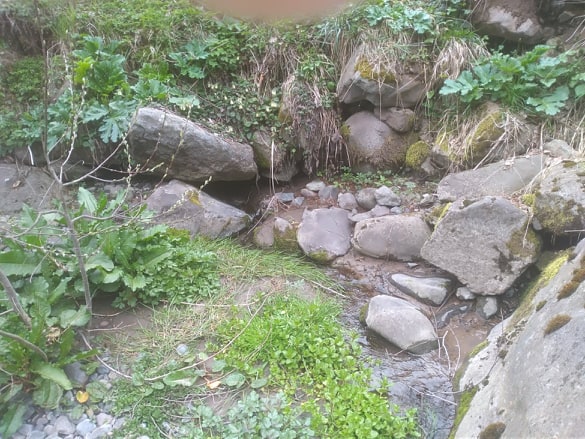
How did the Tuzla 7 hole get so deep? 

In September 2018, the Sarajevo-based NGO Aarhus Resource Centre and Bankwatch submitted a complaint to the Energy Community signalling that the Federation’s plan to guarantee the EUR 614 million loan from China ExIm Bank did not comply with EU rules and should be investigated. The guarantee covers 100 per cent of the loan plus interest and other associated costs. Usually, only up to 80 per cent may be covered by a guarantee, and while there are circumstances in which a higher guarantee is allowed, these are not fulfilled in this case. 

The Energy Community Secretariat commissioned an expert analysis to look into the complaint in early March 2019, confirmed our claims: the proposed loan guarantee has elements of State aid. The Secretariat called on the State aid Council of the Federation of Bosnia and Herzegovina to re-examine the case and the Federal Parliament not to adopt the guarantee. The Parliament however was blind and deaf to the warnings and went ahead with the vote in favour a few days later. In response to this defiance, the Energy Community Secretariat opened an infringement case three weeks later. 

For a while, it looked like the Bosnian authorities had finally accepted the seriousness of the situation and agreed to bring this matter to mediation. However, in a textbook example of nose-thumbing, the Federal Minister of Finance signed the guarantee agreement without prior clarification of compliance with Energy Community State aid rules on 19 November 2019, leaving the mediation process void.

The reasoned opinion sent by the Secretariat on 16 January 2020 to Bosnia and Herzegovina is a reminder that compliance with the Treaty is not optional and that there are consequences for those who think otherwise.

Kosovo also learning the hard way

In December 2019, the Energy Community Secretariat also opened an infringement case against the Government of Kosovo, citing concerns over the illegality and existence of State aid in relation to the Kosova e Re lignite power plant project**. 

Several Kosovar NGOs*** supported by Bankwatch submitted a complaint in May 2019, which alleges that the 20-year power purchase agreement, signed by the Kosovar government with ContourGlobal in December 2017 for the construction of the 500 MW unit of Kosova e Re fails to comply with the Energy Community Treaty rules on State aid because it provides ContourGlobal a range of benefits that give it an unfair advantage over other energy producers. If the Government fails to bring itself into compliance, the Secretariat will pursue the case further. 

These cases are important because they are not just about breaking the rules. They exemplify how the Bosnia-Herzegovina and Kosovo governments are blindly pursuing new coal projects without understanding that coal is no longer a cheap option, but will actually cost them dearly. Unfortunately, the same is happening in Serbia, where the government has even taken a loan on behalf of the energy company developing the Kostolac B3 project.

The Kosovo power purchase agreement, in particular, is a rip-off that Kosovo cannot afford. Even the World Bank, which for years backed the preparation of the project, in the end found that it was not the cheapest option. Tuzla 7 too, presents untold risks for Bosnia and Herzegovina due to the over-optimistic assumptions about coal and carbon prices in its feasibility study, which are likely to result in nasty surprises later. 

Both Bosnia and Herzegovina and Kosovo are struggling financially, and cannot afford to ignore warnings from projects like Sostanj 6 in Slovenia and Ptolemaida V in Greece. Both these projects went ahead in spite of warnings from civil society and economics experts, and both are now a liability. Sostanj 6 is loss-making, while the future of Ptolemaida V is uncertain, even while it is under construction. The Energy Community Secretariat’s infringement cases really should be the last 12th hour warning.

* The 450 MW Tuzla 7 project would result in additional coal capacity compared to the current situation. The project would be implemented by the China Gezhouba Group Co. and be financed by a loan from China Exim Bank

** Kosova e Re is planned to have a gross capacity of 500 MW and in December 2017, the Kosovo government signed a series of commercial contracts with UK-registered ContourGlobal for a 20-year concession to build and operate the plant. All electricity would be bought off by the State at a “target price” of EUR 80/MWh, much higher than current electricity prices, leaving ContourGlobal with almost no commercial risks.

*** Balkan Green Foundation, GAP Institute, Group for Legal and Political Studies, INDEP

« Previous Page
Next Page »

Footer

CEE Bankwatch Network gratefully acknowledges EU funding support.

The content of this website is the sole responsibility of CEE Bankwatch Network and can under no circumstances be regarded as reflecting the position of the European Union.

Unless otherwise noted, the content on this website is licensed under a Creative Commons BY-SA 4.0 License

Your personal data collected on the website is governed by the present Privacy Policy.

Get in touch with us

  • Bluesky
  • Email
  • Facebook
  • Instagram
  • LinkedIn
  • RSS
  • YouTube