• Skip to primary navigation
  • Skip to main content
  • Skip to footer

Bankwatch

  • About us
    • Our vision
    • Who we are
    • 30 years of Bankwatch
    • Donors & finances
    • Get involved
  • What we do
    • Campaign areas
      • Beyond fossil fuels
      • Rights, democracy and development
      • Finance and biodiversity
      • Funding the energy transformation
      • Cities for People
    • Institutions we monitor
      • European Bank for Reconstruction and Development
      • European Investment Bank
      • Asian Infrastructure Investment Bank
      • Asian Development Bank (ADB)
      • EU funds
    • Our projects
    • Success stories
  • Publications
  • News
    • Blog posts
    • Press releases
    • Stories
    • Podcast
    • Us in the media
    • Videos
  • Donate

Home > Archives for Blog entry

Blog entry

Revealed: EIB supporting major Israeli environmental offender

The European Investment Bank (EIB) doesn’t miss a chance to boast about its green credentials. The world’s largest lender does have some of the more stringent social and environmental standards among international financial institutions, but sometimes it seems there are light years between the bank’s policies and the situation on the ground.

Such is the case with Israel Chemicals (ICL), a multinational corporation that is widely known in Israel for its dubious environmental track record.

Israeli environmental groups have long warned about the toll ICL’s subsidiaries in Israel have taken on the local environment – be it the contribution of Dead Sea Works to the rapid and continued decline of the Dead Sea, or the years-long pollution of the popular Bokek stream from Rotem Amfert’s factories in the Negev desert.

Dead sea mining (Photo by Ranbar CC-BY-SA-3.0)
Ashalim stream (Nahal Ashalim), Judean Desert, in 2017 was contaminated with toxic water (Photo by Yuvalr CC-BY-SA-3.0)

Nurtured on EU public money

Rather than becoming a green and clean business, last year ICL seems to have managed to break its own record of disregard to the environment.

Over the past decade the EIB has awarded ICL two generous loans aimed at supporting research, development and innovation related to fertilisers and speciality chemicals in the company’s different facilities in Israel and abroad. Among their stated objectives, these investments – totalling more than EUR 230 million – were supposed to help improve the so-called environmental performance of ICL’s existing products and processes.

But rather than becoming a green and clean business, last year ICL seems to have managed to break its own record of disregard to the environment. In June 2017, one of the wastewater pools in Rotem Amfert’s Mishor Rotem plant collapsed and a wave of highly toxic wastewater spilled into the Ashalim dry stream that’s located within a desert nature reserve, decimating the local wildlife, including a third of the local Nubian ibex population.

https://www.youtube.com/watch?time_continue=12&v=88Q3CHbGhec

EIB turns a blind eye

Bankwatch has obtained documents related to the two loans ICL had received from the EIB, and their analysis, summarised in a briefing released today, reveals that the bank has failed to assess and acknowledge the company’s environmental performance.

In fact, the EIB’s supposedly rigorous due diligence checks appear to have missed even the most obvious red flags. Since January 2013 the Israeli Environmental Protection Ministry has recorded dozens of environmental infringements in ICL operations across the country, and both ICL and Rotem Amfert have even been ranked by the ministry’s Environmental Impact Index among Israel’s top environmental offenders for several years.

The EIB’s supposedly rigorous due diligence checks appear to have missed even the most obvious red flags.

Yet, the EIB’s environmental assessment for the loan approved in November 2016 stated that “ICL has a sound environmental policy, including commitments to comply with legal requirements, prevent pollution, continual improvement, regular audits and annual report of its environmental performance.”

In response to Bankwatch’s queries, the EIB indicated that this assessment was based “on the situation that could be observed during the Bank’s appraisal visit in Israel, and on publicly available documents, such as for example the [Corporate Social Responsibility] report that is annually published by the promoter and was also discussed during the Bank’s appraisal visit.”

This response raises concerns that, despite the EIB’s policies, its evaluation of ICL relied almost only on information it had received from the company itself.

Similarly, the document that the board members received from the bank’s management before deciding on the loan, mentioned nothing about the two companies’ poor environmental record. In fact, it even concludes that ICL’s operational risk, assessed as “medium,” is “mitigated by the promoter’s compliance with stringent environmental procedures and stringent policies it has put in place.”

The EIB, as the EU’s financial arm, is obliged to monitor the companies it supports. Yet, the Environmental and Social Completion Sheet for ICL’s earlier project, which indicates that “the project has been implemented in line with EIB Environmental and Social Standards, applicable at the time of appraisal” also states that this assessment is based on ICL reports.

So it is also unclear whether ICL has notified the EIB of the Ashalim disaster – or the multiple initiatives for class action that followed, most recently by the ministry itself – even though the loan contract requires it to do. If it did, the bank has never indicated to Bankwatch that it had taken any measures in response.

A bigger problem

This case casts a serious shadow over the EIB’s appraisal mechanisms, and possibly also its oversight of the projects it finances. And it is of particular concern given that the same failures appear to characterise two successive and similar projects, or as the saying goes, “fool me once, shame on you; fool me twice, shame on me.”

… the same failures appear to characterise two successive and similar projects

The EIB’s loans to ICL were guaranteed by the EU’s funds under the so called External Lending Mandate, created to help the bank support sustainable projects outside Europe. Bankwatch has documented at least several projects covered by this instrument with questionable quality and performance in terms of transparency, human rights and environmental due-diligence.

In a recent communication on a new Neighbourhood, Development and International Cooperation Instrument, the European Commission presented a plan for a better alignment of the EU’s external action with environmental principles and sustainable development goals. Should this be enough to prevent similar operations as ICL loans it is yet to be seen.

With EU funds in Romania, where there is a will, there is a way

Originally published on People’s Budget


Since the accession of Romania to the European Union in 2007, the country had access to various funds made available to support the process of eliminating the discrepancies between Europe’s developed and least-developed regions. For Romania, European funds, mainly the Structural and Investment Funds, were and still are a fundamental instrument to strengthen the economic, social and territorial cohesion. Through eight national and regional programmes, Romania has been allocated EUR 30.94 billion from ESI Funds over the period 2014-2020. With a national contribution of EUR 5.63 billion, Romania has at its disposal a total budget of EUR 36.47 billion to invest in various areas.

Poor absorption of EU funds

For the 2007-2013 financial framework, Romania received EUR 19.7 billion from the European Union to be spent through seven sectorial operational programmes. But it was easier said, than done. By the middle of the financial period the absorption rate was 0.8% of the total amount allocated, meaning EUR 170 million and at the end of 2013 the rate of absorption reached 26.5%. Things seem to go at the same pace also in the current financial period and the data available confirms this situation – in February 2018 the absorption rate was at a level of 10.07% having spent almost EUR 4 billion from the total budget.

The explanation for this poor absorption relies in the excessive bureaucracy, low productivity, lack of personnel, the quality of the projects and, of course, the ongoing changes in regulations made by the management authorities. The lack of vision for development is another explanation for the failure of absorption of the funds available. Thus, for the 2014-2020 financial period, Romanian authorities are experiencing methods for improving the absorption and the use of EU funds will be based on a partnership agreement between European Commission and the Government of Romania.

Too good to be true? The story of Ciugud

Among the issues of poor absorption of European Funds, the example of Ciugud, in Alba County stands out but in a more positive way. Located in the western part of Romania, in the Transylvanian Plateau and a few kilometres from the city of Alba Iulia, Ciugud can be compared to many communities from developed countries across Europe. The evolution of the Ciugud commune started almost 20 years ago when the budget of the whole town barely covered the salaries of the few employees the local administration had or the gas bills for the local clinic and schools. Then, almost 2 600 people lived with the hope that their living conditions will turn out for the best.

In an interview for the national press, the mayor, Gheorghe Damian, remembered the initial situation of the village ‘In 2000, when I became mayor, our own revenues amounted to 70.000 RON (approx. 15,000 EUR) and we inherited a debt of about 300,000 RON (approx. 65,000 EUR). We could not pay our salaries to the City Hall, the public lighting was always cut from the lack of payment and we did not have money for the schools’ gas bills. We couldn’t even talk about an investment budget as any administration should have: meaning an operating budget and a development budget through which you could envision activities in the short, medium and long term in that community’.

Having this situation as a starting point, the mayor looked for alternatives anywhere. That’s when, in 2004, he decided to turn one of the pastures into an industrial area for investment. He explained that before taking this decision, the administration spent almost 50,000 RON (approx. 11,000 EUR) every year on cleaning works, because the pasture wasn’t used for intensive grazing anymore. Now, the industrial area of Ciugud houses various businesses in different fields with more than 700 employees, bringing to the commune’s budget an annual total amount of 2.5 million RON (approx. 540,000 EUR).

A small initiative was all it took for the Ciugud commune to start an intensive process of development for which European money was used and it came as a breath of fresh air for the community. So, in 2005, with the emergence of first pre-accession funds in Romania, the authorities from Ciugud put together some small projects, which were easily accepted and paid. They consisted in providing the City Hall with computers and software to improve their capacity and ease the future planning.

The transformation begins

After that moment, they realised the usefulness of European money and they began an ongoing process of writing projects and finding the proper financial instrument for them. Thanks to their continuous efforts, in 2007, Ciugud was approved the largest infrastructure project in the history of the county – EUR 7.5 million through which all the commune’s roads have been paved and 47 Km of sewage network and water network have been done.

But none of this would be possible without an ambitious and productive personnel. The public administrator of Ciugud City Hall, Doru Dan Pop confesses that ‘People are behind everything. It is important to have a human resource capable of implementing this kind of projects’. Having discovered the recipe of success, they kept on writing projects and finding new ways to attract European money and currently they represent the top tier of communities spending European Funds having over 70 approved projects and approximately EUR 27 million collected.

Anything is possible in Ciugud because not only they have paved 30 Km of agricultural roads which connect three communes, seven villages serving 2 500 hectares of land and 15 farms, but they went to the next level and installed solar panels and a micro-wind farm and the energy produced serves for the street illumination. This was possible through ‘a partnership between Ciugud commune and Polytechnic University of Timișoara, a project of 1 million EUR funded by the Norwegian Government’, the mayor explained and added that another group of solar panels and micro-wind farms will be installed to produce the electricity needed to cover the consumption of public institutions and public lighting throughout the commune. And the investments don’t stop here – the community has a several kilometres long bicycle track that crosses a part of the commune, free wi-fi is available in all public spaces and the parks have also been modernised through European money.

This story represents one of the few successful examples in Romania but should serve as an inspiration for all the mayors and representatives of the Romanian authorities. Nobody says it’s going to be a smooth sailing when dealing with accessing European funds, but it is important to have well-prepared personnel, a vision for sustainable development and last, but not least, a desire to make positive changes in your community.

Bulgarian authorities, forced to think about Just Transition

Originally published on Just Transition


Bobov Dol Mining, owned by controversial entrepreneur Hristo Kovachki, announced last week it would close down the Bobov Dol underground mine employing 400 people. The closure procedure is scheduled to start July 16 and finish by the end of the year, by when all employees would be let go.

The closure is happening because production costs far exceed purchase prices and there is a shortage of qualified specialists in the region. Local authorities were nevertheless surprised by the news: it is common practice in Bulgaria to keep unprofitable mines going, in part to silence the unions, in part to benefit further from state subsidies.

The closure of Bobov Dol is happening without any planning as to what might happen to the workers and region at large once the mine is gone. The area where Bobov Dol is located is not rich, neither does it have a diversified economy – it’s been dependent on coal for decades. This spells trouble if there is no planning. The case of another Kovachki-owned mine in the same region, Babino, which closed last year similarly without any contingency plans gives further reasons to worry.

When nearby Babino shut down, 650 miners lost their jobs. All the workers heard when they were made redundant was that they should go to the unemployment office – needless to say the assistance they got there is not enough to cover for the costs of a normal family, nor does it last forever.

The Bobov Dol municipality is so worried the same thing will happen to another 400 miners that they called a press conference to express their concern.

https://bankwatch.org/wp-content/uploads/2018/06/FFM-CZ-short-version.mp4

“We live in a country where politicians have no vision for the development of areas like ours”,  said the mayor of Bobov Dol municipality, Elsa Velichkova.

Interviewed by us, the mayor wondered why there was no dialogue between the various institutions that should deal with the aftermath of mine closures and come up with plans for the economic diversification of coal regions.

At the end of May, mayor Elsa Velichkova joined a study trip organised by CEE Bankwatch Network and Czech NGO CDE to the coal mining region Usti in Czechia.

Mrs. Velichkova, together with other decision-makers from CEE, discussing Just Transition in Usti region.


There, Mrs. Velichkova had the chance to see how some Czech towns are preparing mitigation plans for employees of the coal sector and their families even before the mines are closing; instead of trying to slow down artificially the closure of coal mines, some Czech authorities are working on preparing the people for the inevitability of mine closures and working together with them to create a post-coal future. At the end of the study trip, Mrs. Velichkova said she would stay in touch with her Czech colleagues and insist on similar transition plans to be prepared for coal-dependent regions in Bulgaria.

First opened in 1891, Bobov Dol used to be one of the main sources of coal in southwestern Bulgaria, but its prime has passed long ago.

About 45% of electricity in Bulgaria comes from coal, mainly locally-produced lignite with high sulphur content. More mine closures will come and it’s high time for Bulgarian authorities to start taking Just Transition seriously. That Mrs. Velichkova does so is very encouraging.

China, the Western Balkans and the EU: Can three tango?

Originally published on Euractiv


While the EU has kept busy with its economic and political crises, China has become a main financier in the eastern part of the continent.

China’s far-reaching Belt and Road initiative to create mega connectivity corridors on land and by sea, including from China to Europe, is made viable with Chinese financing and development of big ticket infrastructure projects in wider Europe’s key strategic transport and energy sectors.

But there’s more going on. China is financing at least five new coal plants in the Western Balkans that would not qualify for financing from multilateral development banks and export credit agencies, which have stepped away from coal in the last years.

China is increasing its ties not only with the Western Balkans but also with investment-hungry eastern EU member states, mainly through a China-led platform, the so-called Central and Eastern Europe-China “16+1” framework, that comprises annual signing of trade agreements.

In the rush for Chinese cash, the Western Balkans are agreeing to business deals that could prove problematic for the countries’ path towards EU accession.

The trouble is, there are insufficient mechanisms to ensure that Chinese investments in the Western Balkans adhere to EU standards. In the Western Balkans, not yet members of the union, the EU has fewer tools at its disposal, and those which it does have, it does not use sufficiently.

Take for example the nine or so new coal-fired power plants planned by Western Balkan countries at the moment. Of these, at least five – Kostolac B3 in Serbia, and Tuzla 7, Banovići, Gacko II and Kamengrad in Bosnia-Herzegovina – are expected to involve Chinese companies and receive financing from the China Exim Bank, the Industrial Commercial Bank of China and potentially other Chinese banks.

Not one of them is guaranteed to be in line with the EU’s current pollution control standards, the so-called LCP BREF. The environmental impact assessments are generally of low quality and all the ones done so far are being challenged in court.

Only one of the projects has been subject to a tender procedure which appeared to be regular. For Kostolac B3 in Serbia there was none at all – with Serbia and China instead signing an intergovernmental agreement to waive this requirement.

The Chinese loans discussed so far would be backed by state guarantees with unknown conditions, thus potentially clashing with the countries’ state aid commitments under the Energy Community Treaty. In the case of Kostolac B3 the Serbian state actually took the loan instead of the state-owned company Elektroprivreda Srbije (EPS), thus shielding EPS from any real risk. Other forms of state aid eg. subsidies for coal mining also plague the sector in these countries.

Even with the state aid, most of the projects are unlikely to be profitable. Their proponents are too optimistic about likely electricity sales prices and coal production prices, and hardly any of them have taken future CO2 costs into account. Adding even low CO2 prices for plants like Kostolac B3 and Gacko II results in the plants being unprofitable.

One Chinese-financed coal plant, Stanari, in Bosnia-Herzegovina, has already been built in the region and started operating in 2016. EU pollution control legislation for new plants has been updated twice since the Large Combustion Plants Directive which Stanari was designed to comply with, rendering it out of date before it even started to operate. In May 2017 media reported that project promoter EFT may sell the Stanari plant or a share in it to Croatia’s state-owned Hrvatska Elektroprivreda, raising questions about its profitability.

Current Chinese financing in the Western Balkans’ energy sector is enabling non-compliant coal projects to thrive, thus putting European regulatory harmonisation at risk.

At the same time, the EU and the Western Balkans are caught in a chicken-and-egg situation: The EU has not been able to offer a quick enough accession perspective to motivate the Western Balkans countries to comply with EU law, while the countries have not made enough progress for the EU to promise rapid accession.

The only way to solve this conundrum is for the EU to step in and ensure its legislation is adhered to when Chinese investors offer deals to the Western Balkans.

At this week’s EU-Western Balkans summit in Sofia, Bulgaria, the EU is expected to reaffirm its commitment towards its Western Balkans partners and strengthen connectivity with and within the region. This follows its Western Balkans Strategy issued on 6 February this year, which constituted the EU’s clearest statement in years on the prospects for accession.

This summit constitutes a clear opportunity for the EU to assert its position and clearly let China and the Western Balkans countries know what it expects.

To ensure the Chinese-financed projects in the Western Balkans are in line with EU standards, the EU has several tools at its disposal. For one, it has funding, which can be redirected, increased or withdrawn. It also has the Energy Community Treaty (a mechanism to integrate energy markets of pre-accession countries), which needs to be strengthened to make enforcement more credible. And it could also develop mechanisms to assist countries – for example in case of energy shortages – or to dis-incentivise them from certain policy routes – for example limitations on imports of energy from sources that don’t comply with EU law.

The Western Balkans’ governments will only become interested in EU standards when they see there are serious consequences to not following them and when they see what they can gain by doing so.

It is very much in China’s interest too to be more interested in adherence to EU standards, however, as failure to do so will eventually result in more and more doors being closed to its involvement in projects in the EU. Declaratively, China is committed to doing so, but in reality we have found its regulators and banks too ready to believe the assurances of Western Balkans’ governments without carrying out sufficient independent due diligence.

The loan that made sense until it didn’t

For a country with unstable finances, Serbia seemingly burns cash on its ambitious coal plans, even if it means throwing the country further into debt. The Serbian government is pursuing the expansion of a lignite mine and a new 350 MW plant at Kostolac, as loans pour in from both the east and west. China ExIm Bank is supporting coal infrastructure, namely the construction of the new Kostolac B3 plant by the China Machinery and Engineering Corporation (USD 608 million in 2015) and desulphurisation at the existing blocks of Kostolac B (USD 293 million in 2011).

In addition, the World Bank and the European Bank for Reconstruction and Development (EBRD) have lent to the Serbian coal giant, Elektroprivreda Srbije (EPS) – although these investments tend to be obscured as policy or restructuring loans.

Most recently in April 2018, the World Bank approved a USD 200 million policy loan with one of its aims being the improvement of the financial sustainability and efficiency of public sector energy enterprises. While these loans promise ambitious reforms of the energy sector and of EPS’s corporate management, there is little sign that these factor in the costs of coal as a stranded asset or put Serbia on a low-carbon transition track.

Because of doubts about the EBRD’s 2015 restructuring loan to EPS , Bankwatch and its Serbian member group CEKOR submitted a complaint to the bank’s grievance body, alleging that the bank violated its environmental and social policy. The Project Complaints Mechanism (PCM) registered the complaint on May 10. EPS has a long history of receiving EBRD loans and then being hit with subsequent PCM complaints – in fact no other EBRD client has been the subject of so many PCM investigations.

While the EPS restructuring loan should have prepared a coal-heavy company for the realities of adhering to stricter EU legislation, it appears to have freed up resources so that the company can extract and burn even more coal, by adding the 350MW Kostolac B3 power plant to its portfolio and expanding the Drmno lignite mine capacity from 9 to 12 million tonnes per year production. The latter is even being performed without an environmental and social impact assessment, which is a breach of EBRD policy.

The history

In May 2014 EPS woke up to a nightmare. The biggest open cast lignite field, Tamnava West, had turned into a lake overnight, after severe rainfall caused the Kolubara river to spill into the massive hole. Excavators and other mining machinery worth tens of millions of euros were deep underwater.

Two-thirds of Serbia’s coal production was lost when open-pit mines were flooded and Serbia was forced to import energy to avoid power outages. Overall damages in the power sector were estimated at nearly EUR 500 million. Serbia’s energy utility, Elektroprivreda Srbjie (EPS), was on its knees.

To anyone aware of the correlation between coal burning and climate change – manifesting itself as severe floods, among other natural disasters – this was an eye-opening cause-effect reaction.

The World Bank approved a USD 300 million loan to the utility for dewatering the mine, and coal production was partially resumed in December 2014.

Meanwhile, the European Bank for Reconstruction and Development (EBRD) also approved the  restructuring loan to EPS with the stated purpose “to alleviate the deteriorating cash situation created by the unprecedented and catastrophic floods in Serbia in 2014”. The board document, however, was more candid: freeing up resources to allow the Company to focus on and boost the implementation of its long term capital expenditure program.

To an untrained eye, this statement would probably not ring many alarm bells, but considering EBRD’s long history with EPS, consisting of no less than five loans since 2001, amounting to EUR 315 million [1], the Bank should have known what the utility’s “long term capital expenditure program” really means.

According to the 2016 Energy Strategy of Serbia, in addition to prolonging the life of existing coal plants, EPS is planning several new lignite power plants: Kostolac B3, Nikola Tesla B3, Kolubara B, and Stavalj. While it is unlikely that all of these will go, EPS clearly prioritises Kostolac B3 in the implementation programme for the energy strategy and has not publicly announced any cancellations.

In fact, construction of new coal generation capacities is proposed as a GHG emission reduction measure in Serbia’s Second Report to the UNFCCC. 

Coal stains on EBRD’s Green Economy Transition


For a bank that should be limiting its lending for coal power, a requirement of its 2013 Energy Sector Strategy which also commits it to a “green economy transition”, the EBRD should think twice before freeing up EPS resources to carry out its well-known ‘long-term plans’. But not the EBRD – the bank has systematically downplayed the information submitted by NGOs regarding EPS’s lack of a long-term vision for the development of the sector, its overreliance on lignite, and no plans to decarbonise. It also does not seem to take the six complaints submitted to the bank’s compliance mechanism (PCM) as a serious indicator of EPS’s failure to follow EBRD environmental and social policy.

That Serbia and EPS depend so heavily on coal should signal significant risks for the economy and society, and the EBRD had a great opportunity to deliver on its commitment to the low-carbon transition for its countries of operation by for example agreeing with its client on a climate audit or a decarbonisation plan upon approval of the corporate restructuring loan.

Is this opportunity missed altogether? The ball is in the bank’s court and even if it has lost its leverage to influence EPS’s lignite expansion plans, the EBRD better not miss the opportunity to analyse thoroughly how its policy applies to corporate level loans in the future.


Notes:

[1] Project Summary Documents (PSDs)

  1. EPS: Emergency Power Sector Reconstruction Loan
  2. EPS POWER II
  3. EPS Metering
  4. EPS Kolubara Environmental Improvement
  5. EPS Hydropower Plants

New wave of protests against the Nenskra dam

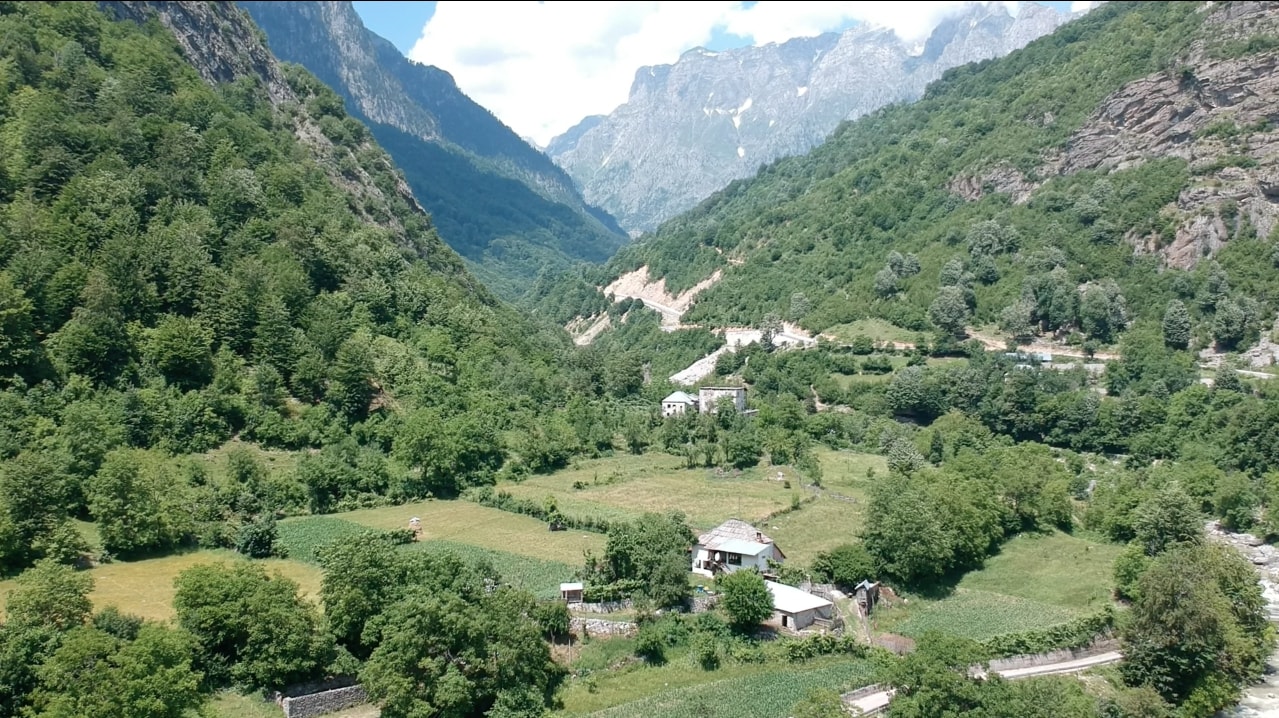
Since the Nenskra project’s launch in 2015, local Svans have been continuously raising their concerns over the 280-megawatt hydropower plant (HPP) at their doorstep. The demonstration in Chuberi comes after a series of preceding events in Tbilisi, Oni, and Mestia in the past two months.

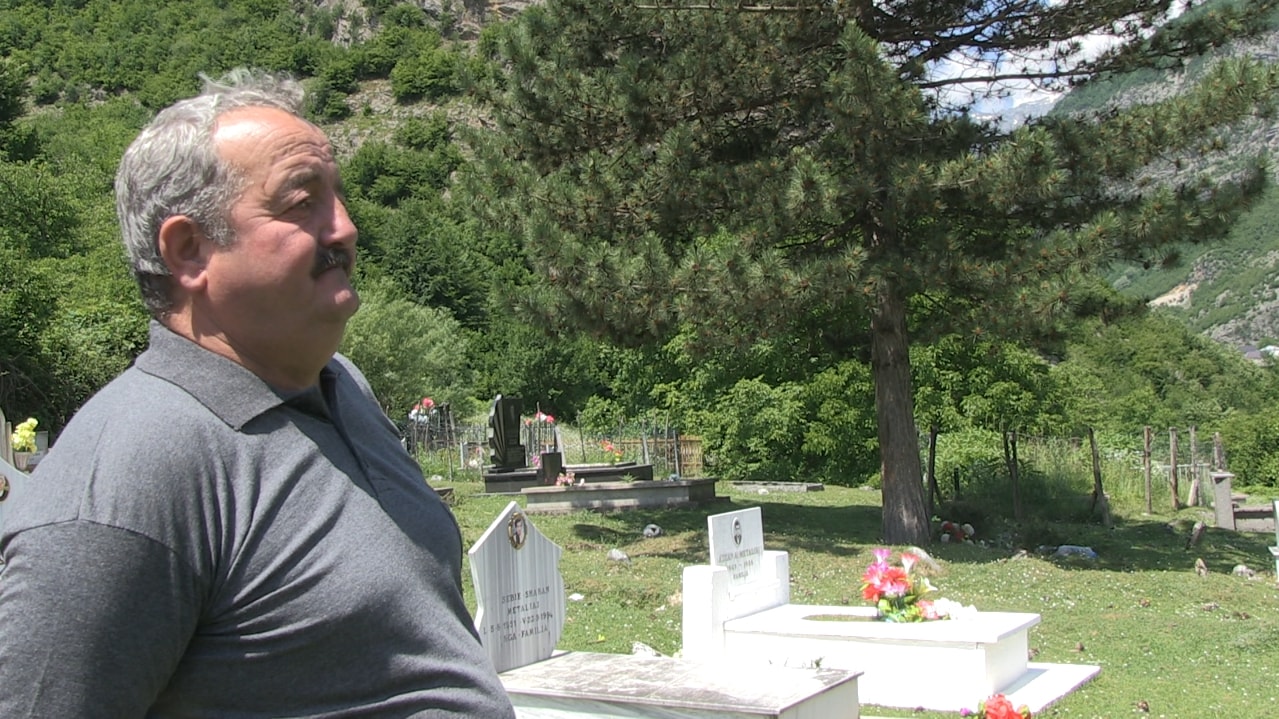
Today, we gathered in Chuberi to support and show solidarity to locals who are protesting against the Nenskra HPP. Unfortunately, we are stuck in the past and, instead of shifting to modern technologies, the country pushes for what the modern world has rejected long ago. We say ‘No’ to big dams, as in the long run it is much more profitable for locals to keep the nature than destruct 400 hectares of forest for one single project. That is why we are saying ‘No’ to HPPs in Svaneti and in Georgia – they destruct our cultural heritage and nature.

Dato Gulbani, a protester in Chuberi.

The stakes are high. A billion-worth Nenskra project, backed by public institutions, such as the EBRD and ADB, will flood communal lands and vast territories in Svaneti. Despite the magnitude of such pervasive construction, potential economic and environmental impacts have not been properly assessed.


https://www.facebook.com/liberalimagazine/videos/1794612247268947/?t=0


Previous attempts by the Deputy Minister of Internal Affairs and the Deputy Minister of Economy to address public disapproval of the hydropower developments in the region did little to bring about a needed change and propose any workable solution.

Unable to influence local decision-makers, Svan representatives appeal to public financiers that account for 75 % of all Nenskra funding. They will address the EBRD during the annual meeting in Jordan to challenge the bank’s involvement in the Georgian hydropower sector.

I will tell the banks to stay away from such proposal as they threaten to destruct Svaneti. Wrecking nature in Svaneti means intervention in people’s lives and losing strategic zone for Georgia along the conflict zone with Abkhazia.

Manana Saghliani, the leader of Svan Lalkhor.

« Previous Page
Next Page »

Footer

CEE Bankwatch Network gratefully acknowledges EU funding support.

The content of this website is the sole responsibility of CEE Bankwatch Network and can under no circumstances be regarded as reflecting the position of the European Union.

Unless otherwise noted, the content on this website is licensed under a Creative Commons BY-SA 4.0 License

Your personal data collected on the website is governed by the present Privacy Policy.

Get in touch with us

  • Bluesky
  • Email
  • Facebook
  • Instagram
  • LinkedIn
  • RSS
  • YouTube