• Skip to primary navigation
  • Skip to main content
  • Skip to footer

Bankwatch

  • About us
    • Our vision
    • Who we are
    • 30 years of Bankwatch
    • Donors & finances
    • Get involved
  • What we do
    • Campaign areas
      • Beyond fossil fuels
      • Rights, democracy and development
      • Finance and biodiversity
      • Funding the energy transformation
      • Cities for People
    • Institutions we monitor
      • European Bank for Reconstruction and Development
      • European Investment Bank
      • Asian Infrastructure Investment Bank
      • Asian Development Bank (ADB)
      • EU funds
    • Our projects
    • Success stories
  • Publications
  • News
    • Blog posts
    • Press releases
    • Stories
    • Podcast
    • Us in the media
    • Videos
  • Donate

Home > Archives for Blog entry

Blog entry

Poland’s recovery planning lacks public consultation and transparency

Poland will be the fourth largest beneficiary of the Recovery and Resilience Facility, as it is set to receive EUR 57 billion – an unprecedented amount of EU funds to be invested in such a short period of time, drawing comparisons to the Marshall Plan that helped lift Western Europe up from the postwar crisis. In a letter delivered yesterday to the Chancellery of the Prime Minister of Poland, campaigners urged the Polish government not to waste such an opportunity by leaving citizens out of the planning process and using the funds to support low-quality projects. Signatories of the letter include environmental CSOs, such as Polish Green Network, WWF, ClientEarth, and Climate Strategies, as well as business organisations.

All photos courtesy of WWF Poland. The letter contains proposals on how to ensure the plan complies with the “do no significant harm” principle. Campaigners also point toward important milestones the plan should address. To truly work for the people, Poland’s NRRP should include the following projects:

  • clean air and energy;
  • mobility and inclusive transport;
  • broadband internet;
  • ways to deal with drought and water pollution; and
  • healthy and safe food.

With the April 30 deadline for national plans’ submission to the Commission soon approaching, the Polish government has kept the content of the plan a mystery, with no dialogue with members of the public whatsoever.  A survey prepared by Bankwatch and CAN Europe shows whether Member States are complying with EU rules on public participation and in Poland’s case, the answers form a resounding “no”. Poland’s NRRP draft is not available and the government is not sharing any information about its content. Works are carried out in closed working groups that do not include environmental CSOs. There is also no word on whether a strategic environmental assessment, required by the EU, will be carried out.

Read more about the survey here.

The public is still paying, hydropower operators are still profiting

In September 2019, Bankwatch and partners published the Who Pays, Who Profits? report. It showed how renewable energy incentives have driven the rampant development of hydropower plants smaller than 10 megawatts (MW), drying up rivers and streams, often leaving local people without water for their crops and livestock.  

Hydropower, the report also showed, has been systematically privileged over other energy sources. In 2018, small hydropower received 70 per cent of renewable energy incentives in the Western Balkans, yet generated only 3.6 per cent of electricity overall.

Civil society organisations have therefore been calling for an end to subsidies for this disproportionately destructive form of power generation, and for an overall change in the countries’ incentives schemes, in line with EU rules. 

Under the Energy Community Treaty, the Western Balkan countries must apply EU state aid rules in the energy sector, including the Guidelines on State Aid for Environmental Protection and Energy (EEAG). The EEAG is already undergoing revision in the EU, but most Western Balkan countries still do not comply with it, particularly in the hydropower sector. 

Among other things, the EEAG stipulates that – with the exception of the smallest renewable energy plants – support can only be granted through premiums paid on top of the market price, not through feed-in tariffs as in the past. In addition, a competitive auction procedure is required in order to set the level of the premiums. This model tries to ensure more affordable and proportionate incentives, after the previous system became too expensive.

The EEAG also allows state aid only for projects developed in line with EU environmental legislation, and specifically requires that any hydropower receiving incentives must be in line with the Water Framework Directive. 

But a new Bankwatch briefing published today shows that the countries have moved at very different speeds to change their legislation in line with the EEAG, and that hydropower subsidies remain an issue.

New renewables law planned in Serbia

At the end of 2020, the Serbian government announced the development of a Renewable Energy Law. The draft Law foresees feed-in tariffs for hydropower up to 500 kW, and eligibility for hydropower up to 30 MW to take part in auctions.

In theory, this is in line with the EEAG, provided that the hydropower plants are in line with EU environmental legislation. But, given the damage wrought so far by small hydropower plants and their negligible contribution to Serbia’s electricity generation – 0.7 per cent in 2019 – halting feed-in tariffs for hydropower altogether seems wiser.

Likewise, premiums for hydropower plants up to 30 MW would not be useful. Hydropower is a mature technology, and there is limited potential for such plants in Serbia, so incentivising will not bring the price of the technology down for future investments.

Little progress in Bosnia and Herzegovina and Kosovo, despite pledges

In 2019, hydropower received almost 90 per cent of renewables support in Republika Srpska, and other renewable energy sources were effectively excluded from the system. 

In the Federation of BIH (FBIH), no report was published on incentive payments for the year, and figures obtained on request by the Center for Environment were unclear and much lower than would have been expected. This may have been partly due to upheaval in the Federation of BIH’s Operator za OIEiEK agency, which distributes incentive payments. In 2019 the FBIH government forced the agency to suspend payments to producers, and in December 2020 the Director was dismissed.

In November, the Minister for Energy pledged to stop incentives for small hydropower from the beginning of 2021, but no legislative changes have taken place yet.

A proposal for reforming the renewables support schemes in Bosnia and Herzegovina, of which an overview was published in August 2019, would abolish feed-in tariffs for all but the smallest hydropower plants – though the exact threshold remains to be decided. Worryingly, however, the published information indicated plans to award premiums for hydropower plants larger than 10 MW, despite the current low level of environmental enforcement. Since 2019 there has been little visible progress with the proposals.

Kosovo is in a similar situation, having recognised for several years already that it needs to change its feed-in tariff system. The European Bank for Reconstruction and Development has been providing assistance to develop an auctions scheme, and in late 2020 it was announced that the first auctions would be launched in 2021. However, this seems ambitious considering that legislative changes are needed and that there will be elections in February.

Hydropower still privileged despite new laws in North Macedonia and Albania

Even in the countries which moved earlier to introduce auctions and premiums – Albania and North Macedonia – hydropower has continued to receive special treatment. 

In North Macedonia, solar and wind plants need to participate in auctions and are eligible for premiums, while an unlimited number of hydropower plants up to 10 MW can receive feed-in tariffs. This imbalance between the conditions for different energy sources is currently being reviewed by the Energy Community Secretariat. 

In Albania, hydropower plants up to 2 MW are still eligible for feed-in tariffs – exceeding the 500 kW threshold from the EEAG – and plants up to 15 MW can participate in auctions.

Continued subsidies for hydropower are particularly incomprehensible in Albania, which is almost totally hydropower-dependent. In 2018, its incentives for hydropower under 15 MW cost EUR 93.5 million and in 2019 around EUR 87 million, due to lower generation – by far the highest costs in the region. Yet this has failed to address its need for electricity imports in most years due to its greatly fluctuating electricity generation, which heavily depends on rainfall.

Montenegro at a crossroads

Montenegrin legislation stipulates that no renewables incentives will be granted if the country meets its renewable energy target. Montenegro met its 2020 target several years ago, but numerous previously licenced plants are still in the process of being built. 

In 2020 the Law on Energy was adjusted to allow for auction-based incentives even if renewable targets are met. The provisions now appear to be roughly in line with the EEAG’s requirements on renewable energy, but are not clear enough to prevent environmentally harmful subsidies from being granted. The Law also contains a worrying clause declaring renewable energy projects to be of ‘public interest’, which may be used to cut corners in permitting.

In December, Montenegro’s new government initiated a commission to review all the hydropower concession contracts signed so far and approved the termination of concession agreements for seven plants. On 14 January it also agreed to refuse a construction permit for the Slatina plant, built by a company part-owned by President Milo Đukanović’s son, and to refrain from permitting any more plants until all the current concessions have been reviewed.

What still needs to be done

Our briefing provides country-specific recommendations, depending on their state of play, but what all the countries have in common is that they need to review the ongoing hydropower projects and take action against any which were not developed in line with environmental or other legislation.

Those countries which have not moved away from feed-in tariffs for new plants clearly need to change their legislation, so that it is at least in line with the EEAG, and preferably so that it abolishes incentives for hydropower altogether.

In doing so, they need to pay attention not only to technical issues like auction thresholds, but also to the environmental aspects of the EEAG. This also applies to the countries which have already made some changes towards EEAG compliance – Albania, Montenegro and North Macedonia – which still need to provide clearer instructions on how the environmental compliance of projects will be checked before awarding incentives and stipulate that any plant later found to be violating environmental legislation will have its incentives cut. Even if hydropower incentives are cut, this is still a necessary requirement for other technologies.

Looking at the wider picture, all the countries are currently developing National Energy and Climate Plan processes. These need to be used to clarify their future renewable energy plans. In particular, projects which have been around for decades need to be critically reassessed for their relevance and feasibility in today’s conditions, in which hydropower is becoming less and less competitive and less reliable due to fluctuating rainfall.

Pulling the ‘cotton’ over Uzbek eyes at latest EBRD investment

According to the bank, the project is expected to strengthen competitiveness and enhance economic inclusion, especially for young people and women in rural areas. Moreover, it “helps the company achieve higher environmental standards” similar to the Better Cotton Initiative for sustainable cotton farming in Uzbekistan, whose industry is notorious for violating the rights of workers. However, the expected transition impact of the project is not even Good (ETI score: 57), while the investment is quite significant. And what does a reality check show? Confiscations of farmers’ land, poor working conditions and job cuts, unfair payment, harmful technologies and ongoing reprisals against staff for voicing their complaints and whistleblowing give cause for alarm.

Centralisations vs competitiveness

In 2018 Indorama Corporation, a Singapore-based multinational, established Indorama Agro to grow the cotton. The intention is to produce its own cotton for Indorama Kokand Textile, operating in Uzbekistan since 2011. Moreover, Indorama Kokand Fertilizers and Chemicals is expected to start production of fertilisers for cotton farming in 2021. Thus, Indorama will be one of the largest vertically-integrated cotton farms in Uzbekistan, operating 75 000 hectares of land and dominating the export of spun yarn, including to Europe. 

In 2020, the EBRD approved USD 22.5 million loan to JSC Indorama Kokand Fertilizers and Chemicals, and now it considers approving another US$70 million to the same corporation. While the bank has rejected concerns about monopolistic trends in agribusiness in Uzbekistan raised by local Radio Free Europe subsidiary Ozodlik, EBRD investments in Indorama Agro alone will exceed the overall EBRD funding for agribusiness in Uzbekistan. 

Economic exclusion

2,897 cotton farms operated in the area of project footprint before.

Indorama Agro claims that the acquisition of 1,068 farms happened via voluntary termination of land lease agreements. Farmers interviewed by Ozodlik have claimed that some lease terminations were not voluntary. The EBRD, in its response to Ozodlik, said that no evidence has been found that the land lease agreements were terminated under duress, and the company offered jobs to all farmers. 

However, the NGO Uzbek Forum found that land was transferred to the company with no regard for the long-term leases that farmers had with local administrations and without any compensation from the state for the unilateral termination of their land leases. In cases where farmers were able to reclaim the right to lease their land through the courts, the local hokimiyat refused to implement the court’s decision, acting solely in the interests of Indorama. 

For rural people in Uzbekistan, land is the only source of income, food and employment. Below are excerpts from interviews conducted by Uzbek Forum with former farmers and Indorama employees. People requested anonymity due to fear of reprisals, as many of them are still employed there. 

Increasing social ails

According to a local official in the Kasbi district, the number of unemployed people and those in need of social assistance had tripled in the last two years. Many farmers lost their land when it was transferred to Indorama following the apparently ‘voluntary’ land lease terminations. 

Indorama forbids the use of small plots of land for cultivation by the local community. Local people who annually rented a small plot of land from farmers to grow vegetables for food and sale have lost valuable income and sustenance as a result. Indorama also does not permit cattle to be grazed or the collection of cotton stalks for firewood. Combined with a loss of income, the official believes that the most vulnerable in the rural population are at risk of starvation.   

Moreover, the entire project aims at the mechanisation of the cotton sector, which will result in massive job losses. According to the limited data of Indorama, around 4 337 permanent and 9 070 seasonal workers may have been affected in Nishon, Sardoba, Kasbi and Oqoltin districts. As a way to compensate the livelihood loss, the company proposed to plant mulberry trees as part of a Community Asset Programme, with a view to improving local income by generating opportunities in silk cocoon production. 

However, the silk sector remains highly controlled by the government, which questions the benefits to farmers and rural communities. Uzbek Forum has in the past reported on abusive practices in the silk sector, which depends highly on forced labour and exploits the vulnerability of farmers and the rural poor. In many cases, Uzbek Forum monitors found that the government underpays or fails to pay producers upon delivery of cocoons. 

Poor working conditions

Indorama Agro confirmed hiring 2 720 people out of 13 407 who might have lost the jobs. However, there is a range of evidence of poor working conditions, unfair payment, gender discrimination, fraud and corruption. Indorama employees, interviewed by Uzbek Forum, told us that the workers are forced to stay in the fields in all kinds of weather with no shelter from freezing cold and scorching heat or a place for workers to rest. They report that they are forced to work over and above their contractual obligations with no extra pay. 

Moreover, people complain that they have been retained on seasonal employment contracts even though they are employed year-round.This effectively means that they are not eligible for sick or holiday pay and have no security of employment. Multiple cases of bribery requested from people in order to ensure employment at Indorama were also reported.  

Ongoing complaints and retaliation

In June 2016 a coalition of NGOs on behalf of Uzbek victims of human rights abuses submitted a complaint to the Office of the Compliance Advisor Ombudsman (CAO) at the World Bank related to Indorama Kokand Textile. The claim raised concerns about the existence of forced labour in IKT’s supply chain. 

In April 2018, CAO received another complaint related to the operation of Indorama Eleme Fertilizer and Chemicals Ltd. in Nigeria from its employees raising a series of concerns regarding the company’s labor and working conditions and use of security forces. 

Uzbek Forum has documented other cases where Indorama employees have been fired or received threats for speaking out about labour rights violations. One recent case involves Roza Agaidarova, who worked as a materials accountant in the company’s warehouse. She claims she was fired after she discovered a shortage of chemicals worth approximately USD 3 million and a violation of reporting procedures. After informing management, she became the target of allegations of theft and received threats that she would be sued. Indorama Agro has since filed a lawsuit against her for allegedly stealing diesel and disclosing information about fraud in the company in an interview she gave to Ozodlik. 

It is important to underline that the entire public consultation process on the environmental and social impact assessment  for the Indorama project took place during the ongoing COVID-19 pandemic . But the company decided to engage stakeholders online, which is very limiting especially for rural communities due to limited internet access and project documentation. 

Harmful technologies and pesticides

Farmers and employees reported that cotton yields on farms operated by Indorama have fallen significantly in the last two years. They believe that this is due in part to the overuse of chemicals and pesticides coupled with a basic lack of understanding on the part of Indorama’s management of the ecology of the land.

‘Before Indorama got land in our area, the land yield was at least 20 centners of cotton per hectare. In 2019, the yield rate on Indorama land was 11 centners per hectare. This was explained by the fact that the company is new and that they do not have specialists who understand local conditions. In 2020, the yield was only 8 centners per hectare. Now they justify low yields through flooding. But yields also fell sharply on those lands that were not affected by the flood.’

According to Indorama Agro, the company intends to apply over 1.5 million liters of pesticides, some of which are not approved or highly restricted in the EU. 

Moreover, the use of glyphosate at such scale raises serious concerns in light of recent scientific literature confirming its carcinogenic, endocrine-disrupting and genotoxic properties. Several epidemiological studies have linked exposure to glyphosate with non-Hodgkin’s lymphoma, hairy cell leukaemia, multiple myeloma, DNA damage, parkinsonian syndromes, autism, etc. In 2015, the World Health Organization’s International Agency for Research on Cancer (IARC) classified glyphosate as ‘probably carcinogenic to humans’, which means that there is sufficient evidence of carcinogenicity in experimental animals but limited evidence in humans. 

Although glyphosate is an authorised product in the EU and globally, many countries impose restrictions on its use in public spaces or have committed to do so in the near future. Italy and France have already introduced such restrictions, as have local authorities in Belgium, Canada, the UK, New Zealand, the USA, Spain and Australia. Moreover, there is a range of ongoing revisions of existing regulations due to newly received evidence of health risks or gaps in previously made risks assessments. Despite the fact that glyphosate is currently approved for use in the European Union until the end of 2022, Germany and France announced that they will begin phasing it out. In 2020, Luxemburg announced it would terminate the use of glyphosate in 2021.

There is also an increasing social movement to stop the use of glyphosate. In 2017, over one million citizens called on the European Commission ‘to propose to Member States a ban on glyphosate’. Moreover, thousands of people have filed lawsuits against the Monsanto Company (now Bayer) alleging that exposure to the glyphosate-based herbicide Roundup caused them or their loved ones to develop non-Hodgkin’s lymphoma. In June 2020, the company announced that it would pay over USD 10 billion to resolve these claims. In 2018 and 2019, Monsanto was ordered to pay USD 2.2 billion to people that got cancer after using Roundup.

Apart from glyphosate, other pesticides, including propargite and chlorpyrifos, are not approved for use in the EU mainly due to the risks they pose to the environment and human health. Imidacloprid is approved only for use in permanent greenhouses, particularly due to its high risks for bees. 

Such impacts of pesticides are already present in Uzbekistan: after the depletion of the Aral Sea, pesticide and fertiliser residues left on the dried surface are blown into the surrounding region in toxic dust storms. An investigation made by the Environmental Justice Foundation in 2005 discovered that in some areas of Uzbekistan, around 50 per cent of deaths were from respiratory illnesses such as pulmonary tuberculosis, obstructive lung disease and bronchial asthma. Moreover, cancer rates in these areas were abnormally high, with residents of the Karakalpakstan region, located close to the sea, suffering the most. 

For these reasons Uzbek Forum and CEE Bankwatch Network are calling on the EBRD to suspend approval of the loan to Indorama Agro until the company ensures the protection of human rights, and to prevent retaliation against current and former employees of Indorama Agro based on their right to raise concerns.

On 10 February, the EBRD approved the loan to Indorama Agro. Bankwatch will continue to monitor the project and support the rights of local communities.


An earlier version of this post incorrectly used an illustrative photo from China. The post has been updated.


‘Needle under a blanket’ at Belgrade waste project

Where I come from they say that it’s not wise to hide a needle under a blanket. The better the needle is hidden, the higher the chance that someone gets hurt.

The EBRD’s Independent Project Accountability Mechanism (IPAM) informed Bankwatch before Christmas that it found the bank to be in full compliance with its policy regarding the Belgrade Solid Waste public-private partnership (PPP)  project.  The four page analysis of compliance reads like a superficial attempt by IPAM to cover up the problems with the project at a time when a second complaint has already been submitted to IPAM. Indeed a “needle under a blanket.” 

The complaints concern a EUR 70 million loan provided in 2019 by the EBRD to ‘Beo Cista Energija d.o.o Beograd’ for the remediation of the Serbian capital’s old Vinca landfill and the construction of a solid waste incinerator. The International Finance Corporation  and the Austrian Development Bank are also financing the project. The EIB was also considering funding before confirming it had pulled out in October 2019, citing the project’s incompatibility with EU waste prevention and recycling targets.

New grievances arise as the first complaint is closed

A month after the first complaint on the project was closed, on January 18, 2021, a second complaint by waste pickers was registered by IPAM. The second complaint was submitted in November, so in fact the mechanism was in discussions with Belgrade human rights lawyers representing several waste pickers at the same time that the compliance review was being closed. 

Two years earlier, in December 2018, the families of the waste pickers were evicted from the project site and lost access to Belgrade’s Vinca landfill, their main source of livelihood. During its investigation of the first complaint, experts at the mechanism met a family of waste pickers in Belgrade in December 2019. The family showed these experts the eviction order by the City of Belgrade and reported the inadequate social housing to which they were resettled. 

Their new housing was not affordable, they said, especially after their contracts with the Belgrade waste company were terminated and their livelihood from picking recyclables on the Vinca landfill was lost. The rent, electricity and heating bills of the dilapidated apartment were too high, much higher than their insecure income. Moreover, picking of recyclables from the streets of Belgrade has been prohibited, and thus their livelihood criminalised, as the new solid waste PPP project was being set up.

At the time, the accountability mechanism’s experts advised the Roma family to submit a separate complaint and use the mechanism’s problem-solving function. This did not prevent the compliance review from concluding that the EBRD has properly done its job with regards to resettlement and livelihood restoration, although IPAM’s report is not very persuasive:

“Finally the ESAP [Environmental and Social Plan] contains provisions related to the effective implementation of the RAP [Resettlement Action Plan] and appointment of an independent consultant to conduct periodic evaluation of the resettlement process and the effectiveness of the implemented measures to successfully restore the livelihoods of waste pickers.”

Problems persist

Two years after the eviction, IPAM’s compliance report provides no information whatsoever on the monitoring results from the actual implementation of the Resettlement Action Plan and no assurance that the rights of the most vulnerable group of project affected people were respected.

As the new complaint and A11’s letter to the EBRD board detail, there is sufficient evidence that the shelter and the livelihoods of Vinca waste pickers have not been restored. It informs the board that the resettlement was “more akin to forced eviction than any form of sustainable and legally sanctioned process of relocation”.

The A11 letter makes clear that additional action is needed from the EBRD’s client and the City of Belgrade to bring the project into compliance with the EBRD’s policy requirements to “restore or, where possible, improve the livelihoods and standards of living of displaced persons to pre-displacement levels” and to “improve living conditions among physically displaced persons through the provision of adequate housing, including security of tenure at resettlement sites”.

IPAM’s compliance report has not served to adequately warn the bank of these ongoing issues. It remains to be seen if the mechanism can deliver effective remedy to redress the violation of the rights of project affected people through problem solving.

Lost in transition

One potential reason for the sub-standard compliance review on the Belgrade Solid Waste PPP is the on-going reform of the EBRD’s accountability mechanism. In 2020 the EBRD’s former Project Complaint Mechanism (PCM) transitioned to an Independent Project Accountability Mechanism (IPAM). The IPAM appointed a new Managing Director with a direct reporting line to the board of the bank. The structure of the mechanism was changed to provide greater control by IPAM over the handling of complaints, in order to ensure consistent quality, predictability of the process and equal treatment of complainants.

One problem with the PCM was the different approaches of external experts to evidence and to following the terms of reference defined by the mechanism. One could not know what to expect from the external experts, and this lack of predictability was even more annoying to EBRD management than to complainants, as a survey of PCM stakeholders found. The independence of the mechanism was underpinned by the independence of the external experts, so the PCM had little control in ensuring quality and consistency.

As the PCM transitioned to IPAM, the problem persisted. A comparison of two compliance reviews from 2020, those of the Belgrade Solid Waste PPP and the Nenskra hydropower project, shows huge differences in IPAM’s approach to considering good practice in policy implementation. For example, the Nenskra review found non-compliance in the lack of proper assessment of project alternatives. The Belgrade Solid Waste review noted the allegation, but claimed compliance without providing any explanation why. 

Most importantly, the two reviews also show very different views regarding good practice in disclosure of information and stakeholder engagement, which underpin the proper implementation of safeguards and the project’s mitigation hierarchy.

Understandably,  it takes time for an institution like the EBRD to set up a fully functioning and well resourced IPAM. Building a strong mechanism, which is trusted by stakeholders and project affected people, will not happen overnight.

Meanwhile, controversy around the Belgrade Solid Waste PPP is far from over. We can only hope that the compliance review “needle under a blanket” will not haunt the IPAM and become an obstacle for the restoration of the rights to shelter and livelihoods of Belgrade’s Roma recyclers.

Serbia’s renewable energy law must prioritise both environmental and financial sustainability

Serbia’s Ministry of Energy and Mining has recently held a public consultation on the main points of its planned new Law on Renewable Energy. 

Among other things, this law aims to bring Serbia’s renewables incentives scheme into line with the EU’s Energy and Environment State Aid Guidelines. The EBRD has already been assisting Serbia to move away from feed-in tariffs towards auctions for wind and solar incentives, but in order to become a reality, the country needs to change its legislation.

Moving away from feed-in tariffs is a much needed move from both the environmental and financial point of view, as Serbia’s existing support scheme is becoming increasingly expensive. The Ministry recently announced a five-fold increase in the fee paid by consumers to incentivise renewable energy in Serbia. 

According to data from the Regulatory Authority, AERS, in 2019 the part of Elektroprivreda Srbije which distributes incentives collected only EUR 59 million while it paid out EUR 106.7 million. In addition, new wind farms started work in 2019 and 2020, so it is clear that the costs of the scheme are increasing and the income from consumers has not kept up.

Bill increases are highly controversial in a context where people are struggling to meet daily costs, but particularly because part of the money is used to incentivise small hydropower plants which have caused widespread protests across Serbia. 

Despite the fact that there were more than 100 small hydropower plants operating in Serbia in 2019, according to AERS, they only generated around 0.7 per cent of the country’s electricity. Their construction destroys swathes of forests for access roads, increasing erosion, and their operation causes countless mountain streams to run dry.

In fact, Serbia’s current Law on Energy is also the only in the Western Balkan region which allows feed-in tariffs for hydropower plants up to 30 MW. In reality, no plants over 10 MW have been built while the Law has been in force, and most of the controversy has been aimed at small plants. However larger plants, eg. those planned at Brodarevo, are also controversial, and subsidising these would bring even higher consumer costs and more protests.

The Vinča waste incinerator in Belgrade has also been given preliminary approval to receive operating subsidies under Serbia’s current Law on Energy – a decision which is being challenged at the Energy Community as it would incentivise burning all waste, including the non-renewable fraction.

These controversial uses of consumers’ money threaten to undermine public support for energy transition as a whole and make it imperative that Serbia, like any other country, brings its renewables support costs down to a minimum and only supports those technologies which can significantly contribute to energy generation and which are the most environmentally acceptable.

No more aid for mature technologies

As technologies mature and their costs fall, they should no longer receive incentives. This is what has started to happen with solar and wind, which started off expensive but whose prices have been falling rapidly. Larger projects may now be able to function on a market basis.

Therefore, the scarce resources available need to be directed at those technologies which still need a boost but whose prices may still fall – mainly solar and wind farms not sited in environmentally sensitive locations. Mature and environmentally destructive technologies such as hydropower and waste-to-energy must not be subsidised any more.

Under the EU Energy and Environment State Aid Guidelines, feed-in tariffs would still be allowed for hydropower under 500 kW or lower. Given the controversy about small hydropower plants, including those under 500 kW, one option would be to decrease this threshold to below 100 kW. However, given their minimal contribution to energy generation capacity, and the negative experience so far with enforcing environmental legislation at such dispersed plants, we advocate for a halt to hydropower incentives altogether.

Particular attention and support needs to be given to incentivising prosumers and energy cooperatives. These can make a significant contribution to generating electricity close to where it is consumed – thus minimising losses – and in increasing public support for energy transition. 

Need to ensure environmental compliance

The EU’s Energy and Environment State Aid Guidelines state that all projects receiving incentives must be in line with EU environmental law. 

Serbia’s new Law on Renewable Energy needs to explicitly incorporate this requirement. Auction criteria should exclude plants in protected or otherwise environmentally sensitive areas, and the auctions should only be held after the plants have received all relevant permits, in order to ensure a high realisation rate. 

The Law needs to make clear who will check compliance with environmental legislation, at what stage in the procedure, how, and clearly laying out how incentives for non-compliant plants will be halted and recovered.

One concern we have is the proposal to delegate approval of incentives for small plants (below 500 kW or whatever threshold is decided on) to local authorities. This might be acceptable for rooftop solar or other uncontroversial energy sources, but not for hydropower, where even small plants can cause damage, and local authorities have not demonstrated the capacity or knowledge to properly assess their impacts.

Review of existing contracts needed

The new law will also regulate existing power purchase contracts. Given the high level of controversy about small hydropower plants, all the existing contracts need to be reviewed to double-check whether the plants have been permitted and built in line with Serbian legislation. For those which are not, the power purchase contracts need to be annulled. This is an essential step to build public confidence in the incentives system.

A need for genuine consultation

Although the idea to hold an early public consultation was very welcome, the extremely short time period allowed for comments – from 31.12.2020 to 12.01.2021, with Orthodox Christmas right in the middle – prevented many stakeholders from taking part and gave an unfortunate impression of the Ministry not being entirely sincere in its invitation for comments. 

We hope that further consultations on the Law will allow much more time and be much better advertised, and we also advocate for more public participation during the process of awarding incentives, in order to allow any concerns to be raised at an early stage. For example, an action plan for 2-3 years needs to be drawn up, which should be publicly available and publicly consulted, and draft decisions to award incentives should also be published before they are signed.

With these measures, Serbia can develop an incentives system which keeps down costs and finally gains the trust of the public, while driving forward a sustainable energy transition.

This publication was produced in collaboration with EuroNatur in the frame of the joint research and advocacy work on hydropower finance and subsidies.
EU state aid rules must finally end environmentally harmful subsidies for energy projects

Irrespective of its mundane title, the Guidelines on State Aid for Environmental Protection and Energy 2014-2020 brought significant changes to the way that public money supports the EU’s energy sector, particularly renewable energy. 

The Guidelines, which lay out the rules on how the European Commission assesses Member States’ planned subsidies for the energy and environment sectors, ensured a switch from feed-in tariffs to premiums awarded via a competitive bidding procedure, thus helping to greatly reduce the cost of renewable energy incentives.

But much has changed since 2014, and although the European Commission extended the validity of the Guidelines until the end of 2021, they are now quite out of date. 

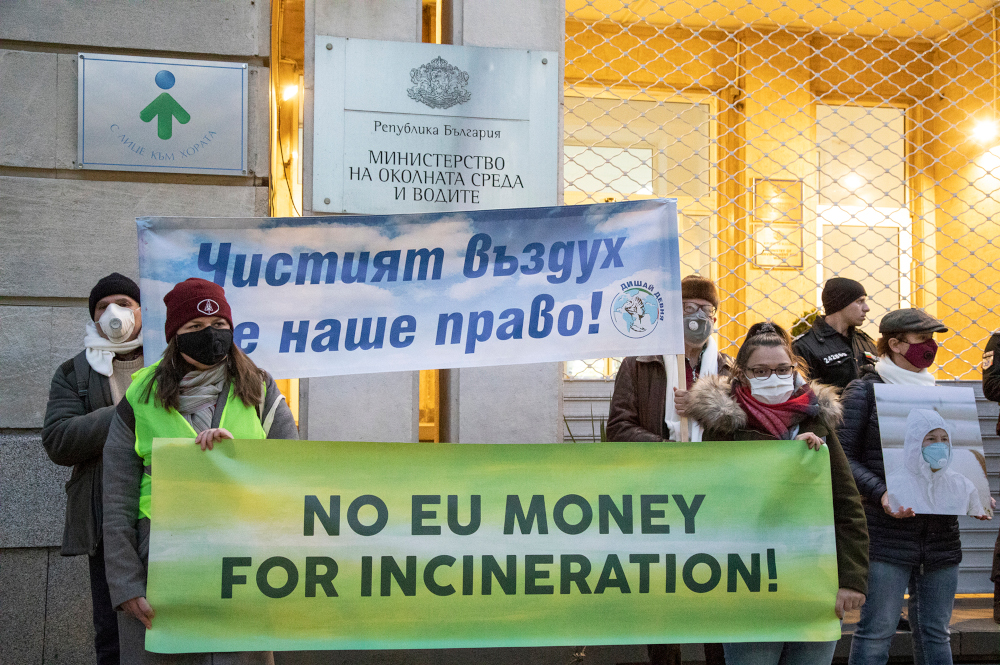
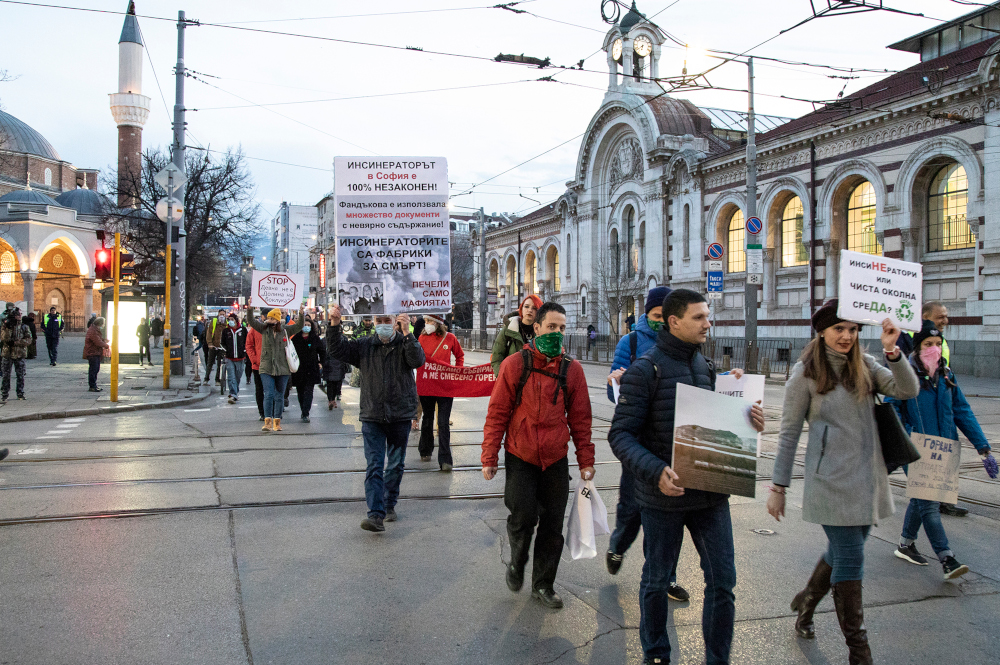
The Guidelines brought positive changes that limited incentives to build additional small hydropower plants in EU countries, but they have not proven successful in halting state aid for existing hydropower projects which breach EU environmental law, nor for preventing aid for the Sofia incinerator, fossil gas Projects of Common Interest, or capacity mechanisms that enable back-door fossil fuel subsidies.

Last week saw the end of a public consultation on plans for the new Guidelines, to which Bankwatch contributed with a range of ideas on how to end environmentally harmful subsidies.

No subsidies without environmental compliance – how to make this a reality?

Even within the existing rules, much more could be done to ensure environmental compliance and policy coherence. The Guidelines already state that Member States must ensure compliance with EU environmental legislation, carry out an environmental impact assessment when it is required by EU law and ensure all relevant permits. 

They also specifically point out that hydropower plants must comply with the Water Framework Directive and waste projects with the waste hierarchy laid out in the Waste Framework Directive. 

The European Court of Justice confirmed in September 2020 that aid to an activity that breaches EU environmental law cannot be found compatible with the internal market.

But in reality, the Commission needs to take more care in assessing environmental compliance. It is unclear how the Commission currently checks this, but from its decisions on renewable energy support schemes, it appears that it asks the Member State to confirm that it will ensure compliance, rather than looking at the country’s actual compliance record.

In reality, support schemes – some of which awarded aid before the current Guidelines entered into force – have approved subsidies for projects that later turned out to be non-compliant. For example, the Commission in 2015 opened a case against Romania for failure to apply the environmental acquis to small hydropower plants. The 2019 Commission letter of formal notice to Croatia on inadequate application of the Habitats Directive in the case of wind farms and the experience with the Kaliakra wind farm in Bulgaria show that environmental breaches also apply to other subsidised renewable energy projects. 

But apart from the general principle that non-compliant projects are not allowed to receive aid, there is no clear mechanism in the Guidelines to systematically halt or prevent state aid for illegally permitted projects. 

So, the new rules need to make more explicit how both the Commission and Member States need to check compliance when approving aid, and what happens when a project is found to be non-compliant only later.

It is surely easier to prevent aid being granted than to recover it later, so a precautionary approach needs to be taken, especially in countries where environmental breaches are known to be a problem. 

Just as Article 3 of the Renewable Energy Directive prohibits Member States from granting subsidies for energy from the incineration of waste if the State has not complied with the separate collection obligations laid down in the Waste Framework Directive, the Guidelines also need to clearly stipulate that no incentives for hydropower – even for very small plants – may be provided in countries which have not achieved the goals of the Water Framework Directive. 

Likewise, to make sure that energy projects developed in breach of the Environmental Impact Assessment, Birds or Habitats Directives, do not receive incentives, the Guidelines need to clearly state that any energy/environment projects or sectors subject to infringement procedures, investigations or court cases may not receive incentive payments until the issue is resolved.

Not only legal, but desirable – the need for better policy coherence

There is – unfortunately – a difference between being illegal and being environmentally damaging, and too often the Commission has accepted planned subsidies which may or may not be legal, but which certainly do not represent the best use of public money. Gas infrastructure and highly-efficient cogeneration are just two examples where the Guidelines fail to prevent state aid for projects which contradict the EU’s decarbonisation and circular economy agendas.

Gas and fossil hydrogen

For years, under the TEN-E Regulation, the EU has used public money to support new gas infrastructure such as pipelines and LNG terminals, while at the same time promoting decarbonisation. 

The TEN-E Regulation is currently under revision and the Guidelines will need revising in line with the new version. We expect that this will lead to an end to direct support for new fossil gas infrastructure. However, concerns remain about hydrogen.

Renewable hydrogen may play a role in sectors which are difficult to decarbonise, but caution is needed. Hydrogen needs large amounts of energy to produce, and even if generated by renewable energy, can put pressure on ecosystems. 

There is also a serious danger of boosting fossil gas hydrogen by overestimating the future availability of renewable hydrogen. Shaping policies and infrastructure around renewable hydrogen that may or may not materialise is likely to result in extending and expanding the use of fossil hydrogen instead. Currently, less than 0.1 percent of hydrogen capacity is for ‘green hydrogen’, and the availability of renewable hydrogen in the future has yet to be proven. 

Therefore, direct or indirect support for hydrogen must be limited to strictly renewable hydrogen, to be used only for hard-to-decarbonise sectors, and must exclude any support that relies on fossil fuels and unproven technologies such as carbon capture and storage.

Cogeneration, fossil fuels and waste incineration

In 2019, the Commission decided to allow subsidies for the Sofia waste incinerator, despite Bulgaria’s appalling record on recycling. This makes it highly likely that recyclable materials will be burnt.

This decision is the result of the fact that the current Guidelines allow operating aid for highly efficient cogeneration plants as defined in Annex II of the Energy Efficiency Directive. In practice, this has proven to be a loophole allowing subsidies for fossil fuels, as well as incineration of waste that is not biodegradable and would therefore not qualify for renewable energy operating aid, as in the Sofia case.

It is no longer acceptable to provide state aid for fossil fuels in any form, efficient or not, nor for other unsustainable energy forms such as waste incineration. The Commission needs to review the definition of cogeneration which can receive aid under the Guidelines and stop linking it to the current definition from the Energy Efficiency Directive.

It should also, at a minimum, update the Guidelines to prevent any subsidies for waste incineration in countries that have not met their separate waste collection targets, in line with Article 3 of the Renewable Energy Directive. 

But it should also be taken into account that the Commission’s 2017 Communication on the role of waste-to energy in the circular economy advises Member States to phase out public support for energy from incineration, because quantities of mixed waste as a feedstock for waste-to-energy processes are expected to fall as a result of separate collection obligations and increasingly ambitious EU recycling targets.

So, it is questionable whether any new aid should be allowed for waste incineration at all.

Public participation and access to justice as means to better decisions

One of the most interesting parts of the Commission’s consultation questionnaire included a proposal to initiate public consultations on proposed aid schemes. 

Considering that state aid decisions have until now been one of the most difficult areas of EU decision-making for the public to influence, this would be highly welcome as a step forward to increase state aid transparency and effectiveness.

State aid has traditionally been seen as something mainly affecting market competitors of beneficiary companies, so the general public and non-governmental organisations (NGOs) have had little involvement. It is often hard to find out when the Commission initially examines cases, as they are announced only when a decision is made to open an investigation. So, it is hard to provide timely input, and neither the general public nor NGOs are allowed to challenge the Commission’s state aid decisions. 

The Aarhus Convention stipulates the need to involve the public in environmental decision-making, so it is only logical that state aid schemes with a potential impact on the environment – positive or negative – be consulted. 

Similarly, the public needs to be able to challenge the Commission’s decisions to approve state aid, which is one of the issues being raised in another current EU policy process, the review of the Aarhus Regulation, which is still ongoing.

The European Commission has made strong commitments in its Green Deal to ensure that the environment is at the top of its agenda and that European citizens have a voice in this process. State aid policy can only make a difference when implemented together with ambitious legislation in all fields. But it is clear that the use of public funds will strongly influence the Green Deal’s outcomes, and that there is no time to lose. 

The new Guidelines on State Aid for Environmental Protection and Energy must do more to not only ensure that the projects supported by state aid are compliant with EU environmental legislation, but that they also represent the very best use of public money. State aid must look beyond what is legal, to what is clearly desirable.


This publication was produced in collaboration with EuroNatur in the frame of the joint research and advocacy work on hydropower finance and subsidies.
« Previous Page
Next Page »

Footer

CEE Bankwatch Network gratefully acknowledges EU funding support.

The content of this website is the sole responsibility of CEE Bankwatch Network and can under no circumstances be regarded as reflecting the position of the European Union.

Unless otherwise noted, the content on this website is licensed under a Creative Commons BY-SA 4.0 License

Your personal data collected on the website is governed by the present Privacy Policy.

Get in touch with us

  • Bluesky
  • Email
  • Facebook
  • Instagram
  • LinkedIn
  • RSS
  • YouTube