• Skip to primary navigation
  • Skip to main content
  • Skip to footer

Bankwatch

  • About us
    • Our vision
    • Who we are
    • 30 years of Bankwatch
    • Donors & finances
    • Get involved
  • What we do
    • Campaign areas
      • Beyond fossil fuels
      • Rights, democracy and development
      • Finance and biodiversity
      • Funding the energy transformation
      • Cities for People
    • Institutions we monitor
      • European Bank for Reconstruction and Development
      • European Investment Bank
      • Asian Infrastructure Investment Bank
      • Asian Development Bank (ADB)
      • EU funds
    • Our projects
    • Success stories
  • Publications
  • News
    • Blog posts
    • Press releases
    • Stories
    • Podcast
    • Us in the media
    • Videos
  • Donate

Home > Archives for Blog entry

Blog entry

Racing against the clock: Kenyan villagers under imminent threat of eviction by project under EU’s bank’s appraisal

The European Investment Bank (EIB) has a long history of financing geothermal power plants in Kenya. The last in line awaiting approval is Akiira 1 geothermal plant, set to occupy the homeland of the Lorropil community (also known to locals as Kambi Turkana).

The project is currently under the EIB’s appraisal, awaiting a EUR 155 mln loan that would constitute a good half of the project cost. According to the EIB website, a complementary ESIA for the steam-field, power plant and transmission line is underway. The money comes with conditions – the bank’s Stakeholders Engagement Standard requires open, transparent and accountable dialogue of the project promoter with all relevant stakeholders at the local level – but in practice this seems to be hardly respected. The exploratory works started back in 2012 without any proper consultation with the community.

Lorropil people share that the company continues to pressure them into leaving their homes. On 4 and 17 June, they were threatened by persons openly associated with Akiira 1 to seek shelter elsewhere by 20 June.

The Lorropil village is home to 47 families –  one of the most vulnerable groups in the area. The villagers are not formally recognised by the state despite residing there for decades. The living conditions are extreme: there is no longer free access to water, and their makeshift homes offer minimal protection and comfort. But these are their only homes and they have nowhere else to go.

A typical house in the Lorropil village

Daniel Lepariyo, the chief of the Lorropil village, explained that the village was constructed in 2004. According to him, the village was displaced without any compensation to make space for the construction of a new village for people resettled due to geothermal projects financed by the EIB and the World Bank . Now, the same people are to be impacted again by a new geothermal plant – Akiira 1.

RELATED STORY


Turned into steam

How geothermal power projects uproot the lives of Maasai communities in Kenya

Before it is too late, the EIB must establish whether its potential client is involved in these threats and condemn any discovered wrongdoing.

If the Lorropil community is forced to leave the area before the environmental and social assessment is finalised, they might lose their status of project affected persons and their associated privileges – playing right into the hands of the company that in this case, technically, would not be burdened with proper resettlement costs.

The Lorropil community should be identified as Akiira 1 Geothermal Power Plant project stakeholders, effectively and meaningfully engaged in the project decision-making, given equal opportunity to voice their opinions and concerns, and have those considered. If any resettlement scheme is needed, it should be developed in line with the bank’s standards.

A false solution to a real problem?

EU Member States submitted their draft National Energy and Climate Plans (NECPs) in the beginning of 2019 and the European Commission is expected to deliver an assessment of and recommendations on these draft plans in the coming days, in time for the governments to submit their final plans by 31 December 2019. Bankwatch has already analysed these draft plans and highlighted a worrying lack of commitment from the countries of central and eastern Europe to supporting more energy efficiency investments and sustainable mix of renewable energy production.

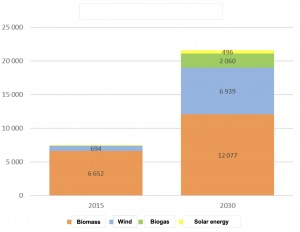
A new, supplementary analysis, published today confirms these findings by examining the NECPs of Bulgaria, Czechia, Estonia, Hungary, Latvia, Poland and Slovakia and their measures to support the use of wood biomass. It shows that the majority of these countries plan logging and biomass use above sustainable levels.

Instead of investing heavily in energy efficiency and small-scale renewable energy, these countries are choosing to reach their 2030 renewable energy objectives by increasing the use of biomass, even though this would have an adverse effect on the climate and environment of the whole region.

In several of these countries, the projected biomass usage is so high that they would have to import biomass from abroad or resort to unsustainable domestic sourcing. This would drive logging demand up even further and cause significant reduction in CO2 capture in the whole region, contradicting the principles of sustainable forest management. Similarly, the use of biomass in low-efficiency heating systems delays investments in energy efficiency and small-scale renewables.

This reliance on biomass is part of a worrying wider trend of replacing coal with other unsustainable and often non-renewable fuels, such as biomass, gas and/or municipal waste, as shown in another analysis by Bankwatch also published last week.

Central and eastern European governments are often tempted to make apparently “cheap” and unrealistic energy choices in order to perpetuate business as usual. The answer to this challenge has to be two-fold.

First, the European Commission must clearly spell out that these plans, if implemented, would damage ecosystems and the climate, and should therefore be reviewed in order to include sustainability safeguards. Credible sustainability criteria in every Member State must exist before they are allowed to heavily invest in this sector.

Second, the EU has to show it is best placed to support the energy transition in central and eastern Europe, by delivering a post-2020 EU budget that has a strong emphasis on climate and environment. Discussions regarding the next cohesion policy, a major source of public investment in this region, should focus on how to support more ambitious NECPs, for example by scaling up energy efficiency investments, as recommended by the European Semester, and on how to include every actor in order to ensure future-proof and acceptable plans for the next seven years.

Short-term fixes that would bring more problems in the medium- to long-term are of no use to anyone. Only more holistic thinking, focusing on a combination of greenhouse gas savings, material and energy efficiency, biodiversity protection and people’s welfare stands a chance of steering the EU towards the energy future it seems to want.

New opportunities for eastern Europe if the EU’s bank ramps up climate ambition and quits fossil fuels

This fear of losing on the EIB’s low-interest and attractive maturity loans, if climate investments dominate the bank’s spending strategy, is unnecessary but understandable. The EIB’s climate operations have been rather marginal in the eastern states. So far, the EIB has been unable to tap into the region’s vast potential in increasing energy efficiency and renewable energy.

Our past findings clearly show that the EIB’s climate action varies across the states. For example, in 20 member states – 10 of which are the eastern states – the EIB’s share of energy efficiency and renewable energy investments was below the EU’s average.

Within the EU, the bank invested billions in fossil fuels projects – mainly in Italy, Spain and the UK – which blatantly contradicts Europe’s climate goals. Research shows, Europe must stop fossil fuels infrastructure development plans now. Any further investments of this kind will end up as a stranded asset instead of bringing prosperity and environmental benefits.

Suspending fossil fuels financing and stepping up climate action is an opportunity to boost the EIB’s green financing, especially in central and eastern Europe.

First, the Bank and its shareholders should critically examine its business model, which at the moment favours big projects in transport, energy and industry sectors. This model does not correspond to the needs of modern transformation in central and eastern Europe. The initiative to reshape the EIB and its priorities is a chance to adapt and redirect EIB’s financing to energy transformation based on innovative technologies in energy efficiency and renewable energy.

Right now the EIB is reviewing the energy policy which should eliminate its support for fossil fuels, but reducing greenhouse gas emission requires a comprehensive approach from multiple financial policies, such as budgeting, fiscal stimulations, procurement procedures, public finance management and financial sector regulations.

The intervention of finance ministers who decide the fate of the EIB’s credit policy is prerequisite to bringing the bank on the right track to fight climate change, energy poverty, air pollution and upholding the EU’s prosperity.

Money for nothing: Ugljevik III coal concession must be cancelled, not bought off

In 2013, the Republika Srpska entity authorities in Bosnia-Herzegovina signed a concession contract with a little-known company called Comsar Energy, owned by Russian billionaire Rashid Sardarov, to build a 600 MW lignite power plant at Ugljevik, next to a smaller existing plant.

There was a flurry of activity around the project in 2013 and 2014 as an environmental permit was issued. The project looked set to be another one in a series built and financed by Chinese companies and banks in the region, but it was later reported that negotiations had come to nothing and the project stagnated.

In July 2017 the project seemed to reach a dead end when the Supreme Court of the Republika Srpska Entity cancelled the environmental permit for the project, after a challenge by the Center for Environment. But the Ministry of Spatial Planning, Construction and Ecology responded by issuing another permit without changing the environmental impact assessment or holding new public consultations.

In late 2018 a separate complaint process, via the Energy Community dispute settlement mechanism, resulted in an agreement by the Republika Srpska authorities not to use the existing environmental permit for the project, meaning that if the project is to go ahead, it would have to re-start the permitting process.

And indeed this is a big “if”.

In its annual report on the implementation of concessions issued in April 2018, the Republika Srpska Concession Commission clearly stated that the concessionaire was not fulfilling its obligations and that low electricity prices were hindering the realisation of the project. But no recommendations were made on what to do about it.

In August 2018, local media reported that Comsar threatening to give up the project unless an extension of the concession from 30 to 45 years was granted, together with a reduction of the capacity from 600 MW to 350 MW because the plant would otherwise be unprofitable.

The only surprising thing about this is that it took so long. Coal plant construction has collapsed globally in recent years because of coal’s increasingly poor economics and widespread opposition.

Western Balkans governments are pushing blindly ahead with coal projects via subsidised state-owned companies that suffer losses in order to maintain unsustainable electricity prices and employment levels.

Just this week it has been confirmed that Republika Srpska’s state-owned electricity company, ERS, plans to buy off Comsar Energy’s concession for Ugljevik III. The likely cost has been cited at around EUR 90 million.

So let’s get this straight: Comsar Energy got a concession in 2013, and didn’t fulfill its contractual obligation to build the plant. But now it gets to sell its concession for an unprofitable coal plant back to the public sector for EUR 90 million? Why should we, as electricity consumers, pay for the omissions made in planning this project?

If the concessionaire didn’t fulfill its obligations, the contract should be cancelled, period. It took a risk, and lost. ERS doesn’t need yet another unprofitable new coal project on its hands – it already has Gacko II – and it certainly doesn’t have enough money to pay EUR 90 million for nothing.

Taking the chill off Romania’s residential buildings

In Romania, the potential for energy efficiency improvements in buildings is vast.  Most residential buildings from the second half of the twentieth century lack specific thermal requirements for the envelope, which leaves a lot of room for improvement.

Average energy consumption per year (kWh/m2)

Investing in thermal rehabilitation

Since the early 2000s, legislative frameworks and different funding opportunities have helped spur thermal rehabilitation works in the housing stock.

In Bucharest, the rehabilitation works were carried out through these programmes:

  • 2009: the National Programme for Energy Performance Improvement of Apartment Buildings
  • 2010-2016: the Thermal Rehabilitation Programme for Apartment Blocks financed by government guaranteed bank loans
  • 2012: a government ordinance enabling local administrations to finance local budgets designated for increasing energy performance of housing blocks or single-family houses.

Through the national programme for energy performance improvements for housing blocks the Ministry approves local budget allowances for municipalities, towns and communes, and Bucharest districts, based on local programmes and funds allocated from the state budget.

The other programme financed through government-guaranteed loans facilitates access by homeowners’ associations to contract bank credits with subsidised interest rates for thermal rehabilitation.

According to the District 3 city hall, since 2012, 922 apartment blocks were thermally rehabilitated through the local programme. The Court of Auditors report states that in the 2010-2014 EU Budget period, a total of 2 248 housing blocks were rehabilitated, or 28 per cent of the blocks in Bucharest.

How it works

  1. Housing blocks are identified and owners’ associations are notified about registration in the programmes.
  2. If an owners’ association decides to register, a decision of the general meeting of the owners is required to sign a mandate contract. This contract mandates local authorities to carry out intervention works and sets out other relevant obligations and clauses.
  3. The design and execution of intervention works start.
  4. At the final reception, an energy performance certificate is issued together with a three-year performance guarantee period.

What seems like a simple procedure may actually stretch over a long period of time: not all owners in the association might agree on the works, administrative bottlenecks might obstruct the process, contracting processes sometimes get stuck.

One community’s experience

The administrator of one of Bucharest’s owners’ associations detailed his experience with the local thermal rehabilitation process. The apartment block he manages is 22 years old, and since its construction there has not been any other rehabilitation works.

He explained: “Things ran smoothly with those in charge at the city hall. Although they initially said that the association would bear 20 per cent of the total costs, till now, two years after the intervention works have finished, the administration has not charged us anything.”

In practice the owners’ association pays 20 per cent of the total cost of the rehabilitation works and the remaining 80 per cent is provided by the state through local budgets. This 20 per cent is shared among all owners according to their individual share of ownership, but if an association or one or more owners cannot pay their share, the local city hall may partially or fully take over the costs and decide later how to recover the money.

The design of the intervention works is where issues begin to arise. He complained, “The design is done in the office and nobody comes to see the situation on the site. Everything is based on pictures and even if unforeseen situations occur during work, they still send someone to take a picture and send it back to the design office.”

Overall, the association was satisfied with the work done: “They changed the buildings’ envelope, all the hot water pipes in the basement, and now the pipes are all new, insulated, and from this point of view it is good because those were about 20 years old. They also insulated the roof and they did it quite well, as we never have leaks.”

The authorities, however, never conducted the final reception. Legally this means that the energy performance certificate of the building was not issued, which would have highlighted the specifics of annual energy consumption for heating. But according to the owners “it is indeed warmer than it used to be and heating bills have also fallen.”

In 2014, media reported a case where an apartment block rehabilitated in 2010 was approved to undergo the same rehabilitation works four years later. Of course these works never started because they were already done, but this did not stop the city hall from expensing the funds anyway. This unresolved case highlights the need for more transparency in the work of local authorities.

Who is footing the bill?

These large-scale programmes require massive injections from the state budget. Across some districts of Bucharest, the local administration also contracted the European Investment Bank loans for additional funding.

District 1: 220million (EUR)
District 2: 88million (EUR)
District 3: 38million (EUR)
District 4: 70million (EUR)
District 5: 12.3million (EUR)
District 6: 177million (EUR)

EIB Thermal Bucharest projects in Romania 2009 – 2018

District 1: 52%
District 2: 35%
District 3: 41%
District 4: 75%
District 5: 51%
District 6: 69%

The share of loans in thermal rehabilitation payments, 2010-2014 (Court of Auditors’ report)

The loans represent an important source of financing for local programmes, but they also significantly increase the rehabilitation expenses borne by the local budget, the report concludes. These credits are contracted in a foreign currency, with a floating rate, meaning there are bigger risks that they cannot be repaid in the event of unfavourable developments in the exchange rate.

European funding is also available through Priority Axis 5 of the Regional Operational Programme 2014-2020 which supports the increase of energy efficiency for public and residential buildings. According to the Ministry for Regional Development and Public Administration, District 3 received from the Regional Operational Programme 2014-2020 EUR 11 million and District 4 received almost EUR 16 million.

Way forward

Between 2009 and 2018, the EIB financed EUR 605 million worth of energy efficiency projects. Although such investments carry some risks, the EU bank should continue deploying investments in the energy efficiency sector, instead of supporting uneconomic, unsustainable fossil fuel projects. To minimise currency fluctuation risks, the EIB should preferably provide loans in the local currency. A transparent system of the apartment owners’ contribution should also increase the efficiency of public funds use. The program should aim at complex and high quality energy efficiency measures works which should be monitored and confirmed by a certificate of energy performance.

With a wide range of financing sources available, these energy efficiency interventions for residential buildings could be carried out in a simpler, more transparent manner. Instances where a contracting process of rehabilitation works is obstructed by dubious mechanisms of public procurement or administrative delays must not become a habit, because authorities have all the means for making thermal rehabilitation a success.

EU enlargement reports show increased concerns on Chinese financing and hydropower sustainability

Back in 2004, the then EU External Affairs Commissioner, Chris Patten, cautioned that EU accession “cannot be a question of the countries pretending to reform and our pretending to believe them.” But here we are in 2019, albeit with different candidate countries, and this is certainly what it feels like.

Reading through the 2019 EU Enlargement Package, there are a lot of familiar faces: among others corruption, the judiciary, meaningful parliamentary oversight, media and civil society freedom, lack of progress on improving air quality and waste management, and lack of adequate control of State aid.

On environment, one of the most stark examples of “pretending to reform” is the fact that already in 2005 all the Western Balkans countries with coal power plants signed the Energy Community Treaty, committing to bring them into line with EU pollution control legislation by 1 January 2018. Yet nearly 14 years later, none of them have actually done it, resulting in thousands of premature deaths annually in the region and beyond.

This level of negligence has not gone unnoticed by the EC, which has for several years criticised the lack of progress on air quality and industrial emissions, but the situation has still not improved, indicating that stronger measures are surely needed. Introducing the latest pollution control and air quality legislation into the Energy Community Treaty would be a start, as would opening dispute settlement cases against the countries failing to implement their existing commitments under the Treaty.

In addition to the chronic ongoing issues, some points been given increased prominence in this years’ reports.

The most obvious one is Chinese influence in the region. The Commission’s Communication on EU Enlargement Policy points out what we have been saying for some time now:

“It is key to strengthen the resilience of the region to ensure the full adherence of any foreign–funded economic activity to EU values, norms and standards, notably in key areas such as the rule of law, public procurement, environment, energy, infrastructure and competition.

China’s business and investment activity in the Western Balkans has been on the rise and can in principle offer opportunities for the region; however, these investments very frequently neglect socio-economic and financial sustainability and EU rules on public procurement, and may result in high levels of indebtedness and transfer of control over strategic assets and resources.”

A key area of concern is in the energy sector, where Bankwatch has documented a whole range of legal violations in Chinese-financed and potentially Chinese financed coal power projects, ranging from illegal subsidies to selecting companies without a tender process to inadequate environmental assessments.

Chinese loans for coal are gaining attention because they are the most widespread – 3.5 GW of new capacity is planned in southeast Europe with support from Chinese state banks – but Kosovo’s controversial planned Kosova e Re lignite plant received a distinct warning too. Nevertheless, compared to the absurdity of the project’s contract, it is still rather mildly worded:

“As regards the new Kosova e Re coal-based power plant project, (…) It may have a major impact on public finances, tariffs and the environment and this must be carefully assessed. The contractual framework for the construction of the new plant, which involves designating a single buyer of the electricity it produces, could negatively impact the opening of the market.”

The Commission has also increased its warnings about the need for better protection of the region’s biodiversity including its rivers, reminding Montenegro, Serbia and North Macedonia that any further development of hydropower should be in line with EU environmental legislation, and unpacking a whole slew of issues with hydropower in Albania, including poor environmental assessments, the need for public consultations, vulnerability to climate change and lack of diversification of energy sources. Had Bosnia-Herzegovina had a full report devoted to it, rather than just an Opinion, it surely would have received similar comments.

This reflects the growing public resistance to the hydropower sector all across the region, which represents one of the bright spots in the last few years as communities band together to defend their rivers and expose legal violations in decision-making processes. The battle is far from won but there are clear steps forward, with Montenegro halting the issuance of new concessions and new subsidies, and several successful court cases against individual projects across the region.

This year’s Enlargement Package may still have an air of plus ça change, but governments cannot keep up their pretences forever. The EC must not pretend to believe them, and neither must we. We need to expose incompetence, corruption and authoritarianism every step of the way until we get the change we want.

« Previous Page
Next Page »

Footer

CEE Bankwatch Network gratefully acknowledges EU funding support.

The content of this website is the sole responsibility of CEE Bankwatch Network and can under no circumstances be regarded as reflecting the position of the European Union.

Unless otherwise noted, the content on this website is licensed under a Creative Commons BY-SA 4.0 License

Your personal data collected on the website is governed by the present Privacy Policy.

Get in touch with us

  • Bluesky
  • Email
  • Facebook
  • Instagram
  • LinkedIn
  • RSS
  • YouTube