• Skip to primary navigation
  • Skip to main content
  • Skip to footer

Bankwatch

  • About us
    • Our vision
    • Who we are
    • 30 years of Bankwatch
    • Donors & finances
    • Get involved
  • What we do
    • Campaign areas
      • Beyond fossil fuels
      • Rights, democracy and development
      • Finance and biodiversity
      • Funding the energy transformation
      • Cities for People
    • Institutions we monitor
      • European Bank for Reconstruction and Development
      • European Investment Bank
      • Asian Infrastructure Investment Bank
      • Asian Development Bank (ADB)
      • EU funds
    • Our projects
    • Success stories
  • Publications
  • News
    • Blog posts
    • Press releases
    • Stories
    • Podcast
    • Us in the media
    • Videos
  • Donate

Home > Archives for Blog entry

Blog entry

High time for better biodiversity protection in the Energy Community countries

The Energy Community Treaty currently covers some of the most biodiverse regions in Europe. From the steppe and forests of Ukraine and Moldova, to the mountains and rivers of Georgia and the Western Balkans, these countries have a stunning range of species and habitats, including beautiful  and well-preserved rivers.

What they also have in common is that they are inadequately protected from human activity. Despite the nomination of numerous sites as part of the Emerald Network under the Bern Convention, plans to ensure the Network was fully protected by 2020 were not met, by a long way.

Threats to nature come from many sectors, including agriculture, waste, transport and industry, but in recent years, the impact of the energy sector has been especially pronounced in the Western Balkans and Georgia, due to a rapid expansion of hydropower. 

While it is clear that hydropower blocks fish migration and decreases water quality, in reality, its impacts are much wider. For example, small plants often completely dry up the riverbed downstream of the water intake, clearance of forests for reservoirs and access roads destroys habitats and causes erosion and landslides and local people often lose access to water for their livestock or crops. 

But hydropower is far from the only form of energy that endangers rivers and other habitats. Coal and nuclear plants heat up water bodies by discharging spent cooling water, coal mining and ash dumps endanger groundwater and rivers, biomass endangers forest biodiversity, wind farms and transmission lines can affect birds and bats, and we have all seen what oil spills can do.

The wild beauty of the Energy Community countries by Bankwatch

Insufficient protection in the Energy Community Treaty

When the Energy Community Treaty was signed in 2005, its authors recognised that if the EU’s neighbours were to be allowed to participate in the EU energy market, some environmental safeguards would need to be put in place. Obligations to carry out environmental impact assessments were included in the Treaty, as well as an obligation to protect wild migrating birds and limit air pollution from power plants. 

But time has proven that these are not enough. The results from an environmental impact assessment inform the measures to be included in the environmental permit for an energy facility, but we are not aware of any example from the region where such an assessment has concluded that the impact of an energy project on the environment would be unacceptably high.

In addition, smaller projects such as hydropower plants, are often exempted from undertaking environmental assessments due to their small installed capacity, yet their damage is considerable. This is partly due to failure to properly screen projects under the environmental assessment legislation, but it is also a reflection of the gap left by not having the full range of EU nature protection law as part of the Treaty.

If these countries are participating in the EU energy market and trading electricity with EU countries, they need to play by the same rules in order to avoid unfair competition. The same goes if they want to benefit from the energy transition. Renewable energy can bring many benefits, but when not well planned, it can also damage biodiversity. This has already happened with hydropower but can easily happen with poorly-sited wind farms and uncontrolled use of forest biomass in particular. 

Energy projects threaten biodiversity in the Energy Community region by Bankwatch

Active protection needed

In contrast, the EU’s Birds Directive, Habitats Directive and Water Framework Directive aim to actively protect species, habitats and water bodies respectively. They strive to actively improve the status of species, habitats and watercourses such as rivers and lakes, rather than just stopping their further decline.

Their underlying assumption is that areas protected as Natura 2000 sites and water bodies such as rivers and lakes should not be harmed unless there is truly no other option. They define under what circumstances it is allowed to decrease the quality of water or build infrastructure in protected areas, and stipulate what needs to be assessed in order to take such a decision.

For this reason, Bankwatch and partners have undertaken an analysis of how these Directives can be incorporated into the Energy Community Treaty, bearing in mind its energy-sector mandate. In our opinion, any energy projects potentially impacting on the existing network of nominated candidate Emerald sites and other protected areas, or on watercourses, should be subject to assessments under the Directives, to understand whether they can go ahead.

Building on existing obligations

In fact, most of the countries have already started to implement these Directives, particularly the Water Framework Directive, within the framework of agreements with the EU, and under the Danube River Protection Convention (ICPDR). The protection of Emerald sites and setting up of Natura 2000 sites in the EU accession countries is lagging, and needs to be speeded up, but under our proposal to start by using already protected or identified high-value natural areas as the basis for assessment, protection of these areas from new energy projects does not need to wait.

Certainly the Directives are not a silver bullet, but in 2017 the European Commission’s comprehensive evaluation of the Birds and Habitats Directives found that bird populations, other protected species and natural habitats in Europe would be much worse off without protection from the Birds and Habitats Directives and that the benefits from the Directives are much greater than the costs. 

Likewise, although the implementation of the Water Framework Directive with the EU clearly needs to be improved, in 2019 the Commission also concluded that it has been successful in setting up a governance framework for the EU’s water bodies, slowing down the deterioration of water status and reducing chemical pollution, and that it is generally fit for purpose.

As the Energy Community countries increase their share of renewable energy, better nature protection is becoming more and more crucial. Clearly a great increase in renewable energy is needed in the countries, but it must not come at the expense of biodiversity.

Thirsty hydropower: misuse of drinking water pipelines has destroyed a river in Bulgaria

When initially designed, this seemed to be the most sustainable hydropower cascade in Bulgaria. According to the investment proposal submitted by the investor to the Bulgarian authorities, the project aimed at the ‘utilisation of the hydropower potential of the pipeline “Blagoevgradska Bistritsa” at eight points of its length with the goal to construct small hydropower plants’. The plants were going to operate under a ‘subordinate’ regime, meaning that they would produce energy only from the amount of drinking water the town needed, which is already in a pipeline and thus would cause no additional damage to the river.

Funding was provided by the European Bank for Reconstruction and Development (EBRD) and later, after the plant was built, the European Investment Bank (EIB) also supported the project company’s trade receivables. Both banks used a financial intermediary – the commercial bank Allianz Bank Bulgaria PLC. Due to a lack of transparency on the part of the multinational banks, their involvement became public many years later. The affected public could not participate in the project’s approval and raise their concerns in front of the banks.

But three problems should have raised a red flag for the banks. First, the project was planned within protected areas – two water intakes were in Rila National Park and the river flows through another Natura 2000 site. Second, the project was divided into eight pieces when requesting environmental approvals, indicating an attempt to play down its impacts. And third, the company constructing the plant was owned by Grisha Ganchev, ‘a known money launderer and organised crime figure’, according to a cable from the US Embassy in Sofia.


‘No life at all, not even frogs’

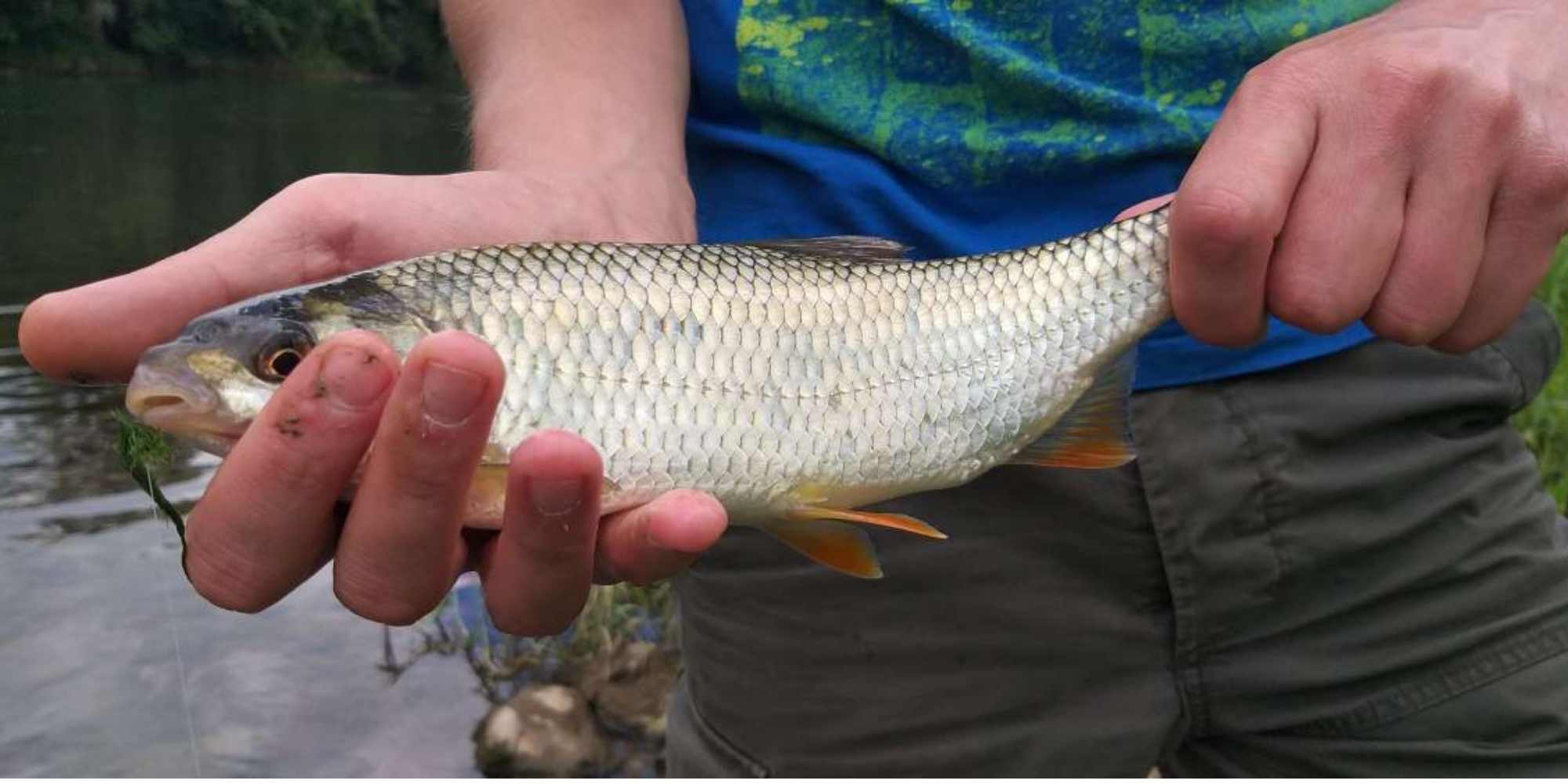
Blagoevgradska Bistritsa used to be one of the best rivers for trout fishing in Bulgaria. Local anglers remember catching trout up to 1 kilogram in weight or 50 centimetres long. The river was also a habitat for three protected species at the European level – the otter (Lutra lutra), the stone crayfish (Austropotamobius torrentium) and the endemic Struma barbel (Barbus strumicae). 

Right after the construction of the cascade, anglers and farmers noticed severe changes in the river. According to a survey with local people commissioned by Bankwatch in 2020, the whole river between the intakes in the national park and the lowest plant of the cascade was severely impacted. Many people said that they had seen the river completely dry and that in some stretches there was ‘no life at all, not even frogs’. Even below the lowest plant, anglers noticed a lot less wildlife in the river. Farmers also complained that there was no water for irrigation anymore.

Have you seen the Blagoevgradska Bistritsa river fully dry or with low water level?

Fishermen take over monitoring the river, ‘since the authorities do not care at all’

When they realised that they were losing their favourite river, fishermen’s associations from Blagoevgrad and Sofia started regular inspections of the hydropower plants’ operation. The results of 12 field visits since 2015 have been compiled in a public monitoring platform. ‘For every violation of the environmental rules we do our best to fight it, since the authorities do not care at all’, said the founders of the platform. The information gathered was made accessible to the public, the media and the authorities. 

See the Public Control Platform

A hidden pipeline

The fishermen discovered that at any time of the day, even when the town of Blagoevgrad was barely using drinking water, the cascade was operating at full capacity and the river was dry. The water permits allowed the cascade to use more than twice the water necessary for the town, breaching the environmental permits that said: ‘The exploitation of the hydropower plant would not have its own impact on the water balance of the river’. 

In theory, since the plants use the drinking water for the turbines, once the water has passed the last plant, it should continue towards the town. But footage from the cascade’s lowest plant shows a large pipe which discharges water used in the hydropower production process directly back into the river. This proves that the cascade is using additional river water, more than the amount that is carried further for the town’s water consumption. This explains why the river upstream is dry, without fish, otter or crayfish.

Two Bulgarian laws and two EU directives breached

Citizen monitoring has provided evidence of several violations of national and EU legislation, namely:

  1. The Bulgarian Water Act requires a minimum ecological water flow to be discharged with priority over any economic activity. Field visits by fishermen showed one of the intakes leaving no water in the river, while the other barely trickled.  
  2. The Bulgarian Act for Environmental Protection requires an environmental impact assessment (EIA) to be carried out before construction of hydropower plants which may have a significant impact on the environment. Eight different decisions for the eight plants were issued, without requesting an EIA – a practice known as ‘salami slicing’, or splitting a project into pieces to downplay its likely impacts.
  3. The EU Water Framework Directive requires Bulgaria to implement measures to prevent the deterioration of the status of bodies of surface water.
  4. The EU Habitats Directive requires Bulgaria to conduct an appropriate assessment of projects likely to have a significant effect on Natura 2000 sites. The project is located in two such sites. 

What can still be done to save the river?

Because their involvement was not known, the issues could not be addressed to the banks in a timely manner. A response from the EBRD on 21 December 2018 stated:

‘Unfortunately we have not succeeded in retrieving the information for the Projects you were looking for. These Projects are just too old for us to still have active records with operational detail.’

The EIB has admitted in a reply to Bankwatch that:

‘the EIB did not carry out an environmental due diligence on the Blagoevgradska Bistritsa plants, did not assess the decisions of the competent authorities regarding the Environmental Impact Assessment (EIA) of the plants, and did not carry out field visits’,

and suggested we contact the plants’ owner and/or the competent authorities in Bulgaria.

Although the EIB’s financing came at a later stage, in our view the Bank should have undertaken due diligence to ensure its client’s operations complied with environmental law. As public money was used to build the plant and later to support its owner, we cannot accept that the European banks take such a hands-off approach. The EIB and EBRD need to oblige Allianz Bulgaria to engage with the final beneficiary, with the relevant authorities and interested stakeholders in order to remedy the situation. 

The Bulgarian authorities need to modify the water permits of the plants so that they are identical with the water permits for the drinking water supplier. 

The water discharge pipe from the lowest plant should be removed, and new fish passes on all intakes should be built to facilitate migration.

How should the banks improve their policies?

The multinational banks use various intermediaries – commercial banks, state development banks and private equity funds – to help reach smaller clients. In 2019 the EBRD’s new environmental and social policy set stricter conditions for financing hydropower projects, including higher transparency of the intermediaries’ projects. The EIB’s 2019 Hydropower Guidelines also set up similar provisions, but it is not clear how they are implemented. The EIB is also reviewing its transparency and environmental policies in 2021.

The EIB and the EBRD need to make their lending through financial intermediaries fully transparent, at least for risky projects such as hydropower plants, so that any concerns can be raised before the damage is done.

For such high-risk intermediary projects, the EIB also needs to be involved in environmental and social appraisal and project monitoring, as its intermediaries clearly are not able to do these tasks adequately.

The EIB also needs to ensure that the provisions for financial intermediaries set in the Hydropower Guidelines are included in loan contracts, while the EBRD needs to keep long-term records on intermediary projects as a basic matter of accountability.


This publication was produced in collaboration with EuroNatur in the frame of the joint research and advocacy work on hydropower finance and subsidies.

Devil in the climate details as Slovakia finalises plan for EU recovery fund

The devil however is in the details. The premise of the plan is misguided in that it is based on Slovakia’s outdated climate and energy strategies. The proposed renovation and efficiency measures are littered with false solutions, as is the country’s approach to tackling the industry’s pollution problem, and in spite of significant improvements for green transport, some investments still miss the mark. All the more frustrating is that many of the issues explored below could have been addressed during the planning, had the government set out a transparent process for public engagement in line with the Commission´s partnership principle. The end result should be a recovery plan that is less focused on trying to catch up with the EU’s average GDP and more concerned with financing decarbonisation and resilience measures that lead Slovakia to the goal of reducing CO2 emissions by 55 per cent by 2030

Components of the Slovak national recovery and resilience plan

Name of the Component
RRP in mil. € Green
Green Economy 2 170 2161
Renewable energy sources and energy infrastructure 220 220
Renovation of buildings 700 700
Sustainable transport 750 741
Decarbonisation of industry 350 350
Climate change adaptation 150 150
Education 798 97
Science, Research and Innovation 700 50
Healthcare 1 450 545
Efficient public administration 1 037 92
Total sum 6 155 2 945
  Minimum: 2 277
 
 
*Source: Ministry of Finance, Slovakia, March 2021


Outdated plans and no regional capacities

One of the key problems with the Slovak recovery plan is that it is based on outdated documents. There is no appropriate carbon neutrality decarbonisation model finalised for aligning the measures with 2030 and 2050 EU climate targets. The Slovak National Energy and Climate Plan was outdated even in 2020 when it was published. There was not enough political will to update the decarbonisation models, and Slovak ministries did not have sufficient capacities. The Ministry of Environment prepares the model for carbon neutrality since 2019, but only general information about measures is available – no clear pathway.   Moreover, Slovakia will probably review its reports on renewable energy shares starting from 2010 due to incorrect reporting of data from households and small sources in the last decade. The current government’s Programme from April 2020 stated that it would review the NECP and Low Carbon strategy. The draft plan has not so far built in NGO recommendations for supporting preparation of capacities in the Regional Centres, which would help orchestrate the planned decarbonisation at the regional level. One-stop shops in the regions assisting households in applying for funding is a measure in good direction, but it shouldn´t subsitute real decarbonisation planning and implementation and much wider and deeper focus of the Regional Centres.

Slovak ministries should include a component for  ‘Preparation of regional capacities for decarbonisation’ with EUR 3 million.


Renovation of buildings

Reforms include integrating various public support measures, increasing transparency, complex assessment of historical buildings, and dealing with construction waste. The last reform is the only circular economy initiative in the whole recovery plan. The renovation of public historical buildings should incentivise deep renovation and preserving historical values – not only pragmatic utilisation of these buildings. It is hardly possible to assess if it’s an appropriate use of funding to contribute to carbon neutrality by 2050 at the latest.  Moreover, the regional decarbonisation strategies and capacities for preparing them are almost non-existent.

The relevant ministries should double-check the support for historical and listed buildings with the decarbonisation model.


Fossil gas boilers a false solution to tackle energy poverty

Investment package for improving the energy efficiency of 40 000 family houses investments package includes a EUR 50 million allocation for fossil gas boilers. Although the Ministry of Environment conditioned this programme on other energy efficiency measures, it comes with a false presumption that low-income households will be schooled into using fossil gas boilers to avoid air quality infringement. Low-income families would hardly switch from cheaper fuels, such as wood (and unfortunately waste), to fossil gas. This is problematic because Slovakia already has one of the worst ratios of energy-related spending compared to income in the whole EU and opting for the more expensive fossil fuel would only make it worse.  Fossil gas boilers in the plan should be replaced by more sustainable solutions. The Slovak Academy of Sciences recommends examples of good practice in tackling energy poverty, such as supporting homes’ renovation in other member states.  There is mention of solar systems and heat pumps, but they are not yet properly integrated into the component.

The Ministry of Environment should replace support for fossil gas boilers with renewable energy sources (RES) systems.


The renewable energy sources and energy infrastructure

Reforms from the renewable energy sources and energy infrastructure component primarily focus on transposing the Clean Energy for all Europeans package into Slovak legislation.

Ministry of Economy should add sustainability criteria for renewable energy sources and set municipalities, energy communities and prosumers into the eligible recipients of public finance support for building new RES – not only support entrepreneurs.  


Decarbonisation of industry

This component’s reforms include a phase out of subsidies for electricity from domestic coal, which was approved in 2018 and won’t be financed from the Recovery and Resilience Facility. Streamlining controls and improving integrated permitting for industry is another reform that raises attention from the environmental and access to justice points of view. The cost-efficiency is the main principle for investments in the EUR 350 million decarbonisation of industry component of the plan.

The Ministry of Environment should check if the projects listed there are in line with the carbon neutrality model, which their department finalised.


Railway and cycling infrastructure, but also highway hydrogen infrastructure

Reforms in sustainable transport are focused on preparing investment projects and other public passenger transport and intermodal freight transport measures. The new policies for the long-term support of alternative fuels seem problematic as the RRP supports highway infrastructure. Through EUR 700 million, the plan includes spending on a number of positives, including the development of low carbon transport infrastructure and environmental freight transport, as well as promotion of ecological passenger transport. Unfortunately, it also plans to support problematic construction of infrastructure for alternative fuels (e-mobility and hydrogen). Pedestrian, cycling and public transport infrastructure were strongly neglected for decades as overpriced highways have been financed as a state priority. Individual automobile transport is much less efficient, socially accessible and environmentally sustainable than public transport systems.  

This is why the EUR 50 million allocation for 1000 new electric and hydrogen recharge stations on highways should be switched from grants to loans. 


The partnership principle and participation

The Slovak Ministry of Finance sent the first draft of Slovakia’s recovery plan to the European Commission on 23 December 2020. However, the Ministry published the complete draft of Slovakia’s plan for public consultation on 8 March 2021. With the tight deadline for submitting plans to the European, this three month delay made the public participation in the planing process mostly a formal exercise.  Moreover, the Slovak government massaged the legislative process by publishing a draft version of the plan for the official consultation on 8 March 2021 in order to reach agreement among political coalitions, discuss with the Commission and finalise by 30 April 2021. This is a dangerous precedent as the legislative process allows this consultation only in its final stage.

The Ministry of Finance should incorporate the partnership principle into the implementation structure of the recovery plan.

Bosnia and Herzegovina: Who gains from extending the FBiH renewables support scheme?

Like the rest of its Western Balkan peers, in 2012 under the Energy Community Treaty, Bosnia and Herzegovina (BiH) committed to reach a certain percentage of renewable energy – not just electricity – by 2020. 

In the case of BiH, its target was 40 per cent, based on the fact that its share in 2009 was already 34 per cent due to its existing hydropower plants and the widespread use of wood for heating. 

Bias towards hydropower generated resistance

Bosnia and Herzegovina’s respective entities drew up action plans for reaching the target. In the electricity sector, these mainly consisted of building new hydropower plants. Various authorities across BiH had been handing out concessions for small hydropower plants since 2006, so this was the perfect opportunity to set up an incentives scheme to support them.

Like many EU countries, BiH’s entities set up renewables support schemes based on feed-in tariffs. Their action plans defined how much of each technology would be supported by buying off all their electricity at a higher-than-market price.

But unlike most EU countries, which had earlier used feed-in tariffs to stimulate new technologies and massively bring down the cost of solar and wind, the Western Balkan governments, including in BiH, stuck to what they knew – small hydropower – with hugely damaging consequences for rivers, streams and nearby communities across the region.

Nor did this help much with reaching the renewable energy targets. By 2018, Bosnia and Herzegovina had reached just 35.97 per cent of overall renewable energy in their energy mix – and it is not clear how much progress has been made since then. In the same year, small hydropower contributed just 2.6 per cent of total electricity.

An end to small hydropower subsidies…

In late 2020, public opposition to small hydropower had reached a peak and the Federation authorities pledged not to grant new incentives to such projects after the end of the year. 

In fact, to achieve this, all they had to do was nothing. The whole incentive scheme was based on a 2020 target, so it automatically expired. Either the target had been reached or not; either companies had entered the support scheme or not.

The Federation had in any case prepared – but not yet adopted – a draft new Law on Renewable Energy and needed to set renewable energy, climate and energy efficiency targets for 2030. It also needed to bring any new incentive system into line with newer EU rules stipulating that any support schemes need to be based on competitive bidding and premiums rather than feed-in tariffs. 

Or not?

Yet instead of just adopting the new law it has already prepared, the Federation government has now proposed a single-item addition to the existing law on renewables, due to be discussed in the House of Representatives on Tuesday 30 March.

Purporting to fill a legal vacuum by extending the existing action plan’s 2020 target until new strategic documents are ready, it fails to mention that this would also automatically extend the current feed-in tariff scheme, which is based on the action plan. 

In failing to mention this, the government is clearly trying to pull the wool over the House of Representatives’ eyes, especially as the changes have been proposed via an ‘urgent procedure’ process, giving little time to debate their real implications.

Who gains?

There is no reason to extend the 2020 target. The only reason for this move could be to enable some renewable energy plants that did not manage to enter the feed-in tariff scheme by the end of 2020 to do so. 

We cannot say for certain which producers will gain from this decision, if adopted, but one thing is for certain: the public will lose. Once again, it will be bill-payers who will continue to support a select group of businesses via this outdated support scheme. 

The House of Representatives must recognise this proposal for what it is and refuse to approve it.

This publication was produced in collaboration with EuroNatur in the frame of the joint research and advocacy work on hydropower finance and subsidies.

Indorama Agro workers are fighting to register the first independent trade union in Uzbekistan

On March 19, over 200 employees of Indorama Agro in the Syrdarya region of Uzbekistan held a meeting to establish an independent trade union, “Xalq Birligi” (People’s Unity), the first of its kind in the country. 

In a joint statement Bankwatch along with 11 other international CSOs, is calling on the government of Uzbekistan and international development banks to ensure registration and support to the trade union established by Indorama Agro employees in the Syrdarya region.

Previously, Indorama employees in the Syrdarya region raised their concerns multiple times about the massive job cuts, poor working conditions, unfair payment, gender discrimination, and retaliation against complainants. However, the company was reluctant to address them in any significant way. People had to call on the local authorities, international CSOs and international development banks active in the region, and ask them for protection of human rights. 

In 2020-2021, the European Bank for Reconstruction and Development (EBRD), and the International Finance Corporation (IFC) approved $130 million loans in total to Indorama Agro to enhance economic inclusion, especially for young people and women in rural areas. Both banks recognise the right of workers to elect their representatives, form or join workers’ organisations of their choosing and engage in collective bargaining. 

Moreover, according to the EBRD Environmental and Social Policy, the client – in this case Indorama Agro – shall not discriminate or retaliate against workers who act as representatives, participate, or seek to participate in such organisations or in collective bargaining, and cannot engage in employment discrimination on the basis of affiliation to a union. According to the IFC Performance Standard on labor and working conditions, the client must engage with workers’ representatives and workers’ organisations and provide them with information needed for meaningful negotiation in a timely manner. 

Apart from it, the ILO Convention 87 on Freedom of Association and Protection of the Right to Organize, ratified by Uzbekistan in 2016, clearly states that “public authorities shall refrain from any interference which would restrict this right or impede the lawful exercise thereof.” In March 2020, Uzbekistan revised “Law on Trade Unions,” exactly to ensure compliance with its international obligations to protect the rights to free association and collective bargaining. 

However, the very next day after the establishment of the trade union in Syrdarya region, some members of a newly formed worker organisation reported receiving calls from local authorities and police warning them to stop this initiative. Any actions taken by the Uzbek government or Indorama Agro to restrict the workers’ rights might be perceived as violations of the country’s obligations under the international law and investment agreements respectively.

The group of international CSOs call on the Government of Uzbekistan to ensure the timely registration of the independent trade union “Xalq Birligi” and on the EBRD and IFC to ensure that Indorama Agro respects the rights of its workers to form an independent union by remaining neutral in union registration and organization. Indorama Agro should enter into good faith negotiations with the organization’s democratically elected leadership to resolve worker concerns. All the parties must take immediate and decisive measures to prevent retaliations against union members and organisers. 

Demonstrators demand cleaner skies as Bulgaria presses on with incinerator

The latest action was a visible reminder to the city of the problems plaguing the beleaguered project chosen by the municipality for EU funding. 

In an open letter sent to the Ministers of Environment and Waters and the Minister of Health, the organisers demanded a complete revision to the waste and air quality management plans, including a total ban on incineration, strict control over polluting facilities and a ban on waste imports for incineration. 

In March 2020 the European Commission approved the EUR 77 million project, arguing that it would support “the construction and operation of a high-efficient cogeneration plant to produce heat and electricity using fuel derived from unrecyclable municipal waste to be in line with EU State aid rules”.

The project is slated to receive a whopping 30 per cent of all the funding available to Bulgaria under its environmental programme in the current EU budget. 

Other public financiers also lie in wait. The European Investment Bank (EIB) also signed a EUR 67 million loan for 2018 and is considering an additional loan to co-finance the project. This in spite of the fact that the EIB does not classify waste to energy projects as ‘circular economy’.

Does not add up and crowds out funding for EU targets

If built, the project will prevent Bulgaria from reaching the Commission’s waste management targets for 2030, which sets a 65 per cent recycling rate. The project’s planned incineration capacity of 180 000 tonnes of refuse derived fuel annually is three times the amount currently produced in Sofia. This means that if there is not enough waste being produced, waste could be imported from other towns or from abroad, and sludge from the water treatment facility could also be burned, as is proposed in the project’s environmental impact assessment

Bulgaria desperately needs investments in integrated systems for separate collection, recycling and composting installations, as well as information campaigns to explain why these issues are important. 

[This blog post was originally published on the 22nd of March and republish after corrections].

« Previous Page
Next Page »

Footer

CEE Bankwatch Network gratefully acknowledges EU funding support.

The content of this website is the sole responsibility of CEE Bankwatch Network and can under no circumstances be regarded as reflecting the position of the European Union.

Unless otherwise noted, the content on this website is licensed under a Creative Commons BY-SA 4.0 License

Your personal data collected on the website is governed by the present Privacy Policy.

Get in touch with us

  • Bluesky
  • Email
  • Facebook
  • Instagram
  • LinkedIn
  • RSS
  • YouTube