• Skip to primary navigation
  • Skip to main content
  • Skip to footer

Bankwatch

  • About us
    • Our vision
    • Who we are
    • 30 years of Bankwatch
    • Donors & finances
    • Get involved
  • What we do
    • Campaign areas
      • Beyond fossil fuels
      • Rights, democracy and development
      • Finance and biodiversity
      • Funding the energy transformation
      • Cities for People
    • Institutions we monitor
      • European Bank for Reconstruction and Development
      • European Investment Bank
      • Asian Infrastructure Investment Bank
      • Asian Development Bank (ADB)
      • EU funds
    • Our projects
    • Success stories
  • Publications
  • News
    • Blog posts
    • Press releases
    • Stories
    • Podcast
    • Us in the media
    • Videos
  • Donate

Home > Archives for Blog entry

Blog entry

IEA call to public finance institutions: End of finance for new fossil fuel projects & massive scale-up of clean energy spending needed

According to the IEA, the global energy sector has to be at the heart of action to tackle climate change, as it is responsible for almost three-quarters of greenhouse gas emissions that have already pushed global average temperatures 1.1 °C higher since the pre-industrial age, with visible impacts on weather and climate extremes. 

Why is this report important?  

The IEA was established in mid-1970s to secure OECD member states’ access to oil, a background which makes today’s report particularly significant.  Its previous scenarios, with a prominent role for fossil gas, were used by oil and gas companies to prolong our dependence on fossil fuels. This report, however, despite still containing some risky modelling choices on technologies such as carbon capture, storage and utilisation technologies and biofuels in order to reach net zero by 2050, confirms that new public finance for fossil fuel projects needs to end now.  

And how is the world faring right now according to the IEA?  

Global emissions by scenario, 2000-2050. Source: World Energy Outlook 2021 Report by IEA, available here: https://www.iea.org/reports/world-energy-outlook-2021

The world is on the track for a catastrophic 2.6°C of warming by 2100 with the measures that have actually been put in place, even taking into account policy initiatives that are currently under development, according to the IEA. Even if we add the newly announced climate pledges in the run-up to November’s COP26 climate summit, we are still going overboard, with a temperature rise of 2.1 °C above preindustrial levels in 2100. 

Is there a solution?  

IEA projections show that we need a radical transformation of our energy systems to stay on a course below 1.5°C, clean energy spending must triple to curb climate change – and that of course means ending public finance for new fossil fuel projects.  

Natural gas demand according to the Net zero scenario, 2010-2030. Source: World Energy Outlook 2021 Report by IEA, available here: https://www.iea.org/reports/world-energy-outlook-2021

In the net-zero compatible scenario, demand for fossil gas needs to drop sharply from 2025 onwards and reach not more than 1,750 billion cubic metres in 2050. The IEA has reiterated the conclusions from its landmark Net Zero by 2050 report that the necessary rapid drop in oil and natural gas demand means that no fossil fuel exploration is required and no new oil and natural gas fields are required beyond those that have already been approved for development. 

Solar PV and wind generation by scenario, 2010-2030. Source: World Energy Outlook 2021 Report by IEA, available here: https://www.iea.org/reports/world-energy-outlook-2021

The IEA’s recipe to prevent the worst consequences of climate change is to accelerate the decarbonisation of the electricity mix, focus on energy efficiency, and cut methane emissions from fossil fuels.  

According to the report we need to triple global clean energy investment by 2030. Furthermore, investing heavily in energy efficiency means that the energy intensity of the global economy needs to fall by 4 per cent annually this decade. 

The role of public international finance 

According to the IEA, a key role in accelerating the energy transformation is reserved for public financial institutions.  

Getting the world on track for 1.5 °C requires a surge in annual investment in clean energy projects and infrastructure to nearly USD 4 trillion by 2030. Some 70 per cent of the additional spending is needed in emerging market and developing economies. 

Clean energy and infrastructure investment, 2018-2030. Source: World Energy Outlook 2021 Report by IEA, available here: https://www.iea.org/reports/world-energy-outlook-2021

Alongside the necessary policy and regulatory reforms, public financial institutions – led by international development banks and larger climate finance commitments from advanced economies – need to play crucial roles to bring forward investment in areas where private financing is missing.   

IEA analysis has repeatedly highlighted that a surge in spending to boost deployment of clean energy technologies and infrastructure needs to happen quickly.  

However, more investments in renewables alone cannot lead to decarbonisation: public finance institutions also need to send a strong signal to the markets, by stopping all support for fossil fuels, including fossil gas. This is crucial if international development banks want to make a meaningful contribution to climate change mitigation and adaptation and to long-lasting economic transition in its countries of operation. 

Kenya energy project exposes the dark side of EU development funds

For several years, Bankwatch and other civil society groups have been raising the alarm about the risk of grave human rights violations around the Akiira geothermal energy project in Kenya. In June 2019 we warned that the local community is facing an imminent forced eviction to make room for the energy project. At the time, the European Investment Bank (EIB) was considering a EUR 155 million loan to the controversial project. Four months later, the Bank informed us it had decided to pull out.

This should have been a sigh of relief. Instead, a few weeks later the village – home to 47 families living in abject conditions – was burned down in its entirety, and the local residents were chased away by the police. The humanitarian crisis that ensued necessitated a Red Cross intervention to aid the inhabitants, especially children, who had been left without food or shelter. 

Even more astonishing, our investigation revealed that while the EIB has stopped considering a loan to the Akiira project, it has in fact already been financing it through a different channel.

It turned out the 70MW geothermal energy project has been a beneficiary of European public money through the Global Energy Efficiency and Renewable Energy Fund of Funds (GEEREF), a joint initiative of the EIB and the European Commission in which the Bank plays both an advisory and investor roles[1].

In GEEREF’s Impact Report for 2015, Akiira is mentioned as an example of good stakeholder engagement. Yet, in August 2021, the EIB’s Complain Mechanism confirmed that the violent eviction of the villagers constitutes a breach of the Bank’s standards. In its response to members of the impacted community, the Mechanism also admitted that the EIB’s monitoring of the GEEREF’s social performance was insufficient.

These conclusions are shocking, showing that despite the EIB’s promises to make every effort to ensure that the EIB’s Environmental and Social Standards are respected throughout all of its projects it ignored the raised problem and did nothing to inform and advise GEEREF how to prevent eviction and address project’s non-compliance. 

One third of the EIB portfolio unknown to the public

Nevertheless, the Akiira geothermal energy project is emblematic of a systemic issue with financing by the world’s largest multilateral lender. A third of the EIB’s 2020 investments – a total of EUR 22.6 billion – were made through financial intermediaries. These are typically commercial banks, national promotional banks and public financial mechanisms such as GEEREF.

Projects enabled through these intermediaries usually escape public scrutiny, and it is extremely difficult to trace the EIB’s involvement. These project also lack proper environmental and social due diligence as it is entirely delegated to the financial intermediaries, including for high risk projects.

In the case of Akiira, the EIB’s Complaint Mechanism stated the Bank was supposed to “allocate sufficient resources to perform the same standard of due dilligence as it usually applies to its own operations.”

Such due diligence would have spotted the risk of human rights abuse this project entailed for the local community. Yet, the absence of screening for potential environmental and social ramifications of projects enabled through financial intermediaries has been evident in a number of cases Bankwatch has been monitoring.

In Croatia, the construction of the Ilovac hydropower plant in a protected Natura 2000 area has led to the loss of aquatic species in the Kupa river. Only after it was built, thanks to civil society groups fighting to expose the project’s financiers, did the EIB’s contribution via the Croatian Bank for Reconstruction and Development (HBOR) come to light.

The Blagoevgradska Bistrica hydropower cascade in Bulgaria, which was constructed without an environmental impact assessment inside multiple protected areas, has dramatically altered the river’s hydrology. Nevertheless, as civil society later managed to reveal, the project promoter received EIB money through a loan to the commercial bank Allianz Bank Bulgaria PLC after the hydropower project was already built.

In October 2019, at the same time the EIB confirmed it is ditching the Akiira geothermal energy project in Kenya, the Bank also informed it is withdrawing from the Vinca waste incinerator project in Serbia. And just like in Kenya, right after activists who had been campaigning against the controversial Belgrade project welcomed the EIB’s decision it turned out that the EIB-financed Marguerite II Fund remained a shareholder in the company contracted to build the waste incinerator. 

Later the Bank also acknowledged that “the Marguerite II Fund is required to ensure that investments comply with the EIB  requirements, including on environmental and social matters,  through the legal documentation, which i.a. includes the obligation to  comply with national laws and with EU legislation, as applicable.”

High time for EIB to open up about intermediate lending

The EIB’s board of directors is set to adopt a new version of the Bank’s environmental and social standards within weeks. Yet, the draft policy offers little to ensure EIB investments do not harm the environment or local communities.

This document does introduce a new, dedicated standard for intermediated finance supposedly intended to help improve the evaluation of the social and environmental implications as well as the development impact of such investments. But, alarmingly, the text makes little to no attempt to address the fundamental concerns raised in cases like the Akiira project.

In comments on this new standard jointly submitted by Bankwatch and 15 other NGOs in August 2021, we called on the EIB to disclose the relevant details of higher risk projects supported through financial intermediaries, improve the appraisal and monitoring of high risk clients and projects, and ensure that communities affected by such projects have access to remedy.

Revising the EIB’s environmental and social standards is an opportunity for the Bank to learn from the experience of the Akiira geothermal energy project and other reckless projects. Enough damage has already been done by projects realised through financial intermediaries with no transparency or due diligence. The EU’s house bank has the responsibility to ensure that European public money, whether invested directly or indirectly, does not end up wrecking the natural world and enabling human rights violations.

NGO recommendations from a joint paper sent to the EIB:

  • Improving appraisal and monitoring of high-risk clients and sub-projects – Specifically, the EIB should define higher risk sub-projects which should be given higher attention, including by EIB staff. This should include sub-projects which may have human rights implications, affect indigenous or vulnerable communities, involve displacement of affected communities, support fossil fuels, or those which impact protected areas and areas of high biodiversity value.
  • Improving development outcomes, including climate action and human rights protection – the EIB should measure and disclose its climate commitments in financial intermediaries (FI) lending. It should invest only in FI clients who commit to develop a portfolio decarbonisation plan to achieve emissions reductions in line with the Paris Climate Agreement. 
  • Transparency – EIB and financial intermediary should disclose the name, sector, beneficiary, location and planned approval/signing date of higher risk sub-projects financed via FIs on EIB’s website and on the FI client’s website; FI should be obliged to provide the EIB with environmental and social documents and to inform about the  EIB’s involvement in sub-projects at the project sites for high risk projects, ensuring that it is clearly visible and understandable to affected communities.
  • Access to remedy – without transparency about sub projects, the EIB is effectively denying complainants their right to be heard and to access redress. The EIB should require its FI clients to disclose the EIB’s involvement in sub-projects and about the Complaint Mechanism at the project sites, ensuring that it is clearly visible and understandable to affected communities.

Notes:

[1] The financing structure of this deal is rather intricate: GEEREF invested in a fund (DI Frontier Market Energy and Carbon Fund) that partly finances the project. GEEREF is advised by both branches of the EIB Group: the European Investment Fund (EIF, the private sector branch of the EIB Group) and the EIB itself. Furthermore, the EIB is an investor in GEEREF and the EIF represents the European Union’s shareholding in GEEREF as Trustee on behalf of the European Commission.

EIB misinterprets EU’s development finance needs

In fact, the EIB is currently rewriting its environmental and social safeguards, but the draft policy remains a far cry, not only from the standard one might expect from the world’s largest international lender, but also from the equivalent policies in other development banks.

And even before this process is completed, the EIB announced last month a so-called new development branch.

The EIB’s lackluster attempts to act as a development bank have been evident since the first evaluation of its external operations in 2010. And yet, there has been no decisive institutional follow-up on the recommendations from that evaluation. In fact, even the  High-Level Group of Wise Persons concluded recently that the Bank has failed to improve the impact of its financial support to development projects.  

Only scarce information about the new ‘development hub’ was presented to the public. The EIB’s press release had nothing about new, dedicated strategies for improved development impact or how the Bank plans to  increase cooperation with other European financial institutions. In reality, the EIB’s superficial announcements are nothing more than internal reshuffling and rebranding, which are to ensconce it in its current investment business model.  

Hard-pressed, an EIB official explained to Devex that having more staff will be one of the crucial elements in the changed business model. It is part of the Bank’s intention to advance complicated projects faster, disbursing loans faster and getting interest payments faster which, in turn, should increase the Bank’s revenues to cover the increased cost of staff. Magic. 

Civil society organisations have long been urging the EIB to ensure it has the staff necessary to deliver on its development promises. However, we have also pointed to the wrong internal incentives pushing the Bank’s staff to throw out big loans for big projects whose development impact was questionable. Impact financing is not about speed. It’s also not about how much money you manage to invest in developing countries. Impact financing is about enabling projects that are in the interest of the greater society, knowing who benefits and how, improving standards in and beyond the project and contributing to wider, systemic improvements. Obviously, the EIB is fully aware that such projects would require time to prepare even if more staff is involved, forging partnerships in project implementation, longer maturity and bigger financial risk (e.g due to local currency exposure). The EIB has had enough time to prepare a meaningful proposal and it should have openned it for public discussion.

It is also worrying to learn that the Bank is claiming it still hasn’t distinguished its EU operations from its non-EU ones and that a new branch will finally enable dedicated financials, objectives and key performance indicators for measuring results.

Well, that is not how the EIB has been portraying its outside EU operations so far. They have always been separated in its operational plan, separately budgeted and reported. Most of these operations are covered by various EU mandates setting specific objectives and providing additional guarantees against risks and losses. It is incredible that the EIB, after decades of external lending, has finally found it has it all upside down and needs to create an internal branch to put things straight. Even more magic.    

In reality, much more fundamental reforms are needed if the EIB is to fulfil its development mandate. It’s just not enough to create an internal branch, accelerate spendings and rebrand existing local offices as “hubs”.

A rigorous project selection, based on policy objectives, must be followed by prudent environmental, social and human rights due diligence and accompanied with the highest level of transparency. It is outrageous that the EU’s house bank has been involved in projects devastating biodiversity, violating human rights and enabling corrupted elites.

The EIB needs to carefully monitor its operations and work in partnership with promoters and other local stakeholders. Finally, it needs to report, not only on the length of train tracks it had supported, but also on how it actually contributed to the strategic objectives of the EU’s external action such supporting democracy, the rule of law, human rights and fundamental freedoms.


Budapest airport torments neighbours as expansion project evades environmental checks

When designed in the 1930s the airport was located merely 16 kilometres from the centre of Budapest to ease the access. In 2019 it served a record 15 million passengers and its expansion assumed an increase in passenger turnover to 21 million.

A plane lands or takes off approximately every four minutes or even more frequently right above the neighbouring households’ roofs. And for the million people living around it – including families with children whose houses had been built decades before works to expand the airport even started – life has become unbearable.

A new analysis by Bankwatch and MTVSZ reveals the extent of air pollution the airport is responsible for and the toll it has been taking on local residents. The levels of micro-dust pollution in the radius of  9 kilometers around the airport is 4 to 13 times the average level. During our field visit to the area, home to half a million people, citizens or relatives of those with pulmonary fibrosis or brain cancer reported that they have often been told by physicians that their disease was largely attributable to kerosene or noise pollution, even if not confirmed in writing.

Noise is even more unbearable. During the day, noise levels exceed those recommended by the World Health Organisation and those allowed by the EU’s Noise Directive. Inhabitants living in close vicinity of the airport are simply unable to have conversations outdoors.

The airport has also been granted permission to operate during the night. Six landings or takeoffs between 00.00 and 05.00 are allowed. Local residents also reported that regulations on flight paths and aircraft altitude over inhabited areas are often violated.

The Hungarian Ombudsman for Future Generations has also alerted  the Hungarian government in February 2019 that the  excessively busy air traffic during the night (exceeding the planned number) means that the right of affected citizens to a healthy environment is being violated. Vulnerable groups and those with financial difficulties are not able to easily adapt to or move away from an environment that threatens their well-being. 

It might be hard to believe but despite these significant environmental and social impacts, widespread public dissatisfaction and frequent complaints sent to Hungarian authorities, the project to expand the airport has never been subject to any environmental or social impact assessment. 

The developer, Budapest Airport ZRT, has managed to circumvent both EU environmental legislation and the EIB’s standards by obtaining exemptions from requirements to comply with the local spatial plan and for an environmental impact assessment. Somehow, the EIB’s social and environmental due diligence for the project did not spot any adverse social impacts. The glaring non-compliance with the EU’s environmental impact assessment regulations and the EU Noise Directive has also been ignored by the Bank. And in 2018, the EIB awarded the project a EUR 200 million loan, with the only positive economic and social impact being a job creation potential. The EIB loan was also guaranteed by the European Fund for Strategic Investments. 

This case demonstrates that the EIB doesn’t have in place the environmental, social and human rights standards and due diligence procedures needed to ensure that all the projects it supports comply with EU law and the EIB’s own policies.

The EIB often argues that projects in the EU must comply with national law and thus automatically with EU directives and regulations. But reality is different. The ongoing review of the EIB’s Environmental and Social Sustainability Framework must address these shortcomings to ensure these projects are serving people and the environment, not compromise them. 

On the other hand, basic mobility rights do not mean ‘fly as we please and dump the external costs on locals’, and mobility must not overrule the fundamental human right to a healthy environment and local living/livelihood. The COVID-19 pandemic provided an outstanding opportunity to rethink our approach to globalisation, including foreign trade and long-distance travel, and to find alternatives. Returning to the old ‘normal’ is just not an option, and this is our shared responsibility.

The Western Balkans Green Agenda Action Plan: Quantity over quality

Hidden among debates about EU enlargement and the role of the EU’s enlargement Commissioner, an Action Plan on the Green Agenda for the Western Balkans was quietly agreed on at this week’s EU-Western Balkans Summit in Slovenia.

Just a week ago it was far from clear whether it would be approved at all. Despite the Regional Cooperation Council (RCC) having had nearly a year since the Sofia Declaration to prepare the Plan, the draft document was completed only two weeks ago, giving little time for agreement. Presumably the EUR 9 billion in grants which the EU is promising the region helped to oil the wheels.

But the late and rushed drafting of the Plan affected its quality. It covers at least 58 measures that would truly bring positive change in the region if implemented. But there are too many ambiguities to ensure that this will happen.

On 30 September, 18 civil society organisations including Bankwatch sent a letter to the RCC and DG NEAR calling for major improvements. For example, clear deadlines are needed. Setting up an Action Plan with ‘Indicative timeframes’ is setting it up for failure, especially when some of the tasks are so poorly defined. 

What, for example, does ‘Increase the uptake of Best Available Techniques in accordance with the Industrial Emissions Directive’ by – indicatively – 2030 mean? Transposing the Directive? Applying it to new installations? To existing installations? Ambiguity will inevitably become an excuse for inaction.

And it needs to be clear what will happen if countries do not implement the plan. The European Commission has to hold governments accountable, but there are no plans for this to happen within the Green Agenda – Ministers will instead assess their own progress at regular meetings.

We also asked for requirements for the countries to ensure civil society participation at the national level, not only the regional level, as this would clearly have a greater impact on the day-to-day implementation of the Green Agenda. 

Unsurprisingly given the hurry before the Summit, the final version of the Plan barely changed compared to the draft. And where it did, in some places it got worse. 

For example, an ‘indicative timeframe’ of 2025 for phasing out coal subsidies is now ‘ongoing’.

And desperately needed air quality strategies will indicatively be ‘developed and implemented’ by 2030, but now with a note added that implementation will be ‘beyond 2030’. What does that mean? People choking on the region’s notorious pollution need to wait nine more years even for a plan?

Such poor formulations could easily have been prevented by a proper consultation process. The Plan actually claims that there was an ‘extensive consultation process’ and that it was “developed following a bottom-up approach that involved authorities from the Western Balkans (WB) economies, relevant regional organisations active in the policy areas covered by the GAWB [Green Agenda for the Western Balkans], international financial institutions (IFIs), civil society organisations (CSOs), and other partners.” 

This is far from the truth, at least with regard to environmental civil society organisations. 

‘Bottom-up’ implies that input was collected before drafting and that various actors were consulted on successive drafts. But what happened in reality was that after taking nearly a year to draft the Action Plan – and providing no information about it in the meantime – the RCC allowed just one week for civil society organisations to comment on the draft. 

It is galling to see such a token effort described as an ‘extensive consultation process’. If the European Commission and RCC are serious about encouraging public participation in decision-making in the region, they need to lead by example. 

Civil society organisations know well what is needed in the region and have much to offer in terms of knowledge and suggestions. But we need adequate time to read, comment, coordinate and agree on draft documents. 

This is already the second time we have seen inaction for months, a lack of consultation with civil society on draft documents, and then a last-minute rush – the same happened with the Commission’s Guidelines for the Implementation of the Green Agenda for the Western Balkans last year. Once can be a mistake, but twice is starting to become a habit.

The stakes are high and we have no time to lose. We will do our best to advance the goals of the Green Agenda, but we can only be effective if we are informed and consulted on time. Since the regional Action Plan is so unclear, involvement of civil society on the national level will now be even more crucial to define clear steps and timelines.

At the same time, the European Commission needs to stop outsourcing the process and show real leadership to make it a reality, including by conditioning pre-accession funds on real progress by the countries.

Federation of Bosnia and Herzegovina: Renewables incentives chaos finally confirmed by auditors

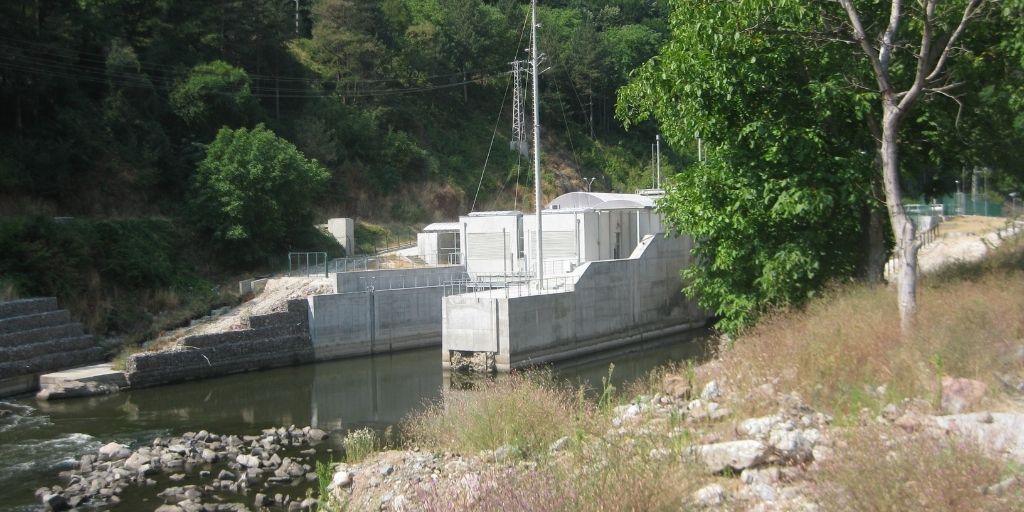
Kordići small hydropower plant. Photo: Robert Oroz

It was a long time in the making. An audit of the financial statements of the Federation’s Operator for Renewable Energy Sources and Efficient Cogeneration (Operator za OIEEK) was originally planned in 2018. In the end, an audit spanning 2019 and 2020 was only completed in September 2021.

In 2018, the auditor was unable to obtain the relevant documentation and the Auditor General ended up suspending the audit.

In March 2019, the FBIH government ordered the Financial Police to examine the Operator’s files and to report back within a month. Only extracts from the police report were published, but they appeared to establish several instances of problematic conduct.

The government even temporarily banned the Operator from making payments to renewables producers in March 2019, a situation which appears to have lasted for several months, as the Director sent a letter in June 2019 pleading for a resolution of the situation.

In its October 2020 progress report for Bosnia and Herzegovina, the European Commission warned that: ‘There are serious concerns related to the work of the Operator for Renewable Energy Sources in the Federation of Bosnia and Herzegovina. Responsible authorities should undertake meaningful measures to ensure prudent management and prevent any misuse of available funds.’

In December 2020, a new Director was finally appointed, but only because the former Director’s mandate had expired. In March 2021 local media noted that there had been no improvements in the Operator’s information disclosure on which producers were benefiting from the feed-in tariff scheme – a situation which continues until this day. Anonymous employees have also recently confirmed to the Balkan Investigative Reporting Network that the situation has not improved since the new Director took over.

Countless breaches of the renewable energy legislation

The audit confirmed many things we already knew, for example that the Operator has consistently failed to publish updated information on which producers have obtained the right to feed-in tariffs and how much of the available quota remained for specific technologies. No comprehensive project register is available on the Operator’s website and even in the offline version, not all projects are included.

Because of this, it was not visible to the public that requests for the right to obtain feed-in tariffs were not always handled in the order in which they were submitted, nor were companies invited in writing to rectify any omissions in their requests as required by law. The auditor found examples of requests for feed-in tariffs being approved despite failure to submit some of the legally required documentation, but did not name the producers in question.

By the end of 2020, more solar capacity had been awarded the right to feed-in tariffs than was allowed by the Renewable Energy Action Plan of FBIH, because the Operator failed to follow the rules on allocation of available capacity.

As well as mis-handling the incentives system itself, the audit report contains a litany of misdeeds related to the management of the Operator, including failures in financial management, the employment of 20 people without advertising the positions, failure to adopt and publish a procurement plan, failure to carry out tenders in line with the law, and failure to submit information on tenders to the Public Procurement Agency.

But as the audit also points out, the Operator is not the only problem. The Federal Ministry for Energy, Mining and Industry and the Federal Energy Regulatory Commission (FERK) also failed to ensure that the Law on Renewable Energy Sources and Efficient Cogeneration was being implemented and that the body set up by the Law was functioning properly.

Both have recently defended themselves: FERK says that it regularly reported to various bodies and that it did not cancel the Operator’s licence because this would have put the whole renewable energy incentives scheme into jeopardy, while the Ministry claims it consistently monitored the Operator’s work by requesting information and requesting follow-up actions based on its reports.

This might be true, but around two years passed between the Operator failing to provide documentation to auditors and the Director being replaced. This strongly suggests that neither FERK nor the Ministry really pulled out all the stops to stem the waste of public money.

37 recommendations

The audit office provides the Operator with 37 recommendations such as setting up an internal financial monitoring and auditing system, complying with the law when taking on new employees, and publishing the full register of producers eligible for feed-in tariffs. Although no new incentives could be awarded after the end of 2020 according to the Law, the recommendations are still highly relevant because some of the producers will be receiving feed-in tariffs for almost 12 more years.

The Federation of BIH is also unique in the region in having a scandalous system whereby so-called ‘qualified producers’ have the right to have their electricity purchased at a price 20 per cent higher than market price even after their feed-in tariff contracts have expired. Until this is changed, even those qualified producers who did not manage to get feed-in tariffs, or those whose 12-year power purchase agreements have expired, will be receiving payments from the Operator. So even if it did not invent this system, the least the Operator can do is to inform the public who is getting such unwarranted payments.

In addition, the Federation is due to adopt a long-delayed new Law on Renewable Energy, in which the Operator may still play a role in allocating feed-in tariffs for the smallest new plants.

Is no-one accountable?

As it happens, between October 2019 and March 2021, Operator employees filed three criminal proceedings against the former Director to the Herzegovina-Neretva Canton Prosecutor. These have reportedly been joined into one file and sent to the Federal Financial Police for review. But the Police say they have submitted their findings to the Prosecutor already. But even if the Prosecutor finally opens a case, this leaves numerous questions unanswered.

For example, if feed-in tariffs were approved for producers that had not submitted the required documentation, what will be done about it?

And if the Ministry and FERK are failing to keep the Operator under control, what will be the consequences for them?

The audit report does not answer these questions. Civil society and the media will have to keep pushing for answers and finally hold the institutions accountable for this gross mis-use of public money.


This publication was produced in collaboration with EuroNatur and RiverWatch in the frame of the Save the Blue Heart of Europe campaign, with financial support from MAVA Foundation.

« Previous Page
Next Page »

Footer

CEE Bankwatch Network gratefully acknowledges EU funding support.

The content of this website is the sole responsibility of CEE Bankwatch Network and can under no circumstances be regarded as reflecting the position of the European Union.

Unless otherwise noted, the content on this website is licensed under a Creative Commons BY-SA 4.0 License

Your personal data collected on the website is governed by the present Privacy Policy.

Get in touch with us

  • Bluesky
  • Email
  • Facebook
  • Instagram
  • LinkedIn
  • RSS
  • YouTube